
Team Details
Revolve NTNU
| University | Norwegian University of Science and Technology
NO Trondheim NTNU short 738 |
 |
|---|---|---|
| Location | Trondheim, Norway | |
| Homepage | https://www.revolve.no/ | |
| Social Media | ||
| CV Team | Revolve NTNU | |
| DV Team | Revolve NTNU Driverless | |
| Short Link | tid.fsg.one/611 | |
Past Events
2026
Info
173x
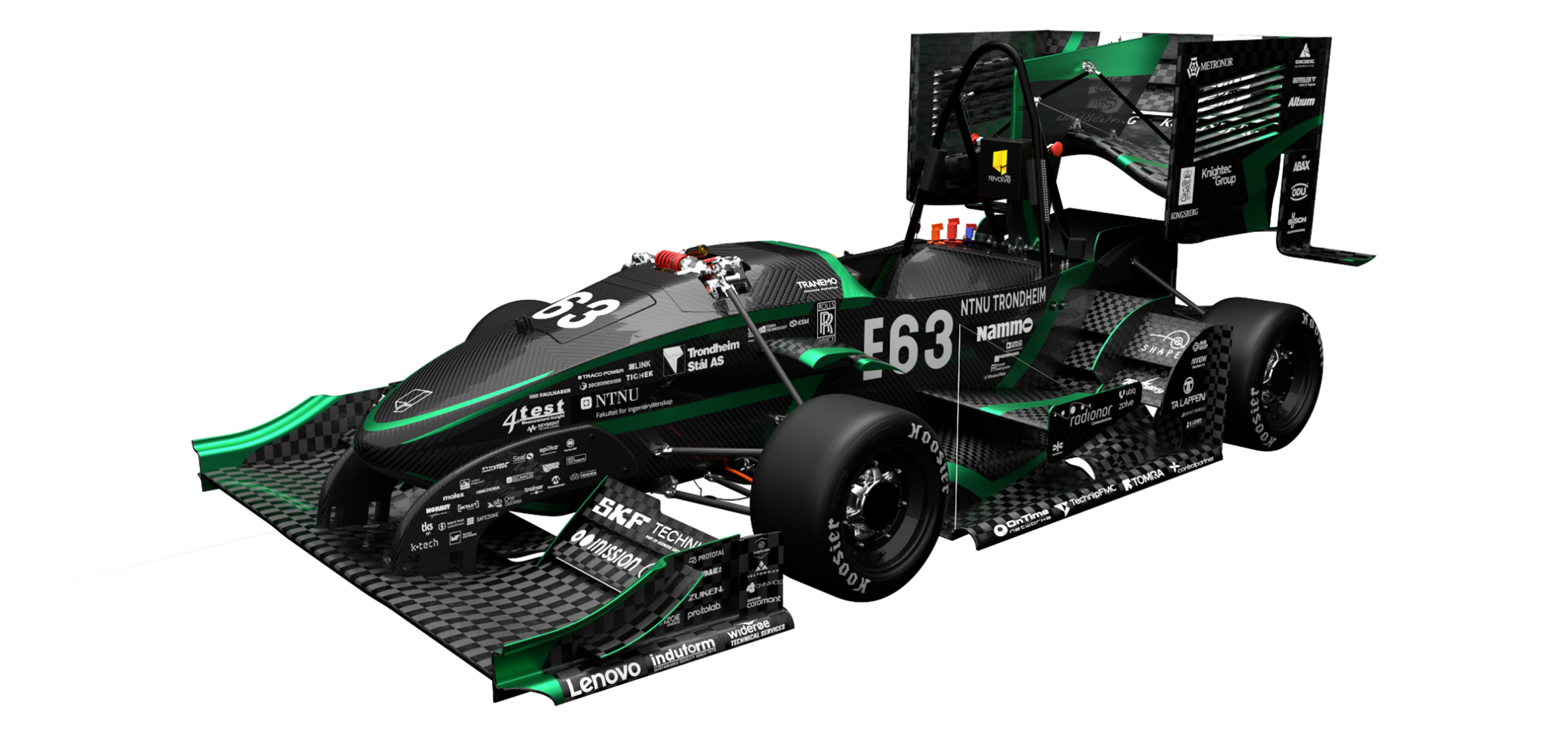
Revolve NTNU was founded in 2010. We developed two combustion cars, before switching to electric in 2014, and we had our first 4WD electric car in 2016. In the years 2017-2021 we made both an autonomously and a manually driven car, before we evolved into making a hybrid capable of doing both in 2022. This year we are presenting our fifth EV/DV-merged car, with further improved autonomous capabilities, new accumulator, inverter and improved aerodynamics.
Engineering Design Priorities:
Overall Vehicle Concept
Autonomous System
Accumulator
Inverter
Aerodynamics
Sensors
Car Specifications
General
| Frame Construction | CFRP Monoqoque |
|---|---|
| Material | Hexcel Satin weave, ALHC 10-20 mm |
| Overall L | 2862 mm |
| Overall W | 1495 mm |
| Overall H | 1082 mm |
| Wheelbase | 1530 mm |
| Track (Fr) | 1220 mm |
| Track (Rr) | 1220 mm |
| Weight with 68kg driver (Fr) | 114 kg |
| Weight with 68kg driver (Rr) | 114 kg |
| Suspension | Double unequal length A-Arm. Push rod actuated roll heave decoupled. |
| Tyres (Fr / Rr) | Hoosier R20 16.0 x 7.5 - 10 |
| Wheels (Fr / Rr) | 1-piece self-developed 10x8" CFRP Rims |
| Drive Type | 1.5 stage planetary gearbox |
| Differential | - |
| Cooling | Two rear mounted radiators, each with a 24v EBM Papst fan (4114N 2H6PU) |
| Brake System | 4 disk system, self developed rotors |
| Electronics | Fully custom PCBs, distributed CAN-FD architecture, in-house developed Telemetry System |
Powertrain
| Number of Motors | 4 |
|---|---|
| Motor Location | Front Right, Front Left, |
| Max Motor Power (per motor) | 35.4 kW |
| Motor Type | IPMSM |
| Max Motor RPM (highest) | 20000 rpm |
| Motor Controller | Self developed, SiCMOSFET based |
| Max System Voltage | 587 V |
| Electrode Materials | LiCoO2 |
| Combined Accumulator Capacity | 6.8 kWh |
| Transmission Ratio (Primary) | 13.38 : 1 |
| Transmission Ratio (Secondary) | - |
Driverless System
| Processing unit(s) | Supermicro MBD-X13SRN-H-O, Jetson Orin NX 8 GB |
|---|---|
| Floating Point Operations Per Second of all processing units that are working for the DV system | 19000 GigaFLOPS |
| Power consumption of all processing units that are working for the DV system | 65 W |
| Camera(s) | 2x StereoLabs ZED X One GS, 80 deg FOV |
| Radar sensor(s) | - |
| Lidar sensor(s) | RoboSense EMX, 192 channels, 120 deg FOV |
| Other sensors | - |
| Highlights of the DV system | LiDAR-camera fusion for precise localization & classification. Navigation pairs non-GNSS EKF with graph SLAM. MPC and TV ensure vehicle control. |
2025
Info
194x
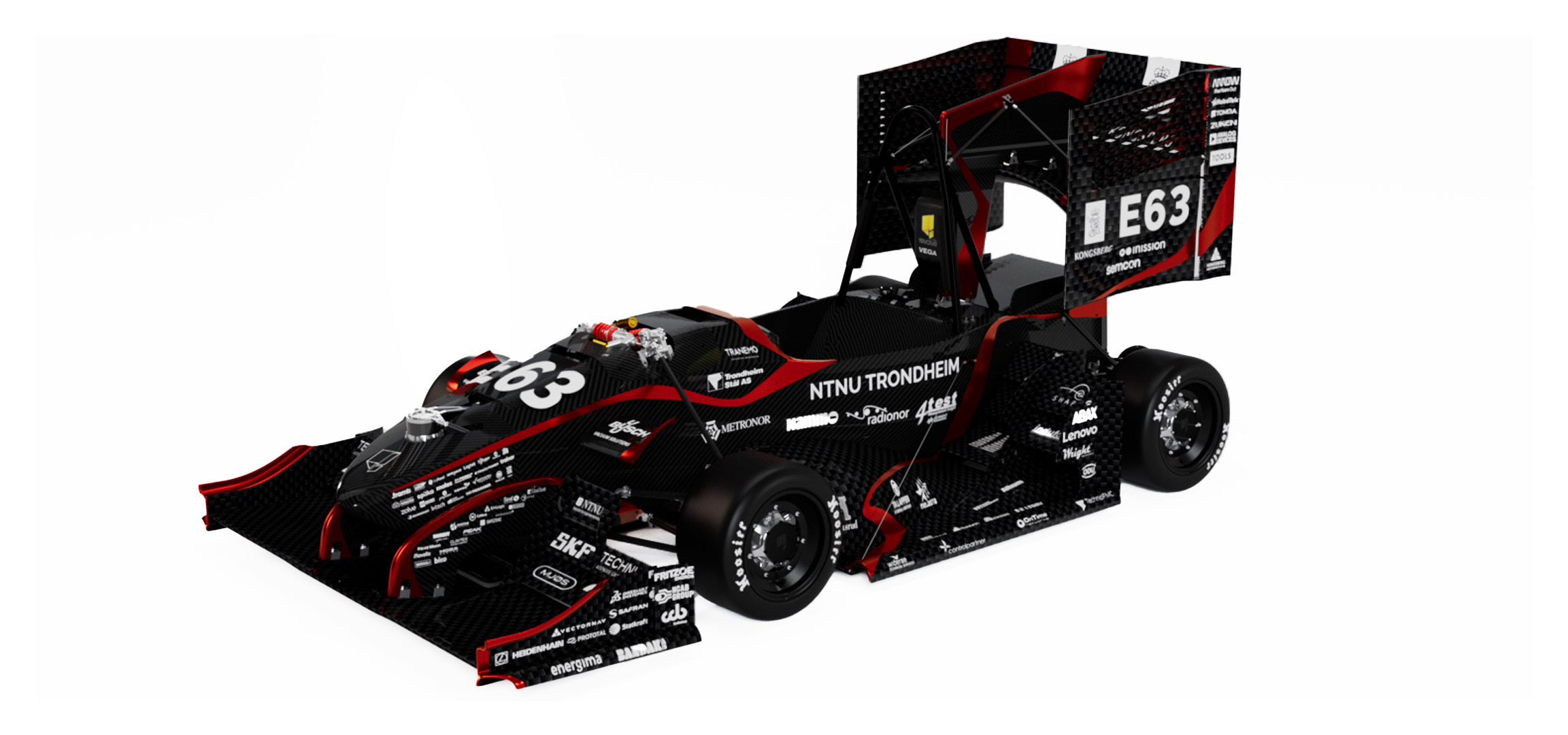
Revolve NTNU was founded in 2010. We developed two combustion cars, before switching to electric in 2014, and we had our first 4WD electric car in 2016. In the years 2017-2021 we made both an autonomously and a manually driven car, before we evolved into making a hybrid capable of doing both in 2022. This year we are presenting our fourth combi-car, with further improved autonomous capabilities, new accumulator, gearbox and monocoque with a focus on aerodynamics.
Engineering Design Priorities:
OverallConcept
Inverter
AutonomousSystem
GearBox
Aerodynamics
Sensors
Car Specifications
General
| Frame Construction | CFRP Sandwitch structure monocoque |
|---|---|
| Material | M46J 2x2 twill & M40J UD w/DT120, Rohacell & ALHC core, CRFP inserts |
| Overall L | 2852 mm |
| Overall W | 1494 mm |
| Overall H | 1182 mm |
| Wheelbase | 1530 mm |
| Track (Fr) | 1220 mm |
| Track (Rr) | 1220 mm |
| Weight with 68kg driver (Fr) | 114 kg |
| Weight with 68kg driver (Rr) | 115 kg |
| Suspension | Double unequal length A-Arm. Push rod actuated roll heave decoupled. |
| Tyres (Fr / Rr) | Hoosier R20 16.0 x 7.5 - 10 |
| Wheels (Fr / Rr) | 10x8 |
| Drive Type | Bevel Gear Spiral Toothed Module 1, Num |
| Differential | Direct drive |
| Cooling | Two rear mounted radiators, each with a 24v EBM Papst fan (4114N 2H6PU) |
| Brake System | 4 disk system, self developed rotos with SLM printed calipers |
| Electronics | 35 self-developed PCAs |
Powertrain
| Number of Motors | 4 |
|---|---|
| Motor Location | Outboard |
| Max Motor Power (per motor) | 35kW kW |
| Motor Type | 3-phase IPMSM |
| Max Motor RPM (highest) | 20 000 rpm |
| Motor Controller | Self developed, SiCMOSFET based |
| Max System Voltage | 600V V |
| Electrode Materials | LiCoO2 |
| Combined Accumulator Capacity | 6.8kWh kWh |
| Transmission Ratio (Primary) | 13.38:1 : 1 |
| Transmission Ratio (Secondary) | na : 1 |
Driverless System
| Processing unit(s) | X13SRN-H, Embedded 3.5 |
|---|---|
| Floating Point Operations Per Second of all processing units that are working for the DV system | 55.3 GigaFLOPS |
| Power consumption of all processing units that are working for the DV system | 103 W |
| Camera(s) | na |
| Radar sensor(s) | na |
| Lidar sensor(s) | 1 x OUSTER OS1-32 gradient, 45deg vertical field of view, gradient channel distribution |
| Other sensors | na |
| Highlights of the DV system | The DV system employs single LiDAR cone detection,features a graph based SLAM and uses GNSS independent state estimation. The planning algorithms are tailored to each event, and the autonomous control module uses torque vectoring control, allowing for higher performance. |
2024
Info
164x
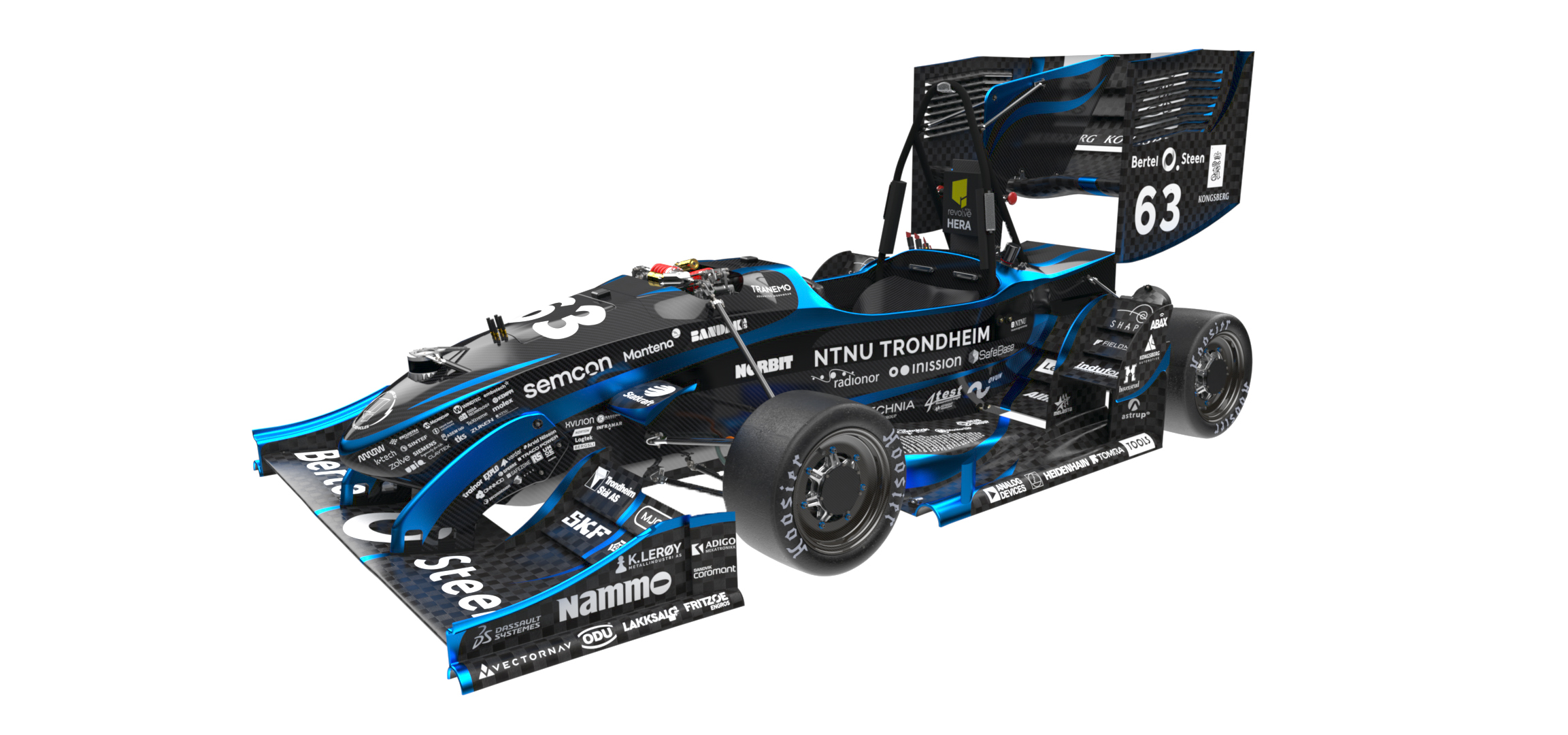
Revolve NTNU was founded in 2010. Since then we have made a total of 12 cars, where the two first was combustion, before we switched to electric cars in 2014. In 2016 we made our first 4WD electric car. In the years 2017-2021 we made both an autonomously and a manually driven car, before we evolved into making a hybrid capable of doing both in 2022. This year we have our third combi-car, with further improved autonomous driving, increased reliability and developed a new inverter.
Engineering Design Priorities:
Inverter
Monocoque
Accumulator
Autonomous System
Sensor System
Torque Vectoring
Car Specifications
General
| Frame Construction | CFRP Sandwitch structure monocoque |
|---|---|
| Material | M46J 2x2 twill & M40J UD w/DT120, Rohacell & ALHC core, CRFP inserts |
| Overall L | 2849 mm |
| Overall W | 1493 mm |
| Overall H | 1179 mm |
| Wheelbase | 1530 mm |
| Track (Fr) | 1220 mm |
| Track (Rr) | 1220 mm |
| Weight with 68kg driver (Fr) | 112 kg |
| Weight with 68kg driver (Rr) | 120 kg |
| Suspension | SLA, upper A-Arm push rod actuated, roll/heave decoupled spring and damper |
| Tyres (Fr / Rr) | 16.0 x 7.5 - 10, Hoosier, R20 |
| Wheels (Fr / Rr) | 1pcs 10 |
| Drive Type | Bevel Gear Spiral Toothed Module 1, Numb |
| Differential | 90 degree bevel gearbox with aluminium housing and internal preload adjustments |
| Cooling | Two rear mounted radiators, each with a 24V spal fan (VA31-B101-46A) |
| Brake System | 4-Disk system, self developed Ø190mm disc, adjustable brake balance, bought calipers |
| Electronics | 35 self-developed PCAs |
Powertrain
| Number of Motors | 4 |
|---|---|
| Motor Location | Hub mounted, all wheels |
| Max Motor Power (per motor) | 35.4 kW x 4 kW |
| Motor Type | Fischer 3-phase IPMSM x4 |
| Max Motor RPM (highest) | 20000 RPM rpm |
| Motor Controller | Self developed, SiCMOSFET based |
| Max System Voltage | 600 V |
| Electrode Materials | Lithium-Ion LCO |
| Combined Accumulator Capacity | 7.3kWh kWh |
| Transmission Ratio (Primary) | 13.38: : 1 |
| Transmission Ratio (Secondary) | n/a : 1 |
Driverless System
| Processing unit(s) | Advantech MIO-5377R (i7-1370P), Zynq Ultrascale + ZU4EV |
|---|---|
| Floating Point Operations Per Second of all processing units that are working for the DV system | 55.3 GigaFLOPS |
| Power consumption of all processing units that are working for the DV system | 103 W |
| Camera(s) | n/a |
| Radar sensor(s) | n/a |
| Lidar sensor(s) | 1 x OUSTER OS1-32 gradient, 45deg vertical field of view, gradient channel distribution |
| Other sensors | n/a |
| Highlights of the DV system | The DV system employs single LiDAR cone detection,features a graph based SLAM and uses GNSS independent state estimation. The planning algorithms are tailored to each event, and the autonomous control module uses torque vectoring control, allowing for higher performance. |
2023
Info
127x
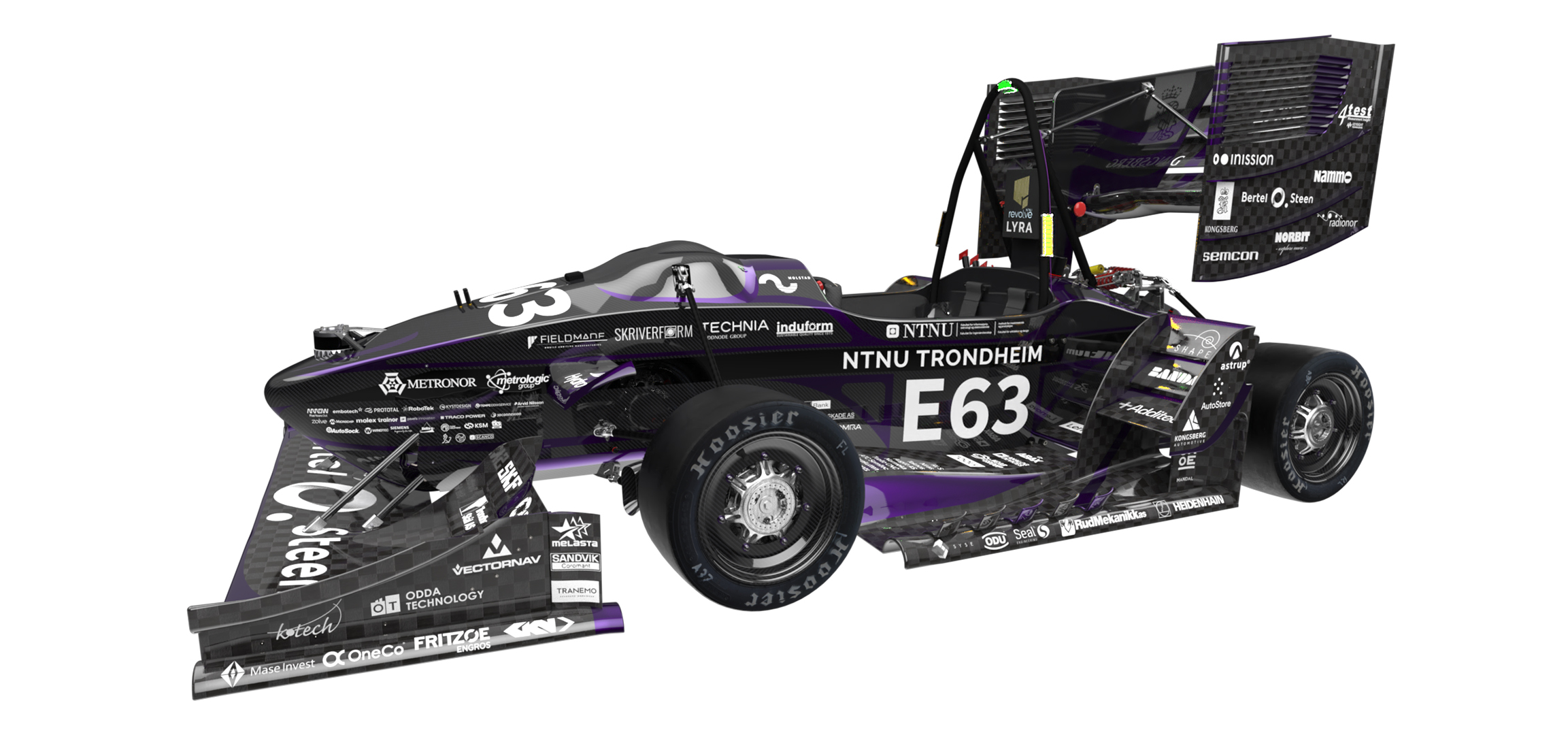
Revolve NTNU was founded in 2010. We developed two combustion cars, before switching to electric in 2014, and we had our first 4WD electric car in 2016. Since 2017 we have been developing both an autonomously and a manually driven race car each year. Last year the first combi-car with both manual and autonomous driving capabilities was made. This year, we are presenting our 11th car, with improved autonomous capabilities, new in-house developed systems and a focus on data and data-driven design.
Engineering Design Priorities:
Inverter
Steering rack
Sensor system
Autonomous integration
Accumualtor (PCM)
Torque vectoring
Car Specifications
General
| Frame Construction | CFRP two-piece monocoque |
|---|---|
| Material | M46J(HM 6k) 2x2 twill DT120, UD 513 w/ HR40, Foam & ALUHC core, CRFP and Alu insert |
| Overall L | 2875 mm |
| Overall W | 1482 mm |
| Overall H | 1193 mm |
| Wheelbase | 1530 mm |
| Track (Fr) | 1220 mm |
| Track (Rr) | 1220 mm |
| Weight with 68kg driver (Fr) | 114 kg |
| Weight with 68kg driver (Rr) | 113 kg |
| Suspension | SLA, upper A-Arm push rod actuated, roll/heave decupled spring and damper |
| Tyres (Fr / Rr) | 16.0 x 7.5 - 10, Hoosier, R20 |
| Wheels (Fr / Rr) | 1pcs 10 |
| Drive Type | Hub mounted compound planetary gearbox |
| Differential | N/A |
| Cooling | Water cooled motors, inverters and PU, dual cycle. Rear mounted radiators with outlet ducts. |
| Brake System | 4-Disk, Formula motcaliper at each wheel in front, one SRAM at each wheel at the rear |
| Electronics | All PCB's except IMD, telemetry and PU are self developed. |
Powertrain
| Number of Motors | 4 |
|---|---|
| Motor Location | Hub mounted, all wheels |
| Max Motor Power (per motor) | 35.3 kW per motor kW |
| Motor Type | Fischer TI085-052-070-04B7S-07S05BE2 |
| Max Motor RPM (highest) | All; 20000 rpm |
| Motor Controller | Self developed, SiCMOSFET based |
| Max System Voltage | 600 V |
| Electrode Materials | Lithium-Ion LCO |
| Combined Accumulator Capacity | 6.98 kWh kWh |
| Transmission Ratio (Primary) | 13.38: : 1 |
| Transmission Ratio (Secondary) | N/A : 1 |
Driverless System
| Processing unit(s) | Mio-5393 (Intel Xeon) |
|---|---|
| Floating Point Operations Per Second of all processing units that are working for the DV system | 268.8 GigaFLOPS |
| Power consumption of all processing units that are working for the DV system | 103 W |
| Camera(s) | N/A |
| Radar sensor(s) | N/A |
| Lidar sensor(s) | 1x, 120m, 45°, Ouster OS1-32 |
| Other sensors | N/A |
| Highlights of the DV system | The DV system employs single LiDAR cone detection and it features a graph based SLAM. It employs planning algorithms tailored for different events, and this year the autonomous control module has been adapted to use torque vectoring control, allowing for higher performance. |
2022
Info
170x
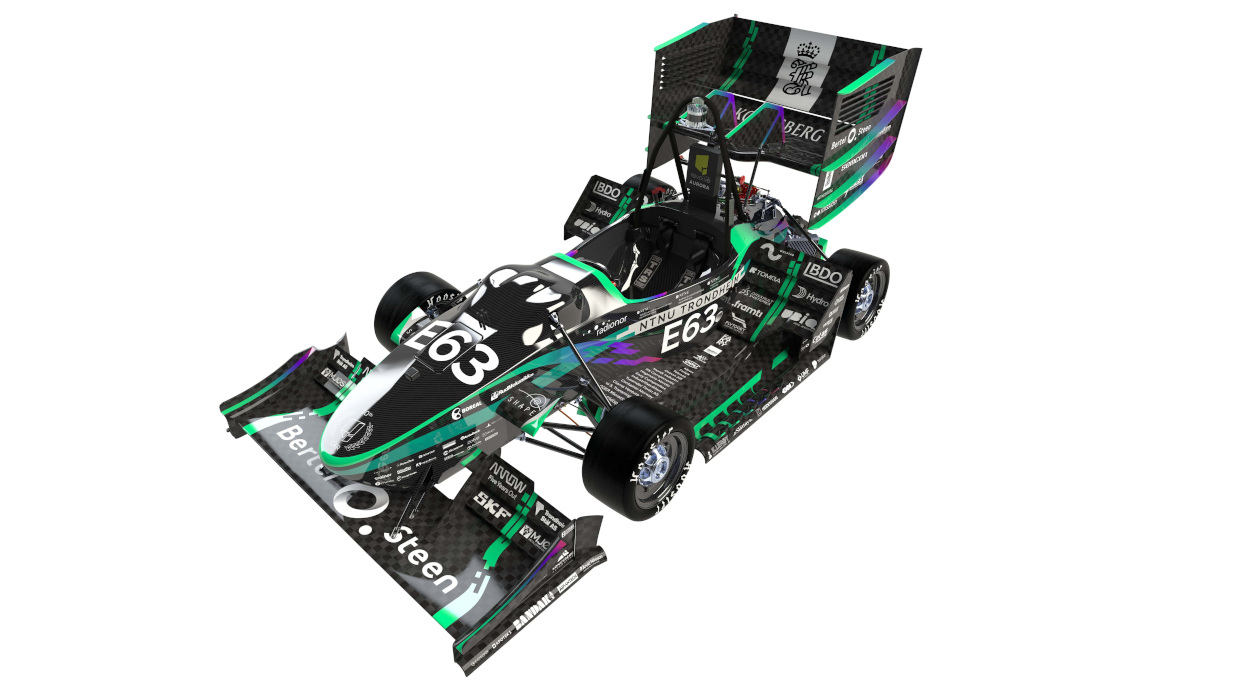
Revolve NTNU was founded in 2010. We developed two combustion cars, before switching to electric in 2014, and we had our first 4WD electric car in 2016. Since 2017 we have been developing both an autonomously and a manually driven race car each year. This year, we are producing our 10th car: AURORA, named as an homage to our first car, BOREALIS. This is a new era of Revolve NTNU, and we are excited to see how our technology will evolve in the future.
Engineering Design Priorities:
Dampers
VCU
Inverter
Brake system
Monocoque
Autonomous Pipeline
Car Specifications
General
| Frame Construction | CFRP two-piece monocoque |
|---|---|
| Material | M46J(HM 6k) 2x2 twill DT120, UD 513 w/ HR40, Foam & ALUHC core, CRFP and Alu insert |
| Overall L | 2875 mm |
| Overall W | 1482 mm |
| Overall H | 1193 mm |
| Wheelbase | 1530 mm |
| Track (Fr) | 1220 mm |
| Track (Rr) | 1220 mm |
| Weight with 68kg driver (Fr) | 115 kg |
| Weight with 68kg driver (Rr) | 115 kg |
| Suspension | SLA, upper A-Arm push rod actuated, roll/heave decupled spring and damper |
| Tyres (Fr / Rr) | Hoosier 16.0 x 7.5-10 |
| Wheels (Fr / Rr) | 1pcs 10 |
| Drive Type | Hub mounted compound planetary gearbox |
| Differential | N/A |
| Cooling | Water cooled motors, inverters and PU, dual cycle. Rear mounted radiators with outlet ducts. |
| Brake System | 4-Disk system, 2 calipers at each wheel in front, one at each wheel at the rear |
| Electronics | All PCB's except IMD, telemetry and PU are self developed. |
Powertrain
| Number of Motors | 4 |
|---|---|
| Motor Location | Hub mounted, all wheels |
| Max Motor Power (per motor) | 35.3 kW per motor kW |
| Motor Type | Permanent magnet synchronous motor |
| Max Motor RPM (highest) | 20.000 rpm |
| Motor Controller | Self-developed, SiCMOS technology |
| Max System Voltage | 600V V |
| Electrode Materials | Lithium-Ion LCO |
| Combined Accumulator Capacity | 6.98 kWh kWh |
| Transmission Ratio (Primary) | 13.38:1 : 1 |
| Transmission Ratio (Secondary) | N/A : 1 |
Driverless System
| Processing unit(s) | Mio-5393 (Intel Xeon) |
|---|---|
| Floating Point Operations Per Second of all processing units that are working for the DV system | 268.8 GFLO GigaFLOPS |
| Power consumption of all processing units that are working for the DV system | 103 W W |
| Camera(s) | N/A |
| Radar sensor(s) | N/A |
| Lidar sensor(s) | 1x, 120m, 45°, Ouster OS1-32 |
| Other sensors | N/A |
| Highlights of the DV system | We are running our ROS-based pipeline using a single LiDAR with an INS with RTK and a rugged embedded system, utilizing graph-SLAM for mapping and localization. Different control implementations are used for different events. In skidpad, a coupled MPC is used. For acceleration, launch control is run on a custom PCB. |
2021
Info
105x
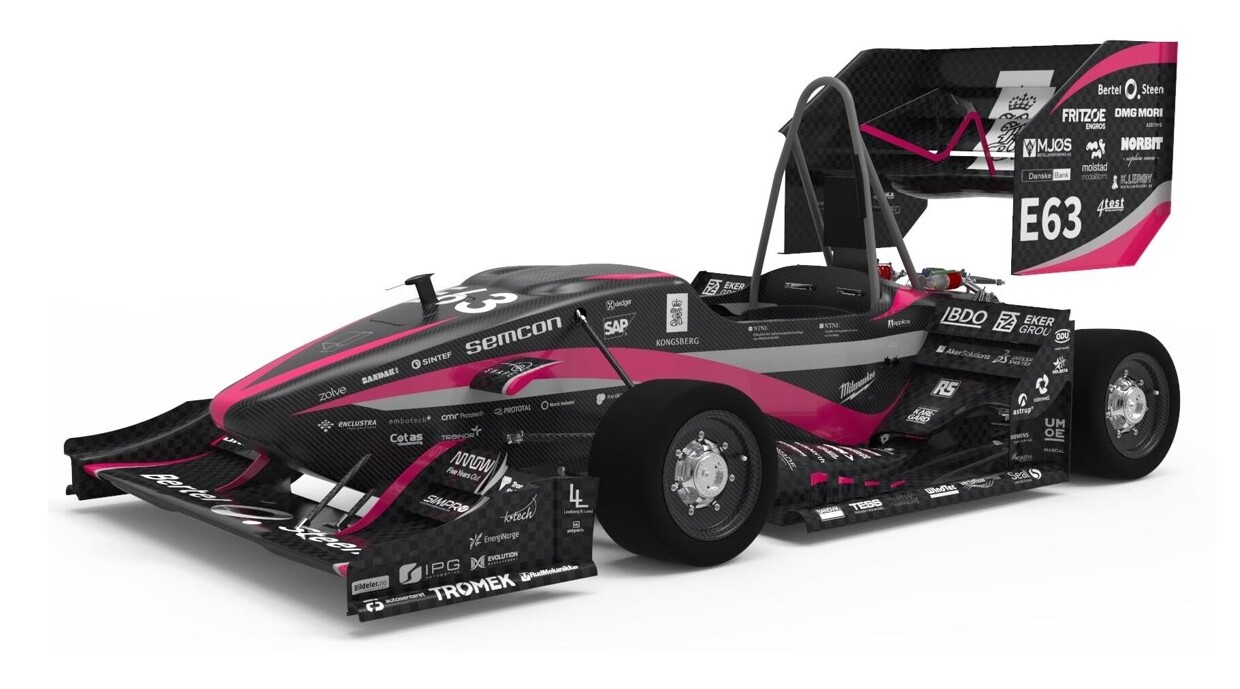
Revolve NTNU was founded in 2010. We developed two combustion cars, before switching to electric in 2014 and had our first 4WD electric car in 2016. Since 2018 we have been developing both an autonomous and an electric race car each year. Last year’s vehicle was unfortunately never completed, so we are really looking forward to showing you everything we have been working on over the past two years. See you at FSG.
Car Specifications
General
| Frame Construction | CFRP two-piece monocoque |
|---|---|
| Material | M46J(HM 6k) 2x2 twill DT120, UD 513 w/ HR40, Foam & ALUHC core, CRFP and Alu insert |
| Overall L | 2886 mm |
| Overall W | 1440 mm |
| Overall H | 1158 mm |
| Wheelbase | 1530 mm |
| Track (Fr) | 1220 mm |
| Track (Rr) | 1220 mm |
| Weight with 68kg driver (Fr) | 111 kg |
| Weight with 68kg driver (Rr) | 116 kg |
| Suspension | SLA, upper whisbone push rod actuated, T-bar ARB w/ progressive 3rd spring |
| Tyres (Fr / Rr) | Hoosier 16.0 x 7.5-10 |
| Wheels (Fr / Rr) | 10'' x 7'', CFRP shells, 56.2 mm offset |
| Drive Type | Hub mounted compound planetary gearbox |
| Differential | N/A |
| Cooling | Water cooled motors and inverters, dual cycle. Rear mounted radiators with outlet ducts. |
| Brake System | 4-Disk system, 2 calipers at ech wheel in front, one at each wheel at the rear |
| Electronics | All PCB's except IMD and telemetry and are self developed. |
Powertrain
| Number of Motors | 4 |
|---|---|
| Motor Location | Hub mounted, all wheels |
| Max Motor Power (per motor) | 35.3 kW per motor kW |
| Motor Type | Permanent magnet synchronous motor |
| Max Motor RPM (highest) | 20000 per motor rpm |
| Motor Controller | Self-developed, SiCMOS technology |
| Max System Voltage | 600V V |
| Electrode Materials | LiCoO2 |
| Combined Accumulator Capacity | 6.8 kWh kWh |
| Transmission Ratio (Primary) | 13.41:1 : 1 |
| Transmission Ratio (Secondary) | N/A : 1 |
2019
Info
61x
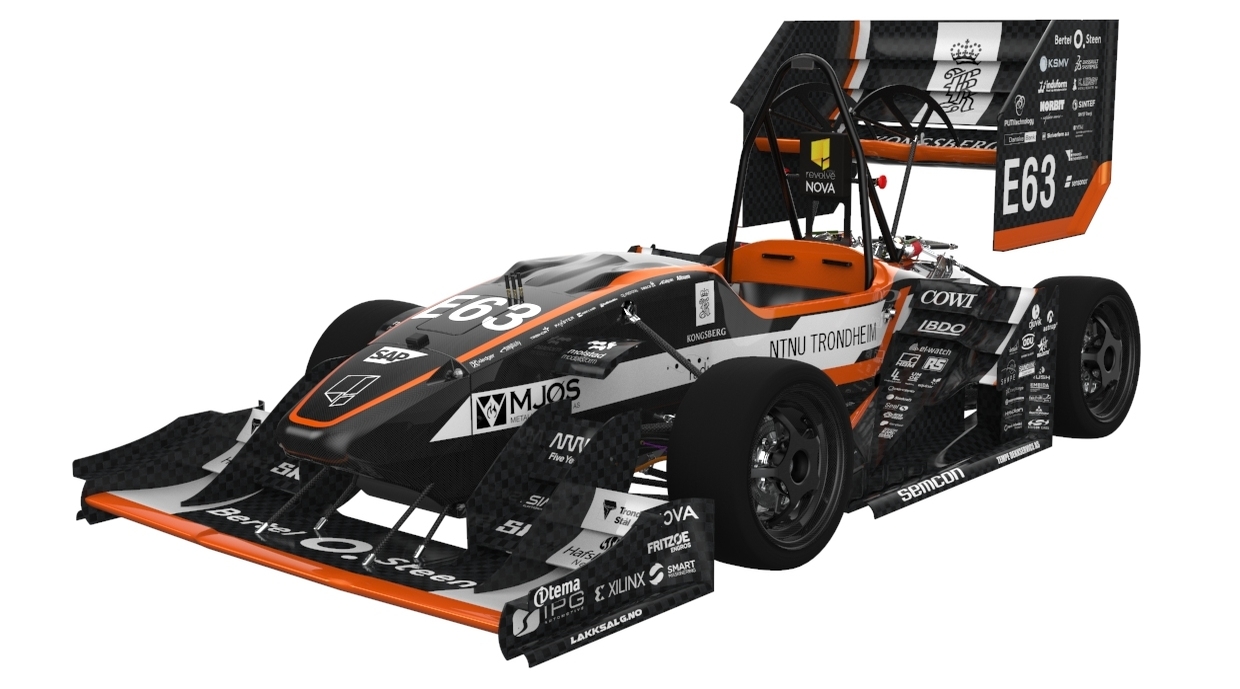
Revolve NTNU was founded in 2010. Developed two combustion cars, before switching to electric in 2014 and had our first 4wd electric car in 2016. In 2018 we joined the new challenge of developing an autonomous racecar and still develop a new electric racecar, all in 8 months. Last year the team had the best competition result in the history both for the electric and driverless car.We are looking forward to showing you what we have made this year. See you at FSG.
Engineering Design Priorities:
Powertrain
Vehicle dynamics
Design approach
Aerodynamics
Data-acquisition
Structural design
Car Specifications
General
| Frame Construction | CFRP two-piece monocoque |
|---|---|
| Material | M46J(HM 6k) 2x2 twill DT120, UD 513 w/ HR40, Foam & ALUHC core, CRFP and Alu insert |
| Overall L | 2890 mm |
| Overall W | 1445 mm |
| Overall H | 1192 mm |
| Wheelbase | 1530 mm |
| Track (Fr) | 1200 mm |
| Track (Rr) | 1200 mm |
| Weight with 68kg driver (Fr) | 112 kg |
| Weight with 68kg driver (Rr) | 119 kg |
| Suspension | SLA, upper wishbone push rod actuated, T-bar ARB w/ progressive 3rd spring |
| Tyres (Fr / Rr) | 205x34 R13, Continental C19 slick/wet |
| Wheels (Fr / Rr) | 7x13, 36 mm offset. Two piece CFRP/Al rims |
| Drive Type | Hub mounted compound planetary gearbox |
| Differential | n/a |
| Cooling | Water cooled motors and inverters, dual cycle. Rear mounted radiators with outlet ducts. |
| Brake System | Self developed rotors and AM calipers, rear bike calipers. adjustable brake balance |
| Electronics | All PCB's except IMD and telemetry and are self developed. |
Powertrain
| Number of Motors | 4 |
|---|---|
| Motor Location | Hub mounted all wheels |
| Max Motor Power (per motor) | 35.3 kW per motor kW |
| Motor Type | Permanent magnet synchronous motor |
| Max Motor RPM (highest) | 20000 rpm |
| Motor Controller | Self-developed, SiCMOS technology |
| Max System Voltage | 600 V |
| Electrode Materials | LiCoO2 |
| Combined Accumulator Capacity | 6.8 kWh kWh |
| Transmission Ratio (Primary) | 14.41:1 : 1 |
| Transmission Ratio (Secondary) | n/a : 1 |
2018
Info
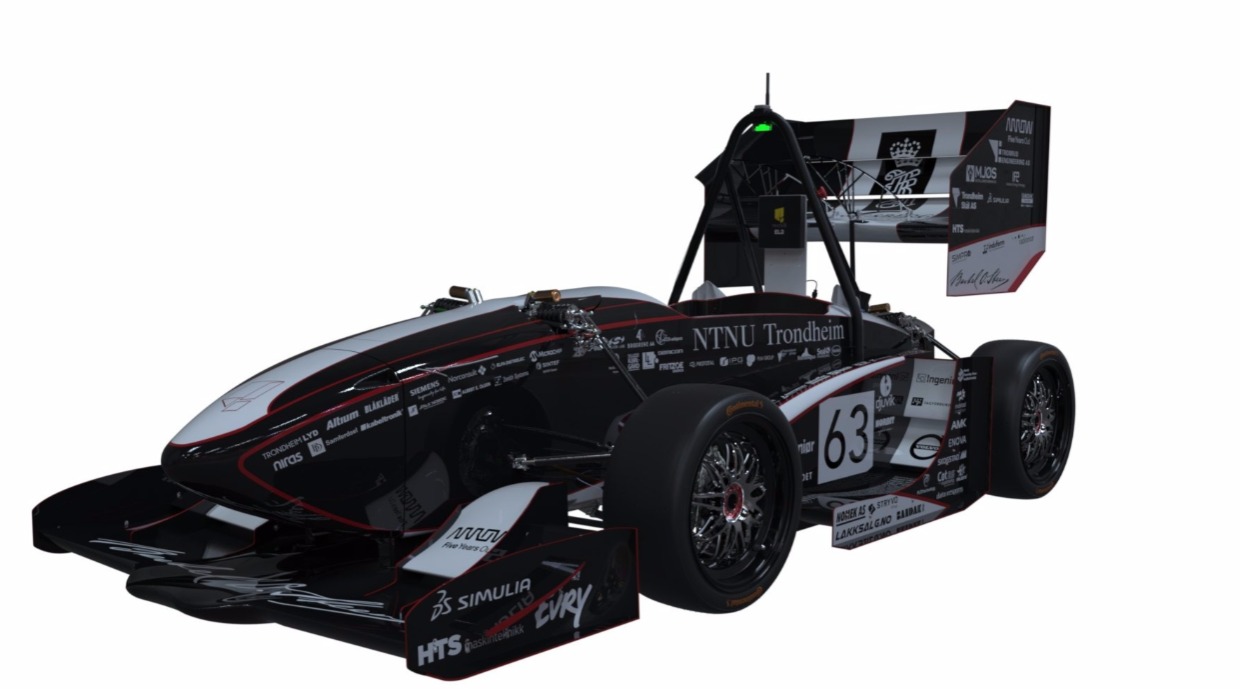
90x
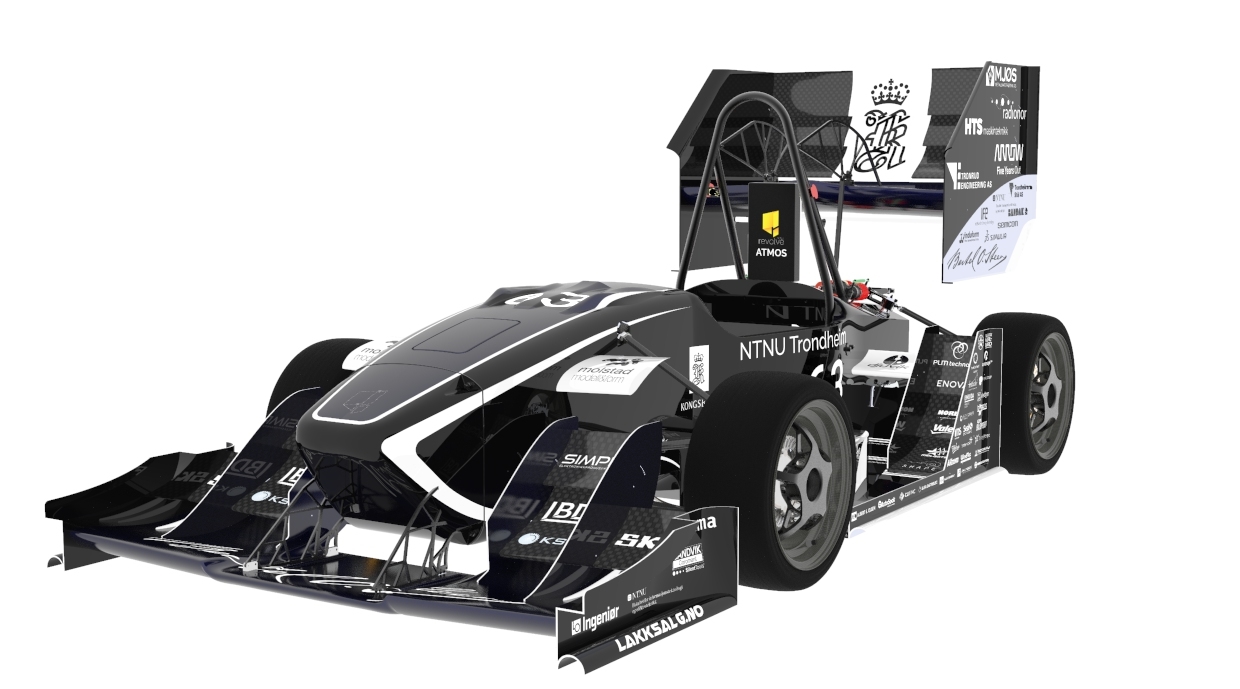
Revolve NTNU is a team from Norway, consisting of 70 students from all years of study, competing in both the EV and DV class for the first time this year. For ATMOS, our EV car, we have focused on reliable electronics, increased downforce and improved data analysis. We have also added a heave spring, to gain more control of one additional grade of freedom. See you at FSG!
Engineering Design Priorities:
Downforce
Traction
Validation
Data-acquisition
Reliability
Testing
Car Specifications
General
| Frame Construction | CFRP two-piece monocoque |
|---|---|
| Material | IM 2x2 twill prepreg and HM UD prepreg with Foam & ALUHC core sandwich panel |
| Overall L | 2870 mm |
| Overall W | 1400 mm |
| Overall H | 1185 mm |
| Wheelbase | 1530 mm |
| Track (Fr) | 1200 mm |
| Track (Rr) | 1180 mm |
| Weight with 68kg driver (Fr) | 120 kg |
| Weight with 68kg driver (Rr) | 127 kg |
| Suspension | SLA, upper wishbone push rod actuated, T-bar ARB w/ 3rd spring |
| Tyres (Fr / Rr) | 205x34 R13 - Continental C17, front and rear |
| Wheels (Fr / Rr) | 7x13, 36mm offset, two pc CFRP/Al Rim, front and rear |
| Drive Type | Hub mounted compound planetary gearbox |
| Differential | N/A |
| Cooling | Dual cycle, mounted inside sidepod w/ fans and ducting. |
| Brake System | 4-Disk system, self developed rotors, self developed calipers, adjustable brake balance |
| Electronics | All PCB's except IMD, telemetry and the inverter are self developed. |
Powertrain
| Number of Motors | 4 |
|---|---|
| Motor Location | Hub mounted |
| Max Motor Power (per motor) | 37 kW kW |
| Motor Type | AMK DD5-14-10-POW-18600-B5 |
| Max Motor RPM (highest) | 20 000 rpm |
| Motor Controller | AMK KW26-S5-FSE-4Q |
| Max System Voltage | 588 V |
| Electrode Materials | LiCoO2 |
| Combined Accumulator Capacity | 6.8 kWh kWh |
| Transmission Ratio (Primary) | 1:15.58 : 1 |
| Transmission Ratio (Secondary) | N/A : 1 |
2017
Info
32x
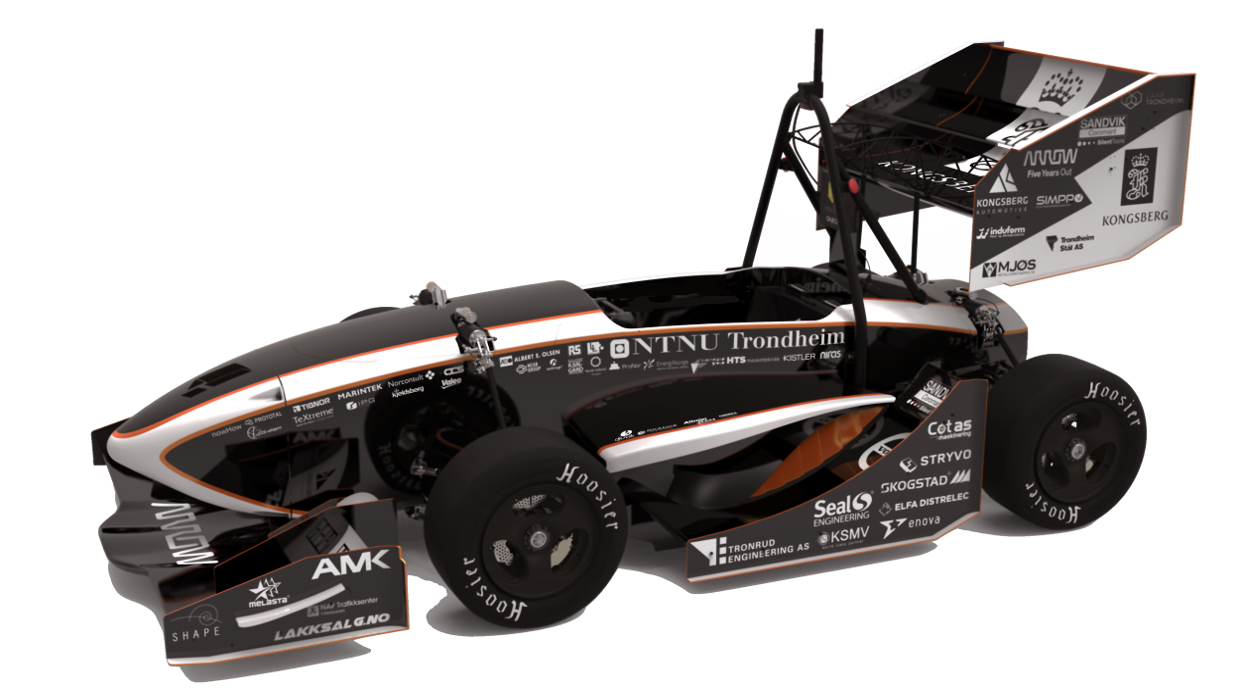
RevolveNTNU’s long-term goal has always been to develop every part of its race car in house and in 2017 they are one step closer to achieving this. Their in-house developed inverters and ongoing motor development project are representative of this. Now there are only a few components on the vehicle that are produced by external companies and they are headed towards being completely independent in terms of production. The team is self-sustaining during events and production.
Engineering Design Priorities:
Performance
Reliable
Precise
Educational
Professional
Sustainable
Car Specifications
General
| Frame Construction | CFRP monocoque. |
|---|---|
| Material | CFRP, AlHC and Rohacell sandwich construction |
| Overall L | 2907 mm |
| Overall W | 1400 mm |
| Overall H | 1180 mm |
| Wheelbase | 1530 mm |
| Track (Fr) | 1200 mm |
| Track (Rr) | 1180 mm |
| Weight with 68kg driver (Fr) | 122 kg |
| Weight with 68kg driver (Rr) | 121 kg |
| Suspension | Double unequal length a-arm. Push rod actuated horizontally oriented spring and damper. |
| Tyres (Fr / Rr) | 205/470 R13 Continental C17 front and rear |
| Wheels (Fr / Rr) | 7.0x13", 2pc Al/CFRP rim front and rear. |
| Drive Type | Hub mounted compound planetary gear box |
| Differential | N/A |
| Cooling | Dual cycle water cooling on motor and controller. Air cooled Accumulator |
| Brake System | Self developed discs(186) and brake balance adjuster. ISR front and rear calipers. |
| Electronics | Most electronics student made, including BMS, Telemetry unit, ADC's and Dashboard |
Powertrain
| Number of Motors | 4 |
|---|---|
| Motor Location | FR,FL.RR,RL |
| Max Motor Power (per motor) | 4x37kW kW |
| Motor Type | 4 x AMK/DD5-14-10-POW |
| Max Motor RPM (highest) | 20000 rpm |
| Motor Controller | AMK /KW26-S5-FSE-4Q |
| Max System Voltage | 588 V |
| Electrode Materials | LiCoO2 |
| Combined Accumulator Capacity | 6.79kWh kWh |
| Transmission Ratio (Primary) | 15.48:1 : 1 |
| Transmission Ratio (Secondary) | N/A : 1 |
2016
Info
11x
By creating the first four-wheel driven electric car in Scandinavia the Revolve NTNU team from Trondheim Norway continue the trend of creating increasingly technical cars each year. The team has completely redesigned the entire car from previous years, resulting in a new chassis, new aerodynamics, all new battery setup and more high tech and advanced electronics than ever before. The team consists of 55 students from different fields of engineering of the university.
Engineering Design Priorities:
Implemented 4WD
Low weight
Student design electronic
Testing time
Car Specifications
General
| Frame Construction | CFRP Monocoque |
|---|---|
| Material | Tencate E745 and a combination of foam and aluminum honeycomb and foam center. |
| Overall L | 2907 mm |
| Overall W | 1413 mm |
| Overall H | 1305 mm |
| Wheelbase | 1530 mm |
| Track (Fr) | 1200 mm |
| Track (Rr) | 1170 mm |
| Weight with 68kg driver (Fr) | 114 kg |
| Weight with 68kg driver (Rr) | 129 kg |
| Suspension | Uneven length double a-arm, push-rod actuated suspension. |
| Tyres (Fr / Rr) | 18 x 7.5 - 10, R25B Hoosier / 18 x 7.5 - 10, R25B Hoosier |
| Wheels (Fr / Rr) | 10 x 7 Two piece CFRP rim |
| Drive Type | Hub mounted compound planetary gearbox |
| Differential | Electronic differential utilizing toque vectoring. |
| Cooling | Water cooled motors and inverter. Air cooled accumlator. |
| Brake System | Self developed brakedisks, ISR 22-048, 4x25mm capliper and Tilton 77 series pistons. |
| Electronics | Fully self developed electronics. |
Powertrain
| Number of Motors | 4 |
|---|---|
| Motor Location | All wheel drive |
| Max Motor Power (per motor) | 37kW kW |
| Motor Type | AMK / DD5-14-10-POW |
| Max Motor RPM (highest) | 20 000 rpm |
| Motor Controller | AMK / KW26-S5-FSE-4Q |
| Max System Voltage | 600V V |
| Electrode Materials | LiCoO2 |
| Combined Accumulator Capacity | 6.98kWh kWh |
| Transmission Ratio (Primary) | 15.46:1 : 1 |
| Transmission Ratio (Secondary) | n/a : 1 |
2014
Info
32x
The car is developed from scratch, featuring the team´s first ever monocoque and electric power train. Weight reduction has been a large focus, reducing the weight with 70 kg compared to the 2014 car. Unsprung mass is also greatly reduced by 3D-printing uprights and titanium and developing 10 inch CFRP rims. All electronics are self developed, including the battery package which offers 7,45 kWh at just 46 kg.
Engineering Design Priorities:
Weight reduction
Electric powertrain
Unsprung mass reduction
Downforce
Driveability
Electronics and data aqui
Car Specifications
General
| Frame Construction | Full monocoque |
|---|---|
| Material | CFRP |
| Overall L | 3095 mm |
| Overall W | 1416 mm |
| Overall H | 1220 mm |
| Wheelbase | 1600 mm |
| Track (Fr) | 1200 mm |
| Track (Rr) | 1170 mm |
| Weight with 68kg driver (Fr) | 114 kg |
| Weight with 68kg driver (Rr) | 135 kg |
| Suspension | Double unequal length A-arm with pull rod actuated spring and damper. |
| Tyres (Fr / Rr) | 6.0/18.0-10 LC0 Hoosier |
| Wheels (Fr / Rr) | 6.0/18.0-10 LC0 Hoosier |
| Drive Type | Two stage straight cut spur gear |
| Differential | Drexler limited slip differential Formula Student V.1 |
| Cooling | Motor and inverter liquid cooled. Radiator placed inside right sidepod. Accumulator pack air cooled. |
| Brake System | 4-Disk system, self developed rotors 188 mm D front and 182 mm D rear |
| Electronics | Self developed electronics, telemetry and data acquisition. Self developed analyze software and app. |
Powertrain
| Number of Motors | 1 |
|---|---|
| Motor Location | Rear center |
| Max Motor Power (per motor) | 100 kW kW |
| Motor Type | Enstroj EMRAX 228 High Voltage, Liquid cooled |
| Max Motor RPM (highest) | 5000 rpm |
| Motor Controller | Unitek Bamocar-D3-700-400 |
| Max System Voltage | 590 V |
| Electrode Materials | LiCoO2 |
| Combined Accumulator Capacity | 7,45 kWh kWh |
| Transmission Ratio (Primary) | 3.65:1 : 1 |
| Transmission Ratio (Secondary) | n/a : 1 |
FS past achievements due to World Ranking Data Base
| Date | Event | Teams | Rank | BP | CM | ED | SP | DV SP | AC | DV AC | AX | EN | EF | Pe | Total |
|---|---|---|---|---|---|---|---|---|---|---|---|---|---|---|---|
| 2026.08 | 80 |
3. |
1. |
6. |
9. |
3. |
8. |
16. |
5. |
17. |
4. |
12. |
0.00 |
782.77 |
|
| 2026.07 | 38 |
12. |
2. |
23. |
6. |
8. |
- |
9. |
- |
9. |
- |
- |
0.00 |
478.80 |
|
| 2026.07 | 52 |
10. |
1. |
21. |
4. |
13. |
- |
5. |
- |
3. |
- |
- |
0.00 |
485.83 |
|
| 2025.08 | 84 |
7. |
2. |
9. |
2. |
4. |
1. |
- |
2. |
38. |
14. |
2. |
0.00 |
701.29 |
|
| 2025.08 | 53 |
3. |
1. |
23. |
2. |
8. |
- |
8. |
- |
5. |
3. |
3. |
-20.00 |
865.06 |
|
| 2025.07 | 40 |
22. |
- |
2. |
5. |
10. |
- |
12. |
- |
13. |
- |
- |
0.00 |
409.60 |
|
| 2024.08 | 79 |
22. |
1. |
8. |
4. |
- |
- |
6. |
3. |
- |
- |
- |
0.00 |
405.90 |
|
| 2024.08 | 32 |
7. |
1. |
5. |
8. |
4. |
- |
2. |
- |
5. |
- |
- |
0.00 |
458.62 |
|
| 2024.07 | 31 |
1. |
4. |
6. |
1. |
9. |
- |
5. |
- |
1. |
3. |
1. |
0.00 |
865.67 |
|
| 2023.08 | 70 |
4. |
4. |
4. |
8. |
3. |
- |
6. |
- |
6. |
2. |
1. |
0.00 |
682.89 |
|
| 2023.08 | 31 |
9. |
6. |
20. |
13. |
2. |
- |
3. |
- |
1. |
- |
- |
0.00 |
480.25 |
|
| 2023.07 | 34 |
6. |
5. |
5. |
8. |
3. |
- |
7. |
- |
12. |
9. |
6. |
-10.00 |
541.90 |
|
| 2022.08 | 63 |
5. |
8. |
22. |
8. |
1. |
9. |
2. |
- |
4. |
- |
- |
0.00 |
480.13 |
|
| 2022.08 | 33 |
11. |
20. |
13. |
13. |
2. |
- |
- |
- |
- |
- |
- |
0.00 |
315.70 |
|
| 2022.07 | 21 |
8. |
7. |
8. |
3. |
- |
- |
- |
- |
- |
- |
- |
0.00 |
273.45 |
|
| 2021.08 | 38 |
21. |
10. |
13. |
10. |
1. |
- |
26. |
- |
23. |
- |
- |
0.00 |
345.78 |
|
| 2021.08 | 26 |
20. |
14. |
14. |
3. |
- |
- |
- |
- |
- |
- |
- |
-10.00 |
279.43 |
|
| 2019.08 | 38 |
10. |
9. |
8. |
1. |
2. |
- |
- |
- |
2. |
- |
- |
-25.00 |
438.41 |
|
| 2019.08 | 24 |
2. |
5. |
4. |
1. |
4. |
- |
- |
- |
2. |
2. |
2. |
0.00 |
828.10 |
|
| 2018.08 | 38 |
4. |
9. |
10. |
6. |
- |
- |
5. |
- |
2. |
3. |
14. |
0.00 |
763.20 |
|
| 2018.08 | 39 |
2. |
18. |
15. |
5. |
2. |
- |
9. |
- |
6. |
2. |
4. |
0.00 |
858.55 |
|
| 2018.08 | 19 |
12. |
3. |
13. |
5. |
4. |
- |
1. |
- |
- |
- |
- |
0.00 |
418.10 |
|
| 2017.08 | 30 |
14. |
18. |
11. |
13. |
7. |
- |
12. |
- |
10. |
- |
- |
0.00 |
414.80 |
|
| 2017.08 | 34 |
16. |
8. |
16. |
10. |
6. |
- |
- |
- |
14. |
- |
- |
-10.00 |
329.22 |
|
| 2016.08 | 37 |
16. |
17. |
9. |
5. |
9. |
- |
18. |
- |
17. |
- |
- |
0.00 |
365.72 |
|
| 2016.08 | 18 |
6. |
9. |
12. |
7. |
5. |
- |
10. |
- |
9. |
5. |
11. |
0.00 |
691.00 |
|
| 2016.07 | 106 |
23. |
18. |
24. |
4. |
5. |
- |
6. |
- |
7. |
- |
- |
0.00 |
489.30 |
|
| 2015.08 | 18 |
4. |
9. |
16. |
5. |
6. |
- |
12. |
- |
7. |
5. |
5. |
0.00 |
658.90 |
|
| 2015.07 | 92 |
26. |
13. |
28. |
3. |
8. |
- |
- |
- |
13. |
38. |
- |
0.00 |
387.50 |
|
| 2014.08 | 39 |
9. |
12. |
3. |
4. |
18. |
- |
6. |
- |
4. |
- |
- |
0.00 |
416.89 |
|
| 2014.07 | 90 |
9. |
58. |
- |
7. |
5. |
- |
5. |
- |
7. |
5. |
5. |
-50.00 |
644.70 |
|
| x 31 | |||||||||||||||