
Team Details
Infinity Racing - Rennteam der Hochschule Kempten e.V
| University | UAS Kempten
DE Kempten UAS short 127 |
 |
|---|---|---|
| Location | Kempten, Germany | |
| Homepage | https://infinityracing.de/ | |
| Social Media | ||
| CV Team | Infinity Racing - Rennteam der Hochschule Kempten e.V. | |
| DV Team | Infinity Racing - Rennteam der Hochschule Kempten e.V. | |
| Short Link | tid.fsg.one/1277 | |
Team Description
Mit der Gründung von Infinity Racing im Jahr 2007 begann die Ära des TOMSOI. In 14 Jahren wurden 12 Verbrenner-Fahrzeuge und das Team wie es sich heute präsentiert, aufgebaut. Mit Höhen und Tiefen hat sich der TOMSOI vom ersten Prototypen bis hin zur aktuellen Entwicklung stark verändert.
Im August 2020 hat sich Infinity dazu entschlossen einen Komplettumbruch zu wagen und daher beschlossen, dass der TOMSOI XII, der während den Corona-Saisons von 2019 bis 2021 entwickelt und gebaut wurde, das letzte Auto seiner Art sein soll. Dies war der Startschuss für die Entwicklung eines komplett neuen Fahrzeug, denn nicht nur der Antriebstrang muss umgebaut werden, ebenfalls Chassis, Fahrwerk und die Bodywork werden für den elektrischen Antrieb angepasst. Weiterhin kamen viele neue Bereiche und Arbeitsgruppen hinzu und bestehende haben sich ausgeweitet und erfordern größeren Aufwand.
Eine Neuentwicklung bringt viele Aufgaben mit sich, daher sind wir unseren treuen und auch neuen Sponsoren sehr dankbar, dass sie das Projekt mit uns zusammen in Angriff nehmen.
Der größte Faktor für unseres Team, um ein fahrendes Rennauto zu entwickeln, sind allerdings die Mitglieder die sich zu 100 Prozent aus Studenten zusammensetzten. Dabei ist es ganz egal in welchem Studiengang man eingeschrieben ist. Tourismus-Studierende helfen bei der Chassis-Fertigung, Mitglieder aus der Elektrotechnik Fakultät kümmern sich um Finanzen, Fahrwerke werden von Wirtschaftlern ausgelegt.
Past Events
Info
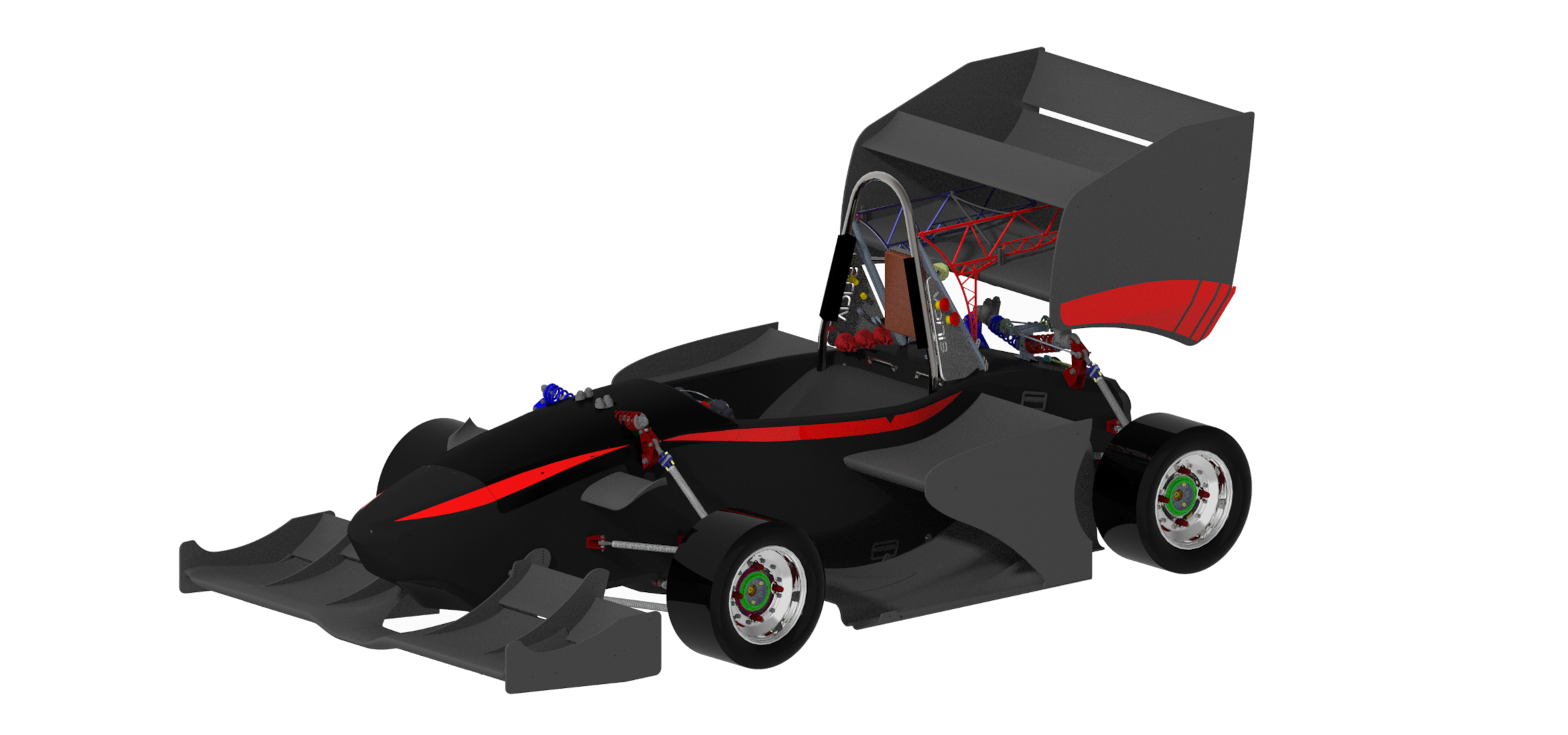
35xCar Specifications
General
| Frame Construction | Full Monocoque |
|---|---|
| Material | Aluminium Honeycomb, prepreg carbon and aramid |
| Overall L | 2861 mm |
| Overall W | 1410 mm |
| Overall H | 1169 mm |
| Wheelbase | 1530 mm |
| Track (Fr) | 1282 mm |
| Track (Rr) | 1239 mm |
| Weight with 68kg driver (Fr) | 134 kg |
| Weight with 68kg driver (Rr) | 134 kg |
| Suspension | Double unequal length A-Arm, pushrod activated horizontal spring&damper, rear stabilisator |
| Tyres (Fr / Rr) | Hoosier, 16x7,5-10 R20 |
| Wheels (Fr / Rr) | Hoosier; 10 |
| Drive Type | Planetary gearbox in wheel hub; ratio 1 |
| Differential | - |
| Cooling | Twin Side mounted radiator with electronic controlled fans, motor build into cooling jacket |
| Brake System | isr braks (4 piston/front wheel; 2 piston/rear wheel); adjustable brake balance |
| Electronics | Hand-welded Battery, DCDC, Control Software with Torque vectoring and Slip Controll, |
Powertrain
| Number of Motors | 2 |
|---|---|
| Motor Location | rear right & left |
| Max Motor Power (per motor) | 0,0, 31kw, 31kw kW |
| Motor Type | Fischer TI085 |
| Max Motor RPM (highest) | 20000 rpm |
| Motor Controller | Bucher MOBILE DCU 6060 |
| Max System Voltage | 600 V |
| Electrode Materials | LiFePO4 |
| Combined Accumulator Capacity | 7.1 kWh |
| Transmission Ratio (Primary) | 12,5:1 : 1 |
| Transmission Ratio (Secondary) | - |
Driverless System
| Processing unit(s) | NVIDIA Jetson Xavier NX + ESX.4cs-gw |
|---|---|
| Floating Point Operations Per Second of all processing units that are working for the DV system | 850 GigaFLOPS |
| Power consumption of all processing units that are working for the DV system | 26 W |
| Camera(s) | Stereolabs ZED 2, range 12m, FOV 120°, Stereocamera with IMU |
| Radar sensor(s) | 0 |
| Lidar sensor(s) | 0 |
| Other sensors | Bosch IMU |
| Highlights of the DV system | Using the potential field method, Silicia 3 is attracted to a centerline between two splines of cones while being repelled by the individual cones, allowing it to navigate smoothly within the corridor. |
Info
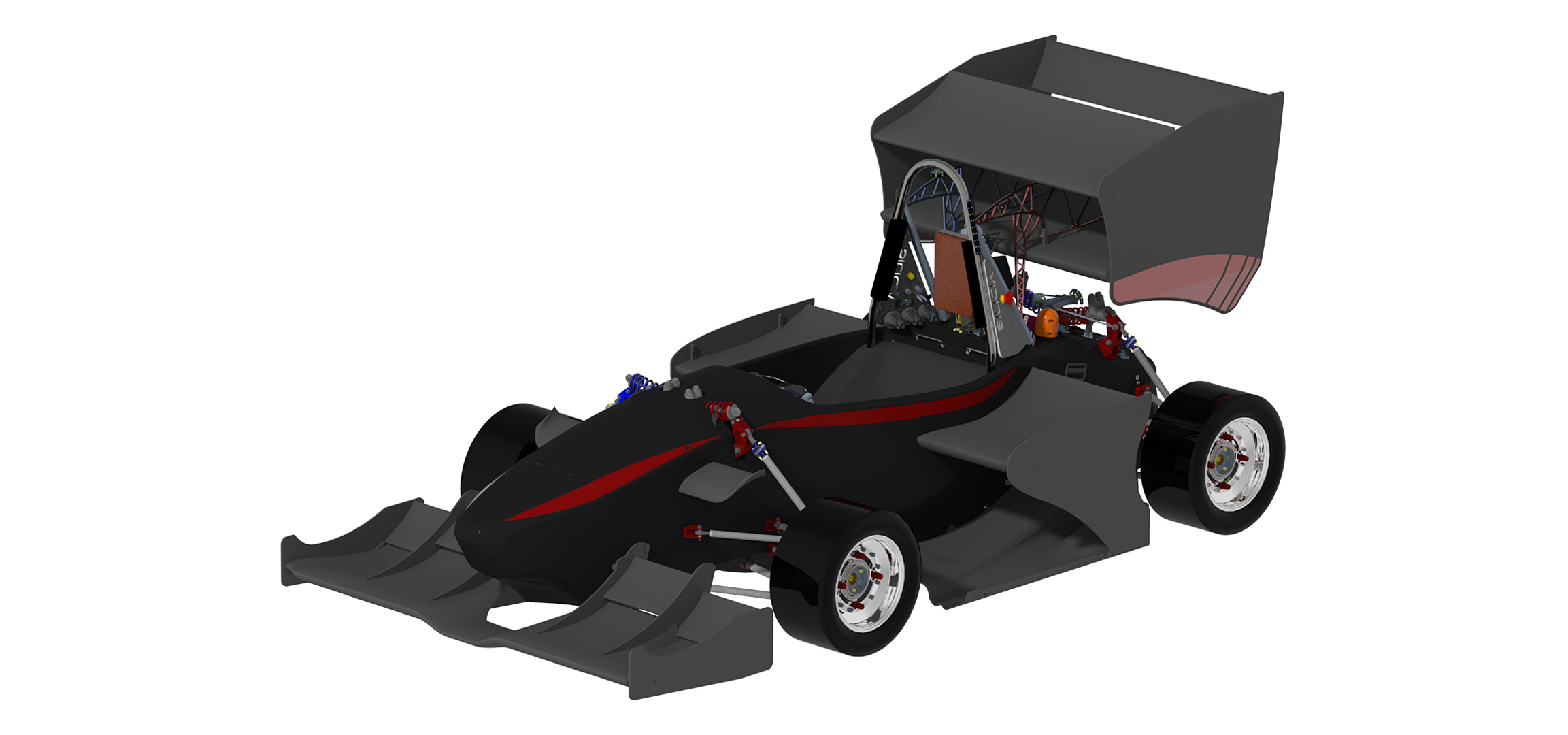
90xCar Specifications
General
| Frame Construction | Full Monocoque with aluminium cores |
|---|---|
| Material | Prepreg Carbon Fibre |
| Overall L | 2920 mm |
| Overall W | 1390 mm |
| Overall H | 1180 mm |
| Wheelbase | 1530 mm |
| Track (Fr) | 1200 mm |
| Track (Rr) | 1160 mm |
| Weight with 68kg driver (Fr) | 132 kg |
| Weight with 68kg driver (Rr) | 132 kg |
| Suspension | Double unequal length A-Arm, push rod activated horizontal oriented spring and damper |
| Tyres (Fr / Rr) | Hoosier, 16x7,5-10 R20 |
| Wheels (Fr / Rr) | Hoosier; 10 |
| Drive Type | Planetary gearbox in wheel hub; ratio 12 |
| Differential | n/a |
| Cooling | Twin Side mounted radiator with electronic controlled fans |
| Electronics | decentralised, CAN-based sensor monitoring system, multifunctional steering wheel, |
Powertrain
| Number of Motors | 2 |
|---|---|
| Motor Location | Rear Right, Rear Left |
| Max Motor Power (per motor) | 35,3 kW |
| Motor Type | Fischer Elektromotoren TI085 |
| Max Motor RPM (highest) | 20000 rpm |
| Motor Controller | Bucher MOBILE DCU 6060 |
| Max System Voltage | 600 V |
| Electrode Materials | LiFePO4 |
| Combined Accumulator Capacity | 7,8 kWh |
| Transmission Ratio (Primary) | 14:1 : 1 |
| Transmission Ratio (Secondary) | n/a : 1 |
Driverless System
| Processing unit(s) | Nvidia Jetson AGX Xavier |
|---|---|
| Floating Point Operations Per Second of all processing units that are working for the DV system | 1400 GFlop GigaFLOPS |
| Power consumption of all processing units that are working for the DV system | 30W W |
| Camera(s) | One Stereo ZED 2; 120° angle, ⅓” 4MP CMOS Sensor with 2688 x 1520 pixels |
| Radar sensor(s) | n/a |
| Lidar sensor(s) | n/a |
| Other sensors | GPS Sensor (Vecot VN-200) |
| Highlights of the DV system | We are currently using a TensorRT optimised, YOLOv8 Object Detection model in ONNX Format. |
Info
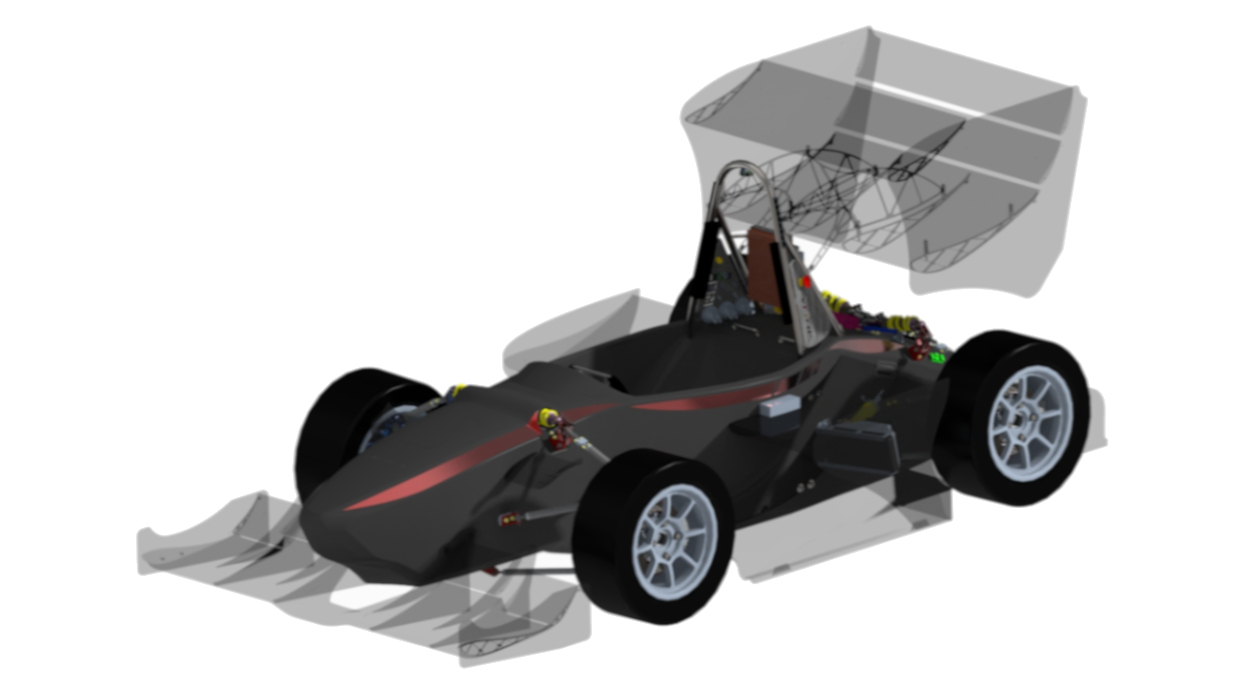
14xCar Specifications
General
| Frame Construction | Full Monocoque with aluminum cores |
|---|---|
| Material | Prepreg Carbon Fibre |
| Overall L | 2941 mm |
| Overall W | 1384 mm |
| Overall H | 1180 mm |
| Wheelbase | 1530 mm |
| Track (Fr) | 1200 mm |
| Track (Rr) | 1140 mm |
| Weight with 68kg driver (Fr) | 145 kg |
| Weight with 68kg driver (Rr) | 145 kg |
| Suspension | Double unequal length A-Arm. Push rod actuated horizontally oriented spring and damper |
| Tyres (Fr / Rr) | Hoosier 43164; 20.5 x 7.0-13, R25B |
| Wheels (Fr / Rr) | OZ 4H 7x13 1 pc Magnesium |
| Drive Type | Planetary gearbox in wheel hub |
| Differential | n/a |
| Cooling | Twin Side mounted radiator with electronic controlled fans |
| Brake System | 4 fully floating discs with 4 and 2 pistion calipers |
| Electronics | Intelligent Driver Interface; decentralized, CAN-based sensor monitoring system |
Powertrain
| Number of Motors | 4 |
|---|---|
| Motor Location | Hub-Motors |
| Max Motor Power (per motor) | 4x 31.2 kW |
| Motor Type | permanent excitated watercooled synchronous |
| Max Motor RPM (highest) | 20000 rpm |
| Motor Controller | self-made |
| Max System Voltage | 600V V |
| Electrode Materials | NCM |
| Combined Accumulator Capacity | 7.8kWh kWh |
| Transmission Ratio (Primary) | 14:1 : 1 |
| Transmission Ratio (Secondary) | n/a : 1 |
Driverless System
| Processing unit(s) | TI TMS, STM32 |
|---|---|
| Floating Point Operations Per Second of all processing units that are working for the DV system | 705 GigaFLOPS |
| Power consumption of all processing units that are working for the DV system | 30 W |
| Camera(s) | ZED 2 |
| Radar sensor(s) | none |
| Lidar sensor(s) | none |
| Other sensors | GPS, GSS |
| Highlights of the DV system | Full moodularity of all DV hardware parts. DV Mainboard used as telemetry module on both, autonomous and non-autonomous mode. |
FS past achievements due to World Ranking Data Base
| Date | Event | Teams | Rank | BP | CM | ED | SP | DV SP | AC | DV AC | AX | EN | EF | Pe | Total |
|---|---|---|---|---|---|---|---|---|---|---|---|---|---|---|---|
| 2026.08 | 42 |
36. |
37. |
6. |
33. |
- |
- |
- |
- |
- |
- |
- |
-100.00 |
98.40 |
|
| 2026.08 | 38 |
32. |
35. |
30. |
33. |
- |
- |
- |
- |
- |
- |
- |
0.00 |
121.30 |
|
| 2025.08 | 23 |
10. |
17. |
20. |
8. |
8. |
- |
9. |
- |
5. |
10. |
- |
0.00 |
276.00 |
|
| 2025.08 | 84 |
58. |
59. |
28. |
32. |
- |
- |
- |
- |
- |
- |
- |
0.00 |
183.40 |
|
| 2024.08 | 79 |
56. |
76. |
63. |
54. |
40. |
- |
28. |
- |
32. |
21. |
- |
-20.00 |
193.82 |
|
| 2024.08 | 25 |
10. |
3. |
15. |
6. |
10. |
- |
2. |
- |
- |
7. |
- |
0.00 |
374.00 |
|
| 2024.07 | 38 |
26. |
30. |
32. |
26. |
16. |
- |
13. |
- |
17. |
- |
- |
0.00 |
198.80 |
|
| 2023.08 | 29 |
29. |
24. |
26. |
28. |
- |
- |
- |
- |
- |
- |
- |
-115.00 |
2.40 |
|
| 2022.09 | 38 |
25. |
14. |
22. |
15. |
- |
- |
- |
- |
- |
- |
- |
0.00 |
240.60 |
|
| 2022.08 | 63 |
39. |
54. |
29. |
10. |
- |
- |
- |
- |
- |
- |
- |
0.00 |
219.13 |
|
| 2022.08 | 33 |
26. |
29. |
15. |
25. |
- |
- |
- |
- |
- |
- |
- |
0.00 |
197.69 |
|
| x 11 | |||||||||||||||