
Team Details
e-gnition Hamburg
| University | Technische Universität Hamburg
DE Hamburg TU short 728 |
 |
|---|---|---|
| Location | Hamburg, Germany | |
| Homepage | https://www.egnition.hamburg/ | |
| Social Media | ||
| CV Team | e-gnition | |
| DV Team | e-gnition driverless | |
| Short Link | tid.fsg.one/414 | |
Team Description
e-gnition Hamburg e.V. is the Formula Student Team of the Technical University of Hamburg. Currently, more than 80 volunteer students work in the team.
Since the foundation in 2011, we have been building an all-electric race car. In 2017, we built our first autonomous car. The DV and EV were combined into one car in 2020.
Past Events
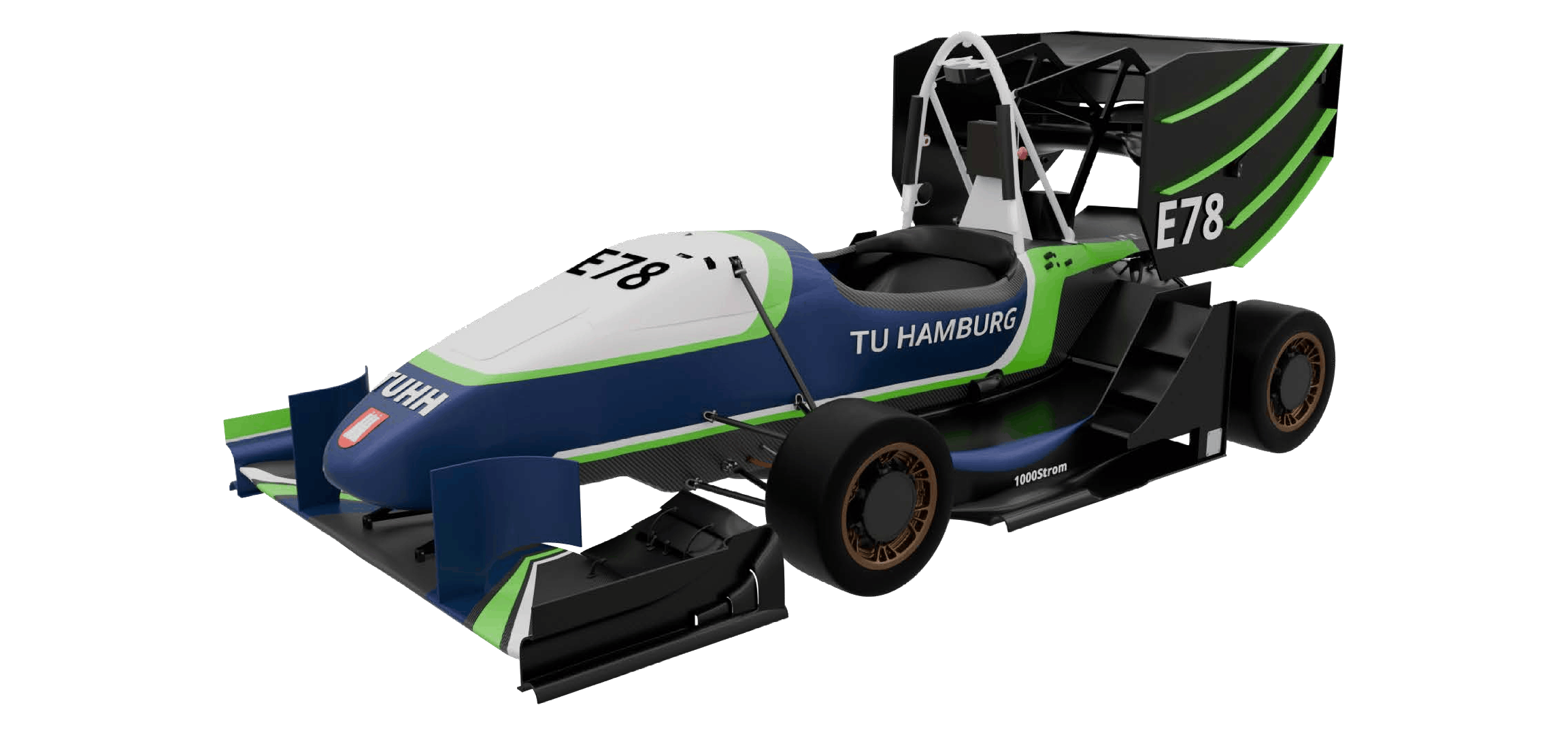
2026
Info
170x
This year's race car implements a completely new powertrain designed by our team whose highlights are a completely new cell type in the accumulator combined with a new inverter. In addition to that, a totally new gearbox was developed using a new cost efficient manufacturing method for the gears. These changes allowed us to save a lot of weight in the respective assemblies and optimize the manufacturing proces.
Engineering Design Priorities:
EnergyStorage
SWDevelopment
Aerodynamcs
Gearbox
Perception
Monocoque
Car Specifications
General
| Frame Construction | CFRP monocoque |
|---|---|
| Material | Gurit SE84LV/HMC |
| Overall L | 2893 mm |
| Overall W | 1490 mm |
| Overall H | 1193 mm |
| Wheelbase | 1530 mm |
| Track (Fr) | 1230 mm |
| Track (Rr) | 1230 mm |
| Weight with 68kg driver (Fr) | 136 kg |
| Weight with 68kg driver (Rr) | 133 kg |
| Suspension | double unequal lenth A-Arms, push rod actuated decoupled heave-roll system |
| Tyres (Fr / Rr) | 16.0x6.0 R10, Hoosier R20 |
| Wheels (Fr / Rr) | 7x10 |
| Drive Type | two stepped planetary gear |
| Differential | electronic torque vectoring |
| Cooling | Water cooling circuit, heat exchangers on both sides of the car |
| Brake System | 4-Disk system, self manufactured, Ti-6AI-4V SLM print, adjustable brake balance |
| Electronics | HV-LV power distribution: Vicor BCM4414, Intelligent Fuses: High Side Switch NX |
Powertrain
| Number of Motors | 4 |
|---|---|
| Motor Location | inside the wheelassembley |
| Max Motor Power (per motor) | 35.4 kW |
| Motor Type | Fischer permanent excitated synchronous |
| Max Motor RPM (highest) | 19000 rpm |
| Motor Controller | Lenze Mobile Drives |
| Max System Voltage | 623 V |
| Electrode Materials | LiCoO2 |
| Combined Accumulator Capacity | 7.43 kWh |
| Transmission Ratio (Primary) | 11.8 : 1 |
| Transmission Ratio (Secondary) | - |
Driverless System
| Processing unit(s) | COM Express Module with Core i7-138000HRE |
|---|---|
| Floating Point Operations Per Second of all processing units that are working for the DV system | 768 GigaFLOPS |
| Power consumption of all processing units that are working for the DV system | 50 W |
| Camera(s) | - |
| Radar sensor(s) | 3x, 140deg, 77 GHz Radar with 4 GHz Chirp Bandwidth |
| Lidar sensor(s) | 1x, 120deg, MEMS LiDAR with Res. of 0.1x0.1deg at 10 Hz |
| Other sensors | 2 Radar Ground Speed Sensors |
| Highlights of the DV system | New controller, MPC Radar |
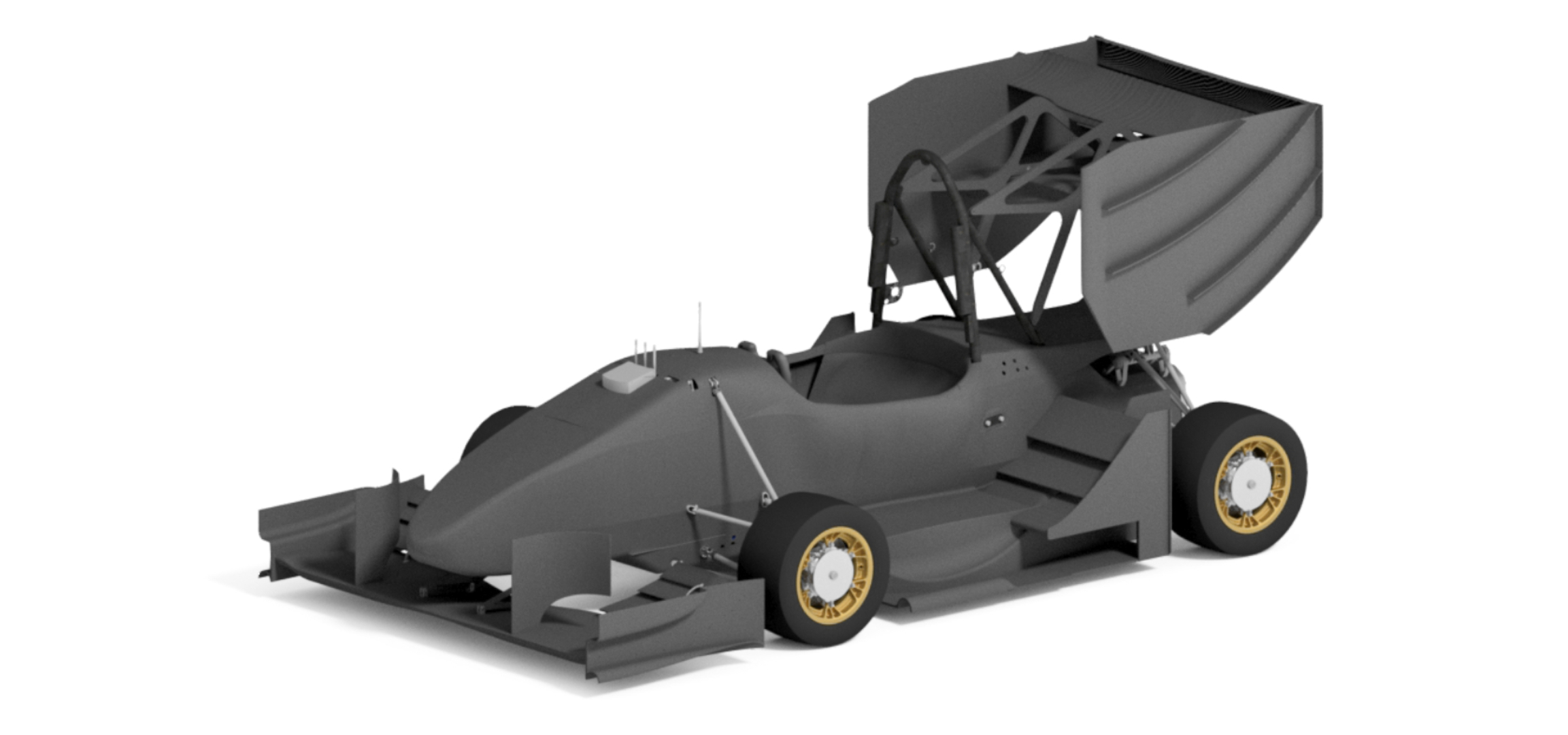
2025
Info
124x
With a history of building fully electric racecars since 2012, the egn25 is e-gnition Hamburg’s newest car. It features a redesigned aero package and improved manufacturing quality. With the addition of RGSS and tire temperature sensors, it enables predictive performance software—enhancing both vehicle insight and reliability.
Engineering Design Priorities:
EnergyStorage
SWDevelopment
Aerodynamics
Gearbox
Perception
Monocoque
Car Specifications
General
| Frame Construction | CFRP monocoque |
|---|---|
| Material | Gurit SE84LV/HMC |
| Overall L | 2893 mm |
| Overall W | 1490 mm |
| Overall H | 1193 mm |
| Wheelbase | 1530 mm |
| Track (Fr) | 1230 mm |
| Track (Rr) | 1230 mm |
| Weight with 68kg driver (Fr) | 136 kg |
| Weight with 68kg driver (Rr) | 133 kg |
| Suspension | double unequal length a-arms, push rod actuated decoupled heave-roll system |
| Tyres (Fr / Rr) | 16.0x6.0 R10, Hoosier R20 |
| Wheels (Fr / Rr) | 7x10 |
| Drive Type | two stepped planetary gear |
| Differential | electronic torque vectoring |
| Cooling | Water cooling circuit, heat exchangers on both sides of the car |
| Brake System | 4-Disk system, self manufactured, Ti-6Al-4V SLM print, adjustable brake balance |
| Electronics | HV-LV power distribution: Vicor BCM4414, Intelligent Fuses: High Side Switch NX |
Powertrain
| Number of Motors | 4 |
|---|---|
| Motor Location | inside the wheelassembley |
| Max Motor Power (per motor) | 35,366 kW kW |
| Motor Type | Fischer permanent excitated synchronous |
| Max Motor RPM (highest) | 19000 rpm |
| Motor Controller | Lenze Mobile Drives |
| Max System Voltage | 588 V |
| Electrode Materials | LiCoO2 |
| Combined Accumulator Capacity | 6,216 kWh |
| Transmission Ratio (Primary) | 1:11,8 : 1 |
Driverless System
| Processing unit(s) | COM Express Module with Core i7-13800HRE |
|---|---|
| Power consumption of all processing units that are working for the DV system | 50W W |
| Camera(s) | / |
| Radar sensor(s) | 1x, 140deg, 77GHz Radar with 4GHz Chirp Bandwidth |
| Lidar sensor(s) | 1x, 120deg, MEMS LiDAR with Res. of 0.1x0.1deg at 10Hz |
| Other sensors | 2 Radar Ground Speed Sensors which are self-developed |
| Highlights of the DV system | New Perception and addition of Radar |
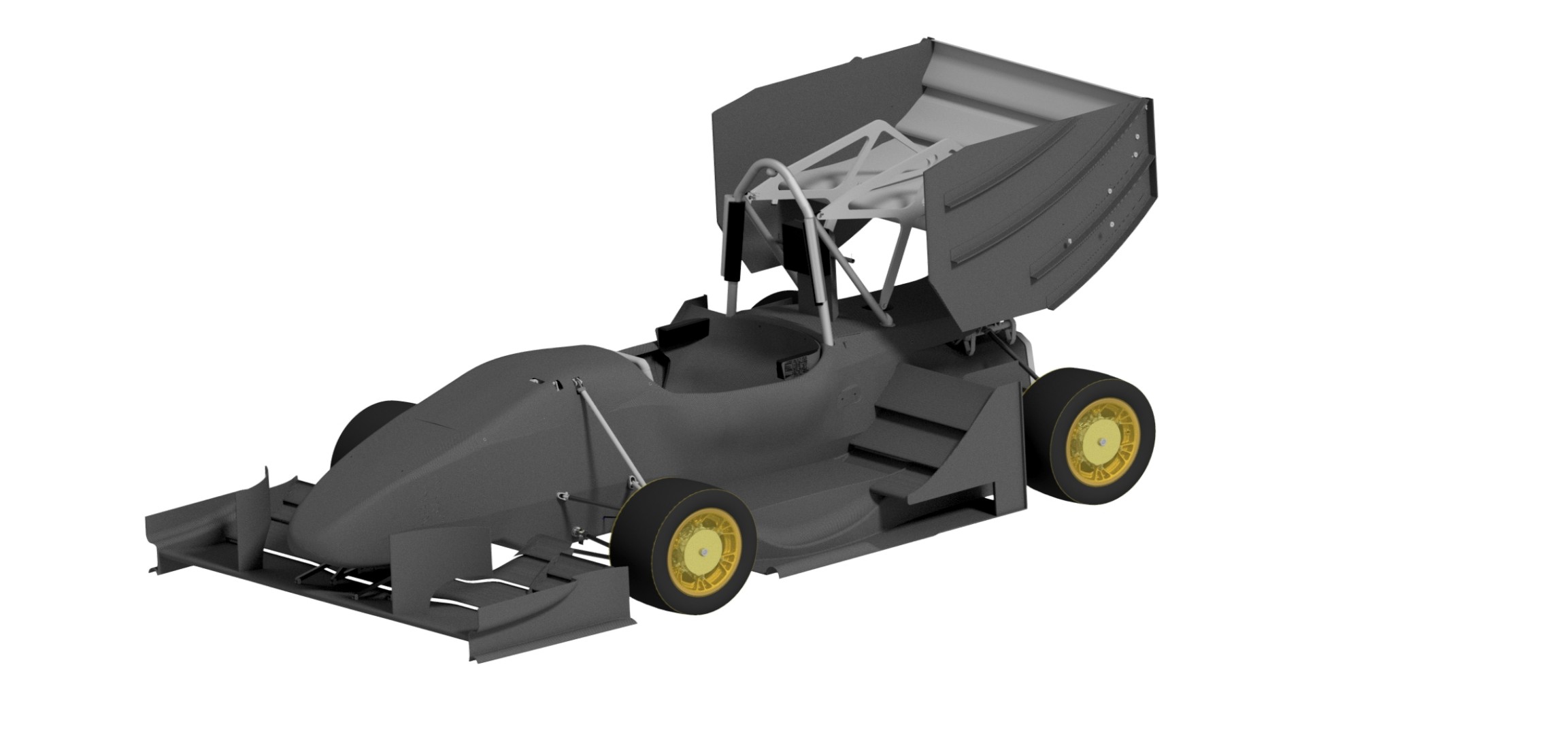
2024
Info
86x
The design of the egn24 focusses on improving reliability. By using new motor controllers, we can get more power out of the egn24 while increasing reliability without failures. The monocoque of the egn24 has been heavily customised, which creates more space for the aerodynamics to increase performance. The new lidar optimises our DV performance. This makes the egn24 faster and better in all disciplines!
Engineering Design Priorities:
inverter reliability
accumulator cooling
testing time
qualified driver
more compact LV system
increased downforce
Car Specifications
General
| Frame Construction | single piece CFRP monocoque with aluminium honeycomb core |
|---|---|
| Material | prepreg fibers, aluminium honeycomb core of various thickness |
| Overall L | 2950 mm |
| Overall W | 1508 mm |
| Overall H | 1180 mm |
| Wheelbase | 1530 mm |
| Track (Fr) | 1230 mm |
| Track (Rr) | 1230 mm |
| Weight with 68kg driver (Fr) | 135 kg |
| Weight with 68kg driver (Rr) | 132 kg |
| Suspension | double unequal length a-arms, push rod actuated decoupled heave-roll system |
| Tyres (Fr / Rr) | 16.0x6.0 R10, Hoosier R20 |
| Wheels (Fr / Rr) | 7.0x10 |
| Drive Type | 1.5-stage planetary gearbox |
| Differential | Software differential |
| Cooling | Water-cooling circuit for inverters, vehicle control unit and motors. Heat exchangers in undertray. |
| Brake System | SLM printed AlSi10Mg brake callipers |
| Electronics | Logically grouped PCBs, more compact and reliable AMS, integration of new uC series |
Powertrain
| Number of Motors | 4 |
|---|---|
| Motor Location | hub motors at each wheel |
| Max Motor Power (per motor) | 35kW kW |
| Motor Type | Fischer TI085-052-070-04B7S-07S04BE2 |
| Max Motor RPM (highest) | 19000 rpm |
| Motor Controller | Lenze Mobile Drives EMDAG2303303U |
| Max System Voltage | 588V V |
| Electrode Materials | LiCoO2 |
| Combined Accumulator Capacity | 6,216 kWh |
| Transmission Ratio (Primary) | 1:11,8 : 1 |
| Transmission Ratio (Secondary) | n/a : 1 |
Driverless System
| Processing unit(s) | Intel Core i7-13800HRE |
|---|---|
| Floating Point Operations Per Second of all processing units that are working for the DV system | 2146 GigaFLOPS |
| Power consumption of all processing units that are working for the DV system | 45 W |
| Camera(s) | n/a |
| Radar sensor(s) | n/a |
| Lidar sensor(s) | Robosense M1 Plus |
| Other sensors | n/a |
| Highlights of the DV system | Improved perception pipeline Improved controller utilizing torque vectoring |
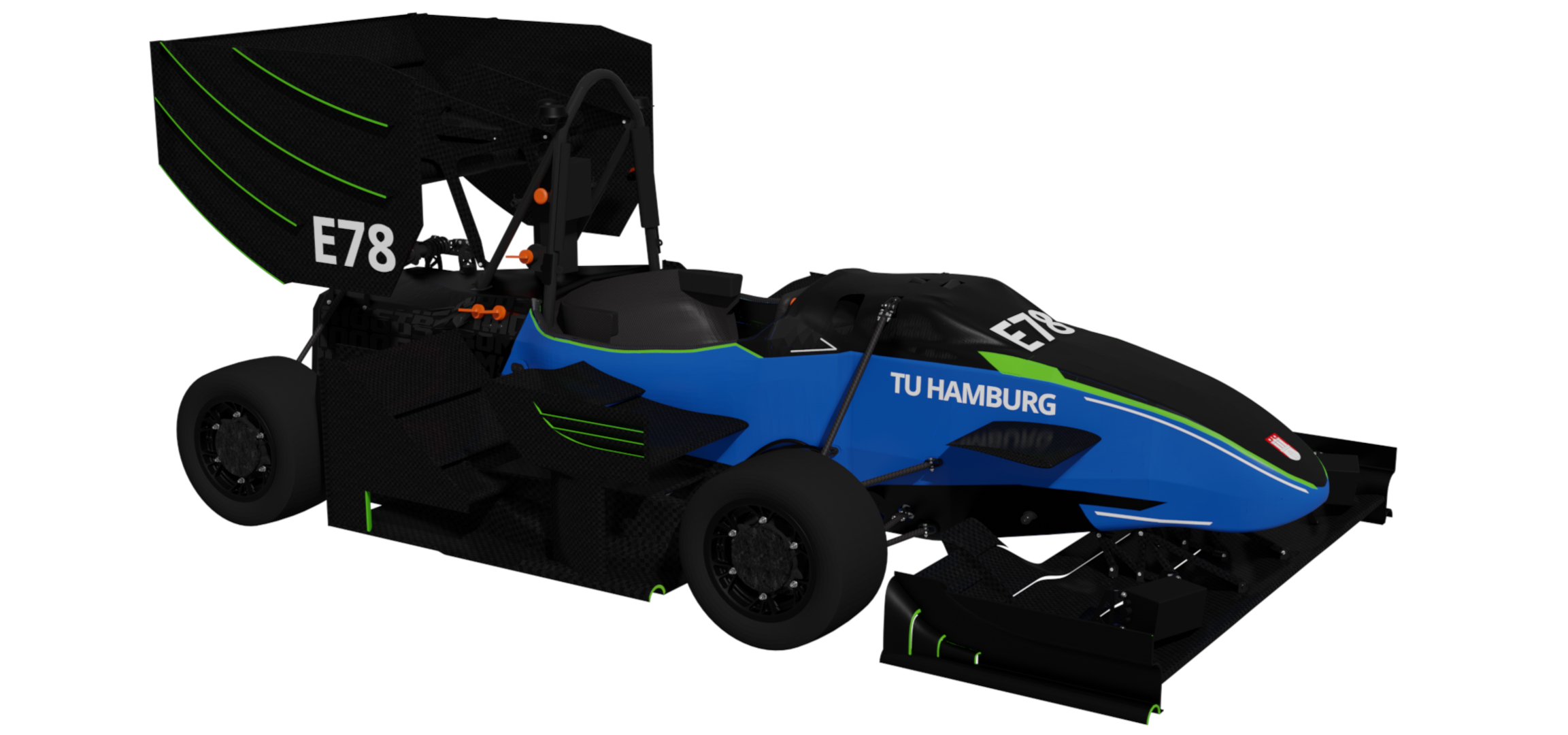
2023
Info
150x
e-gnition Hamburg was founded in 2011 and participates in the EV since 2012 and DV class since 2017. After introducing a new aerodynamics package and wheel assembly in the last season, the egn23 design concentrates on improving the powertrain reliability. For this, not only the accumulator is redesigned but also a motor test bench is constructed to validate the inverter settings. This makes the egn23 stronger and faster than ever!
Engineering Design Priorities:
inverter reliability
accumulator cooling
testing time
qualified driver
more compact LV system
increased downforce
Car Specifications
General
| Frame Construction | single piece CFRP monocoque with aluminium honeycomb core |
|---|---|
| Material | prepreg fibers, aluminium honeycomb core of various thickness |
| Overall L | 2927 mm |
| Overall W | 1480 mm |
| Overall H | 1180 mm |
| Wheelbase | 1530 mm |
| Track (Fr) | 1230 mm |
| Track (Rr) | 1230 mm |
| Weight with 68kg driver (Fr) | 140 kg |
| Weight with 68kg driver (Rr) | 138 kg |
| Suspension | double unequal length a-arms, push rod actuated decoupled heave-roll system |
| Tyres (Fr / Rr) | 16.0x6.0 R10, Hoosier LC0 |
| Wheels (Fr / Rr) | 7.0x10 |
| Drive Type | 1.5-stage planetary gearbox |
| Differential | n/a |
| Cooling | Water-cooling circuit for inverters, vehicle control unit and motors. Heat exchangers in undertray. |
| Brake System | 4-Disk system, self developed rotors 208mm diameter, adjustable brake balance, milled 7075 |
| Electronics | Logically grouped PCBs, more compact and reliable AMS, integration of new uC series |
Powertrain
| Number of Motors | 4 |
|---|---|
| Motor Location | hub motors at each wheel |
| Max Motor Power (per motor) | 35kW each kW |
| Motor Type | Fischer TI085-052-070-04B7S-07S04BE2 |
| Max Motor RPM (highest) | 14000 rpm |
| Motor Controller | Lenze Mobile Drives EMDAG2303303U |
| Max System Voltage | 588 V |
| Electrode Materials | LiCoO2 |
| Combined Accumulator Capacity | 6.216 kWh |
| Transmission Ratio (Primary) | 1:10.02 : 1 |
| Transmission Ratio (Secondary) | n/a : 1 |
Driverless System
| Processing unit(s) | Intel Core i7-9850HE |
|---|---|
| Floating Point Operations Per Second of all processing units that are working for the DV system | 442 GigaFLOPS |
| Power consumption of all processing units that are working for the DV system | 45 W |
| Camera(s) | n/a |
| Radar sensor(s) | n/a |
| Lidar sensor(s) | 2x lidar, 70° centered overlap, ibeo LUX 2010 |
| Other sensors | cooling temperature sensors in cooling circuit |
| Highlights of the DV system | Sophisticated LiDAR Perception, newly developed Drive Control Unit able to run the autonomous system |
2022
Info
142x
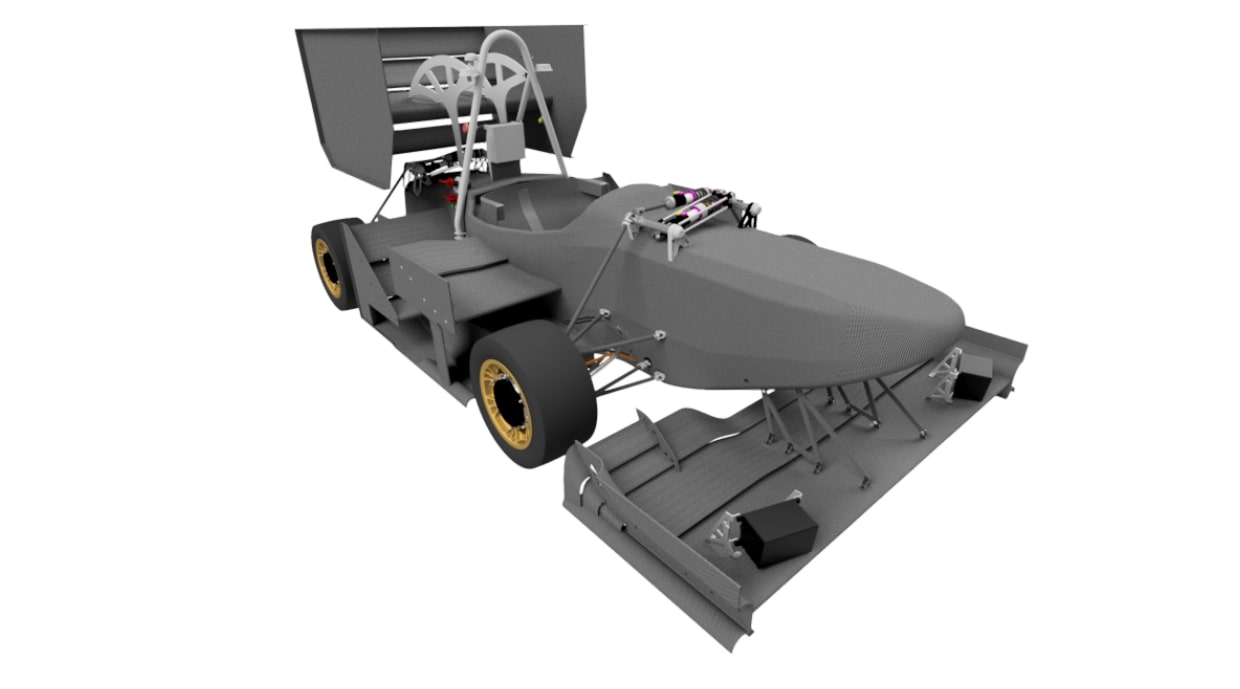
e-gnition Hamburg participates in the formula student since 2012. All-time EV-Team and pioneers in the DV category! The experience gained, after having built their first combined EV-DV vehicle last season, was used to introduce the egn22. A highly integrated DV actuation, completely reworked monocoque shape and a new 10" wheel assembly are just a few of the innovations the egn22 features - and that's just what's visible from the outside!
Engineering Design Priorities:
Driverless integration
Longterm development
Reliability
Performance
Car Specifications
General
| Frame Construction | single-piece CFRP monocoque with aluminium honeycomb core |
|---|---|
| Material | prepreg fibers, aluminium honeycomb core of various thickness |
| Overall L | 2889 mm |
| Overall W | 1480 mm |
| Overall H | 1180 mm |
| Wheelbase | 1530 mm |
| Track (Fr) | 1230 mm |
| Track (Rr) | 1230 mm |
| Weight with 68kg driver (Fr) | 135 kg |
| Weight with 68kg driver (Rr) | 152 kg |
| Suspension | double unequal length a-arms, pushrod actuated bellcranks, heave-roll-decoupled system |
| Tyres (Fr / Rr) | 16x6 R10, Hoosier LC0 / 16x6 R10, Hoosier LC0 |
| Wheels (Fr / Rr) | 7x10 |
| Drive Type | two staged planetary gear |
| Differential | n/a |
| Cooling | Water cooling loop for motors, VCU and inverters. Cooling duct integrated into the undertray |
| Brake System | self developed rotors 210mm diameter, self-designed laser sintered brake calipers |
| Electronics | Self-developed DCU, AMS, ACU, Fuseboard and Sensorboard |
Powertrain
| Number of Motors | 4 |
|---|---|
| Motor Location | hub motors at each wheel |
| Max Motor Power (per motor) | 35kW each kW |
| Motor Type | Fischer TI085-052-070-04B7S07S04BE2 |
| Max Motor RPM (highest) | 20,000 rpm |
| Motor Controller | Lenze Schmidhauser Mobile Drives |
| Max System Voltage | 588V V |
| Electrode Materials | LiCoO2 |
| Combined Accumulator Capacity | 6,216kWh kWh |
| Transmission Ratio (Primary) | 10:1 : 1 |
| Transmission Ratio (Secondary) | n/a : 1 |
Driverless System
| Processing unit(s) | Intel Core i7-6700K, NVIDIA Jetson TX2 module |
|---|---|
| Floating Point Operations Per Second of all processing units that are working for the DV system | 460.8 GigaFLOPS |
| Power consumption of all processing units that are working for the DV system | 90 W |
| Camera(s) | n/a |
| Radar sensor(s) | n/a |
| Lidar sensor(s) | 3 sensors, 85° central working range, ibeo LUX 2010 |
| Other sensors | cooling temperature sensors in cooling loop / ground speed sensor |
| Highlights of the DV system | Sophisticated LiDAR Perception, newly developed Drive Control Unit able to run the autonomous system, self-developed radar ground speed sensor |
2021
Info
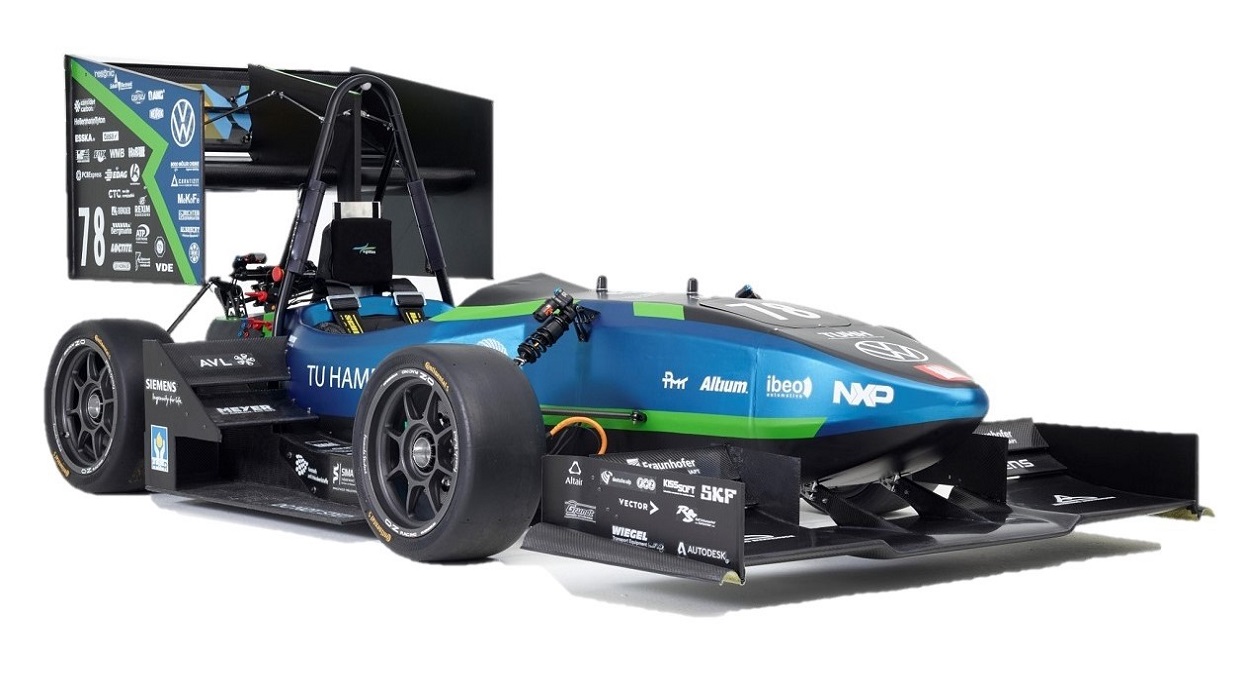
The egn20 is the most innovative and forward-thinking car e-gnition has ever build. In the coming years FSG is looking to integrate driverless technology into every car participating in the event. We decided to start this integration one year early. The egn20 is able to run EV and with a quick change of the steering wheel and front wing it is capable to drive DV as well. The steering actuation is fully integrated into the steering wheel and easily exchangeable with a quick release.
Engineering Design Priorities:
Driverless integration
Reliability
Battery Management System
Low center of gravity
Validation
Wing inner structure
Car Specifications
General
| Frame Construction | Monocoque structure with prepreg and aluminium honeycomb core |
|---|---|
| Material | Unidirectional fibers M21T800S + different kinds of aluminium honeycomb structure |
| Overall L | 2935 mm |
| Overall W | 1422 mm |
| Overall H | 1175 mm |
| Wheelbase | 1530 mm |
| Track (Fr) | 1200 mm |
| Track (Rr) | 1150 mm |
| Weight with 68kg driver (Fr) | 112 kg |
| Weight with 68kg driver (Rr) | 142 kg |
| Suspension | double unequal length a-arms, pushrod actuated bellcranks, heave-roll-decoupled system |
| Tyres (Fr / Rr) | 470 x 205 R13 Continental |
| Wheels (Fr / Rr) | 7x13“ 30mm offset, CFRP rim |
| Drive Type | two staged planetary gear |
| Differential | n/a |
| Cooling | Water cooling. Two fans and heat exchangers, four motors, two inverters and a DV computer |
| Brake System | self developed rotors 222mm diameter, lasersintered self manufactured brake callipers |
| Electronics | ECU, AMS, ACU, fuse board and sensor boards self designed. |
Powertrain
| Number of Motors | 4 |
|---|---|
| Motor Location | Every wheel |
| Max Motor Power (per motor) | 35 kW, 35kW, 35kW, 35kW kW |
| Motor Type | All: Fischer TI085-052-070-04B7S-07S04BE2 |
| Max Motor RPM (highest) | All: 20000rpm rpm |
| Motor Controller | Lenze Schmidhauser Mobile Drives |
| Max System Voltage | 588V V |
| Electrode Materials | LiCoO2 |
| Combined Accumulator Capacity | 6,216kWh kWh |
| Transmission Ratio (Primary) | 1:12,78 : 1 |
| Transmission Ratio (Secondary) | n/a : 1 |
2018
Info
48x
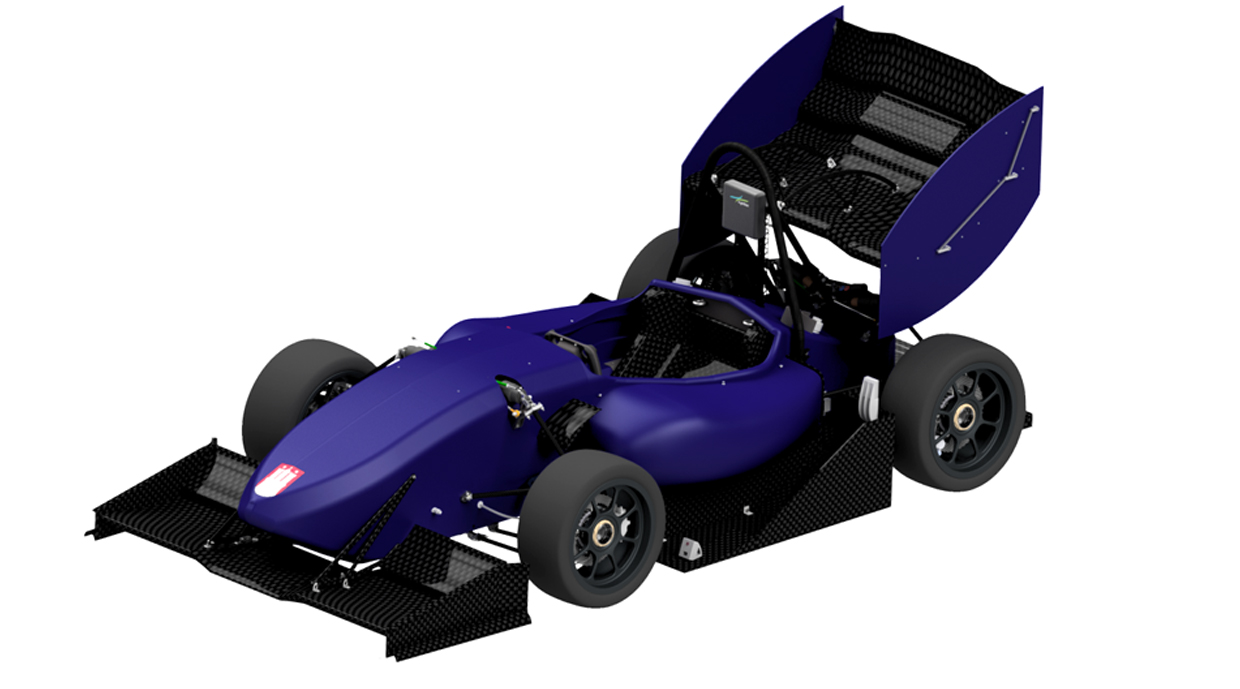
The egn18-ev is the seventh car of the e-gnition Hamburg Team. We opted for an all-wheel drive, featuring a carbon fibre monocoque, a complete aerodynamic package and a completely improved accumulator system. With our strong team we managed to ensure a community in which everybody helped each other, and through which we got our car out on the testing track by mid may.We are excited to spend a great week with the Formula Student community at a sunny Hockenheim race track!
Engineering Design Priorities:
1000STROM
e-gnition
2Cars1Team
jensgehtslos
nurkurzflashen
leichter&steifer
Car Specifications
General
| Frame Construction | Monocoque structure with prepreg and aluminium honeycomb material |
|---|---|
| Material | IMS65 UD Fibres |
| Overall L | 3000 mm |
| Overall W | 1400 mm |
| Overall H | 1130 mm |
| Wheelbase | 1530 mm |
| Track (Fr) | 1200 mm |
| Track (Rr) | 1150 mm |
| Weight with 68kg driver (Fr) | 129 kg |
| Weight with 68kg driver (Rr) | 133 kg |
| Suspension | Double unequal length A-Arm. Push rod actuated air spring and damper |
| Tyres (Fr / Rr) | Continental C18 |
| Wheels (Fr / Rr) | 13 |
| Drive Type | One stage planetary gear system in wheel |
| Differential | Software actuated electrical differential |
| Cooling | Water cooling. Two motors and one motorcontroller each. |
| Brake System | Self developed rotors with 191mm diameter, adjustable breake balance |
| Electronics | ECU, AMS, IMU and sensor boards self designed. |
Powertrain
| Number of Motors | 4 |
|---|---|
| Motor Location | Each Wheelhub |
| Max Motor Power (per motor) | 30kW each kW |
| Motor Type | AMK DD5-14-10-POW |
| Max Motor RPM (highest) | 21000 rpm |
| Motor Controller | AMK Wechselrichter KW26-S5-FSE-4Q |
| Max System Voltage | 600V V |
| Electrode Materials | LiCoO2 - Graphite |
| Combined Accumulator Capacity | 6,7kWh kWh |
| Transmission Ratio (Primary) | 1:14,1 : 1 |
| Transmission Ratio (Secondary) | N/A : 1 |
2017
Info
21x
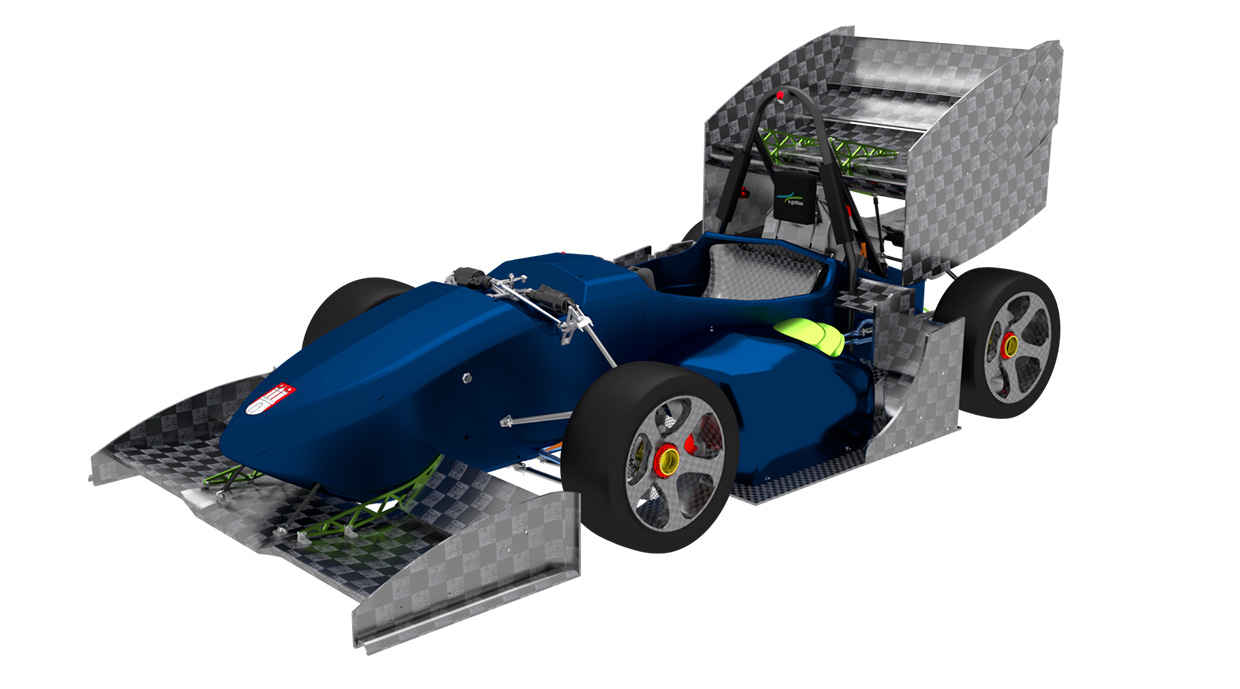
e-gnition is the Formula Student Electric Team of the TU Hamburg. This year we built our sixth electronic car. After the most succesful year in our history with one of the best rear-wheel driven cars of the competition field, we decided to take the next step on the evolutionary ladder. We are now running a four-wheel drive, a DRS, an undertray and a new monocoque. We are pleased to present you our new egn17!
Engineering Design Priorities:
#1000STROM
4WD
planetary gear
aerodynamics
reliability
keepcool
Car Specifications
General
| Frame Construction | Monocoque structure with prepreg and aluminium honeycomb material |
|---|---|
| Material | IMS65 UD Fibres |
| Overall L | 2925 mm |
| Overall W | 1415 mm |
| Overall H | 1140 mm |
| Wheelbase | 1530 mm |
| Track (Fr) | 1150 mm |
| Track (Rr) | 1200 mm |
| Weight with 68kg driver (Fr) | 141 kg |
| Weight with 68kg driver (Rr) | 142 kg |
| Suspension | Double unequal length A-Arm. Push rod actuated air spring and damper |
| Tyres (Fr / Rr) | Continental C17 |
| Wheels (Fr / Rr) | 13 |
| Drive Type | One stage planetary gear system in wheel |
| Differential | Software actuated electrical differential |
| Cooling | Water cooling. Two motors and one motorcontroller each. |
| Brake System | Self developed rotors with 191mm diameter, adjustable breake balance |
| Electronics | ECU, AMS, IMU and sensor boards self designed. |
Powertrain
| Number of Motors | 4 |
|---|---|
| Motor Location | Each Wheelhub |
| Max Motor Power (per motor) | 30kW each kW |
| Motor Type | AMK DD5-14-10-POW |
| Max Motor RPM (highest) | 20000 rpm |
| Motor Controller | AMK Wechselrichter KW26-S5-FSE-4Q |
| Max System Voltage | 600V V |
| Electrode Materials | LiCoO2 - Graphite |
| Combined Accumulator Capacity | 6,7kWh kWh |
| Transmission Ratio (Primary) | 1:12,6 : 1 |
| Transmission Ratio (Secondary) | N/A : 1 |
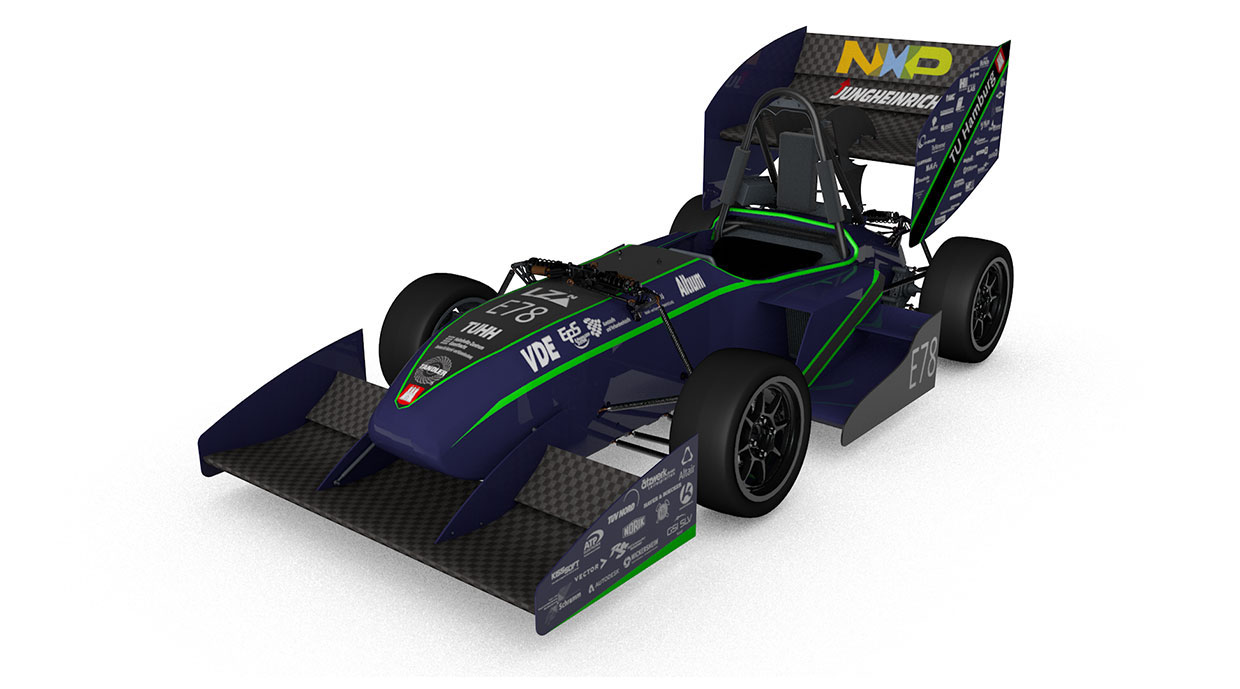
2016
Info
23x
e-gnition is the Formula Student Electric Team of the TU Hamburg. The focus of this season was on reliability and love. The team members are building the car, the egn16, exclusively in their free time, in return they get love and fun but no credit points or money. So we decided to make the benefits as big as possible and we tried to love our mates as much as we can. We also built a very reliable car to rush trough the scrutineering and take all dynamic events to the end. See you on the podium.
Engineering Design Priorities:
1000Strom
UweIstAuchDabei
TeamIntim
Car Specifications
General
| Frame Construction | Carbon fibre monocoque |
|---|---|
| Material | HTS Fibres with Rohacell IGF-71 Core |
| Overall L | 2336 mm |
| Overall W | 1385 mm |
| Overall H | 1125 mm |
| Wheelbase | 1560 mm |
| Track (Fr) | 1200 mm |
| Track (Rr) | 1150 mm |
| Weight with 68kg driver (Fr) | 111 kg |
| Weight with 68kg driver (Rr) | 167 kg |
| Suspension | double unequal length a-arms,push rod actuated horizontally oriented spring/damper, anti-roll bar |
| Tyres (Fr / Rr) | Continental 470 x 205 R13 |
| Wheels (Fr / Rr) | 7x13”, 30mm offset, magnesium rim |
| Drive Type | Spur Gear |
| Differential | torque vectoring |
| Cooling | side mounted selfdesigned radiators |
| Brake System | 4-Disk system, self developed rotors with |
| Electronics | wiring harness, self-developed BMS, selfdesigned Live-Telemetry System, |
Powertrain
| Number of Motors | 2 |
|---|---|
| Motor Location | Rear Right, Rear Left |
| Max Motor Power (per motor) | 2x 40kW kW |
| Motor Type | Enstroj Emrax 208 |
| Max Motor RPM (highest) | 6000 rpm |
| Motor Controller | Unitek Bamocar-D3 700/400 |
| Max System Voltage | 404V V |
| Electrode Materials | Lithium Polymer |
| Combined Accumulator Capacity | 6,7 kWh kWh |
| Transmission Ratio (Primary) | 1:3,7 : 1 |
| Transmission Ratio (Secondary) | - |
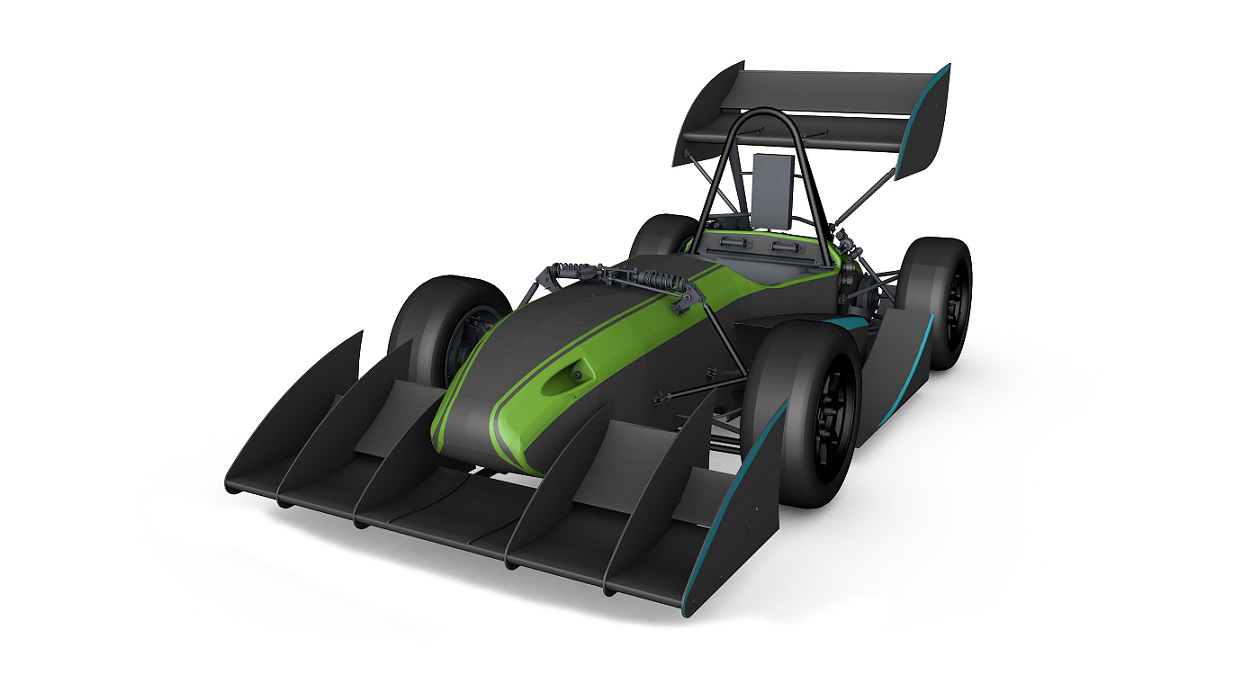
2015
Info
7x
e-gnition is the FSE team of the TU Hamburg. Founded in 2011 the egn15 will be our fourth car. Instead of an evolutionary design we opted for a revolution. The egn15 is our first car to feature a CFRP monocoque as well as a full aerodynamic package. Front and rear wings have a DRS system installed which helps directing air to the cooling system on straightaways. We developed our telemetry system in cooperation with our main sponsor NXP. It features state of the art V2X communication technology.
Engineering Design Priorities:
#goldfish
#egn
#revolutionary
#mono
aero
efficiency
Car Specifications
General
| Frame Construction | Carbon Fiber Monocoque with sandwich structure |
|---|---|
| Material | Sandwich PET core with HTS 45 carbon fibre layers |
| Overall L | 2960 mm |
| Overall W | 1406 mm |
| Overall H | 1166 mm |
| Wheelbase | 1560 mm |
| Track (Fr) | 1200 mm |
| Track (Rr) | 1150 mm |
| Weight with 68kg driver (Fr) | 130 kg |
| Weight with 68kg driver (Rr) | 158 kg |
| Suspension | Double unequal length A-Arm. Push rod actuated spring and damper |
| Tyres (Fr / Rr) | Front and Rear - 520.7 x 177.8-330.2 Hoosier Tyres (Model 43163) |
| Wheels (Fr / Rr) | 13” OZ Magnesium 4H Rims, with Offset 30mm. |
| Drive Type | Single Speed Spur Gear |
| Differential | Electronic, Torque vectoring using two motors |
| Cooling | Two 180x122mm passive radiators |
| Brake System | Steel, floating Hub mounted, 214 diameter Brake Discs; automated adjustable Brake Balance |
| Electronics | Ground Low Voltage System self designed including telemetry und BMS, Multifunctional Steering Wheel |
Powertrain
| Number of Motors | 2 |
|---|---|
| Motor Location | Rear right and rear left |
| Max Motor Power (per motor) | 80 kW, 80 kW kW |
| Motor Type | RR, RL: Emrax 207 |
| Max Motor RPM (highest) | 6000 rpm |
| Motor Controller | Unitek bamocar d3 400-400 |
| Max System Voltage | 404 V |
| Electrode Materials | LiCo2 |
| Combined Accumulator Capacity | 6,7kWh kWh |
| Transmission Ratio (Primary) | 1:4,5 : 1 |
2014
Info
11x
Representing the TUHH the Team e-gnition Hamburg consits of 60 students. Founded in 2011 e-gnition Hamburg developed the third electrical Formual Student race-car of its history. Based on the technical expertise made in the past the egn14 is 50kg lighter. This became possible by using new accumultor cells, motors and doing the bodywork with an environmental friendly material based on natural fibres. At this point we would like to say thank you to all our supporters and Sponsors!
Engineering Design Priorities:
reliable
low center of gravity
compact package
Car Specifications
General
| Frame Construction | tubular space frame |
|---|---|
| Material | S355 |
| Overall L | 2772 mm |
| Overall W | 1457 mm |
| Overall H | 1085 mm |
| Wheelbase | 1540 mm |
| Track (Fr) | 1250 mm |
| Track (Rr) | 1200 mm |
| Weight with 68kg driver (Fr) | 138 kg |
| Weight with 68kg driver (Rr) | 150 kg |
| Suspension | double unequal length A-Arms Push rod actuated spring & damper with U-anti roll bar |
| Tyres (Fr / Rr) | 7x13 Hoosier |
| Wheels (Fr / Rr) | 2pc Al/Mg Rim |
| Differential | electrical |
Powertrain
| Number of Motors | 2 |
|---|---|
| Motor Location | rear left / rear right |
| Max Motor Power (per motor) | 60kW kW |
| Motor Type | Emrax 207 |
| Max Motor RPM (highest) | 6000 rpm |
| Motor Controller | Unitek Bamocar-D3 700/400 |
| Max System Voltage | 425 V |
| Combined Accumulator Capacity | 7kWh kWh |
| Transmission Ratio (Primary) | 4:1 : 1 |
2013
Info
25x
The egn13 is the 2nd Formula Student race car of the Hamburg University of Technology. The main improvements are a higher reliability of all electrical and mechanical components and a much better service facility, for example by new battery design which can be easily removed through the bottom of the frame.
Car Specifications
General
| Frame Construction | Tubular space frame |
|---|---|
| Material | S355 mild steel round tubing 10mm to 25mm diameter |
| Overall L | 2866 mm |
| Overall W | 1454 mm |
| Overall H | 1167 mm |
| Wheelbase | 1625 mm |
| Track (Fr) | 1250 mm |
| Track (Rr) | 1200 mm |
| Weight with 68kg driver (Fr) | 167 kg |
| Weight with 68kg driver (Rr) | 181 kg |
| Suspension | Anti-parallell double wishbone axis, push rod, no sway bars |
| Tyres (Fr / Rr) | 7.0x20-13, Avon Tyres FSAE |
| Wheels (Fr / Rr) | 7.0x20-13, Avon Tyres FSAE |
| Drive Type | Transmission with gear wheels |
| Differential | Software controlled differential |
| Cooling | Air cooled accumulator and motor controllers, each with 6 high performance fans |
| Brake System | 4-Disk system, thickness 3mm, diameter 125mm, high-alloy steel, not vented, not coated |
| Electronics | wiring harness sealed to IP67, failsafe bus system,Live-Telemetry System with data export to website |
Powertrain
| Number of Motors | 2 |
|---|---|
| Motor Location | Rear right and rear left |
| Max Motor Power (per motor) | 80kW/30kW for 1min/contin kW |
| Motor Type | Enstroj EMRAX Air cooled |
| Max Motor RPM (highest) | 3000RPM rpm |
| Motor Controller | UNITEK BAMOCAR-D3-400-400 |
| Max System Voltage | 390 V |
| Electrode Materials | LiFePo4 |
| Combined Accumulator Capacity | 7.12 kWh kWh |
| Transmission Ratio (Primary) | 2,5:1 : 1 |
| Transmission Ratio (Secondary) | n/a : 1 |
2012
Info
The EGN 12 will be the debuting car of the Hamburg University Of Technology. The newly established team has been founded in May 2011 and managed to develop and assemble its electric vehicle within a single year. The car itself weighs about 290kg and contains different key technologies for example torque vectoring, an innovative on-board communication system, which enables easy communication with smart phones and the option of using e-call in case of an emergency. For parts of the body shell the superficial structure of a shark’s skin will be applied to optimize the air flow. Two 35kW EMRAX-Motors, which were originally designed for gliding airplanes are used on the rear axles to power the back wheels via a gear of 2:1. The motors can turn up to 3000rpm with a maximum torque of 220nm – and all at 12kg each. Even though the season 2012 is the team’s first Formula Student season the team managed to build a technologically developed car, it can accelerate from 0-100km/h in about 4s.
Car Specifications
General
| Frame Construction | Tubular space frame chassis |
|---|---|
| Material | S355 steel round tubing / cold seamless drawn / 22mm to 25mm dia |
| Overall L | 2854 mm |
| Overall W | 1475 mm |
| Overall H | 1209 mm |
| Wheelbase | 1625 mm |
| Track (Fr) | 1250 mm |
| Track (Rr) | 1200 mm |
| Weight with 68kg driver (Fr) | 147 kg |
| Weight with 68kg driver (Rr) | 221 kg |
| Suspension | Double unequal length A-Arm. Pull rod actuated spring / damper |
| Tyres (Fr / Rr) | 7.0/20.0x13, Avon A50 / 7.0/20.0x13, Avon A50 |
| Wheels (Fr / Rr) | 7x13, 1pc Steel Rim / 7x13, 1pc Steel Rim |
| Drive Type | student designed gearbox |
| Differential | electrically realised |
| Cooling | water cooling system, two radiators mounted behind the driver's shoulders |
| Brake System | 4-Disk system by AP-Racing, |
| Electronics | High Speed CAN 2.0B,Traction Control System, Torque Vectoring, Telebox Mini, dataconnection via GPRS |
Powertrain
| Number of Motors | 2 |
|---|---|
| Motor Location | Rear left/right |
| Max Motor Power (per motor) | 60kW, 60kW kW |
| Motor Type | RR, RL: EMRAX motor from Enstroj |
| Max Motor RPM (highest) | 3000, 3000 rpm |
| Motor Controller | Bamocar D3 400, Bamocar D3 400 |
| Max System Voltage | 345V V |
| Electrode Materials | LiFePo4 |
| Combined Accumulator Capacity | 6.2kWh kWh |
| Transmission Ratio (Primary) | 1:2 : 1 |
| Transmission Ratio (Secondary) | - |
FS past achievements due to World Ranking Data Base
| Date | Event | Teams | Rank | BP | CM | ED | SP | DV SP | AC | DV AC | AX | EN | EF | Pe | Total |
|---|---|---|---|---|---|---|---|---|---|---|---|---|---|---|---|
| 2026.08 | 80 |
27. |
29. |
63. |
48. |
20. |
4. |
19. |
7. |
- |
- |
- |
0.00 |
355.42 |
|
| 2026.07 | 38 |
17. |
32. |
9. |
17. |
- |
- |
- |
- |
20. |
11. |
13. |
0.00 |
332.50 |
|
| 2026.07 | 52 |
44. |
27. |
- |
31. |
18. |
- |
- |
- |
- |
- |
- |
-20.00 |
129.98 |
|
| 2025.08 | 84 |
28. |
45. |
23. |
25. |
22. |
9. |
27. |
- |
38. |
- |
- |
0.00 |
333.15 |
|
| 2025.08 | 53 |
27. |
38. |
43. |
16. |
17. |
- |
15. |
- |
18. |
- |
- |
0.00 |
304.25 |
|
| 2025.07 | 40 |
23. |
35. |
29. |
28. |
27. |
- |
20. |
- |
- |
15. |
11. |
0.00 |
379.80 |
|
| 2024.08 | 29 |
7. |
10. |
3. |
11. |
7. |
- |
9. |
- |
5. |
- |
- |
0.00 |
391.90 |
|
| 2024.08 | 79 |
35. |
54. |
54. |
46. |
- |
- |
15. |
12. |
29. |
- |
- |
0.00 |
293.04 |
|
| 2024.08 | 32 |
20. |
32. |
14. |
20. |
- |
- |
- |
- |
17. |
- |
- |
0.00 |
193.62 |
|
| 2023.08 | 70 |
11. |
33. |
38. |
29. |
6. |
5. |
15. |
6. |
31. |
- |
- |
0.00 |
418.98 |
|
| 2023.08 | 31 |
3. |
22. |
14. |
18. |
8. |
- |
9. |
- |
6. |
2. |
7. |
0.00 |
714.39 |
|
| 2023.07 | 34 |
5. |
15. |
11. |
13. |
12. |
- |
13. |
- |
14. |
5. |
7. |
0.00 |
559.30 |
|
| 2022.08 | 63 |
10. |
12. |
10. |
33. |
13. |
1. |
28. |
5. |
8. |
- |
- |
0.00 |
456.53 |
|
| 2022.08 | 33 |
5. |
18. |
1. |
5. |
7. |
- |
10. |
- |
3. |
- |
- |
0.00 |
407.28 |
|
| 2022.07 | 30 |
2. |
25. |
12. |
10. |
5. |
- |
10. |
- |
8. |
2. |
2. |
0.00 |
585.40 |
|
| 2021.08 | 38 |
12. |
5. |
28. |
11. |
- |
- |
20. |
- |
16. |
12. |
4. |
-5.00 |
509.73 |
|
| 2021.08 | 26 |
12. |
13. |
5. |
21. |
12. |
- |
13. |
- |
11. |
11. |
2. |
0.00 |
483.45 |
|
| 2021.07 | 27 |
9. |
11. |
8. |
12. |
8. |
- |
9. |
- |
8. |
- |
- |
0.00 |
368.40 |
|
| 2019.08 | 39 |
20. |
17. |
37. |
19. |
15. |
- |
18. |
- |
15. |
13. |
- |
0.00 |
284.40 |
|
| 2019.08 | 24 |
5. |
14. |
11. |
15. |
7. |
- |
9. |
- |
8. |
5. |
1. |
-10.00 |
568.10 |
|
| 2019.07 | 20 |
13. |
19. |
7. |
10. |
12. |
- |
- |
- |
8. |
- |
- |
0.00 |
302.18 |
|
| 2018.08 | 39 |
17. |
37. |
3. |
18. |
15. |
- |
13. |
- |
8. |
- |
- |
0.00 |
377.51 |
|
| 2018.08 | 19 |
1. |
18. |
8. |
5. |
6. |
- |
6. |
- |
7. |
2. |
7. |
0.00 |
826.50 |
|
| 2017.08 | 34 |
10. |
16. |
28. |
24. |
15. |
- |
14. |
- |
8. |
9. |
9. |
-20.00 |
479.48 |
|
| 2017.08 | 19 |
10. |
12. |
7. |
14. |
7. |
- |
11. |
- |
8. |
- |
- |
0.00 |
272.70 |
|
| 2017.07 | 38 |
29. |
17. |
28. |
20. |
- |
- |
- |
- |
- |
- |
- |
0.00 |
226.90 |
|
| 2016.08 | 37 |
21. |
12. |
34. |
15. |
- |
- |
12. |
- |
18. |
- |
- |
0.00 |
289.51 |
|
| 2016.08 | 18 |
9. |
16. |
16. |
11. |
11. |
- |
7. |
- |
7. |
10. |
1. |
0.00 |
551.00 |
|
| 2016.07 | 106 |
14. |
51. |
42. |
36. |
16. |
- |
8. |
- |
- |
11. |
3. |
0.00 |
570.30 |
|
| 2015.09 | 20 |
12. |
11. |
11. |
11. |
8. |
- |
7. |
- |
9. |
9. |
- |
-50.00 |
322.32 |
|
| 2015.08 | 37 |
26. |
5. |
16. |
26. |
22. |
- |
8. |
- |
25. |
28. |
- |
0.00 |
384.27 |
|
| 2015.08 | 39 |
26. |
6. |
27. |
19. |
- |
- |
- |
- |
- |
- |
- |
-20.00 |
181.93 |
|
| 2015.07 | 92 |
66. |
72. |
45. |
24. |
- |
- |
- |
- |
- |
- |
- |
-50.00 |
140.50 |
|
| 2014.08 | 38 |
25. |
4. |
19. |
26. |
18. |
- |
14. |
- |
30. |
24. |
2. |
0.00 |
467.06 |
|
| 2014.08 | 18 |
14. |
16. |
14. |
13. |
17. |
- |
9. |
- |
15. |
7. |
- |
0.00 |
292.00 |
|
| 2014.08 | 39 |
27. |
26. |
24. |
25. |
12. |
- |
19. |
- |
21. |
- |
- |
0.00 |
228.35 |
|
| 2013.08 | 40 |
32. |
20. |
18. |
26. |
- |
- |
15. |
- |
- |
- |
- |
-60.00 |
181.10 |
|
| 2012.08 | 32 |
26. |
23. |
17. |
18. |
- |
- |
21. |
- |
- |
- |
- |
-5.00 |
200.29 |
|
| 2012.07 | 97 |
80. |
86. |
81. |
61. |
- |
- |
- |
- |
- |
- |
- |
0.00 |
120.70 |
|
| x 39 | |||||||||||||||