
Team Details
Chalmers Formula Student
| University | Chalmers University of Technology
SE Göteborg TU Chalmers short 120 |
 |
|---|---|---|
| Location | Göteborg, Sweden | |
| Homepage | https://www.chalmersformulastudent.se/ | |
| Social Media | ||
| CV Team | Chalmers Formula Student | |
| DV Team | Chalmers Formula Student Driverless | |
| Short Link | tid.fsg.one/647 | |
Past Events
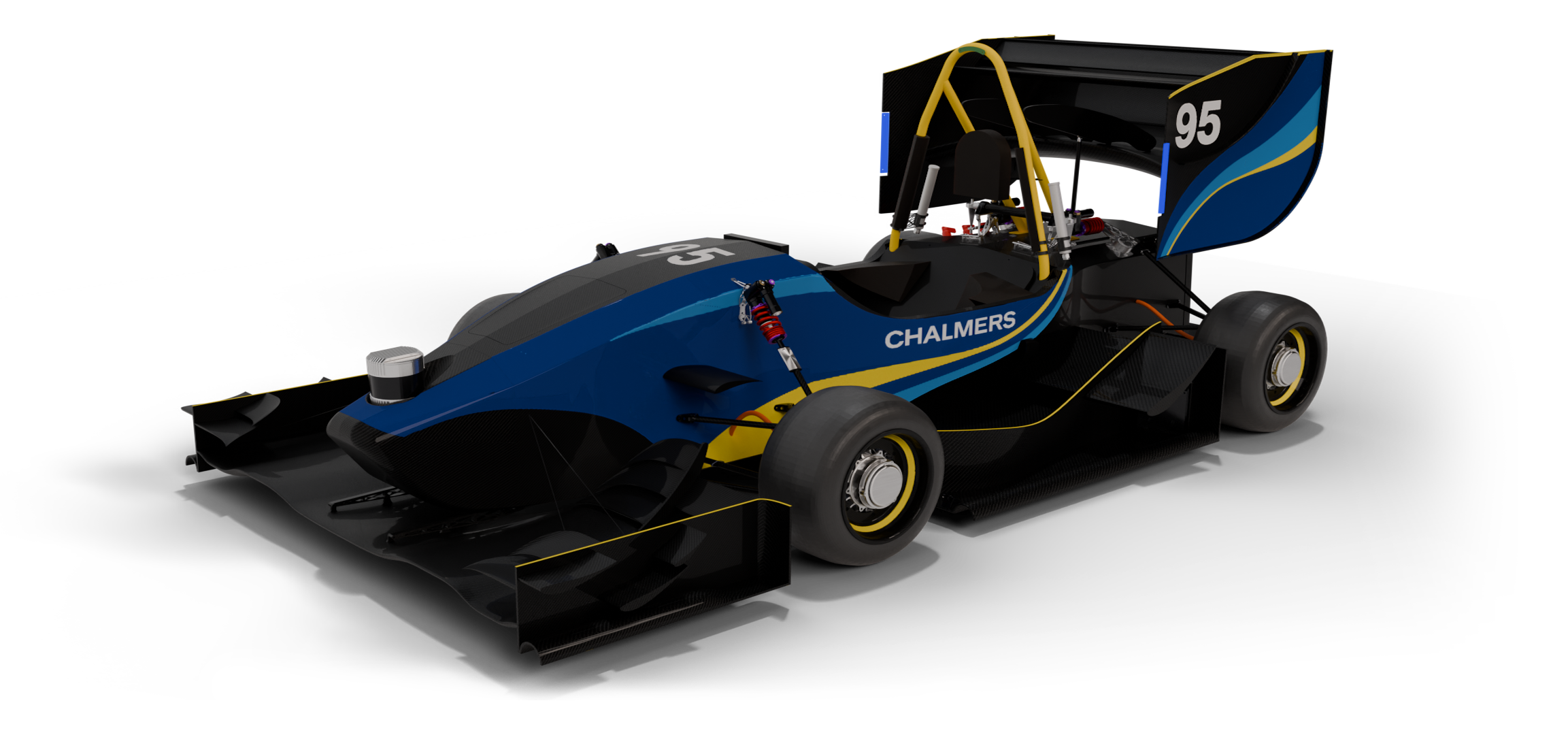
2026
Info
342x
Founded in 2001 at Chalmers University of Technology in Gothenburg, Sweden, by a team of dedicated students, Chalmers Formula Student has since upheld a legacy of innovation and excellence. We have now continued on that legacy, driving innovation through the introduction of our Electric system in 2015, and our Autonomous System in 2022 together with our loyal partners. Now, fueled by our past successes, we're more determined than ever to demonstrate our performance on the track.
Engineering Design Priorities:
NumbersDon'tLie
In-house manufacturing
IAmSpeed
Car Specifications
General
| Frame Construction | Single-piece CFRP monocoque with tubular steel roll bars |
|---|---|
| Material | Aluminium honeycomb core, carbon fiber |
| Overall L | 2864 mm |
| Overall W | 1510 mm |
| Overall H | 1075 mm |
| Wheelbase | 1530 mm |
| Track (Fr) | 1250 mm |
| Track (Rr) | 1250 mm |
| Weight with 68kg driver (Fr) | 125 kg |
| Weight with 68kg driver (Rr) | 128 kg |
| Suspension | Double A-Arm, Direct Actuation front pushrod actuated rear with carbon fiber ARB |
| Tyres (Fr / Rr) | 16x7.5-10, Hoosier |
| Wheels (Fr / Rr) | 8.0x10, CFRP |
| Drive Type | Electric Hubmotors |
| Differential | - |
| Cooling | Double radiator, closed system |
| Brake System | Self developed rotors, master cylinders and topology optimized calipers |
| Electronics | Weight-optimised harness, flash-over-CAN, extensive test coverage, debug LEDs & logging |
Powertrain
| Number of Motors | 4 |
|---|---|
| Motor Location | FR, FL, RR, RL |
| Max Motor Power (per motor) | 40 kW |
| Motor Type | PMSM in-runner |
| Max Motor RPM (highest) | 20000 rpm |
| Motor Controller | Electrophorus |
| Max System Voltage | 600 V |
| Electrode Materials | LiCoO2 - graphite |
| Combined Accumulator Capacity | 7.4 kWh |
| Transmission Ratio (Primary) | 12.48 : 1 |
| Transmission Ratio (Secondary) | - |
Driverless System
| Processing unit(s) | AMD Ryzen AI Max 395 |
|---|---|
| Floating Point Operations Per Second of all processing units that are working for the DV system | 2600 GigaFLOPS |
| Power consumption of all processing units that are working for the DV system | 150 W |
| Camera(s) | - |
| Radar sensor(s) | 0 |
| Lidar sensor(s) | Hesai Pandar 64 |
| Other sensors | GSS, IMU |
| Highlights of the DV system | CFRP DV computer cover, custom sewn Spanish high-quality LiDAR cover, highly integrated steering actuator with titanium and CFRP in-house developed steering system |
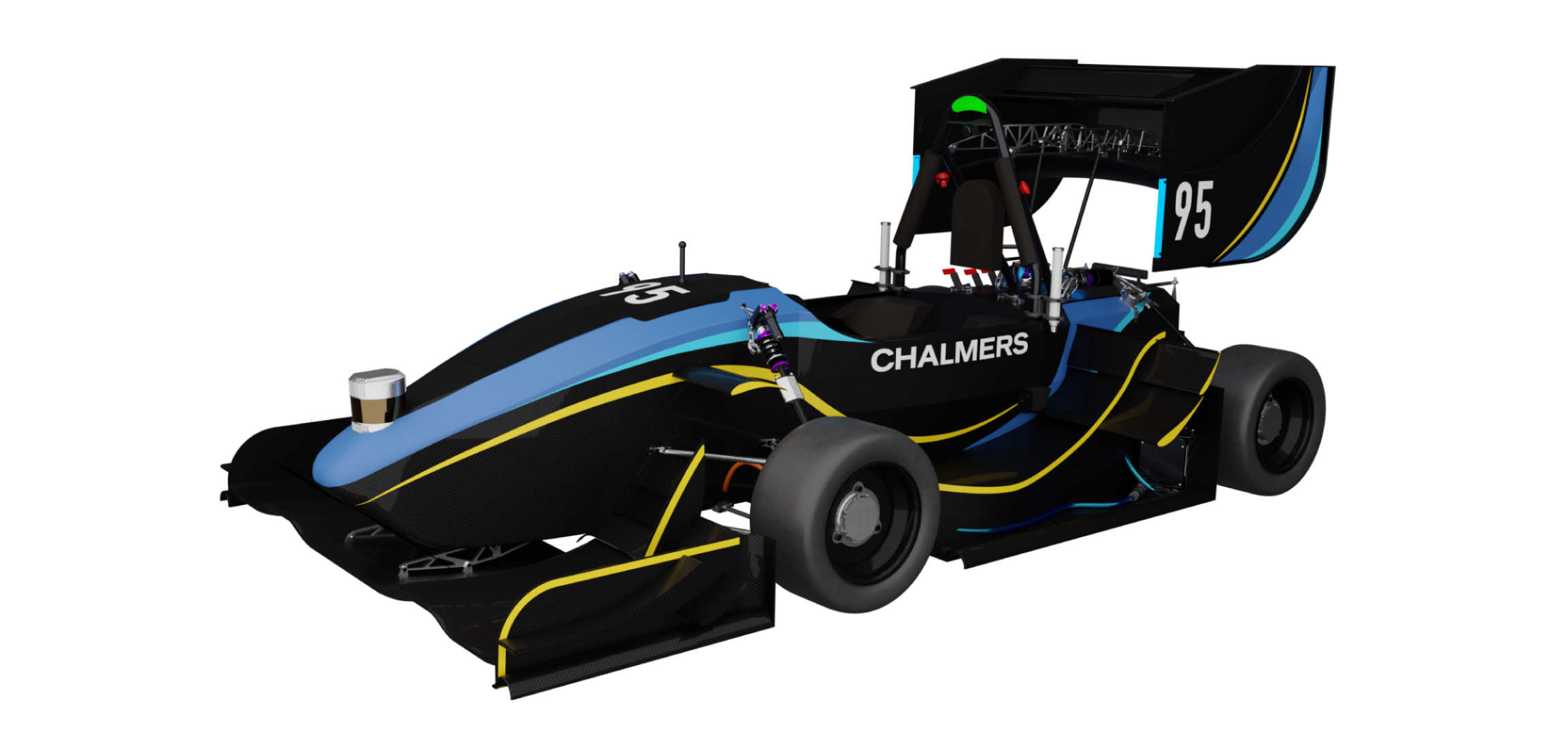
2025
Info
201x
Founded in 2001 at Chalmers University of Technology in Gothenburg, Sweden, by a team of dedicated students, Chalmers Formula Student has since upheld a legacy of innovation and excellence. We have now continued on that legacy, driving innovation through the introduction of our Electric system in 2015, and our Autonomous System in 2022 together with our loyal partners. Now, fueled by our past successes, we're more determined than ever to demonstrate our performance on the track.
Engineering Design Priorities:
NumbersDon'tLie
Inhouse manufacturing
IAmSpeed
Car Specifications
General
| Frame Construction | Composites sandwich panel with carbon fiber skins and aluminium honeycomb core. |
|---|---|
| Material | Euro-composites aluminium honeycomb core (12.5, 25.4mm), Toray carbon fiber skins. |
| Overall L | 2860 mm |
| Overall W | 1490 mm |
| Overall H | 1170 mm |
| Wheelbase | 1530 mm |
| Track (Fr) | 1250 mm |
| Track (Rr) | 1250 mm |
| Weight with 68kg driver (Fr) | 134 kg |
| Weight with 68kg driver (Rr) | 136 kg |
| Suspension | Double Wishbone. Direct actuation front, pushrod actuated rear with carbon fiber ARB |
| Tyres (Fr / Rr) | 16x7.5-R10, 16x7.5-R10, |
| Wheels (Fr / Rr) | 7.0x10, 24.5mm offset, 1pc Carbon composite / 7.0x10, 24.5mm offset, 1pc Carbon composite |
| Drive Type | Electric Hubmotors |
| Differential | No |
| Cooling | Double radiator, closed system |
| Brake System | Self developed rotors, master cylinders and topology optimized calipers. |
| Electronics | Inhouse developed PCBs and harness |
Powertrain
| Number of Motors | 4 |
|---|---|
| Motor Location | FR, FL, RR, RL |
| Max Motor Power (per motor) | 32kW kW |
| Motor Type | PMS Hub Motors |
| Max Motor RPM (highest) | 20000 rpm |
| Motor Controller | No |
| Max System Voltage | 590 V |
| Electrode Materials | NCM523 + Gr |
| Combined Accumulator Capacity | 7,7kWh kWh |
| Transmission Ratio (Primary) | 1:13 : 1 |
| Transmission Ratio (Secondary) | 1:1 : 1 |
Driverless System
| Processing unit(s) | Teensy 4.1, Nvidia Jetson AGX |
|---|---|
| Floating Point Operations Per Second of all processing units that are working for the DV system | 5325 GigaFLOPS |
| Power consumption of all processing units that are working for the DV system | 60 W |
| Camera(s) | 0 |
| Radar sensor(s) | 0 |
| Lidar sensor(s) | Hesai Pandar 64 |
| Other sensors | IMU: NovAtel CPT7 |
| Highlights of the DV system | ROS2 nodes running inside Docker containers LTV-MPC for lateral control Curvature-based adaptive speed planner EKF for speed estimation Multi-threaded graph-based SLAM with sliding window Path planning through delaunay triangulation with minimum curvature optimization on every lap. |
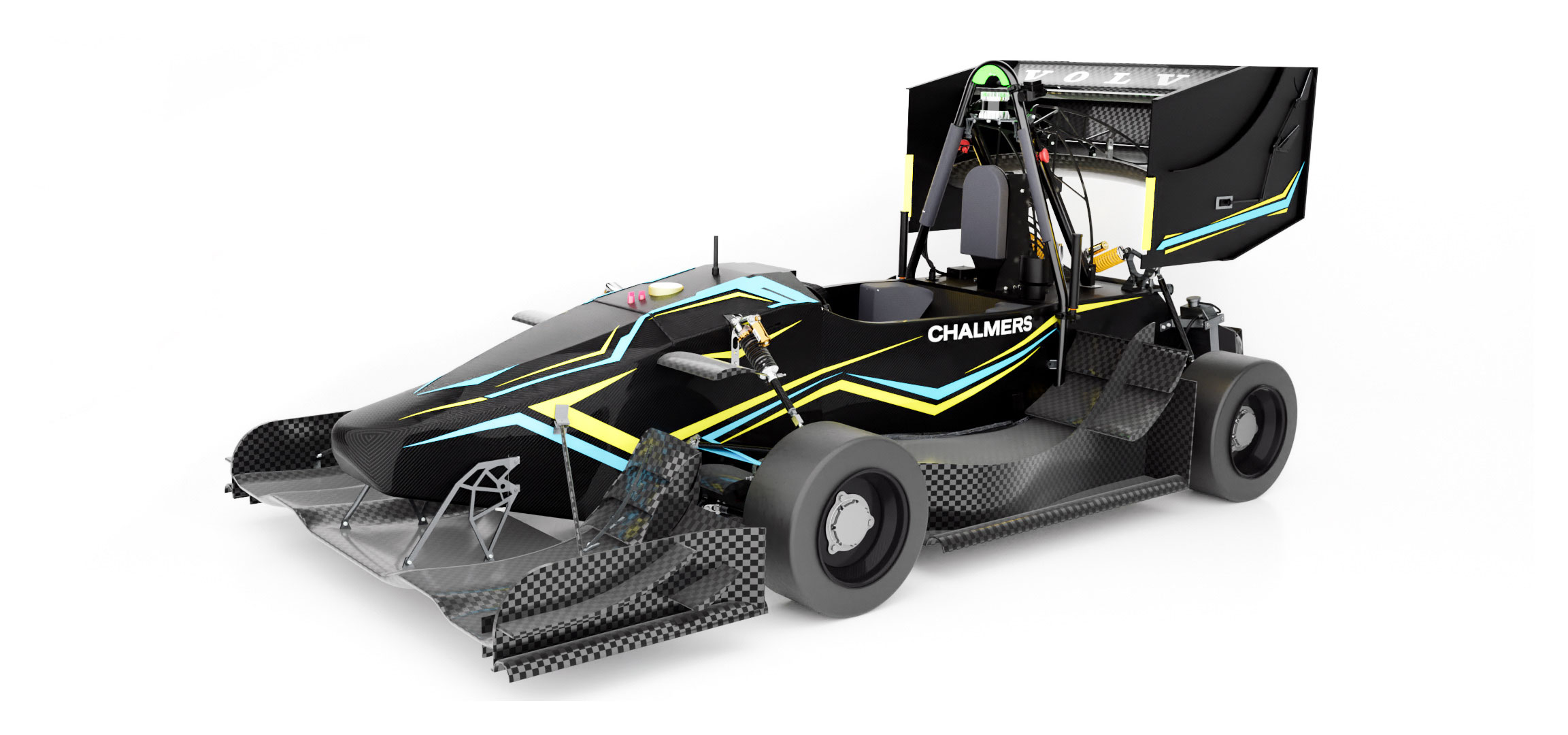
2024
Info
215x
Founded in 2001 at Chalmers University of Technology in Gothenburg, Sweden, by a team of dedicated students, Chalmers Formula Student has since upheld a legacy of innovation and excellence. We have now continued on that legacy, driving innovation through the introduction of our Electric system in 2015, and our Autonomous System in 2022 together with our loyal partners. Now, fueled by our past successes, we're more determined than ever to demonstrate our performance on the track.
Engineering Design Priorities:
Redesigned Segments
Parts Manufacturability
Autonomous System
Topology Optimized Parts
Downforce & Aerodynamics
Low Voltage Harness
Car Specifications
General
| Frame Construction | Composites sandwich panel with carbon fiber skins and aluminium honeycomb core. |
|---|---|
| Material | Corex Aluminium honeycomb core (12.5, 25.4mm), Toray carbon fiber skins. |
| Overall L | 2876 mm |
| Overall W | 1491 mm |
| Overall H | 1083 mm |
| Wheelbase | 1530 mm |
| Track (Fr) | 1250 mm |
| Track (Rr) | 1200 mm |
| Weight with 68kg driver (Fr) | 146 kg |
| Weight with 68kg driver (Rr) | 160 kg |
| Suspension | Double unequal length A-Arms. Direct actuation front, push rod actuated rear. Straight ARB |
| Tyres (Fr / Rr) | 16.0x6.0-R10 Hoosier LC0 / 16.0x6.0-R10 Hoosier LC0 |
| Wheels (Fr / Rr) | 7.0x10, 24.5mm offset, 1pc Carbon composite / 7.0x10, 24.5mm offset, 1pc Carbon composite |
| Drive Type | Compound planetary gearbox |
| Cooling | Dual rear mounted 400cc motorcross bike radiators with 120mm fans. |
| Brake System | 4-Disk system, 200mm self developed rotors, adjustable brake balance. |
| Electronics | Multifunctional Steering Wheel and Dashboard, Torque Vectoring, Dynamic Power Limiter |
Powertrain
| Number of Motors | 4 |
|---|---|
| Motor Location | FR, FL, RR, RL |
| Max Motor Power (per motor) | 32kW per motor kW |
| Motor Type | PMS Hub Motors |
| Max Motor RPM (highest) | 20000 per motor rpm |
| Max System Voltage | 591V V |
| Electrode Materials | NCM523 + Gr |
| Combined Accumulator Capacity | 7,7kWh kWh |
| Transmission Ratio (Primary) | 1:13 : 1 |
Driverless System
| Processing unit(s) | Intel Core i7-12800 |
|---|---|
| Floating Point Operations Per Second of all processing units that are working for the DV system | 2156 GigaFLOPS |
| Power consumption of all processing units that are working for the DV system | 115 W |
| Lidar sensor(s) | 1 Ouster OS1-64 Below Horizon, 120m range, 22.5 degree vertical opening angle |
| Other sensors | NovaTel CPT7 IMU + GNSS with PPP corrections |
| Highlights of the DV system | ROS2 nodes running inside Docker containers, Point cloud aggregation using LiDAR SLAM, LTV-MPC for lateral control Curvature-based adaptive speed planner EKF for speed estimation, Multi-threaded graph-based SLAM with sliding window, Path planning through delaunay triangulation with minimum curvature optimization |
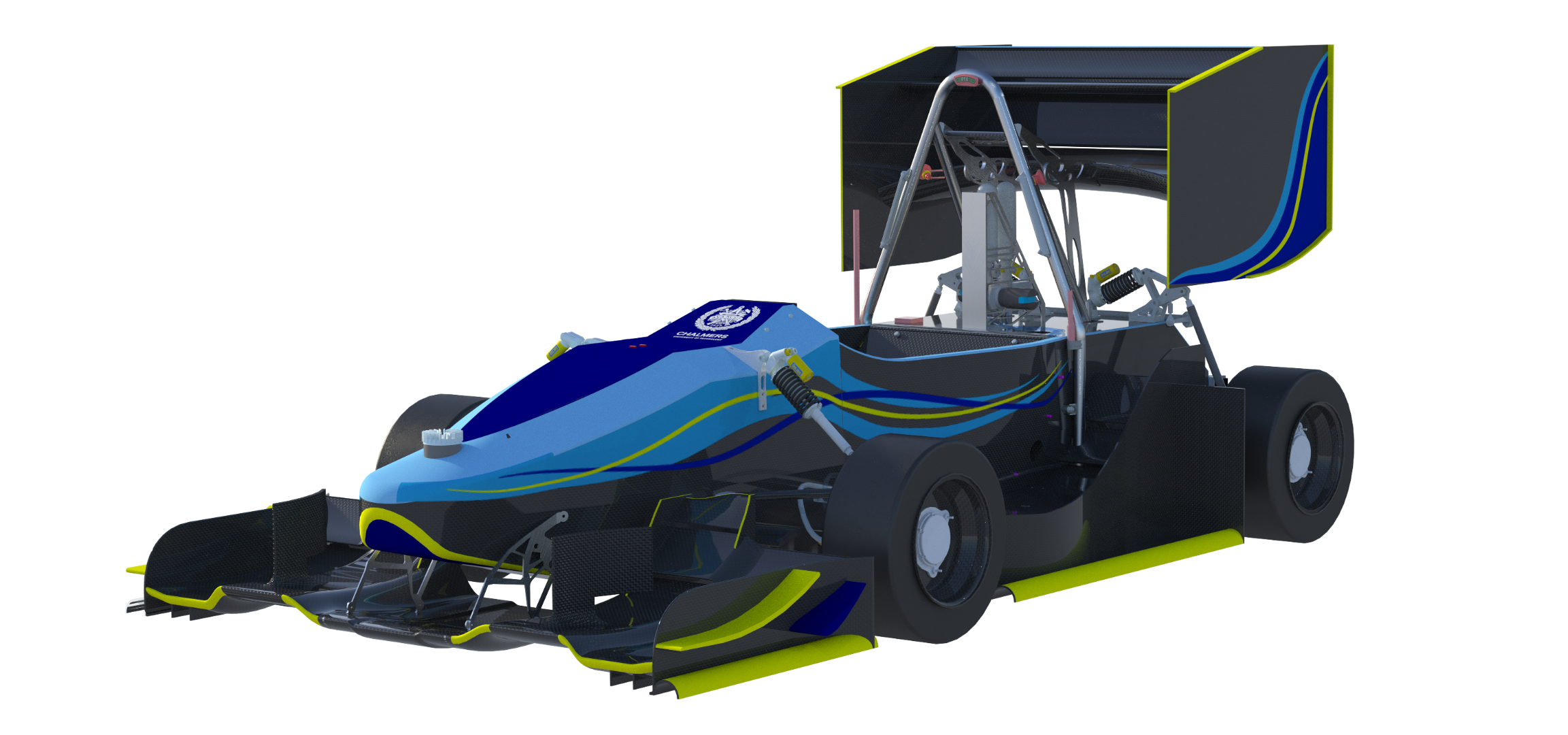
2023
Info
111x
Chalmers Formula Student is the official racing team of Chalmers University of Technology started in 2001. This year, the team of Chalmers Formula Student is excited to present the designed and manufactured both driverless and driver-suited Formula Student racecar called Margareta. It is equipped with four self-made electrical hub motors, forming excellent traction and preparing the car for the sharp corners of Hockenheimring. The team of CFS is thrilled to be participating in FSG again.
Engineering Design Priorities:
Redesigned TSAC
Lighter Monocoque
Direct Actuation System
Topology Optimized Parts
Downforce & Aerodynamics
Autonomous System
Car Specifications
General
| Frame Construction | Composite Monocoque |
|---|---|
| Material | Sandwich panels of CFRP prepreg and aluminium honeycomb |
| Overall L | 2884 mm |
| Overall W | 1529 mm |
| Overall H | 1136 mm |
| Wheelbase | 1530 mm |
| Track (Fr) | 1250 mm |
| Track (Rr) | 1200 mm |
| Weight with 68kg driver (Fr) | 138 kg |
| Weight with 68kg driver (Rr) | 155 kg |
| Suspension | Direct actuation, unequal A arm / Pushrod, unequal A arm, ARB |
| Tyres (Fr / Rr) | Hoosier 16.0 x 6 - 10 LC0 / Hoosier 16.0 x 6 - 10 LC0 |
| Wheels (Fr / Rr) | 7.5in rim width, 23mm offset, custom CFRP with aluminium wheel center |
| Drive Type | Multi planetary automatic gearbox |
| Cooling | Two rear mounted radiators with thermostatic controlled electric fans |
| Brake System | 4-Disks system, adjustable brake balance, regenerative braking |
| Electronics | Multifunctional Steering Wheel and Dashboard, Torque Vectoring, Dynamic Power Limiter |
Powertrain
| Number of Motors | 4 |
|---|---|
| Motor Location | Hub Motor FR, FL, RR, RL |
| Max Motor Power (per motor) | 32kW per Motor kW |
| Motor Type | PMS Hub Motors |
| Max Motor RPM (highest) | 20000 rpm |
| Max System Voltage | 590 V |
| Electrode Materials | NCM523 + Gr |
| Combined Accumulator Capacity | 6.69kWh kWh |
Driverless System
| Processing unit(s) | Intel Core i7-12800 |
|---|---|
| Floating Point Operations Per Second of all processing units that are working for the DV system | 2156 GigaFLOPS |
| Power consumption of all processing units that are working for the DV system | 115 W |
| Lidar sensor(s) | 1 Ouster OS1-64, 120 m range, 22.5 degree vertical opening angle |
| Other sensors | NovaTel CPT7 IMU + GNSS with PPP corrections |
| Highlights of the DV system | Multi-threaded GraphSLAM implementation, Curvature-based longitudinal controller, LTV-MPC for lateral control. |
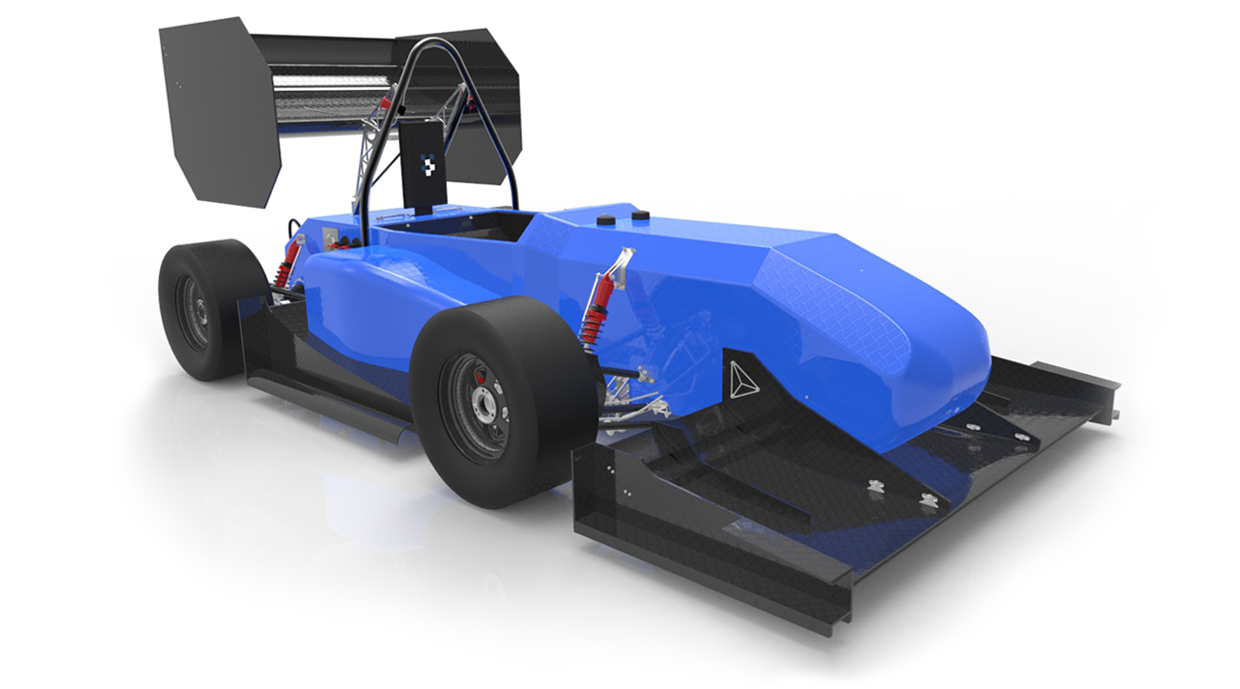
2017
Info
53x
It's the 15th year of Chalmers Formula Student and we present our 3rd rear wheel driven electric car. With a new team formed every year, the team members depend on the knowledge from previous years and experience a steep learning curve during the project life cycle. This year’s car, aimed at being reliable & low weight, will feature custom made high power density motors coupled to compact planetary gearboxes. DRS, CFRP rims, Datalogger, Nodes & BMS are the other highlights; all self-developed.
Engineering Design Priorities:
High Power Density Motors
Planetary Gearbox
Carbon Fiber Rims
Self-made Dataloggers
Drag Reduction System
Live Telemetry System/App
Car Specifications
General
| Frame Construction | CFRP single piece monocoque with Al honeycomb core and integrated front hoop |
|---|---|
| Material | CFRP pre-pregs and Al honeycomb (1/2 and 1 inch) sandwich panels |
| Overall L | 2891 mm |
| Overall W | 1465 mm |
| Overall H | 1183 mm |
| Wheelbase | 1530 mm |
| Track (Fr) | 1250 mm |
| Track (Rr) | 1200 mm |
| Weight with 68kg driver (Fr) | 115 kg |
| Weight with 68kg driver (Rr) | 141 kg |
| Suspension | Double unequal length A-Arm. Pull rod actuated spring and damper. |
| Tyres (Fr / Rr) | Hoosier R25B 18x10x6 |
| Wheels (Fr / Rr) | 10x6 CFRP Custom made rims, +4.7mm offset / 10x6 CFRP Custom made rims, +4.7mm offset |
| Drive Type | Compound Planetary Gearbox |
| Differential | n/a |
| Cooling | Water cooled with 2 side-mounted radiators in sidepods with 150mm electric fans |
| Brake System | Toolex 33 steel, Floating 195x4(fr) 186x4(rr) rotors, 4(fr) & 2(rr) piston calipers |
| Electronics | Live-Telemetry, Datalogger, Nodes, BMS and Torque Vectoring; all self-developed |
Powertrain
| Number of Motors | 2 |
|---|---|
| Motor Location | Rear Right, Rear Left |
| Max Motor Power (per motor) | 40kW, 40kW kW |
| Motor Type | Custom made PMSM from AROS Electronics AB |
| Max Motor RPM (highest) | RR,RL: 20000 rpm |
| Motor Controller | IGBT based 3 phase inverter |
| Max System Voltage | 580V V |
| Electrode Materials | LiCoO2 |
| Combined Accumulator Capacity | 7,66kWh kWh |
| Transmission Ratio (Primary) | 16:1 : 1 |
| Transmission Ratio (Secondary) | n/a : 1 |
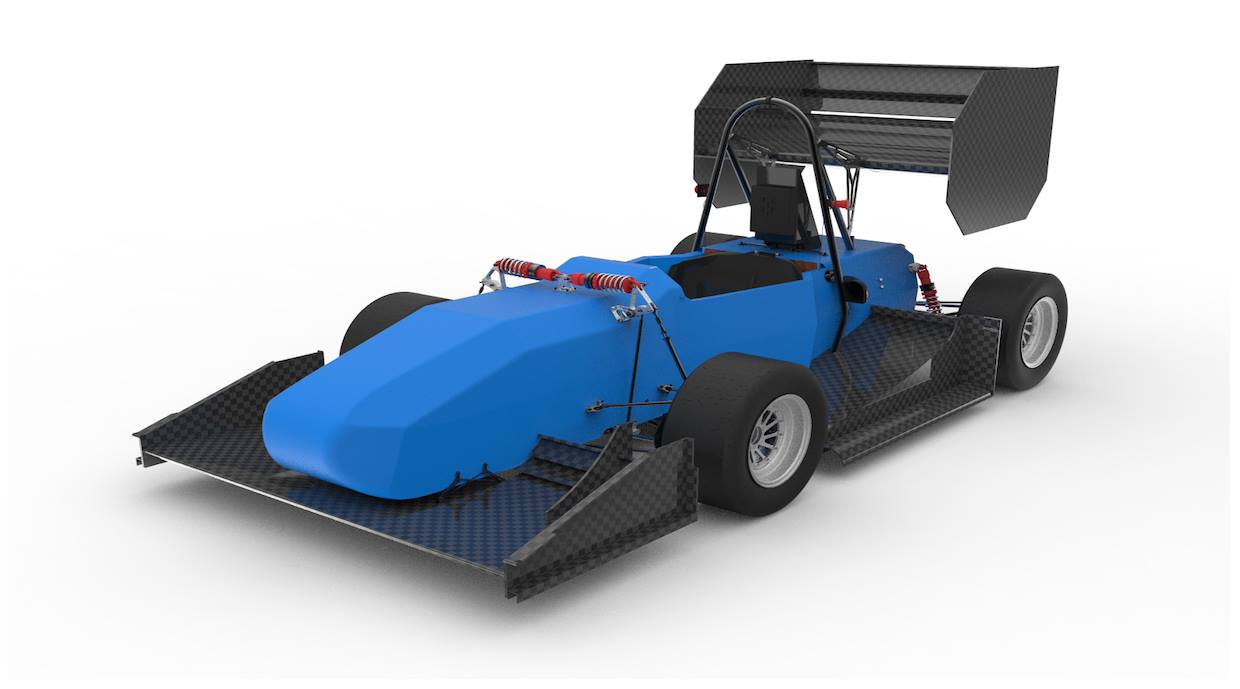
2016
Info
25x
At Chalmers we build a new car every year as well as a completely new team. This year we designed an easy-to-manufacture car for more extensive testing and has focused on validation of analysis by physical tests. Safety, adjustability and sophisticated software highlights the CFS16 car. We have self developed the BMS and processing nodes to better suit our car and keep the reliability high and weight low.
Engineering Design Priorities:
Safety
Reliability
HighPerformance
RearwingMountingSolution
SophisticatedSoftware
WirelessData
Car Specifications
General
| Frame Construction | One-piece monocoque with Al honeycomb core and integrated front hoop |
|---|---|
| Material | Prepreg CF and Al honeycomb structure, 4130 steel main hoop, 2014 Al front hoop |
| Overall L | 2917 mm |
| Overall W | 1375 mm |
| Overall H | 1196 mm |
| Wheelbase | 1530 mm |
| Track (Fr) | 1200 mm |
| Track (Rr) | 1200 mm |
| Weight with 68kg driver (Fr) | 124 kg |
| Weight with 68kg driver (Rr) | 139 kg |
| Suspension | Double unequal wishbones both rear and front |
| Tyres (Fr / Rr) | 18x6 -10 Hoosier / 18x6 -10 Hoosier |
| Wheels (Fr / Rr) | 7x10, 11mm offset, 3pc Al Rim / 7x10, 11mm offset, 3pc Al Rim |
| Drive Type | 2 stage spur gears individual per motor |
| Differential | n/a |
| Cooling | Rear mounted radiator with a San Ace 120 fan |
| Brake System | Floating 195x4 (front) 186x4.5 (rear), toolox 33 steel, ventilated |
| Electronics | Torque Vectoring, slip control, launch control, wireless real/time data transfer |
Powertrain
| Number of Motors | 2 |
|---|---|
| Motor Location | Rear Left, Rear Right |
| Max Motor Power (per motor) | 45kW , 45kW kW |
| Motor Type | IRO-CTHFS15, Water cooled PMSM |
| Max Motor RPM (highest) | Rear : 12000 rpm |
| Motor Controller | Aros Electronics AB |
| Max System Voltage | 399V V |
| Electrode Materials | LiFePo4 |
| Combined Accumulator Capacity | 7.03kWh kWh |
| Transmission Ratio (Primary) | 1:8.02 : 1 |
| Transmission Ratio (Secondary) | n/a : 1 |
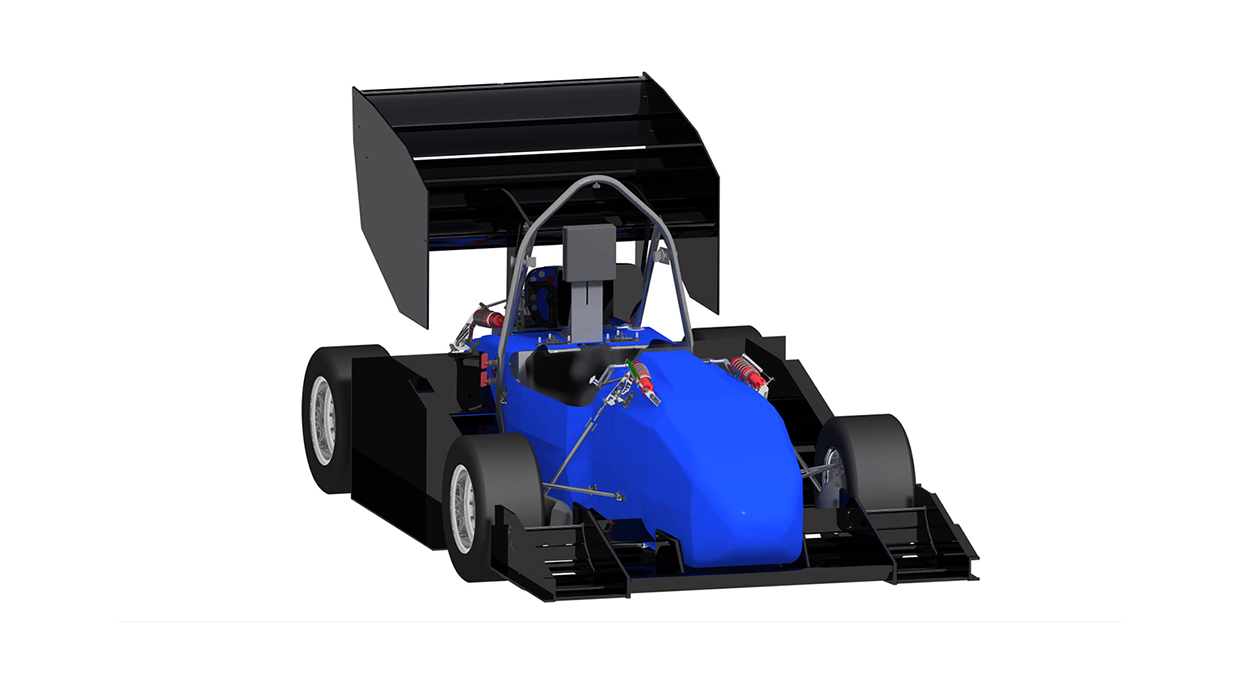
2015
Info
19x
Chalmers Formula Student bridges the gap between Engineering Education and Industry by training students in a real-life project where they independently Design, Analyze and develop Technology solutions by making Data-Driven Decisions throughout the Design, Manufacturing and Testing of a full-fledged Formula Racing automobile, and finally put their skills to the test in competitions with various other teams from the rest of the world.
Engineering Design Priorities:
#Safety
#Reliability
#HighPerformance
#EasyAdjustability
#Ergonomics
#Sustainability
Car Specifications
General
| Frame Construction | Carbon fiber monocoque made aluminum honeycomb sandwich structure |
|---|---|
| Material | Hexcel M49 Carbon fiber and Hexcore Aluminum honeycomb core (25.4mm) |
| Overall L | 2928 mm |
| Overall W | 1415 mm |
| Overall H | 1180 mm |
| Wheelbase | 1530 mm |
| Track (Fr) | 1200 mm |
| Track (Rr) | 1200 mm |
| Weight with 68kg driver (Fr) | 124 kg |
| Weight with 68kg driver (Rr) | 139 kg |
| Suspension | Double unequal length and non-parallel wishbones. Push rod actuated longitudinally mounted dampers |
| Tyres (Fr / Rr) | Hoosier 6.0/18.0-10 LC0 |
| Wheels (Fr / Rr) | Keizer 10” 7” wide two piece rim-shells. CNC milled centrepieces in 7075T6 Aluminium |
| Drive Type | Two stage single gear transmission |
| Differential | Software implemented torque distribution to separate motors |
| Cooling | 300ml rear mounted radiator with electric fan |
| Brake System | Cross Drilled Rotors (Toolox Steel) F: 195 OD, R: 190 OD, Ventilated Disc (Inconel) |
| Electronics | Self designed sensor control units, torque vectoring and traction control,data logging over CAN bus |
Powertrain
| Number of Motors | 2 |
|---|---|
| Motor Location | Rear Left, Rear Right |
| Max Motor Power (per motor) | 45 kW, 45 kW kW |
| Motor Type | RL, RR: IRO AB - CTHFS15 |
| Max Motor RPM (highest) | 12000 rpm |
| Motor Controller | Aros Electronics AB - AROS HPC_HT |
| Max System Voltage | 400V V |
| Electrode Materials | LiCoO2 - graphite |
| Combined Accumulator Capacity | 7kWh kWh |
| Transmission Ratio (Primary) | 1:8.04 : 1 |
| Transmission Ratio (Secondary) | 1:1 : 1 |
FS past achievements due to World Ranking Data Base
| Date | Event | Teams | Rank | BP | CM | ED | SP | DV SP | AC | DV AC | AX | EN | EF | Pe | Total |
|---|---|---|---|---|---|---|---|---|---|---|---|---|---|---|---|
| 2026.08 | 80 |
4. |
27. |
46. |
4. |
36. |
3. |
13. |
3. |
3. |
11. |
1. |
0.00 |
734.25 |
|
| 2026.07 | 52 |
20. |
34. |
31. |
15. |
7. |
- |
- |
- |
- |
- |
- |
0.00 |
263.25 |
|
| 2025.08 | 84 |
8. |
66. |
28. |
9. |
17. |
3. |
17. |
4. |
6. |
15. |
6. |
0.00 |
698.66 |
|
| 2025.08 | 53 |
9. |
4. |
20. |
21. |
13. |
- |
13. |
- |
10. |
10. |
4. |
0.00 |
629.60 |
|
| 2024.08 | 79 |
18. |
38. |
58. |
23. |
12. |
6. |
10. |
4. |
7. |
- |
- |
0.00 |
468.36 |
|
| 2024.08 | 32 |
16. |
21. |
24. |
10. |
14. |
- |
10. |
- |
11. |
- |
- |
0.00 |
289.69 |
|
| 2023.08 | 70 |
16. |
39. |
25. |
13. |
12. |
2. |
- |
- |
11. |
- |
- |
0.00 |
376.43 |
|
| 2022.07 | 30 |
10. |
28. |
18. |
12. |
5. |
- |
7. |
- |
9. |
- |
- |
0.00 |
312.50 |
|
| 2021.08 | 16 |
10. |
7. |
4. |
4. |
- |
- |
- |
- |
- |
- |
- |
0.00 |
276.60 |
|
| 2019.08 | 24 |
14. |
21. |
13. |
9. |
- |
- |
- |
- |
- |
- |
- |
0.00 |
220.70 |
|
| 2019.07 | 21 |
15. |
21. |
10. |
8. |
- |
- |
12. |
- |
- |
- |
- |
0.00 |
222.96 |
|
| 2018.08 | 38 |
11. |
30. |
23. |
18. |
9. |
- |
21. |
- |
17. |
8. |
15. |
0.00 |
581.70 |
|
| 2018.08 | 19 |
3. |
8. |
4. |
10. |
9. |
- |
4. |
- |
5. |
3. |
5. |
0.00 |
811.30 |
|
| 2017.08 | 34 |
8. |
10. |
10. |
10. |
9. |
- |
9. |
- |
7. |
11. |
10. |
0.00 |
555.83 |
|
| 2016.08 | 37 |
9. |
15. |
16. |
15. |
12. |
- |
15. |
- |
7. |
- |
10. |
-15.00 |
441.54 |
|
| 2016.07 | 106 |
6. |
27. |
19. |
23. |
- |
- |
26. |
- |
9. |
7. |
5. |
0.00 |
678.20 |
|
| 2015.08 | 39 |
15. |
28. |
13. |
23. |
- |
- |
12. |
- |
11. |
- |
14. |
0.00 |
350.97 |
|
| 2015.07 | 92 |
42. |
36. |
20. |
12. |
- |
- |
- |
- |
- |
- |
- |
0.00 |
237.90 |
|
| x 18 | |||||||||||||||