
Team Details
TU Graz Racing Team
| University | Technische Universität Graz
AT Graz TU short 30 |
 |
|---|---|---|
| Location | Graz, Austria | |
| Social Media | ||
| EV Team | TU Graz Racing Team | |
| Short Link | tid.fsg.one/33 | |
Team Description
Since 2003 we annually construct and build a race car to compete in the international Formula Student and Formula SAE events. Because of the international participation and the common mix-ups with Austria abroad we named the series TANKIA – There are no kangaroos in Austria. Characteristic feature of the series is that allmost everything is made from carbon fiber.
Past Events
2019
Info
87x
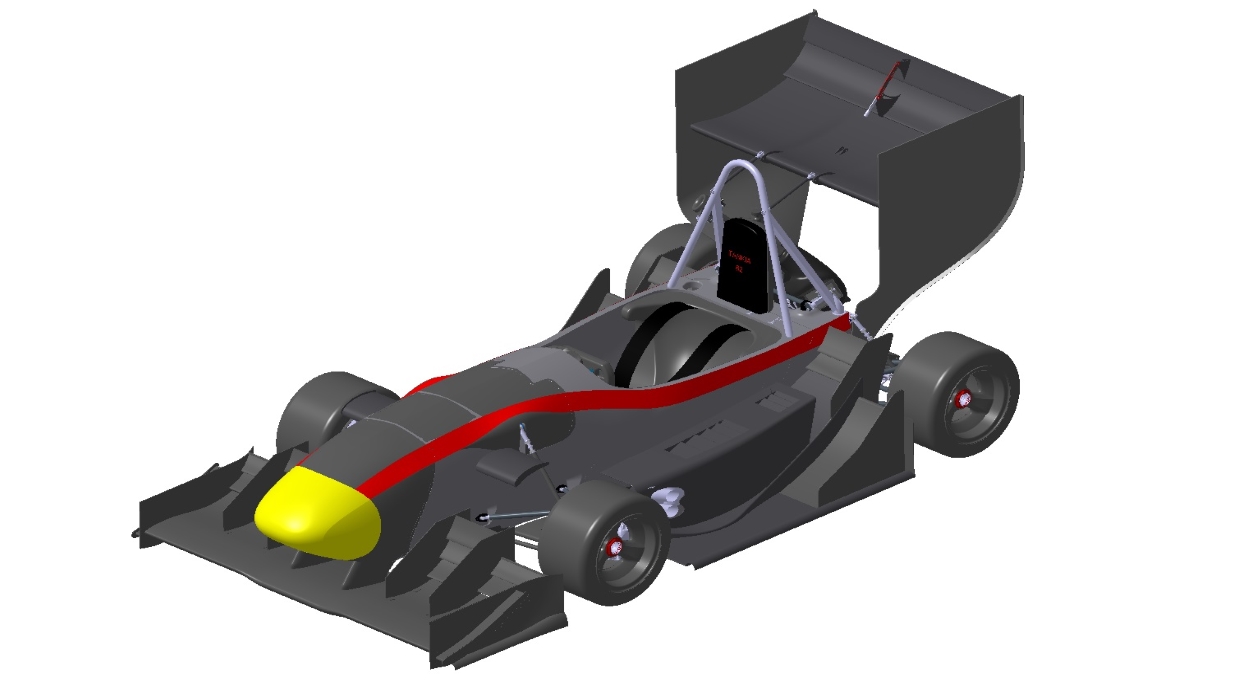
We are the TU Graz Racing Team from Austria and are participating for the 15th consecutive time at FSG with our this years car, called Fiona. Coming into second place for the last two years made us more hungry than ever for a victory at FSG! To achieve this goal, we redesigned our whole car and are now looking forward to compete with the best in the world. Being a team with very young team members, we allways try to implement this young spirit into our TANKIA. Come and visit us at our pit!
Engineering Design Priorities:
lightweight
downforce
efficiency
compliance
ergonomics
style
Car Specifications
General
| Frame Construction | one piece CFRP monocoque |
|---|---|
| Material | carbon fibre prepregs, Nomex and aluminium honeycombs, structual foam |
| Overall L | 2885 mm |
| Overall W | 1430 mm |
| Overall H | 1174 mm |
| Wheelbase | 1550 mm |
| Track (Fr) | 1180 mm |
| Track (Rr) | 1180 mm |
| Weight with 68kg driver (Fr) | 105 kg |
| Weight with 68kg driver (Rr) | 123 kg |
| Suspension | double unequal length A-arms, pushrod actuated horizontally oriented spring and damper |
| Tyres (Fr / Rr) | 16.0 x 7.5 - R10, Hoosier LC0 / 16.0 x 7.5 - R10, Hoosier LC0 |
| Wheels (Fr / Rr) | 7.5 x 10.0, 2 piece, 3 spoke design, CFRP superlightweight |
| Drive Type | chain |
| Differential | Drexler LSD |
| Cooling | aluminium core water cooler with fan + oil-water-heat exchanger |
| Brake System | 4 disk system, self designed rear and front brakes, electric adj. brake balance |
| Electronics | multifunctional steering wheel, electric clutch actuation, self designed live telemetry |
Powertrain
| Engine | KTM SX-F 450/500 |
|---|---|
| Bore | 95 mm |
| Stroke | 72 mm |
| Cylinders | 1 |
| Displacement | 500 ccm |
| Compression Ratio | 15.13:1 : 1 |
| Fuel System | inlet manifold injection |
| Fuel | E85 ethanol |
| Max Power Design | 9000 rpm |
| Max Torque Design | 7500 rpm |
2018
Info
85x
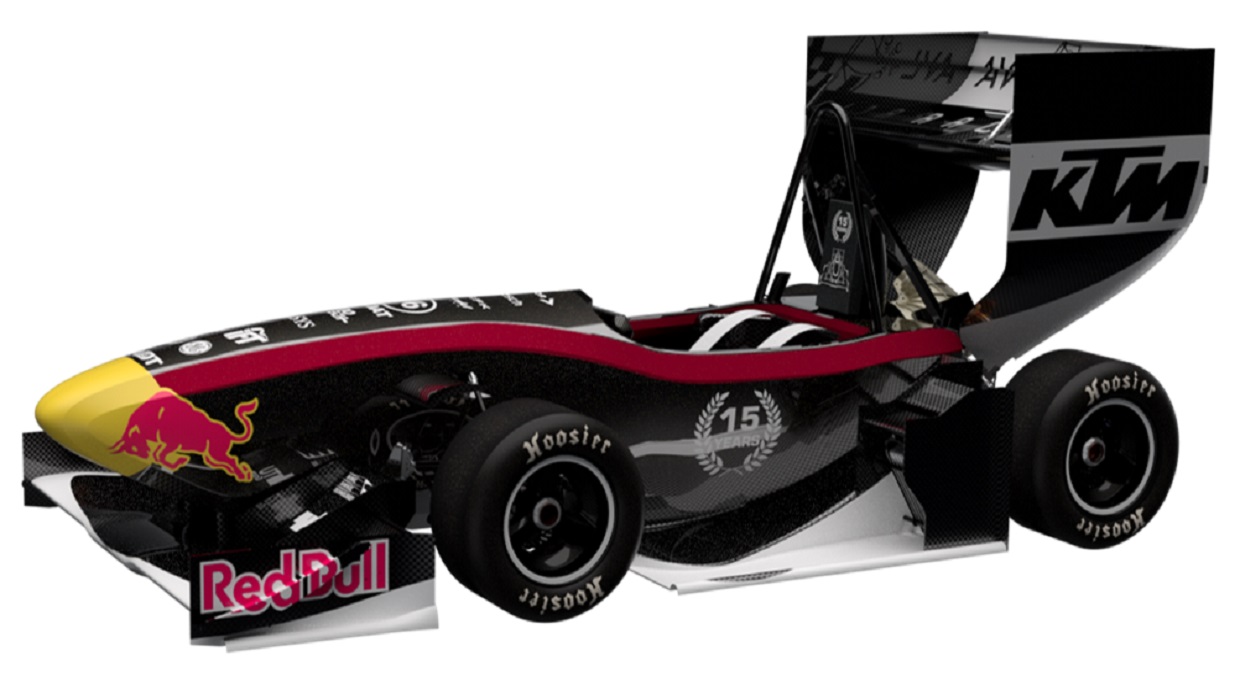
With the TANKIA 2018, the TU Graz Racing Team is competing with its 15th Combustion Car in the Team History. Every Year we try to further improve our car to reach a new level. With our 2018 contender we further improved on our single-cylinder concept by making TANKIA 2018 lighter, stronger and more reliable. At the same time we added new features to further push the boundaries and build an even better car.You are invited to visit us at our pit at any time. ;)
Engineering Design Priorities:
lightweight
maintainability
reliability
suspension adjustment
aerodynamics
fuel efficiency
Car Specifications
General
| Frame Construction | one piece CFRP monocoque |
|---|---|
| Material | carbon fibre prepregs, nomex and aluminium honeycombs, structural foam, cfrp and titanium |
| Overall L | 3022 mm |
| Overall W | 1413 mm |
| Overall H | 1174 mm |
| Wheelbase | 1550 mm |
| Track (Fr) | 1180 mm |
| Track (Rr) | 1180 mm |
| Weight with 68kg driver (Fr) | 107 kg |
| Weight with 68kg driver (Rr) | 115 kg |
| Suspension | double unequal lengh A-Arm, pushrod actuated horizontal orientated spring and damper |
| Tyres (Fr / Rr) | 18 / 6 - 10 Hoosier LC0 /18 / 6 - 10 Hoosier LC0 |
| Wheels (Fr / Rr) | CFRP |
| Drive Type | chain |
| Differential | limited slip differential |
| Cooling | aluminium core oil and water radioator, water radiator with selfmade fan on the suction side |
| Brake System | 4 disk system, electric adjustable brake balance, self constructed rear brake callipers |
| Electronics | multifunctional steering wheel, electric clutch actuation, self designed live telemetry |
Powertrain
| Engine | KTM SX-F 450 |
|---|---|
| Bore | 95 mm |
| Stroke | 72 mm |
| Cylinders | 1 |
| Displacement | 500 ccm |
| Compression Ratio | 15,13:1 : 1 |
| Fuel System | inlet manifold injection |
| Fuel | E 85 |
| Max Power Design | 9000 rpm |
| Max Torque Design | 6500 rpm |
2017
Info
84x
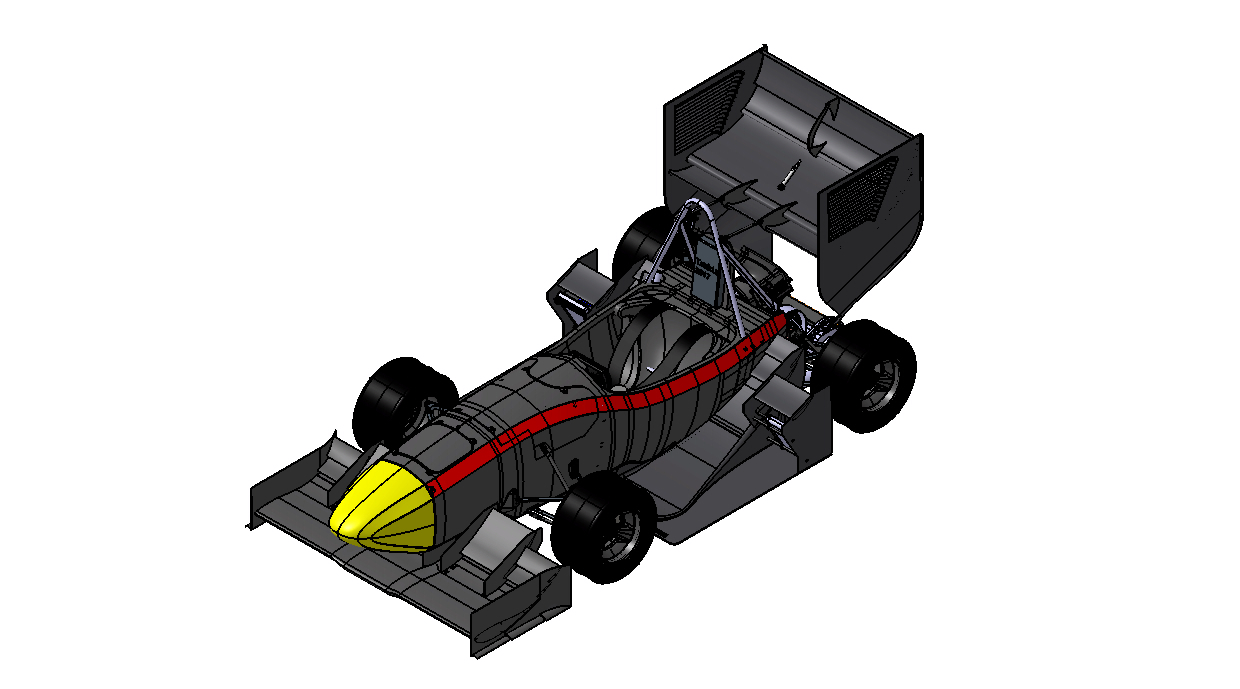
TU Graz Racing Team is a team that is rich in tradition. Every year, we build on the excellent cars from the past and try to continuously improve. This year, like every year we are trying to build a car that maintains or exceeds the performance compared to past cars. We try to meet the challenges of a Formula Student season by clearly dividing the upcoming work into 7 different modules. The heads of the respective modules act as connectors and coordinators.
Engineering Design Priorities:
lightweight
maintainability
reliability
suspension adjustment
aerodynamics
fuel efficiency
Car Specifications
General
| Frame Construction | one-piece CFRP monocoque |
|---|---|
| Material | carbon fibre prepregs, nomex and aluminium honeycombs, structural foam, cfrp and titanium inserts |
| Overall L | 2915 mm |
| Overall W | 1413 mm |
| Overall H | 1180 mm |
| Wheelbase | 1550 mm |
| Track (Fr) | 1180 mm |
| Track (Rr) | 1180 mm |
| Weight with 68kg driver (Fr) | 104 kg |
| Weight with 68kg driver (Rr) | 113 kg |
| Suspension | double unequal lengh A-Arm, pushrod actuated horizontal orientated spring and damper |
| Tyres (Fr / Rr) | 18 / 6 - 10 Hoosier LC0 / 18 / 6 - 10 Hoosier LC0 |
| Wheels (Fr / Rr) | CFRP |
| Drive Type | chain drive |
| Differential | limited slip differential |
| Cooling | aluminium core oil and water radiator, water radiator with selfmade fan on the suction side |
| Brake System | 4 disk system, electric adjustable brake balance, weight optimized rear calipers |
| Electronics | multifunctional steering wheel, electric clutch actuation, live telemetry, ETC |
Powertrain
| Engine | KTM SX-F 450 |
|---|---|
| Bore | 95 mm |
| Stroke | 72 mm |
| Cylinders | 1 |
| Displacement | 500 ccm |
| Compression Ratio | 15,13:1 : 1 |
| Fuel System | inlet manifold injection |
| Fuel | E85 |
| Max Power Design | 9000 rpm |
| Max Torque Design | 6500 rpm |
2016
Info
32x
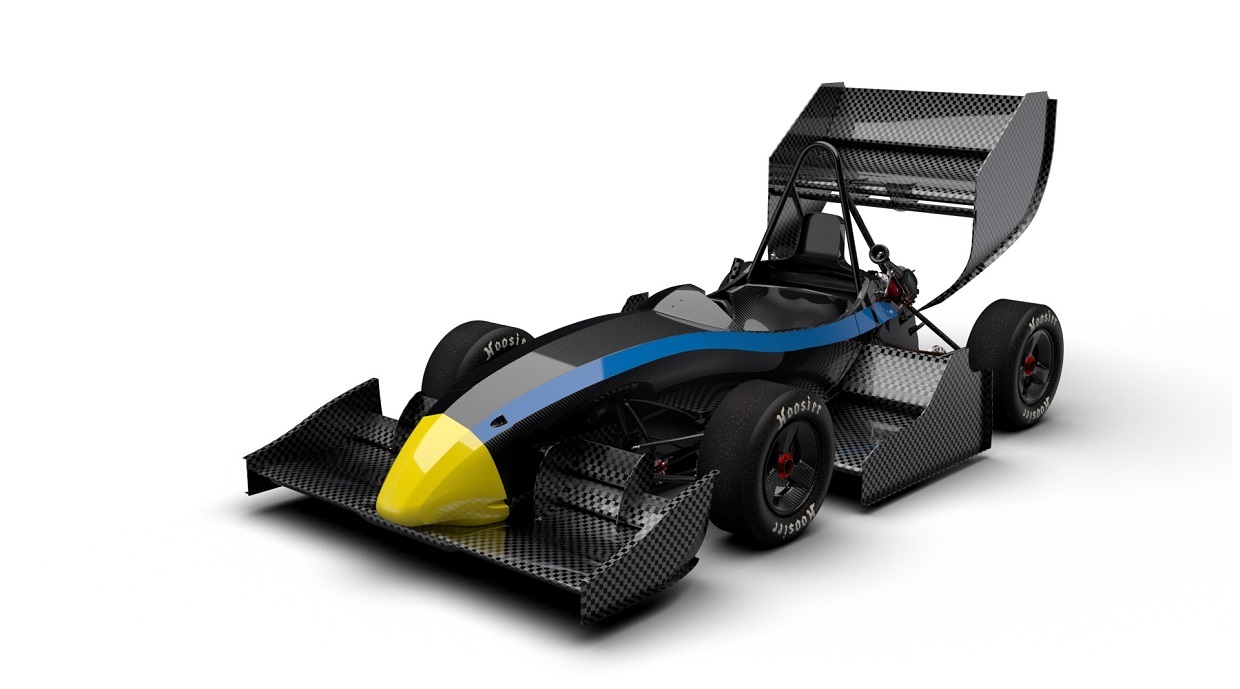
TU Graz Racing Team is a team that is rich in tradition. Every year, we build on the excellent cars from the past and try to continuously improve. This year, like every year we are trying to build a car that maintains or exceeds the performance compared to past cars. We try to meet the challenges of a Formula Student season by clearly dividing the upcoming work into 7 different modules. The heads of the respective modules act as connectors and coordinators.
Engineering Design Priorities:
reliability
weight
center of gravity
engine cooling
aerodynamics
fuel efficiency
Car Specifications
General
| Frame Construction | one-piece CFRP monocoque |
|---|---|
| Material | carbon fibre prepregs, nomex and aluminium honeycombs, structural foam, cfrp and titanium inserts |
| Overall L | 2900 mm |
| Overall W | 1460 mm |
| Overall H | 1195 mm |
| Wheelbase | 1550 mm |
| Track (Fr) | 1197 mm |
| Track (Rr) | 1167 mm |
| Weight with 68kg driver (Fr) | 110 kg |
| Weight with 68kg driver (Rr) | 113 kg |
| Suspension | double unequal lengh A-Arm, pullrod actuated horizontal orientated spring and damper |
| Tyres (Fr / Rr) | 18 / 6 - 10 Hoosier Lc0 / 18 / 6 - 10 Hoosier Lc0 |
| Wheels (Fr / Rr) | CFRP |
| Drive Type | Single 520 chain |
| Differential | limited slip differential |
| Cooling | single side mounted aluminum core WP radiator,413 cfm fan mounted to suction side |
| Brake System | stainless steel, hub mounted, dia. 190mm drilled |
| Electronics | 3.2” display, multifunctional steering wheel, electric clutch actuation, live telemetry |
Powertrain
| Engine | KTM 500 EXC |
|---|---|
| Bore | 95 mm |
| Stroke | 72 mm |
| Cylinders | 1 |
| Displacement | 510 ccm |
| Compression Ratio | 12.9:1 : 1 |
| Fuel System | inlet manifold injection |
| Fuel | 98 octane petrol |
| Max Power Design | 9500 rpm |
| Max Torque Design | 7000 rpm |
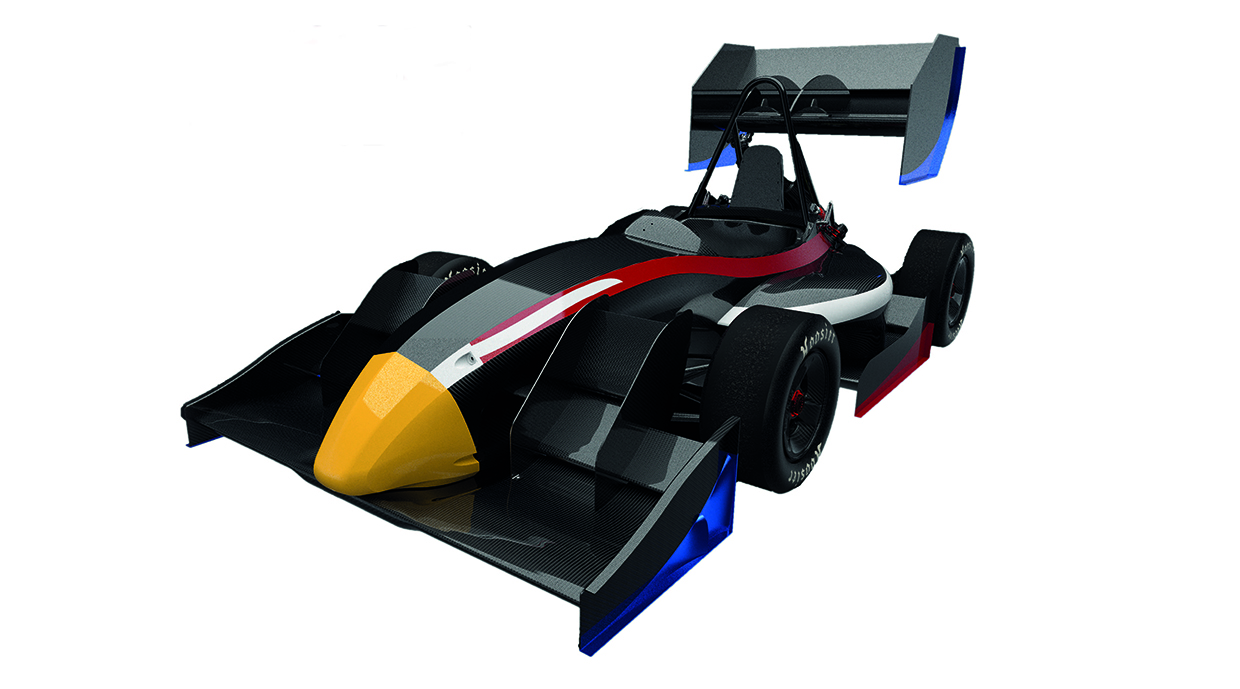
2015
Info
36x
TU Graz Racing Team is a team that is rich in tradition. Every year, we build on the excellent cars from the past and try to continuously improve.This year, one of the biggest challenges has been to comply with the new rules all while trying maintain or exceed performance compared to past years. We try to meet the challenges of a Formula Student season by clearly dividing the upcoming work into 5 different modules. The heads of the respective modules act as connectors and coordinators.
Engineering Design Priorities:
TANKIA2015
Katy
TUGrazRacing
NoKangaroos
MadeInAustria
Car Specifications
General
| Frame Construction | one-piece CFRP monocoque |
|---|---|
| Material | carbon fibre prepregs, nomex and aluminium honeycombs, structural foam, cfrp and titanium inserts |
| Overall L | 2900 mm |
| Overall W | 1450 mm |
| Overall H | 1195 mm |
| Wheelbase | 1550 mm |
| Track (Fr) | 1180 mm |
| Track (Rr) | 1150 mm |
| Weight with 68kg driver (Fr) | 106 kg |
| Weight with 68kg driver (Rr) | 109 kg |
| Suspension | double unequal lengh A-Arm, pullrod actuated horizontal orientated spring and damper |
| Tyres (Fr / Rr) | 18 / 6 - 10 Hoosier Lc0 / 18 / 6 - 10 Hoosier Lc0 |
| Wheels (Fr / Rr) | 6,5 |
| Drive Type | Chain #520 |
| Differential | Drexler multiplate LSD, 49% slip |
| Cooling | single sidepot mounted aluminum core WP radiator ,413 cfm fan mounted to suction side |
| Brake System | stainless steel, hub mounted, Front dia. 190mm drilled, Rear dia. 180mm drilled |
| Electronics | 3.2” display, multifunctional steering wheel, electric clutch actuation, live telemetry |
Powertrain
| Engine | KTM EXC 510 compined with KTM SX-F 450 parts 1 cyl |
|---|---|
| Bore | 95 mm |
| Stroke | 72 mm |
| Cylinders | 1 |
| Displacement | 510 ccm |
| Compression Ratio | 12.9:1 : 1 |
| Fuel System | inlet manifold injection |
| Fuel | 98 oct petrol |
| Max Power Design | 9500 rpm |
| Max Torque Design | 7000 rpm |
2014
Info
44x
The TU Graz Racing Team started their year with the organizing of a new arrangement for their module captains as well as finding new members. Once this had been decided, the design of their newest TANKIA could begin! Their focus this year, once again, is lightweight design. Their newest features are the drag-reduction-system, an additional injector, as well as a completely redesigned aero-package. They have also implemented some of their old parts, such as the single-piece carbon-fibre moncoque.
Engineering Design Priorities:
reliability
weight
drivability
aerodynamics
engine cooling
fuel efficiency
Car Specifications
General
| Frame Construction | one-piece sandwich-structured composite monocoque |
|---|---|
| Material | carbon fibre prepregs, nomex and aluminium honeycombs, structural foam, carbon and titanium inserts |
| Overall L | 3046 mm |
| Overall W | 1393 mm |
| Overall H | 1245 mm |
| Wheelbase | 1550 mm |
| Track (Fr) | 1190 mm |
| Track (Rr) | 1150 mm |
| Weight with 68kg driver (Fr) | 111 kg |
| Weight with 68kg driver (Rr) | 107 kg |
| Suspension | Double unequal length A-Arm. Pull rod and bell crank actuated Öhlins damper and spring units. |
| Tyres (Fr / Rr) | 152x66 R10 Hoosier LC0 / 152x66 R10 Hoosier LC0 |
| Wheels (Fr / Rr) | 6,5x10, 19mm offset, CFRP rim / 6,5x10, 19mm offset, CFRP rim |
| Drive Type | Chain #520 |
| Differential | Drexler multiplate LSD |
| Cooling | single sidepot mounted aluminium core WP radiator |
| Brake System | 4-disk system, floating, adj. brake balance |
| Electronics | electropneumatic shifting system, electrohydraulic clutch actuation, 2-channel live-telemetry |
Powertrain
| Engine | KTM SX-F 450 compined with KTM EXC 510 parts |
|---|---|
| Bore | 95 mm |
| Stroke | 72 mm |
| Cylinders | 1 |
| Displacement | 510 ccm |
| Compression Ratio | 12,8:1 : 1 |
| Fuel System | 2 Spray Keihin Injector, Bosch single spray |
| Fuel | 98 octane unleaded gasoline |
| Max Power Design | 9700 rpm |
| Max Torque Design | 7200 rpm |
2013
Info
61x
This year, the TUG Racing Team started with high hopes and expectations. We started off with the celebrations for 10 years of TUG Racing Team, driving and comparing all the cars we have built in our longtime history. Then, when designing the new car, we took all those information we gathered in those 10 years to build and optimize the new car, the TANKIA 2013. This season, we again concentrated on lightweight design. This resulted in a lot of newly designed parts for our car. The newest TANKIA features 10’’ carbon rims, each weighing less than 800 grams and the one piece monocoque. Also we implemented some of our old parts again, such as the titanium uprights and the multifunctional steering wheel. Livetelemetry and reliability were the main focus for our electronics team. The powertrain focused on improving and testing the 1-cylinder KTM engine we already used in last year’s car.
Car Specifications
General
| Frame Construction | one piece composit monocoque |
|---|---|
| Material | carbon fiber prepregs, Nomex and Aluminium honeycombs, carbon and titanium inserts |
| Overall L | 2678 mm |
| Overall W | 1375 mm |
| Overall H | 1022 mm |
| Wheelbase | 1550 mm |
| Track (Fr) | 1180 mm |
| Track (Rr) | 1150 mm |
| Weight with 68kg driver (Fr) | 107 kg |
| Weight with 68kg driver (Rr) | 102 kg |
| Suspension | Double unequal length CFRP A-Arms. (fr) Pull- (re) Push-rod actuated spring and Öhlins damper |
| Tyres (Fr / Rr) | 152x66 R10 , Hoosier LC0 |
| Wheels (Fr / Rr) | 6,5x10 , 6 mm offset, 1 piece CFRP Rim in 3-spoke design |
| Drive Type | 4 gear transmission and chain drive |
| Differential | Drexler multiplate LSD, 49% slip |
| Cooling | Twin sidepod mounted aluminium core WP radiator , 106 cfm fan mounted to suction side |
| Brake System | 4 self developed rotors with 200mm &180 mm dia, adjustable brake balance, AP Racing calipers |
| Electronics | Multifunctional Steering Wheel, Electropneumatic Shifting System, Live-Telemetry System |
Powertrain
| Engine | KTM / 500 EXC 2012 |
|---|---|
| Bore | 95 mm |
| Stroke | 72 mm |
| Cylinders | 1 |
| Displacement | 510 ccm |
| Compression Ratio | 12,5:1 : 1 |
| Fuel System | 2 Spray Keihin Injector |
| Fuel | 100 octane petrol |
| Max Power Design | 9500 rpm |
| Max Torque Design | 7000 rpm |
2012
Info
1x
The TANKIA2012 is the most revolutionary development in the history of the TUG-Racing team. In recent years, we used an engine that was amongst the most powerful on the track. This year, we made a turn regarding this concept. The focus is now on lightweight and agility rather than merely power. The chassis has become slimmer, the tyres smaller and we shortened the track as well as the wheelbase. And we even went one step further: we switched the engine from a heavy 4-cylinder to a single-cylinder KTM. As a result of our changes, we estimate a much better fuel consumption and more agility. These improvements will provide the driver with enough confidence to stick it into the bends and prove our point. Our car comes with a carbon fiber monocoque and a carbon fiber space frame rear end, which is stiffer and makes it possible to remove the engine very quickly. The self-developed multifunctional steering wheel enables the driver to adjust vehicle parameters easily during the race.
Car Specifications
General
| Frame Construction | carbon fiber monocoque and carbon fiber spaceframe rear-end |
|---|---|
| Material | carbon fiber prepregs, Nomex and Aluminum honeyconbs, carbon-inserts |
| Overall L | 2869 mm |
| Overall W | 1386 mm |
| Overall H | 1028 mm |
| Wheelbase | 1550 mm |
| Track (Fr) | 1180 mm |
| Track (Rr) | 1150 mm |
| Weight with 68kg driver (Fr) | 114 kg |
| Weight with 68kg driver (Rr) | 114 kg |
| Suspension | unequal length a-arms, front pull/rear push rod and bell crank actuated 4-way adjustable dampers |
| Tyres (Fr / Rr) | 18x6.0-10 Hoosier LC0 |
| Wheels (Fr / Rr) | 6x10, 19.05mm offset, 3pc Aluminium Rim |
| Drive Type | Chain, 520 |
| Differential | Drexler, multiplate limited slip differential |
| Cooling | side pod mounted radiators with thermostatic controlled electric fans |
| Brake System | 4-disc system, self designed steel rotors, adjustable brake balance |
| Electronics | multifunctional steering wheel, traction and launch control, live-telemetry system |
Powertrain
| Engine | 2012 KTM, 500EXC |
|---|---|
| Bore | 95.0 mm |
| Stroke | 72.0 mm |
| Cylinders | 1 |
| Displacement | 510 ccm |
| Compression Ratio | 12.58:1 : 1 |
| Fuel System | student designed and built, fuel injection, 2-spray preparation |
| Fuel | gasoline |
| Max Power Design | 10000 rpm |
| Max Torque Design | 6500 rpm |
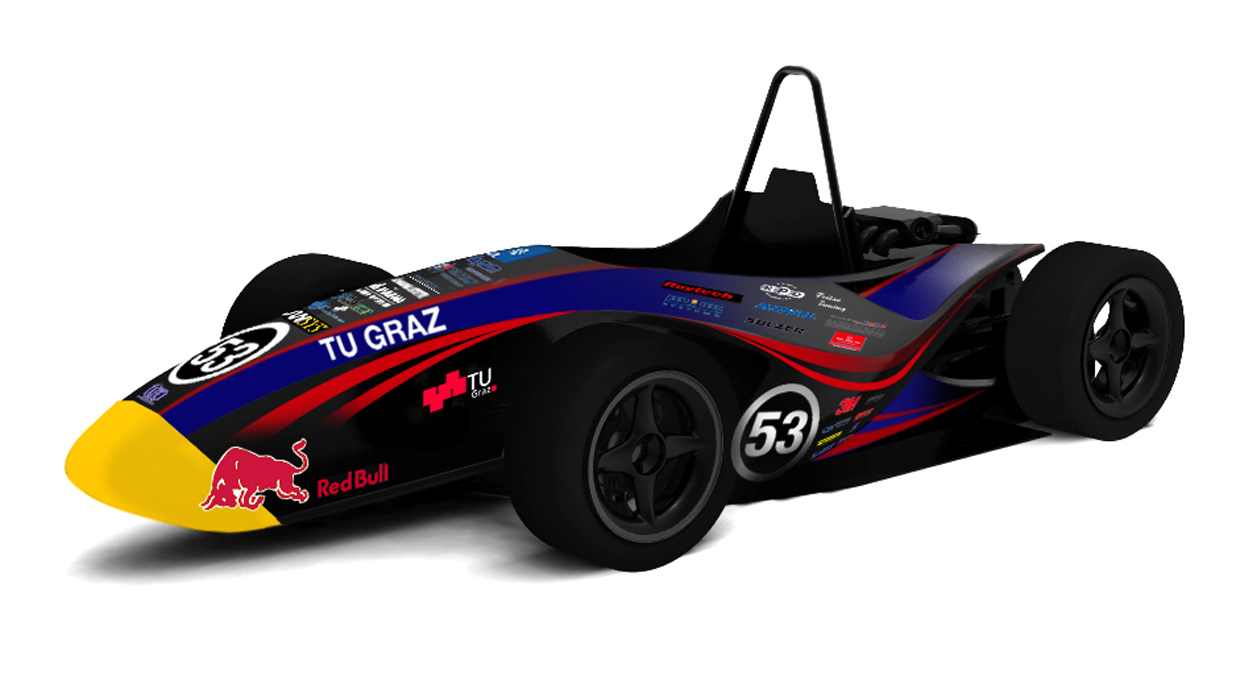
2011
Info
2x
Regarding the potential of our last year’s car, we decided to make the Tankia 2011 an evolution of its precursor. Behind his aggressive but also elegant appearance the Tankia 2011 is hiding a lot of highly sophisticated technical solutions. With a weight of less than 190 kg and an engine which produces 76 hp it has an outstanding power to weight ratio. It comes up with a carbon fiber monocoque and a completely new designed carbon fiber space frame rear end, which is stiffer and makes it possible to remove the engine very quickly. Other highlights of the Tankia 2011 are the one-piece carbon fiber rims, hollow titanium uprights made by EBM technology, variable intake tube lengths, self-developed multifunctional steering wheel, which gives the driver the chance to adjust brake balance and other things during driving. Our Team consists of 39 ambitious members and is divided into four technical (chassis, electronics, powertrain, suspension) and two non-technical departments.
Car Specifications
General
| Frame Construction | carbon fiber monocoque and carbon fiber spaceframe rear-end |
|---|---|
| Material | carbon fiber prepregs, Nomex and Aluminium honeycombs, carbon-inserts |
| Overall L | 2852 mm |
| Overall W | 1453 mm |
| Overall H | 993 mm |
| Wheelbase | 1575 mm |
| Track (Fr) | 1220 mm |
| Track (Rr) | 1180 mm |
| Weight with 68kg driver (Fr) | 124 kg |
| Weight with 68kg driver (Rr) | 129 kg |
| Suspension | unequal length a-arms, front pull/rear push rod and bell crank actuated 3-way adjustable dampers |
| Tyres (Fr / Rr) | 20x7,5-13 Hoosier R25B |
| Wheels (Fr / Rr) | 7.0x13, self made one piece carbonfiber Rim |
| Drive Type | Chain #520 |
| Differential | Drexler, multiplate limited slip differential |
| Cooling | twin side pod mounted radiators with thermostatic controlled electric fans |
| Brake System | 4-disc system, self designed steel rotors, adjustable brake balance |
| Electronics | multifunctional steering wheel, traction and launch control, live-telemetry system |
Powertrain
| Engine | 2006 Yamaha R6 |
|---|---|
| Bore | 67,0 mm |
| Stroke | 42,5 mm |
| Cylinders | 4 |
| Displacement | 599 ccm |
| Compression Ratio | 13,7:1 : 1 |
| Fuel System | student designed and built ,fuel injection, 2-spray preparation |
| Fuel | 100 octane petrol |
| Max Power Design | 12000 rpm |
| Max Torque Design | 8000 rpm |
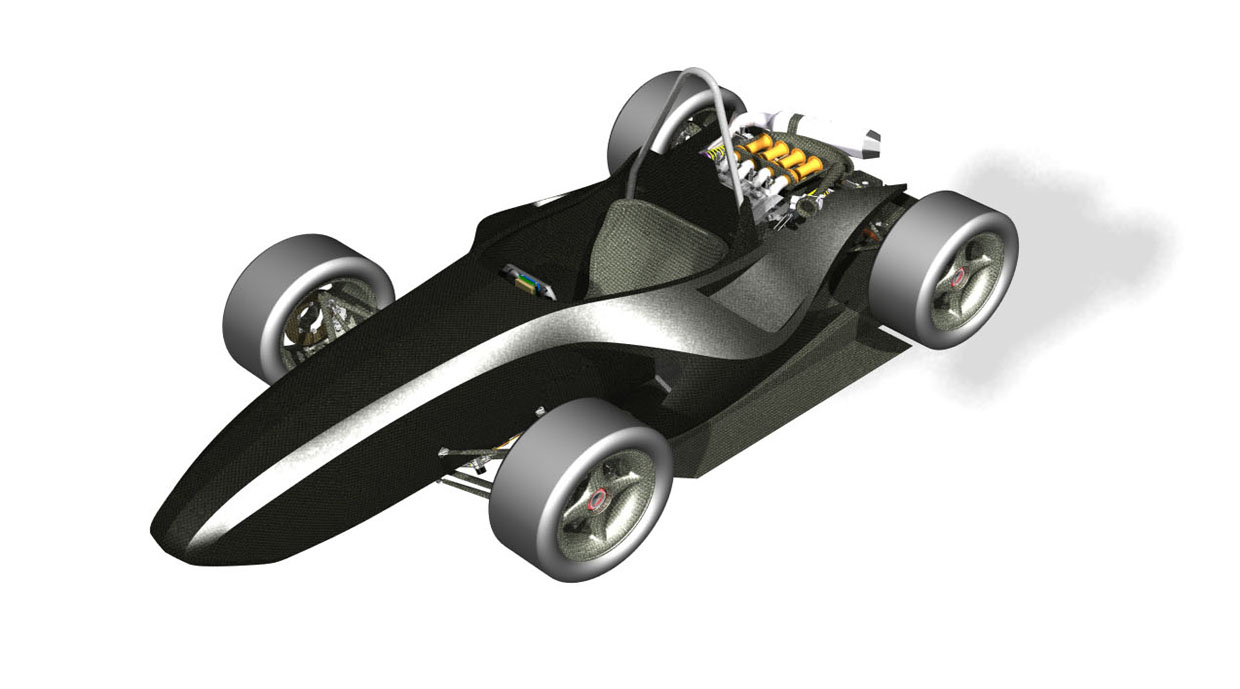
2010
Info
1x
We mainly focus on designing and building a lightweight, powerful, innovative and aesthetic car, which is competitive in every discipline, easy adjustable for changes of driver, track, weather, etc., easy maintainable and safe. Therefore advanced materials such as carbon fibre, titanium, aluminium alloys and high alloyed steels are used for designing and developing the single parts. For getting closer to the limit of the materials, many simulations and calculations as well as physical tests are done. Innovative systems invented by its predecessors where further improved and new solutions where found for better maintainability, easier setup adjustments and ergonomics. Reliability and different setups are the reason for a certain period of testing prior the competitions. The TU Graz Racing Team can look back to 6 years of experience, which mainly influenced the development of our 7th car, the TANKIA 2010 alias "Lucky #7", which will compete in all four European competitions.
Car Specifications
General
| Frame Construction | Carbon monocoque, two piece rear end |
|---|---|
| Material | Carbon fibre prepregs, Nomex and aluminium honeycomb and carbon inserts |
| Overall L | 2784 mm |
| Overall W | 1453 mm |
| Overall H | 980 mm |
| Wheelbase | 1570 mm |
| Track (Fr) | 1220 mm |
| Track (Rr) | 1180 mm |
| Weight with 68kg driver (Fr) | 121 kg |
| Weight with 68kg driver (Rr) | 127 kg |
| Suspension | Unequal length A-Arms, Push/Pull rods and bell crank actuated KW damper and spring units |
| Tyres (Fr / Rr) | 20.0x7.5 R13, Hoosier R25B/20.0x7.5 R13, Hoosier R25B |
| Wheels (Fr / Rr) | 7.0x13, self designed and built one piece carbon fibre rim |
| Drive Type | chain #520 |
| Differential | multiplate limited slip differential, preloaded |
| Cooling | twin side pod mounted radiators with thermostatic controlled electric fans |
| Brake System | 4-Disk system, carbon ceramic (C/SiC)brake discs, adjustable brake balance, AP Racing break calipers |
| Electronics | high sealed wiring harness, Multifunctional Steering Wheel, Electronical Shift and Clutch Actuator |
Powertrain
| Engine | Modified Yamaha R6 (RJ11) |
|---|---|
| Bore | 67 mm |
| Stroke | 42.5 mm |
| Cylinders | 4 |
| Displacement | 599 ccm |
| Compression Ratio | 13.7:1 : 1 |
| Fuel System | student designed and built, fuel injection, 2-spray preparation |
| Fuel | 100 octane unleaded gasoline |
| Max Power Design | 12000 rpm |
| Max Torque Design | 8000 rpm |
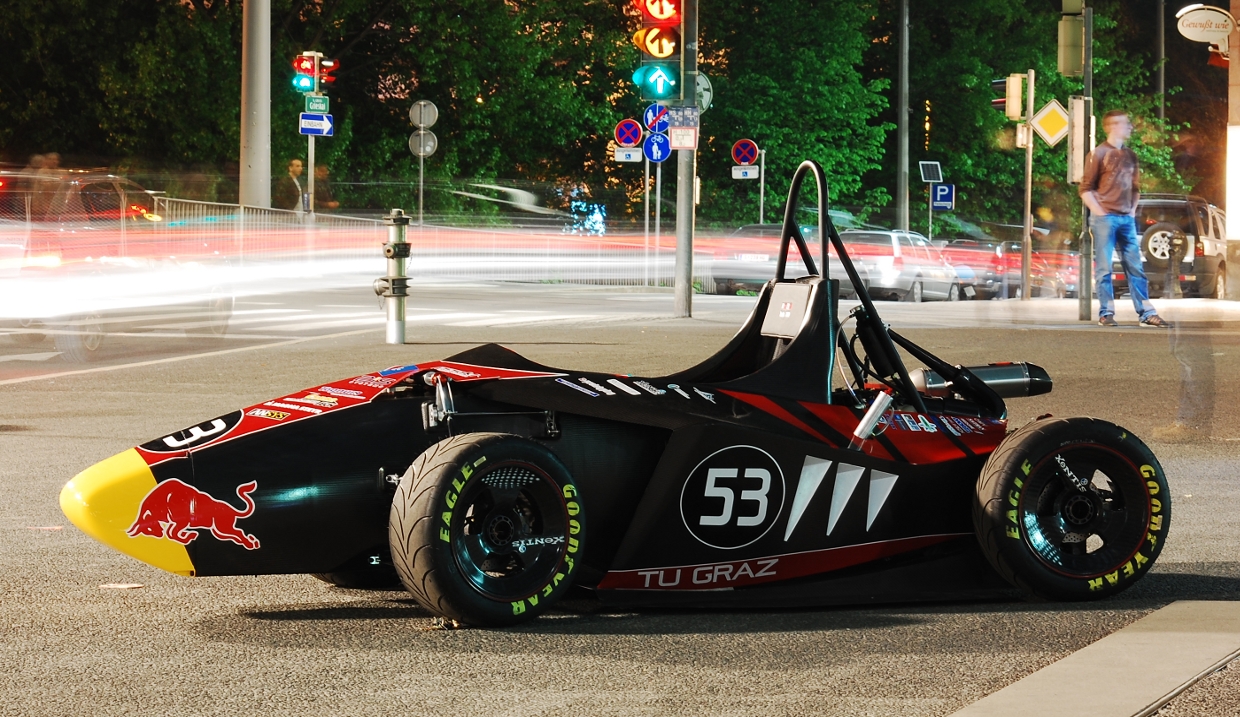
2009
Info
This season we built our 6th car, the „Tankia 2009“. We had to handle the biggest chassis changes in the whole FS because of the new rules. Main aspects were “powerful”, “innovative”, “driveability” and “lightweight”.Tankia 2009 is powered by a Yamaha R6 four-cylinder engine with custom intake, cams, head and exhaust which delivers 72,5kW and 71 Nm with smooth, wide-band torque.By using carbon fiber composites and lightweight metals such as Aluminium and Titanium, the weights about 198 kg (ready to race) and is thanks to its 5th generation monocoque structure yet very stiff and sturdy.Using Simulation Software such as OptimumK and VeDyna and lots of acquired data we were able to better adapt the Tankia 2009s suspension to the nature of FSAE tracks.To help the driver as well as the engineers, the car has advanced electronic systems for data acquisition and driver assistance.New features we developed are an anti-blocking-system and a rear-wheel-steering system.
Car Specifications
General
| Frame Construction | carbon fibre monocoque, carbon fibre two part rearend |
|---|---|
| Material | CRP sandwich structure with nomex honeycomb core |
| Overall L | 2832 mm |
| Overall W | 1410 mm |
| Overall H | 1189 mm |
| Wheelbase | 1575 mm |
| Track (Fr) | 1200 mm |
| Track (Rr) | 1180 mm |
| Weight with 68kg driver (Fr) | 127 kg |
| Weight with 68kg driver (Rr) | 139 kg |
| Suspension | Unequal length A-Arms. Push rod and bell crank actuated ZF Sachs damper units, in bell crank axis mountet torsionbar spring |
| Tyres (Fr / Rr) | 20,5x7-13 Hoosier R25B |
| Wheels (Fr / Rr) | 20,5x7-13 Hoosier R25B |
| Drive Type | Chain #520 |
| Differential | multiplate limited slip differential |
| Cooling | twin side pod mounted radiators with thermostatic controlled electric fans |
| Brake System | 4-Disk system, self designed rotors , adjustable brake balance, |
| Electronics | Multifunctional Steering Wheel, electronical Shift & Clutch System, Live-Telemetry System, CAN-Bus, adj. setup via Bluetooth |
Powertrain
| Engine | 2006 Yamaha R6 4 cylinder, 600ccm |
|---|---|
| Bore | 67 mm |
| Stroke | 42.5 mm |
| Cylinders | 4 |
| Displacement | 600 ccm |
| Compression Ratio | 13.7:1 : 1 |
| Fuel System | student designed and built ,fuel injection, sequential |
| Fuel | ROZ 98 |
| Max Power Design | 11000 rpm |
| Max Torque Design | 7500 rpm |
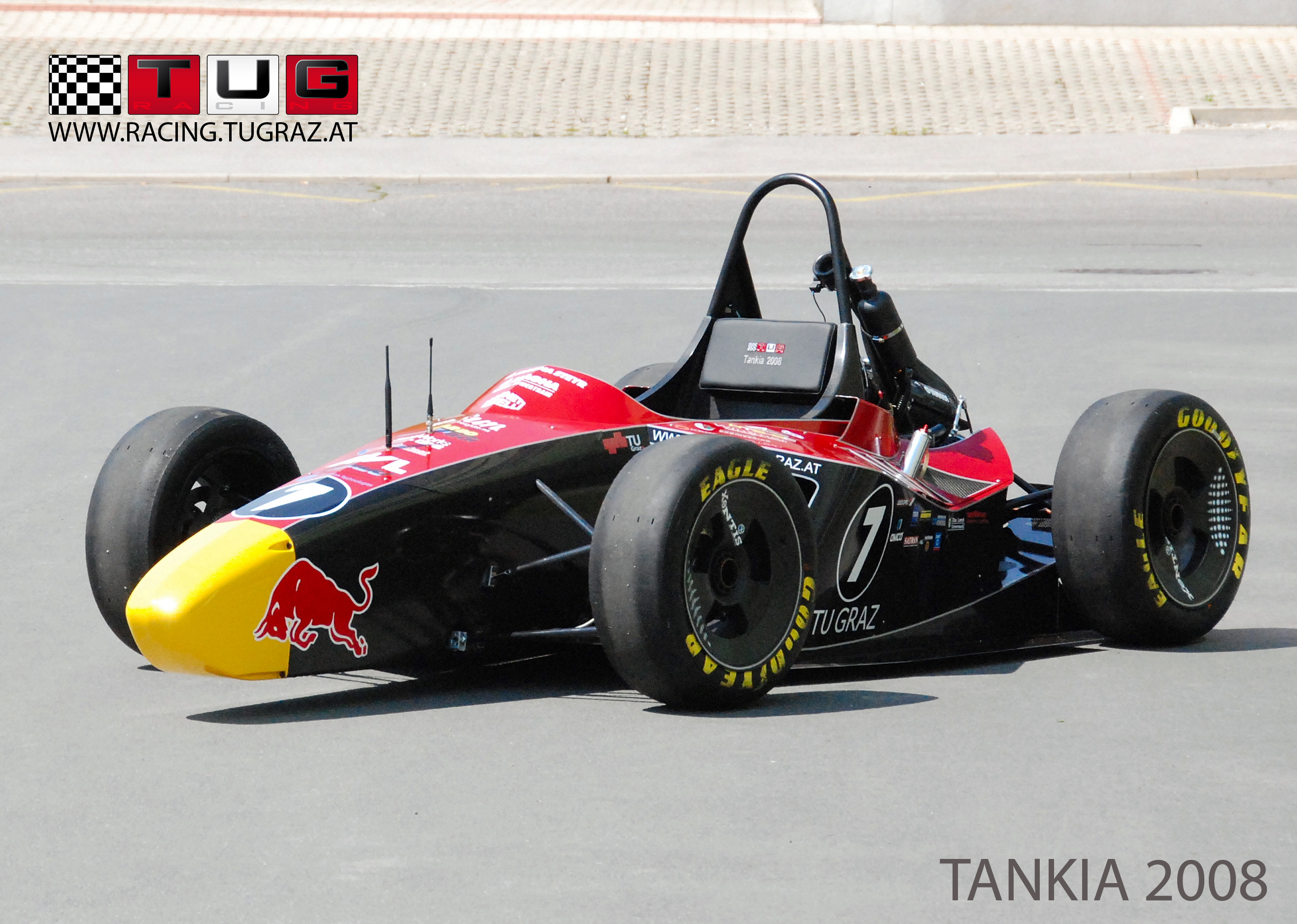
2008
Info
63x
This year, the TU Graz Racing Team is celebrating its 5th year of competing in Formula Student. Once again, 43 team members from different academic fields have come together to turn their vision into reality and design and manufacture a new car: The Tankia (“There Are No Kangaroos In Austria”) 2008. This year, we paid extra attention to the car’s driveability and maintainability. Some of the Tankia 2008’s many highlights are the electro-mechanical clutch, the wishbones, which are made of one single piece of carbon fibre, and the new carbon fibre rim which weights less than 1.1 kg and is more rigid than any rim we have used before To lower the weight we have included the pickup point of the rear tie rod, and replaced the rod ends at the chassis with flex-plates. The flex-plates are not only lighter and maintenance-free, but they also eliminated the play and the friction in the pickup points at the chassis.
Car Specifications
General
| Frame Construction | carbon fibre monocoque and carbon fibre rear end |
|---|---|
| Material | CBP sandwich with prepreg and nomex core foam |
| Overall L | 2725 mm |
| Overall W | 1364 mm |
| Overall H | 950 mm |
| Wheelbase | 1575 mm |
| Track (Fr) | 1200 mm |
| Track (Rr) | 1180 mm |
| Weight with 68kg driver (Fr) | 110 kg |
| Weight with 68kg driver (Rr) | 128 kg |
| Suspension | double unequal length A-Arms. Push rod actuated. Cane Creek Double Barrel spring and damper unit . titanium flex-plate connections |
| Tyres (Fr / Rr) | Goodyear D2692 20.0x7.0-13 / Goodyear D2692 20.0x7.0-13 |
| Wheels (Fr / Rr) | 7 inch wide, self made one piece carbon fibre rim |
| Drive Type | 3-gear sequential gearbox, DID 520 chain |
| Differential | multiplate limited slip differential |
| Cooling | twin side pod mounted radiators with thermostatic controlled electric fans |
| Brake System | 4-disk system, self developed rotors with diameter 200mm, electronical adjustable break balance via balance bar |
| Electronics | multifunctional steering wheel, electronically controlled clutch and gearbox, distrubited sensor network, multiuser live-telemetry |
Powertrain
| Engine | 2006 Yamaha YZF R6 |
|---|---|
| Bore | 67.0 mm |
| Stroke | 42.5 mm |
| Cylinders | 4 |
| Displacement | 599 ccm |
| Compression Ratio | 13,7:1 : 1 |
| Fuel System | student designed and built, fuel injection, sequential |
| Fuel | 98 octane unleaded gasoline |
| Max Power Design | 10500 rpm |
| Max Torque Design | 8500 rpm |
2007
Info
42xNo media information available for this year.
2006
Info
No media information available for this year.
FS past achievements due to World Ranking Data Base
| Date | Event | Teams | Rank | BP | CM | ED | SP | DV SP | AC | DV AC | AX | EN | EF | Pe | Total |
|---|---|---|---|---|---|---|---|---|---|---|---|---|---|---|---|
| 2019.08 | 28 |
10. |
8. |
14. |
5. |
4. |
- |
6. |
- |
2. |
- |
- |
0.00 |
466.40 |
|
| 2019.08 | 60 |
17. |
3. |
35. |
6. |
5. |
- |
7. |
- |
2. |
- |
- |
0.00 |
508.70 |
|
| 2019.08 | 34 |
2. |
3. |
8. |
5. |
1. |
- |
5. |
- |
2. |
4. |
1. |
0.00 |
846.80 |
|
| 2019.07 | 28 |
8. |
2. |
3. |
5. |
2. |
- |
3. |
- |
1. |
- |
- |
0.00 |
512.83 |
|
| 2019.05 | 108 |
2. |
12. |
71. |
8. |
6. |
- |
4. |
- |
1. |
1. |
1. |
0.00 |
885.10 |
|
| 2018.08 | 37 |
12. |
6. |
12. |
12. |
3. |
- |
8. |
- |
4. |
- |
- |
0.00 |
458.50 |
|
| 2018.08 | 57 |
2. |
1. |
6. |
8. |
1. |
- |
15. |
- |
10. |
4. |
1. |
-5.00 |
881.10 |
|
| 2018.08 | 30 |
1. |
8. |
20. |
8. |
5. |
- |
1. |
- |
10. |
1. |
1. |
-18.00 |
846.20 |
|
| 2018.07 | 46 |
1. |
1. |
38. |
4. |
1. |
- |
17. |
- |
1. |
3. |
1. |
0.00 |
908.07 |
|
| 2018.05 | 114 |
2. |
8. |
77. |
3. |
2. |
- |
49. |
- |
2. |
2. |
2. |
0.00 |
812.50 |
|
| 2017.08 | 31 |
1. |
3. |
10. |
4. |
1. |
- |
13. |
- |
3. |
3. |
2. |
0.00 |
870.60 |
|
| 2017.08 | 64 |
2. |
28. |
32. |
6. |
17. |
- |
3. |
- |
4. |
2. |
1. |
0.00 |
861.99 |
|
| 2017.08 | 31 |
10. |
15. |
26. |
4. |
1. |
- |
3. |
- |
2. |
- |
- |
-28.00 |
456.90 |
|
| 2017.07 | 43 |
12. |
9. |
37. |
5. |
1. |
- |
8. |
- |
3. |
26. |
- |
0.00 |
518.05 |
|
| 2017.05 | 109 |
3. |
44. |
96. |
7. |
4. |
- |
32. |
- |
2. |
1. |
1. |
0.00 |
855.10 |
|
| 2016.08 | 36 |
2. |
4. |
4. |
4. |
1. |
- |
12. |
- |
9. |
4. |
1. |
0.00 |
855.40 |
|
| 2016.08 | 73 |
7. |
38. |
33. |
16. |
28. |
- |
32. |
- |
9. |
3. |
2. |
0.00 |
751.43 |
|
| 2016.08 | 21 |
4. |
16. |
10. |
5. |
2. |
- |
12. |
- |
5. |
3. |
2. |
-40.00 |
779.60 |
|
| 2016.07 | 106 |
3. |
80. |
17. |
23. |
6. |
- |
23. |
- |
11. |
3. |
10. |
0.00 |
709.00 |
|
| 2016.05 | 114 |
2. |
31. |
96. |
7. |
6. |
- |
20. |
- |
1. |
1. |
2. |
0.00 |
871.10 |
|
| 2015.09 | 75 |
1. |
3. |
- |
1. |
1. |
- |
1. |
- |
1. |
1. |
3. |
0.00 |
807.47 |
|
| 2015.08 | 20 |
2. |
9. |
5. |
3. |
6. |
- |
4. |
- |
3. |
2. |
1. |
0.00 |
863.20 |
|
| 2015.08 | 71 |
4. |
12. |
46. |
29. |
5. |
- |
4. |
- |
5. |
3. |
3. |
0.00 |
743.85 |
|
| 2015.07 | 92 |
24. |
50. |
70. |
16. |
2. |
- |
11. |
- |
5. |
32. |
- |
-10.00 |
410.20 |
|
| 2015.05 | 108 |
3. |
14. |
94. |
7. |
2. |
- |
8. |
- |
2. |
3. |
31. |
0.00 |
821.40 |
|
| 2014.09 | 44 |
1. |
4. |
13. |
1. |
2. |
- |
4. |
- |
2. |
2. |
4. |
-10.00 |
916.89 |
|
| 2014.08 | 19 |
9. |
3. |
5. |
2. |
4. |
- |
9. |
- |
4. |
13. |
4. |
-25.00 |
547.70 |
|
| 2014.08 | 74 |
20. |
22. |
19. |
8. |
26. |
- |
13. |
- |
4. |
- |
7. |
0.00 |
500.37 |
|
| 2013.09 | 42 |
4. |
6. |
- |
3. |
1. |
- |
11. |
- |
6. |
4. |
1. |
0.00 |
728.80 |
|
| 2013.08 | 39 |
9. |
6. |
15. |
5. |
18. |
- |
14. |
- |
9. |
10. |
10. |
0.00 |
711.44 |
|
| 2013.08 | 74 |
13. |
21. |
3. |
13. |
16. |
- |
28. |
- |
6. |
22. |
4. |
-10.00 |
679.50 |
|
| 2013.07 | 83 |
11. |
5. |
4. |
17. |
8. |
- |
12. |
- |
6. |
25. |
7. |
0.00 |
567.60 |
|
| 2013.05 | 104 |
7. |
9. |
75. |
5. |
20. |
- |
36. |
- |
8. |
13. |
2. |
0.00 |
754.30 |
|
| 2012.08 | 39 |
15. |
10. |
8. |
8. |
12. |
- |
20. |
- |
6. |
- |
- |
0.00 |
493.63 |
|
| 2012.08 | 76 |
47. |
36. |
59. |
10. |
24. |
- |
- |
- |
32. |
- |
- |
0.00 |
293.43 |
|
| 2012.07 | 37 |
13. |
18. |
12. |
11. |
3. |
- |
15. |
- |
20. |
18. |
12. |
0.00 |
552.90 |
|
| 2012.07 | 97 |
10. |
46. |
26. |
19. |
8. |
- |
40. |
- |
20. |
10. |
5. |
0.00 |
590.50 |
|
| 2012.05 | 104 |
6. |
4. |
85. |
5. |
9. |
- |
2. |
- |
9. |
7. |
17. |
0.00 |
751.40 |
|
| 2011.09 | 49 |
27. |
3. |
33. |
3. |
6. |
- |
1. |
- |
35. |
24. |
- |
-50.00 |
367.00 |
|
| 2011.08 | 74 |
20. |
11. |
27. |
15. |
9. |
- |
2. |
- |
9. |
- |
16. |
0.00 |
492.79 |
|
| 2011.07 | 27 |
8. |
1. |
3. |
3. |
11. |
- |
2. |
- |
4. |
- |
- |
0.00 |
469.80 |
|
| 2011.07 | 77 |
5. |
13. |
50. |
14. |
5. |
- |
16. |
- |
5. |
7. |
5. |
-4.00 |
685.20 |
|
| 2011.05 | 97 |
4. |
5. |
83. |
2. |
2. |
- |
7. |
- |
18. |
3. |
17. |
0.00 |
815.70 |
|
| 2010.09 | 41 |
5. |
19. |
18. |
3. |
10. |
- |
4. |
- |
6. |
4. |
- |
0.00 |
821.80 |
|
| 2010.08 | 27 |
3. |
6. |
9. |
2. |
15. |
- |
5. |
- |
3. |
2. |
- |
0.00 |
785.50 |
|
| 2010.08 | 75 |
23. |
17. |
37. |
4. |
26. |
- |
4. |
- |
5. |
- |
- |
0.00 |
460.78 |
|
| 2010.07 | 72 |
30. |
24. |
64. |
9. |
14. |
- |
32. |
- |
- |
- |
- |
-3.00 |
293.20 |
|
| 2010.05 | 101 |
3. |
6. |
80. |
3. |
4. |
- |
3. |
- |
6. |
7. |
12. |
0.00 |
843.40 |
|
| 2009.09 | 36 |
2. |
7. |
23. |
3. |
2. |
- |
1. |
- |
3. |
2. |
- |
0.00 |
896.17 |
|
| 2009.08 | 77 |
9. |
38. |
16. |
16. |
10. |
- |
5. |
- |
31. |
9. |
13. |
0.00 |
736.31 |
|
| 2009.07 | 78 |
29. |
12. |
49. |
12. |
1. |
- |
3. |
- |
7. |
- |
- |
-12.00 |
469.90 |
|
| 2009.05 | 90 |
1. |
1. |
71. |
3. |
1. |
- |
1. |
- |
1. |
3. |
- |
0.00 |
833.50 |
|
| 2008.09 | 31 |
3. |
3. |
7. |
2. |
4. |
- |
1. |
- |
6. |
3. |
- |
0.00 |
784.80 |
|
| 2008.08 | 77 |
3. |
59. |
14. |
10. |
13. |
- |
9. |
- |
10. |
2. |
3. |
0.00 |
850.32 |
|
| 2008.07 | 72 |
25. |
15. |
4. |
24. |
14. |
- |
34. |
- |
14. |
- |
- |
0.00 |
361.75 |
|
| 2008.05 | 104 |
6. |
30. |
62. |
1. |
36. |
- |
7. |
- |
10. |
9. |
- |
0.00 |
813.20 |
|
| 2007.09 | 20 |
3. |
1. |
5. |
1. |
7. |
- |
1. |
- |
3. |
7. |
- |
0.00 |
758.44 |
|
| 2007.08 | 53 |
2. |
2. |
11. |
2. |
18. |
- |
6. |
- |
29. |
2. |
4. |
0.00 |
839.55 |
|
| 2007.07 | 69 |
7. |
7. |
13. |
1. |
26. |
- |
5. |
- |
8. |
11. |
5. |
0.00 |
769.11 |
|
| 2007.05 | 105 |
3. |
12. |
12. |
2. |
8. |
- |
14. |
- |
15. |
5. |
- |
0.00 |
820.02 |
|
| 2006.09 | 17 |
2. |
10. |
4. |
1. |
4. |
- |
1. |
- |
1. |
2. |
- |
0.00 |
893.70 |
|
| 2006.08 | 38 |
1. |
10. |
13. |
3. |
3. |
- |
4. |
- |
13. |
2. |
14. |
0.00 |
832.10 |
|
| 2006.07 | 58 |
2. |
4. |
10. |
1. |
2. |
- |
1. |
- |
17. |
4. |
17. |
0.00 |
833.70 |
|
| 2005.09 | 10 |
1. |
3. |
2. |
1. |
1. |
- |
1. |
- |
2. |
1. |
- |
0.00 |
928.50 |
|
| 2005.07 | 57 |
4. |
37. |
18. |
3. |
4. |
- |
3. |
- |
4. |
7. |
3. |
0.00 |
775.64 |
|
| 2004.07 | 53 |
19. |
32. |
27. |
29. |
7. |
- |
10. |
- |
10. |
- |
- |
0.00 |
399.39 |
|
| x 66 | |||||||||||||||