
Team Details
TU Darmstadt Racing Team e.V.
| University | Technische Universität Darmstadt
DE Darmstadt TU short 25 |
 |
|---|---|---|
| Location | Darmstadt, Germany | |
| Homepage | https://www.dart-racing.de/ | |
| Social Media | ||
| CV Team | Akademische Motorsportgruppe Darmstadt e.V. | |
| DV Team | TU Darmstadt Racing Team e.V. | |
| Short Link | tid.fsg.one/276 | |
Team Description
Das TU Darmstadt Racing Team e.V. (DART) ist ein gemeinnütziger Verein sowie Hochschulgruppe der TU Darmstadt und hat sich der Förderung von Wissenschaft, Forschung und Bildung auf dem Gebiet des Fahrzeugbaus verschrieben.
Aktuell besteht der Verein aus ca. 45 aktiven Studentinnen und Studenten diverser Fachbereiche, insbesondere aus den Bereichen Maschinenbau, Elektrotechnik, Informatik und Wirtschaftsingenieurwesen. Zusätzlich verfügt der Verein über ein großes Netzwerk an Alumni, welche den aktiven Mitgliedern beim aktuellen Projekt mit Rat und Tat zur Seite stehen. Gemeinsam teilen wir die Begeisterung für Rennsport und Ingenieurwissenschaften. Durch die praxisnahe Vertiefung von studienrelevanten Themen sowie realitätsnahe Arbeitsbedingungen gehen die Mitglieder dabei nicht nur ihren Interessen nach, sondern bereiten sich aktiv auf ihren Berufseinstieg vor.
Ziel des Teams ist es, innerhalb eines Jahres ein Rennfahrzeug zu konstruieren, zu fertigen, in Betrieb zu nehmen, zu validieren und auf den Wettbewerben der Formula Student zu betreiben. Dabei gilt es, sich gegen die starke Konkurrenz aus dem In- und Ausland durchzusetzen. In der Vergangenheit hat der Verein dabei bereits an zahlreichen Wettbewerben teilgenommen, unter anderem in Hockenheim/Deutschland, Spielberg/Österreich, Barcelona/Spanien, Assen/Niederlande und weiteren kleineren Rennstrecken.
Das Besondere daran: Der Verein widmet sich insbesondere aktuellen Fragestellungen und Trends der Automobilindustrie. Bereits 2011 konstruierte das Team seinen ersten vollelektrischen Rennboliden und konnte dessen Technik und Antrieb seitdem stetig weiterentwickeln. Doch damit nicht genug: In der Saison 2017 verschrieb sich das Team zusätzlich dem autonomen Fahren und konnte mit dem myD2017 der Öffentlichkeit den ersten vollautonomen Rennwagen der Vereinsgeschichte vorstellen. Seit 2020 mit dem xi2020 wird anstelle der zwei Rennfahrzeuge nur noch ein Fahrzeug gebaut. Dieses ist elektrisch angetrieben und besitzt die Fähigkeit die Rennstrecke vollautonom oder mit Fahrer zu bewältigen.
Bei der Konstruktion des Rennwagens stehen sich wichtige Anforderungen wie Kosten, Zeit, Qualität und Innovation häufig in Spannungsfeldern gegenüber. Um eine effektive Schnittmenge aus diesen einzelnen Gebieten zu erreichen und schließlich ein erfolgreiches Projekt realisieren zu können, gliedert sich das Team in mehrere Teilbereiche und Hierarchiestufen. Im nicht technischen Bereich ist unsere Marketing-Abteilung angesiedelt. Die technischen Abteilungen sind Aerodynamik, Antriebsstrang, Batterie, Chassis, Elektronik & Informatik, Fahrwerk, Autonomes System und Vehicle Dynamics. Die verschiedenen Abteilungen haben je eine Abteilungsleiterin oder einen Abteilungsleiter.
Die Gesamtverantwortung für das Projekt übernimmt die Projektleitung, bestehend aus einem organisatorischen Teamleiter sowie einem technischen Teamleiter. Zu ihren Aufgaben gehört die Steuerung des Entwicklungsprozesses, die Projektplanung, das Projektmanagement, die Unterstützung der Abteilungsleitungen, die Koordination der Abteilungen und die Vertretung im öffentlichen Bereich.
Der Verein wird durch den Vorstand geleitet, welcher jeweils für eine Amtszeit von zwei Jahren gewählt wird. Zu den Aufgaben des Vorstandes gehören unter anderem die finanzielle und rechtliche Verwaltung und Vertretung des Vereins, sowie die Zieldefinition und Überwachung der langfristigen Vereinsentwicklung.
Past Events
Info
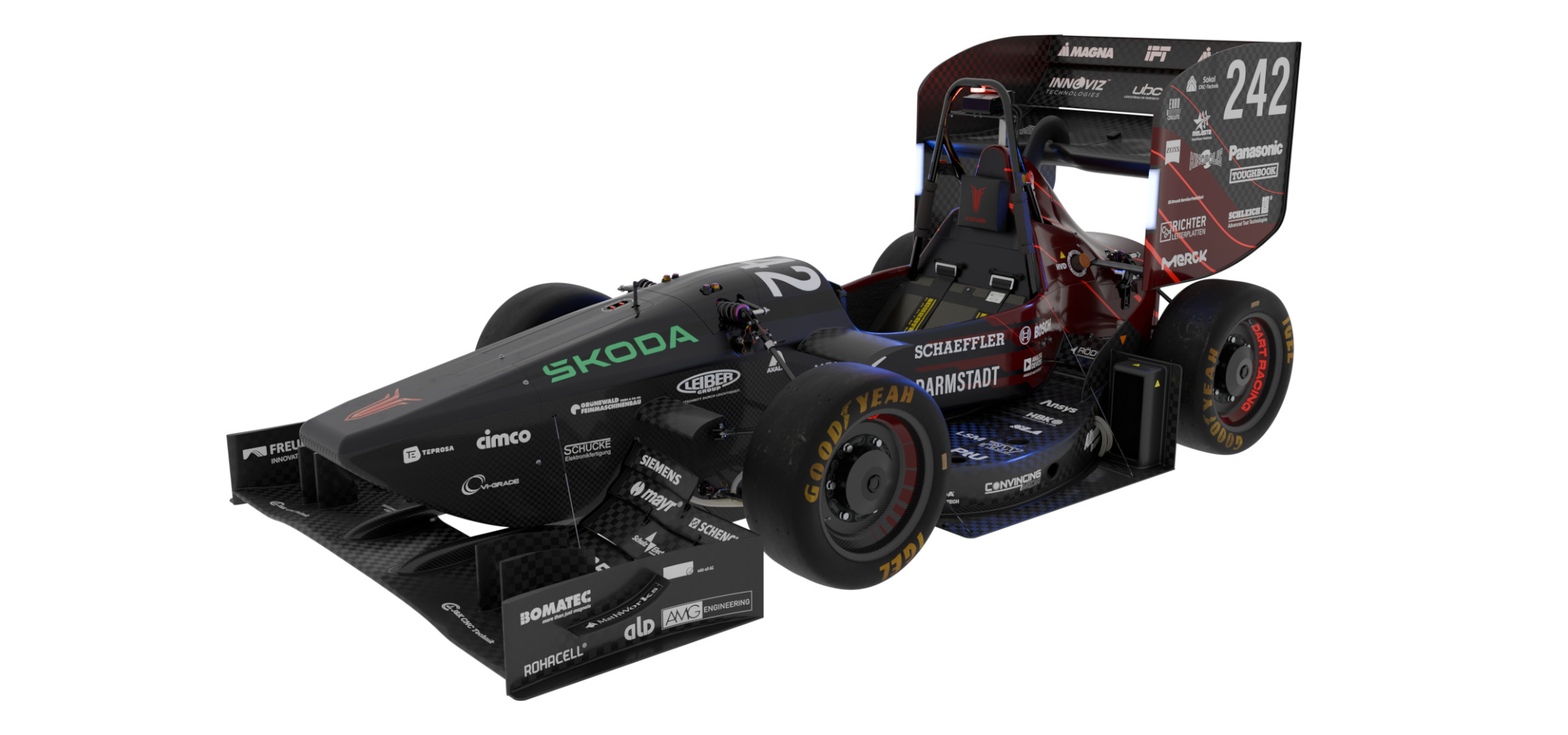
43xCar Specifications
General
| Frame Construction | Monocoque |
|---|---|
| Material | CFRP- Aramid- & Gluefilm-Prepreg, Aluminium honeycomb |
| Overall L | 3040 mm |
| Overall W | 1486 mm |
| Overall H | 1193 mm |
| Wheelbase | 1535 mm |
| Track (Fr) | 1240 mm |
| Track (Rr) | 1190 mm |
| Weight with 68kg driver (Fr) | 130 kg |
| Weight with 68kg driver (Rr) | 134 kg |
| Suspension | double, unequal-length A-Arms, push rod actuated |
| Tyres (Fr / Rr) | Goodyear FSAE (D2773) 20x7-13 |
| Wheels (Fr / Rr) | 7x13, 1 pc CFRP 13 |
| Drive Type | Planetary gearbox |
| Differential | n/a |
| Cooling | water cooled with two radiators in the sidewing with electric fans |
| Brake System | 4 disk system with 220mm outer diameter |
| Electronics | selfdesigned Live-Telemetry System, Multifunctional Steering Wheel, |
Powertrain
| Number of Motors | 4 |
|---|---|
| Motor Location | wheel hub motors |
| Max Motor Power (per motor) | 45 kW |
| Motor Type | self developed PSMS |
| Max Motor RPM (highest) | 19200 rpm |
| Motor Controller | Self-Developed |
| Max System Voltage | 600V V |
| Electrode Materials | LCO |
| Combined Accumulator Capacity | 6,1 kwh kWh |
| Transmission Ratio (Primary) | 1:13.73 : 1 |
| Transmission Ratio (Secondary) | n/a : 1 |
Driverless System
| Processing unit(s) | ARMx64, AMD Ryzen AI 370, TMS320F28388DZWTS |
|---|---|
| Floating Point Operations Per Second of all processing units that are working for the DV system | 5528 GigaFLOPS |
| Power consumption of all processing units that are working for the DV system | 60W W |
| Camera(s) | n/a |
| Radar sensor(s) | n/a |
| Lidar sensor(s) | 1 Lidar sensor with 250m range, solid state, 115 x 25 grad FOV, 0.1 x 0.1 Angular Resolution, 15FPS |
| Other sensors | IMU, Optical Groundspeed |
| Highlights of the DV system | The newly developed MPC-based trajectory planner and VD-control optimize racing lines for precise vehicle adherence. This is supported by new, more powerful hardware, enhancing computational efficiency. Additionally, SLAM performance has been improved through reduced runtime. The system is rounded out by custom in-house simulation software. |
Info
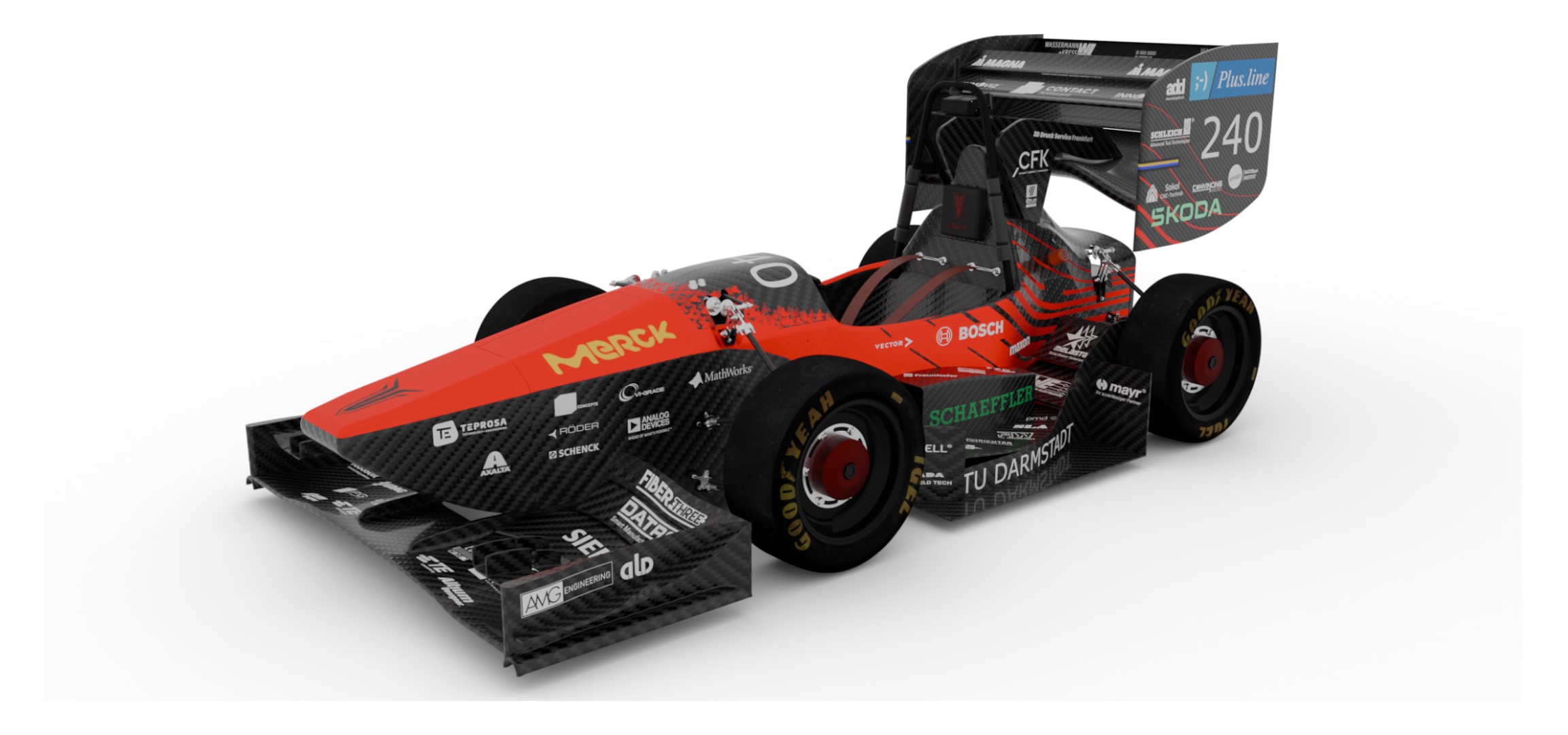
150xCar Specifications
General
| Frame Construction | CFRP- and Aramid Prepreg, Aluminium honeycomb, laminated in one piece |
|---|---|
| Material | CFRP- and Aramid Prepreg, Aluminium honeycomb |
| Overall L | 3040 mm |
| Overall W | 1486 mm |
| Overall H | 1187 mm |
| Wheelbase | 1535 mm |
| Track (Fr) | 1240 mm |
| Track (Rr) | 1190 mm |
| Weight with 68kg driver (Fr) | 128 kg |
| Weight with 68kg driver (Rr) | 140 kg |
| Suspension | Double, unequal-length A-Arms, Push rod actuated horizontally oriented spring and damper |
| Tyres (Fr / Rr) | Goodyear 20.0x7.0-13, FSAE4, R |
| Wheels (Fr / Rr) | 7x13, 1 pc CFRP 13 |
| Drive Type | Direct Drive |
| Differential | N/A |
| Cooling | 2 radiators with fans in the sidepod |
| Brake System | -Disk system, own floating rotors, adjustable brake balance, AP Racing calipers |
| Electronics | EMV-compliant wiring harness, Multifunctional steering wheel, own VCU and telemetry design |
Powertrain
| Number of Motors | 4 |
|---|---|
| Motor Location | Wheelhub |
| Max Motor Power (per motor) | 42kW kW |
| Motor Type | Permanently excited synchronous Motor |
| Max Motor RPM (highest) | 18800 rpm |
| Motor Controller | Electrophorus 4-fold |
| Max System Voltage | 548V V |
| Electrode Materials | LiPo |
| Combined Accumulator Capacity | 7.18kWh kWh |
| Transmission Ratio (Primary) | 13.73 : 1 |
| Transmission Ratio (Secondary) | N/A : 1 |
Driverless System
| Processing unit(s) | Intel Core i5-13600K |
|---|---|
| Floating Point Operations Per Second of all processing units that are working for the DV system | 489.6 GigaFLOPS |
| Power consumption of all processing units that are working for the DV system | 125 W |
| Camera(s) | N/A |
| Radar sensor(s) | N/A |
| Lidar sensor(s) | InnovizOne, FOV: 115 °, Angular Resolution: 0.1 ° * 0.1 °, Detection Range: 0.1 m to 250 m |
| Other sensors | VN300, EPOS4, EBS pressure Sensors |
| Highlights of the DV system | This year, we focused on optimizing first lap performance on unknown tracks. We addressed issues with false positive cones by using IMU data to compensate for LiDAR motion distortion. Our trajectory planning uses MPC with a cost function, solved quickly by OSQP-EIGEN. We improved grip estimation by analyzing high lateral acceleration sections |
Info
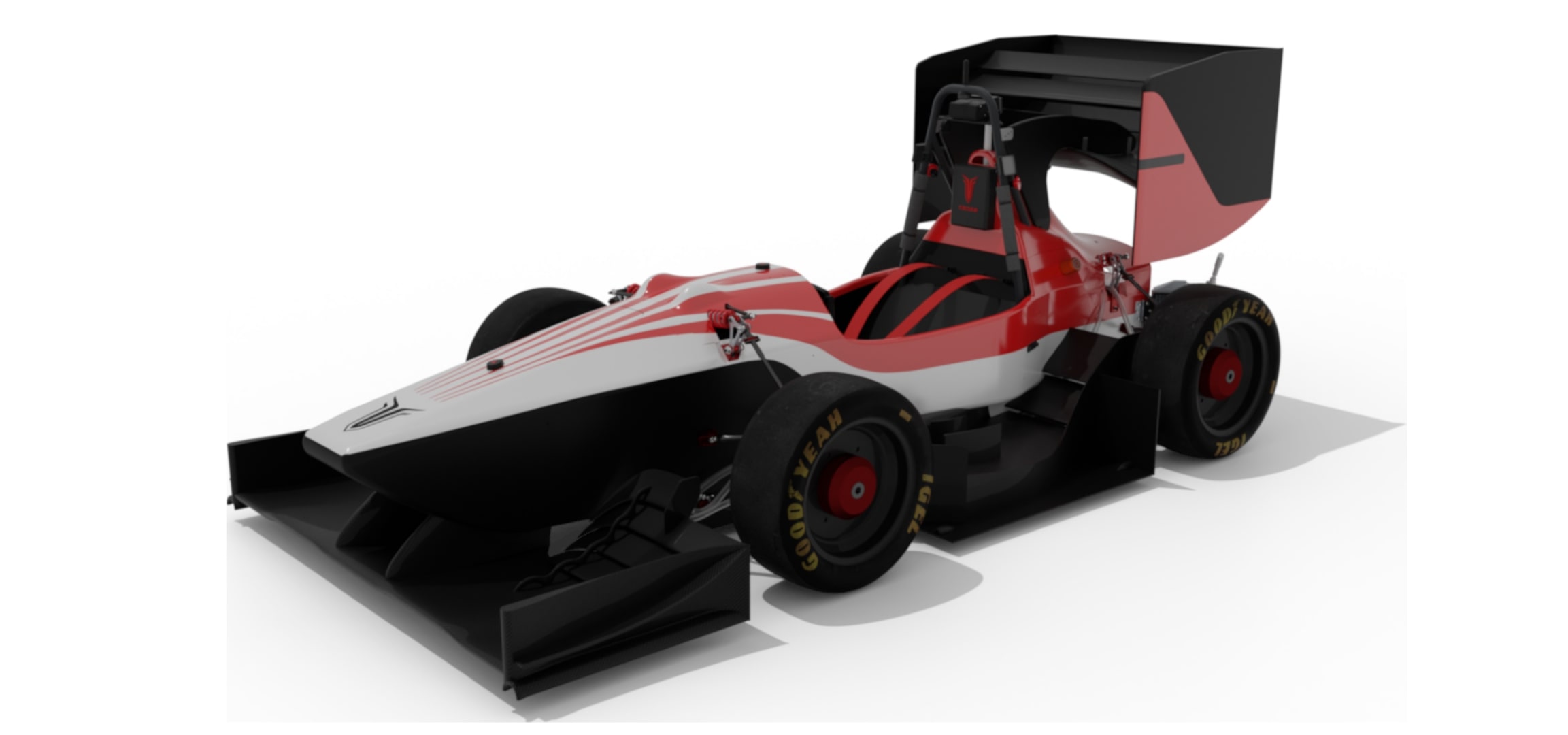
63xCar Specifications
General
| Frame Construction | One-piece monocoque |
|---|---|
| Material | CFRP prepreg and aluminum honeycomb |
| Overall L | 2980 mm |
| Overall W | 1549 mm |
| Overall H | 1185 mm |
| Wheelbase | 1535 mm |
| Track (Fr) | 1240 mm |
| Track (Rr) | 1190 mm |
| Weight with 68kg driver (Fr) | 132 kg |
| Weight with 68kg driver (Rr) | 136 kg |
| Suspension | Double, unequal-length A-Arms, Push rod actuated horizontally oriented spring and damper |
| Tyres (Fr / Rr) | 20x7-13, Goodyear |
| Wheels (Fr / Rr) | 7x13, 1 pc CFRP 13 |
| Drive Type | 1.5-step planetary transmission |
| Differential | n/a |
| Cooling | Separate liquid cooling circuits for ASPC, TS rear and TS front; air-cooled accumulator |
| Brake System | Self-developed rotors with 220 mm diameter, AP Racing 4-piston and 2-piston calipers |
| Electronics | Torque vectoring, bidirectional TCP streaming via WiFi, multifunctional steering wheel |
Powertrain
| Number of Motors | 4 |
|---|---|
| Motor Location | hub motor, 4-wheel-drive |
| Max Motor Power (per motor) | 44kW per motor kW |
| Motor Type | PSM, self-developed |
| Max Motor RPM (highest) | 20000 rpm |
| Motor Controller | Bucher DCU 60/60 |
| Max System Voltage | 548V V |
| Electrode Materials | LiCoO2 |
| Combined Accumulator Capacity | 8.22 kWh |
| Transmission Ratio (Primary) | 13.73:1 : 1 |
| Transmission Ratio (Secondary) | n/a : 1 |
Driverless System
| Processing unit(s) | self-developed VCU |
|---|---|
| Floating Point Operations Per Second of all processing units that are working for the DV system | 13740 GigaFLOPS |
| Power consumption of all processing units that are working for the DV system | 200 W W |
| Camera(s) | n/a |
| Radar sensor(s) | n/a |
| Lidar sensor(s) | 1, 28m, H: 115°, V: 25°, Innoviz One |
| Other sensors | Vectornav VN300, MSO Speed Wedge, self-developed optical ground speed sensor |
| Highlights of the DV system | solo lidar-based perception; complete time synchronisation with integrated dead time compensation in the vehicle control module, self-developed ground speed sensor with integrated IMU |
Info
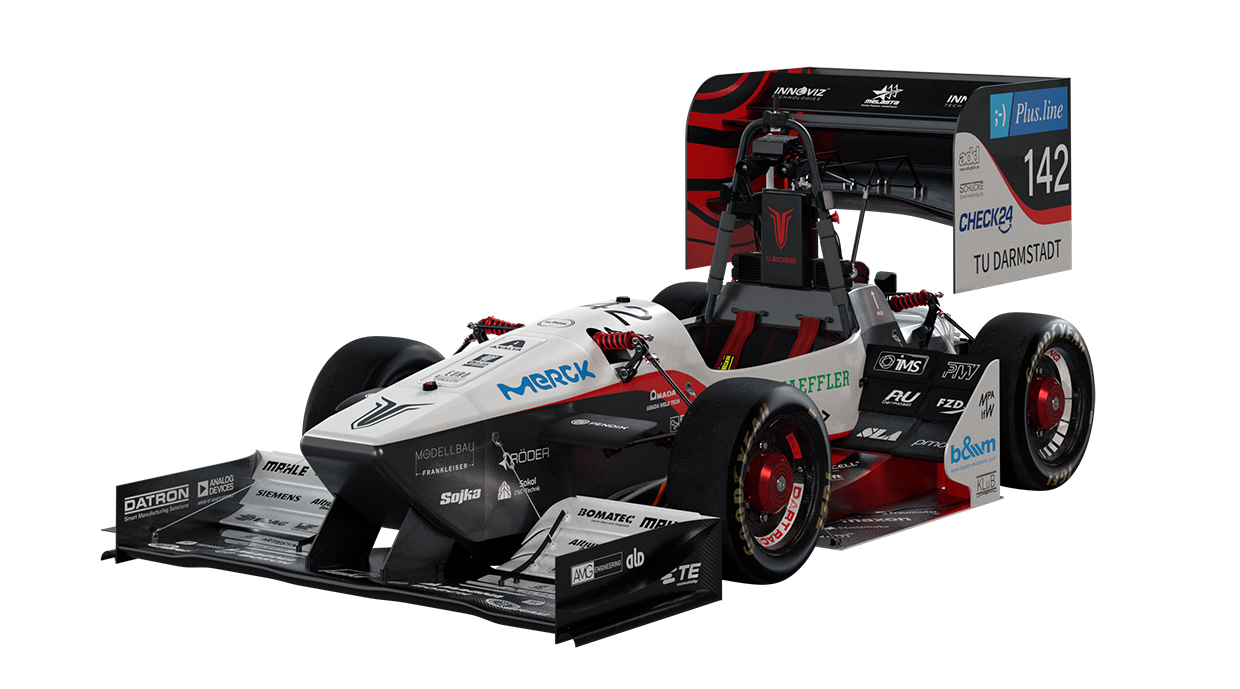
109xCar Specifications
General
| Frame Construction | One-piece monocoque |
|---|---|
| Material | CFRP prepreg and aluminum honeycomb |
| Overall L | 3056 mm |
| Overall W | 1549 mm |
| Overall H | 1193 mm |
| Wheelbase | 1535 mm |
| Track (Fr) | 1240 mm |
| Track (Rr) | 1200 mm |
| Weight with 68kg driver (Fr) | 132 kg |
| Weight with 68kg driver (Rr) | 136 kg |
| Suspension | Double unequal length a-arm, push rod actuated, horizontally oriented spring/damper |
| Tyres (Fr / Rr) | Goodyear G-19 Eagle, 178/53R13 |
| Wheels (Fr / Rr) | 7.0x13; 17.9 mm offset; 1 pc CFRP rim |
| Drive Type | 1.5-step planetary transmission |
| Differential | n/a |
| Cooling | Separate liquid cooling circuits for ASPC, TS rear and TS front; air-cooled accumulator |
| Brake System | Self-developed rotors with 220 mm diameter, AP Racing 4-piston and 2-piston calipers |
| Electronics | Torque vectoring, bidirectional TCP streaming via WiFi, multifunctional steering wheel |
Powertrain
| Number of Motors | 4 |
|---|---|
| Motor Location | wheel hub-integrated |
| Max Motor Power (per motor) | 42 kW each kW |
| Motor Type | self-developed PSM |
| Max Motor RPM (highest) | 20000 rpm |
| Motor Controller | Lenze Mobile DCU 60/60 |
| Max System Voltage | 550V V |
| Electrode Materials | LiCoO2 |
| Combined Accumulator Capacity | 8.22 kWh kWh |
| Transmission Ratio (Primary) | 13.73 : 1 |
| Transmission Ratio (Secondary) | n/a : 1 |
Driverless System
| Processing unit(s) | self-developed VCU |
|---|---|
| Floating Point Operations Per Second of all processing units that are working for the DV system | 13740 GigaFLOPS |
| Power consumption of all processing units that are working for the DV system | 380 W W |
| Camera(s) | 2, 15m (colors 30m), H: 66°, V: 51° Matrix Vision mvBlueFOX3-2032aC-1112 |
| Radar sensor(s) | n/a |
| Lidar sensor(s) | 1, 28m, H: 115°, V: 25°, Innoviz One |
| Other sensors | Vectornav VN300, MSO Speed Wedge |
| Highlights of the DV system | Fully parallel processing pipelines for camera and lidar for redundant and failsafe operation; complete time synchronisation with integrated dead time compensation in the vehicle control module |
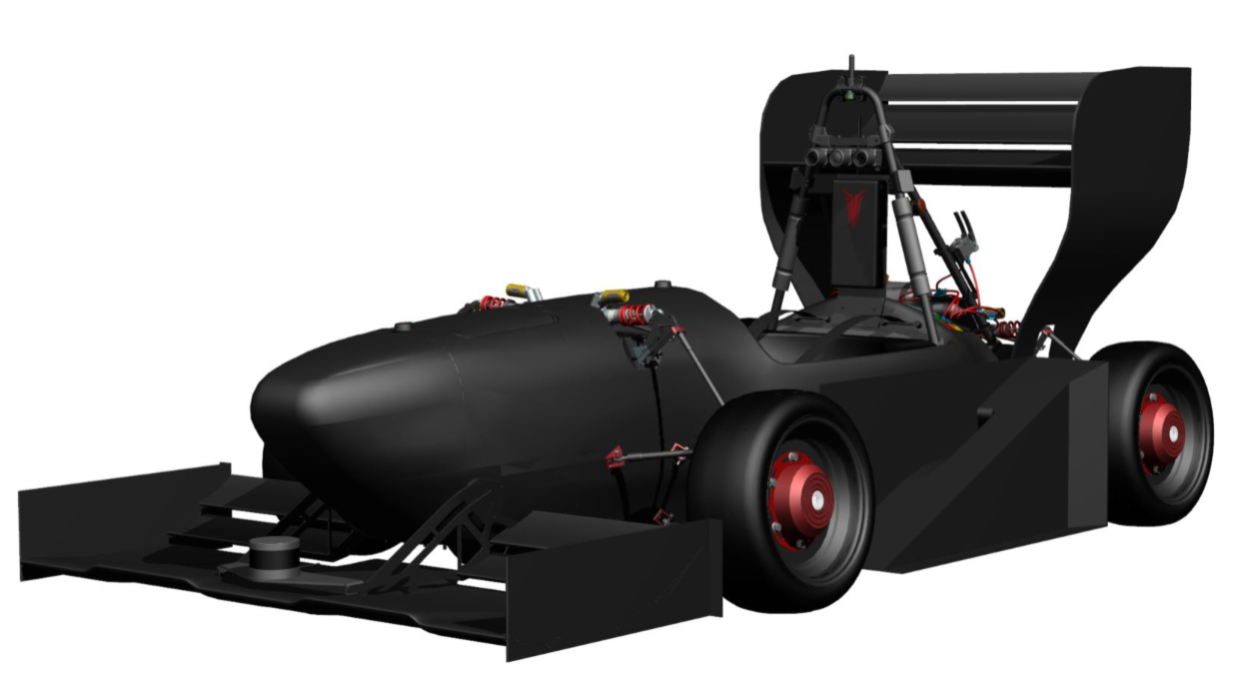
Info
Car Specifications
General
| Frame Construction | Monocoque |
|---|---|
| Material | CFRP-Prepreg, Aluminium honeycomb |
| Overall L | 2994 mm |
| Overall W | 1454 mm |
| Overall H | 1201 mm |
| Wheelbase | 1534 mm |
| Track (Fr) | 1378 mm |
| Track (Rr) | 1331 mm |
| Weight with 68kg driver (Fr) | 131 kg |
| Weight with 68kg driver (Rr) | 142 kg |
| Suspension | Double, unequal-length A-Arms, Push rod actuated horizontally oriented spring and damper |
| Tyres (Fr / Rr) | 205/470 R13, Continental / 205/470 R13, Continental |
| Wheels (Fr / Rr) | 7x13, 17.95 mm offset, 1 pc CFRP Rim/7x13, 17.95 mm offset, 1 pc CFRP Rim |
| Drive Type | Directly driven planetary gearbox |
| Differential | no differential |
| Cooling | water-cooled, radiators on diffusor |
| Brake System | 4-Disk System, self developed rotors with 220mm diameter front and rear |
| Electronics | Torque vectoring, Bidirectional TCP streaming via WLAN, Multifunctional Steering Wheel |
Powertrain
| Number of Motors | 4 |
|---|---|
| Motor Location | 1 at each Wheel |
| Max Motor Power (per motor) | 35,4kW each kW |
| Motor Type | Fischer TI085-052-070 |
| Max Motor RPM (highest) | 20000 rpm |
| Motor Controller | Lenze Schmidhauser DCU 60/60 |
| Max System Voltage | 443V V |
| Electrode Materials | Polymer Li-Ion Battery |
| Combined Accumulator Capacity | 5,81 kWh kWh |
| Transmission Ratio (Primary) | 13,73 : 1 |
| Transmission Ratio (Secondary) | - |
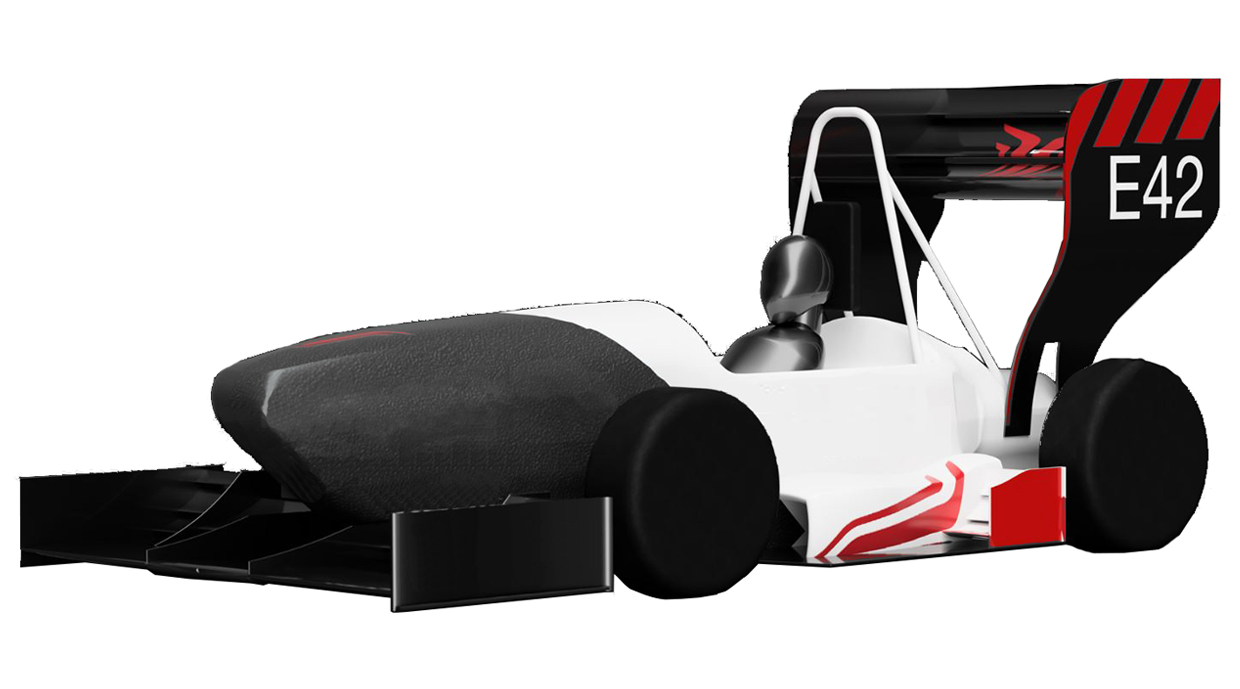
Info
32xCar Specifications
General
| Frame Construction | Monocoque |
|---|---|
| Material | Single peace CFRP with aluminium honeycombs |
| Overall L | 2942 mm |
| Overall W | 1462 mm |
| Overall H | 1190 mm |
| Wheelbase | 1535 mm |
| Track (Fr) | 1235 mm |
| Track (Rr) | 1230 mm |
| Weight with 68kg driver (Fr) | 139 kg |
| Weight with 68kg driver (Rr) | 139 kg |
| Suspension | Double unequal length A-Arm. Push rod actuated horizontally oriented spring and damper |
| Tyres (Fr / Rr) | 205/470 R13, Continental |
| Wheels (Fr / Rr) | 7x13, 12.3 mm offset, 2 pc CFRP/alu Rim |
| Drive Type | planetary gearbox |
| Differential | no differential |
| Cooling | two Radiators mounted in sidepods, seperated front and rear cooling |
| Brake System | 4-Disk System, self developed roots with 220mm diameter (front) and 200mm diameter (rear) |
| Electronics | selfdesigned Live-Telemetry System, BMS, decentralized sensor nodes, dashboard w/ LEDpanel |
Powertrain
| Number of Motors | 4 |
|---|---|
| Motor Location | Wheel hub |
| Max Motor Power (per motor) | 52 kW kW |
| Motor Type | Brusa IPM 1-10.09.04 |
| Max Motor RPM (highest) | 24000 rpm |
| Motor Controller | Brusa DMC 514 |
| Max System Voltage | 443V V |
| Electrode Materials | LiCoO2 |
| Combined Accumulator Capacity | 5.8 kWh |
| Transmission Ratio (Primary) | 18 : 1 |
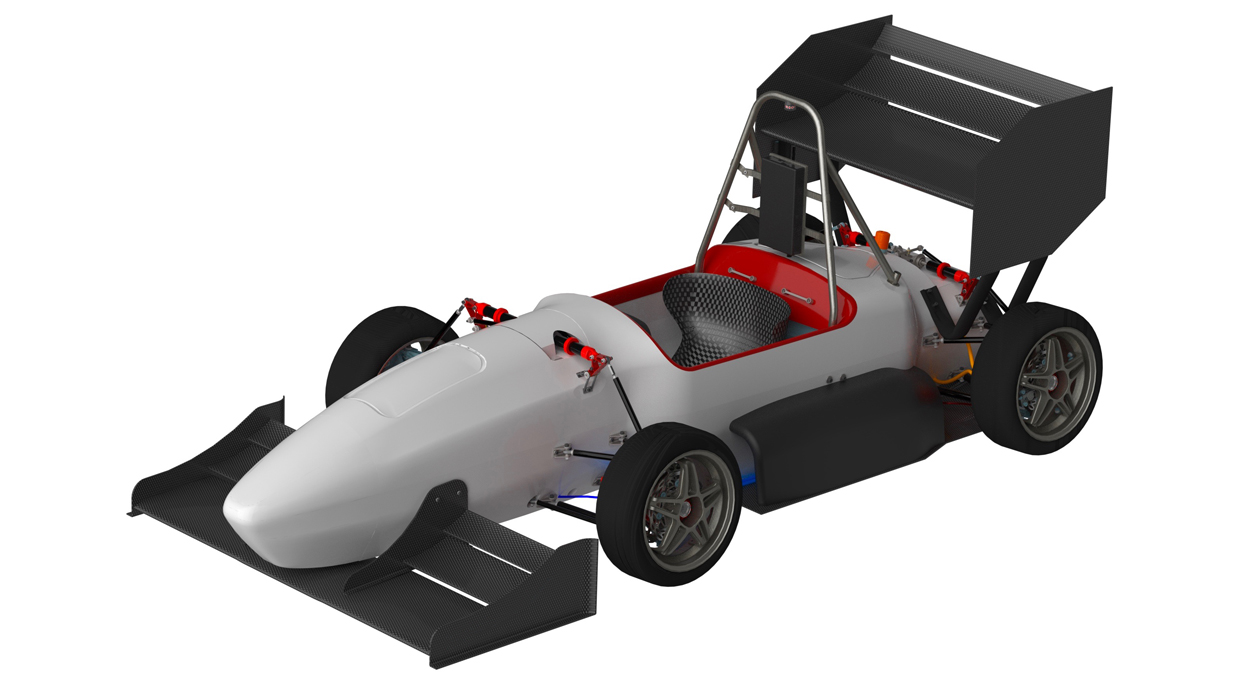
Info
9xCar Specifications
General
| Frame Construction | Monocoque |
|---|---|
| Material | Single-piece CFRP with Aluminium Honeykomcombs |
| Overall L | 3100 mm |
| Overall W | 1400 mm |
| Overall H | 1100 mm |
| Wheelbase | 1585 mm |
| Track (Fr) | 1220 mm |
| Track (Rr) | 1170 mm |
| Weight with 68kg driver (Fr) | 134 kg |
| Weight with 68kg driver (Rr) | 134 kg |
| Suspension | Double A-Arm |
| Tyres (Fr / Rr) | Pirelli 185/40 R13 |
| Wheels (Fr / Rr) | (Aluminiun-CFRP Hybrid / Aluminiun-CFRP Hybrid |
| Drive Type | 1.5 Planetary Gearbox |
| Differential | Electronic Differential |
| Cooling | two seperate water-cooling circuit |
| Brake System | 4-Disk system, self developed rotors, adjustable brake balance, RIT de |
| Electronics | selfdesigned Live-Telemetry System, Multifunctional Steering Wheel |
Powertrain
| Number of Motors | 4 |
|---|---|
| Motor Location | Wheel-Hub |
| Max Motor Power (per motor) | 52kW kW |
| Motor Type | PermMagnet Synchronous Machine |
| Max Motor RPM (highest) | 24000 rpm |
| Motor Controller | BRUSA dmc 514 |
| Max System Voltage | 420 V |
| Electrode Materials | LiPo |
| Combined Accumulator Capacity | 6.99kWh kWh |
| Transmission Ratio (Primary) | 18:1 : 1 |
| Transmission Ratio (Secondary) | 1:1 : 1 |
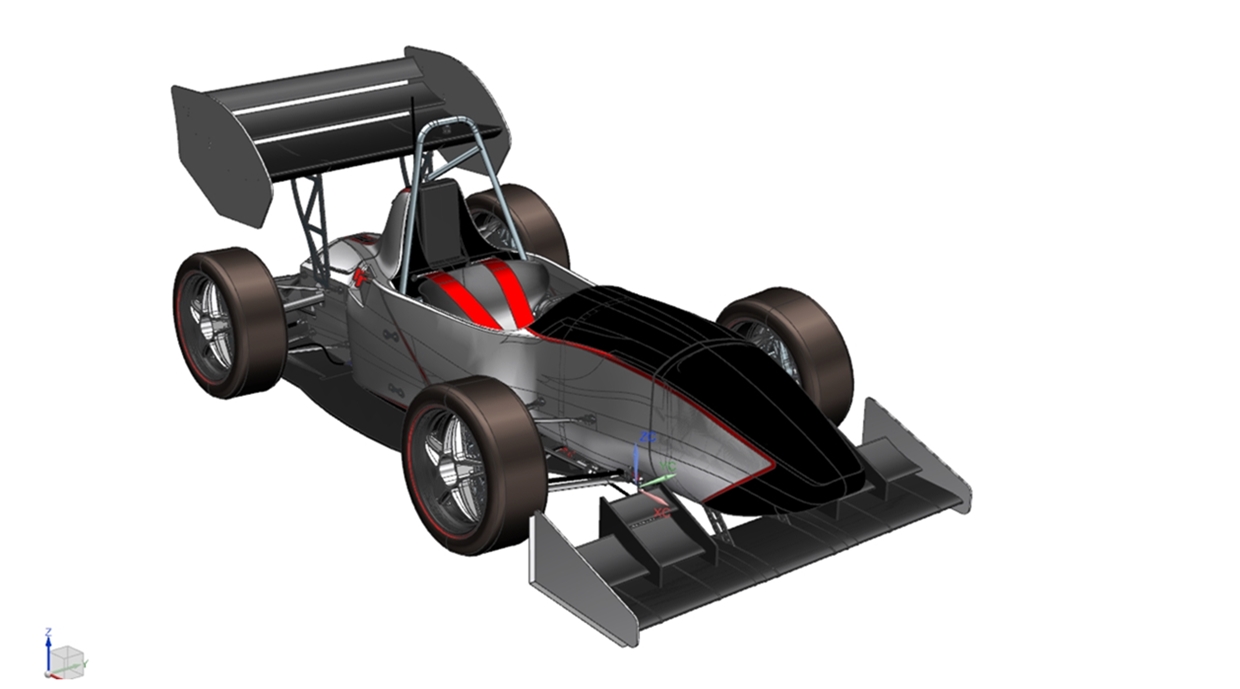
Info
11xCar Specifications
General
| Frame Construction | One-piece monocoque |
|---|---|
| Material | CFRP, aluminium honeycomb |
| Overall L | 2966 mm |
| Overall W | 1345 mm |
| Overall H | 1038 mm |
| Wheelbase | 1525 mm |
| Track (Fr) | 1183 mm |
| Track (Rr) | 1162 mm |
| Weight with 68kg driver (Fr) | 126 kg |
| Weight with 68kg driver (Rr) | 137 kg |
| Suspension | Double-wishbone, Short-Long Arm, pull rod, air spring |
| Tyres (Fr / Rr) | 185/40 R15, Pirelli |
| Wheels (Fr / Rr) | 185/40 R15, Pirelli |
| Drive Type | - |
| Differential | electronic differential |
| Cooling | radiator and fan, mounted in sidepot |
| Brake System | 4-disk system, diameter front/rear 240 mm / 220 mm, Tilton master cylinders |
| Electronics | live-telemetry of battery data, dashboard with LED-panel for driver information |
Powertrain
| Number of Motors | 2 |
|---|---|
| Motor Location | rear |
| Max Motor Power (per motor) | 51 kW |
| Motor Type | Brusa / IPM1-10.09.06-dart0b-03 |
| Max Motor RPM (highest) | 24000 rpm |
| Motor Controller | Brusa DMC 514 |
| Max System Voltage | 420 V |
| Electrode Materials | LiPo |
| Combined Accumulator Capacity | 6.99 kWh kWh |
| Transmission Ratio (Primary) | 18.5:1 : 1 |
| Transmission Ratio (Secondary) | - |
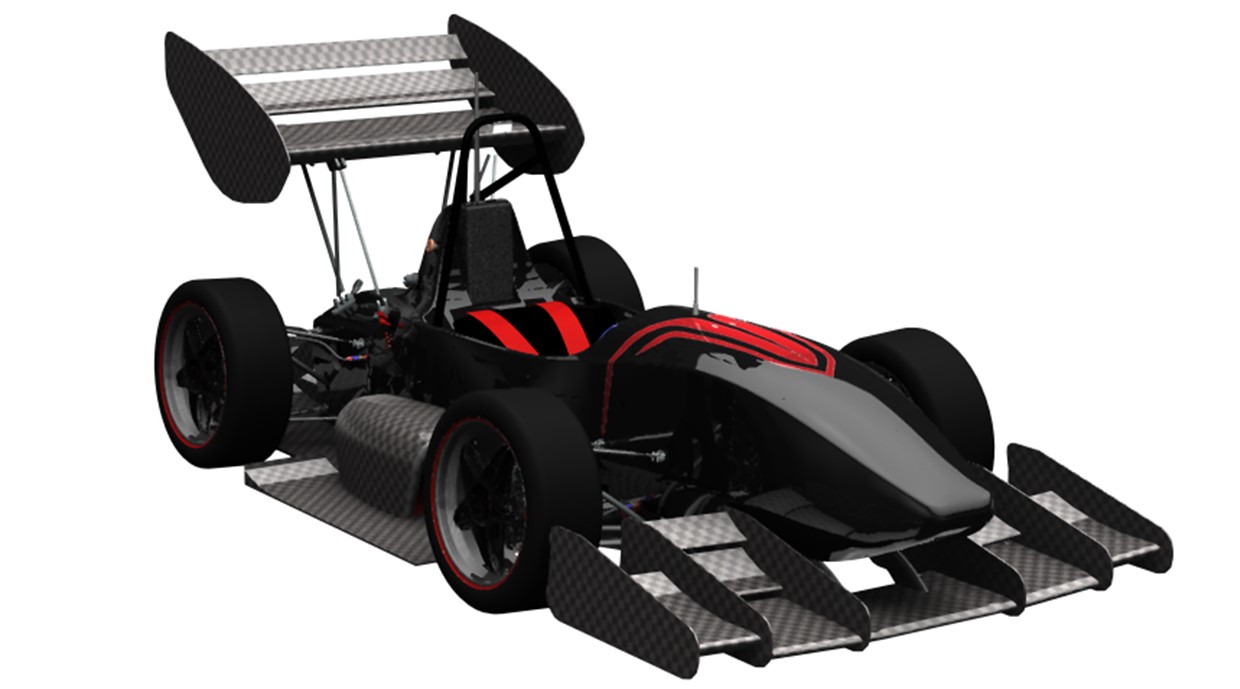
Info
8xCar Specifications
General
| Frame Construction | CFRP-Honeycomb Sandwich Monocoque |
|---|---|
| Material | UD CFRP, Aluminum Honeycomb |
| Overall L | 2977 mm |
| Overall W | 1416 mm |
| Overall H | 1150 mm |
| Wheelbase | 1525 mm |
| Track (Fr) | 1220 mm |
| Track (Rr) | 1200 mm |
| Weight with 68kg driver (Fr) | 97 kg |
| Weight with 68kg driver (Rr) | 106 kg |
| Suspension | Double signle pc wishbone (short-long Arm), pull rod, air spring |
| Tyres (Fr / Rr) | 185/40 R15 Pirelli |
| Wheels (Fr / Rr) | 6.0x15 15mm offset, 2pc CFRP-Al Hybrid Rim |
| Drive Type | dual spur gear, single housing |
| Differential | Electronic Differential |
| Cooling | Water cooling, side mounted radiator, Vestamid 8000 series coolant lines |
| Brake System | 4-Disk floating hybrid rotors (self developed), 220/200 mm dia (fr/re), adj. self designed bias bar |
| Electronics | Plug-and-play dashboard with integr. radio, live telemetry, automated error and data logging |
Powertrain
| Number of Motors | 2 |
|---|---|
| Motor Location | rear right, rear left |
| Max Motor Power (per motor) | 55kW kW |
| Motor Type | Brusa/DART PSM |
| Max Motor RPM (highest) | 24000 RPM rpm |
| Motor Controller | Brusa DMC514 |
| Max System Voltage | 420V V |
| Electrode Materials | LiFePO - graphite |
| Combined Accumulator Capacity | 7,02 kWh kWh |
| Transmission Ratio (Primary) | 1:18.7 : 1 |
| Transmission Ratio (Secondary) | - |
Info
15xCar Specifications
General
| Frame Construction | Single Piece Monocoque |
|---|---|
| Material | UD CFRP, Aluminium Honeycomb |
| Overall L | 2977 mm |
| Overall W | 1416 mm |
| Overall H | 1180 mm |
| Wheelbase | 1525 mm |
| Track (Fr) | 1200 mm |
| Track (Rr) | 1200 mm |
| Weight with 68kg driver (Fr) | 121 kg |
| Weight with 68kg driver (Rr) | 131 kg |
| Suspension | Double unequal length A-Arm, pullrod-actuated, air-spring |
| Tyres (Fr / Rr) | Pirelli 185/40 R15 low section |
| Wheels (Fr / Rr) | 6x15, 15mm offset, 2pc AL/CFRP Hybrid Rim |
| Drive Type | Two stage spur gear transmission |
| Differential | electronic |
| Cooling | Sidepot mounted radiator, one side |
| Brake System | 4-Disk system, self developed rotors, adjustable brake balance |
| Electronics | Dashboard integrated into monocoque and steering wheel, Live-Telemetry System |
Powertrain
| Number of Motors | 2 |
|---|---|
| Motor Location | Rear, left and right |
| Max Motor Power (per motor) | 110kW kW |
| Motor Type | BRUSA/DART PSM |
| Max Motor RPM (highest) | 24.000 rpm |
| Motor Controller | BRUSA DMC 514 |
| Max System Voltage | 420V V |
| Electrode Materials | LiPo |
| Combined Accumulator Capacity | 7,02kWh kWh |
| Transmission Ratio (Primary) | 1:18,5 : 1 |
| Transmission Ratio (Secondary) | - |
Info
35xCar Specifications
General
| Frame Construction | single piece carbon fibre Monocoque |
|---|---|
| Material | CFRP, aluminium honeycomb |
| Overall L | 2840 mm |
| Overall W | 1400 mm |
| Overall H | 1055 mm |
| Wheelbase | 1525 mm |
| Track (Fr) | 1220 mm |
| Track (Rr) | 1200 mm |
| Weight with 68kg driver (Fr) | 124 kg |
| Weight with 68kg driver (Rr) | 143 kg |
| Suspension | Double uneaqual length A-Arm. Pull rod. Air Spring |
| Tyres (Fr / Rr) | Pirelli 185/40 R15 low section |
| Wheels (Fr / Rr) | 7x15, 15mm offset, 2pc Al/CFRP hybrid Rim |
| Drive Type | spur gear drive |
| Differential | n/a |
| Cooling | Water, rear mounted mini radiator |
| Brake System | Front: 220mm outer diameter, 170 inner diameter; Rear 200mm outer diameter, 150mm inner diameter |
| Electronics | adjustable Torque Vectoring, Dashboard, TSAL, Brake light |
Powertrain
| Number of Motors | 2 |
|---|---|
| Motor Location | rear, inside chassis |
| Max Motor Power (per motor) | 85kW kW |
| Motor Type | permanent magnet synchronous axial flux |
| Max Motor RPM (highest) | 4000 rpm |
| Motor Controller | Bamocar D3 |
| Max System Voltage | 600V V |
| Electrode Materials | LiPO |
| Combined Accumulator Capacity | 5,3kWh kWh |
| Transmission Ratio (Primary) | 1:2,68 : 1 |
| Transmission Ratio (Secondary) | n/a : 1 |
Info
Car Specifications
General
| Frame Construction | Full moncoque |
|---|---|
| Material | CFRP, aluminium honeycomb sandwich |
| Overall L | 2815 mm |
| Overall W | 1415 mm |
| Overall H | 990 mm |
| Wheelbase | 1600 mm |
| Track (Fr) | 1220 mm |
| Track (Rr) | 1200 mm |
| Weight with 68kg driver (Fr) | 141 kg |
| Weight with 68kg driver (Rr) | 172 kg |
| Suspension | Double unequal length A-Arm. Pull rod actuated horizontally oriented spring and damper. |
| Tyres (Fr / Rr) | 185x40 R15, Pirelli Spec. X / 185x40 R15, Pirelli Spec. X |
| Wheels (Fr / Rr) | 7.0x15, 10mm offset, 1 pc Al Rim / 7.0x15, 10mm offset, 1 pc Al Rim |
| Drive Type | 520 chain drive |
| Differential | limited slip differential |
| Cooling | sidepod mounted AKG radiator |
| Brake System | Floating, X46Cr13, hub mounted, 200mm outer dia, adjustable brake balance, ISR calipers, ABS |
| Electronics | telemetry over WLAN, multifunctional steering wheel, CAN interface |
Powertrain
| Number of Motors | 1 |
|---|---|
| Motor Location | Rear center |
| Max Motor Power (per motor) | 85 (limited) kW |
| Motor Type | YASA-750 |
| Max Motor RPM (highest) | 2400 rpm |
| Motor Controller | Sevcon Gen4Size8 |
| Max System Voltage | 405 V |
| Electrode Materials | LiPo |
| Combined Accumulator Capacity | 5,25 kWh |
| Transmission Ratio (Primary) | 1:1,6 : 1 |
FS past achievements due to World Ranking Data Base
| Date | Event | Teams | Rank | BP | CM | ED | SP | DV SP | AC | DV AC | AX | EN | EF | Pe | Total |
|---|---|---|---|---|---|---|---|---|---|---|---|---|---|---|---|
| 2026.08 | 40 |
34. |
28. |
34. |
33. |
- |
- |
- |
- |
- |
- |
- |
0.00 |
66.50 |
|
| 2025.08 | 84 |
53. |
32. |
44. |
46. |
- |
- |
- |
- |
- |
28. |
- |
0.00 |
198.40 |
|
| 2025.08 | 53 |
46. |
41. |
28. |
52. |
- |
- |
- |
- |
- |
- |
- |
0.00 |
158.70 |
|
| 2024.08 | 79 |
12. |
8. |
63. |
46. |
30. |
9. |
47. |
14. |
33. |
16. |
7. |
0.00 |
515.15 |
|
| 2024.08 | 47 |
6. |
16. |
37. |
2. |
16. |
- |
21. |
- |
12. |
8. |
8. |
0.00 |
535.07 |
|
| 2024.08 | 32 |
17. |
5. |
10. |
11. |
14. |
- |
18. |
- |
18. |
- |
- |
0.00 |
270.96 |
|
| 2024.07 | 31 |
13. |
23. |
21. |
9. |
- |
- |
10. |
- |
10. |
- |
- |
0.00 |
256.74 |
|
| 2023.08 | 70 |
55. |
46. |
52. |
30. |
- |
- |
- |
- |
31. |
- |
- |
-20.00 |
173.45 |
|
| 2023.08 | 35 |
17. |
11. |
18. |
10. |
12. |
- |
16. |
- |
12. |
- |
- |
0.00 |
295.71 |
|
| 2023.07 | 29 |
7. |
7. |
3. |
8. |
7. |
- |
- |
- |
9. |
- |
- |
0.00 |
311.97 |
|
| 2022.09 | 38 |
14. |
26. |
17. |
9. |
9. |
- |
17. |
- |
10. |
- |
- |
0.00 |
285.70 |
|
| 2022.08 | 63 |
17. |
39. |
37. |
24. |
21. |
6. |
29. |
4. |
29. |
- |
- |
0.00 |
363.27 |
|
| 2022.07 | 26 |
12. |
19. |
18. |
7. |
3. |
- |
- |
- |
- |
- |
- |
0.00 |
262.89 |
|
| 2021.08 | 38 |
23. |
22. |
- |
28. |
23. |
- |
28. |
- |
23. |
16. |
8. |
0.00 |
291.96 |
|
| 2021.07 | 28 |
24. |
19. |
- |
20. |
- |
- |
- |
- |
- |
- |
- |
0.00 |
101.60 |
|
| 2019.08 | 39 |
18. |
16. |
24. |
16. |
20. |
- |
8. |
- |
20. |
13. |
- |
0.00 |
322.40 |
|
| 2019.08 | 38 |
15. |
6. |
16. |
15. |
10. |
- |
17. |
- |
18. |
- |
- |
-5.00 |
302.20 |
|
| 2019.08 | 24 |
18. |
20. |
12. |
18. |
- |
- |
- |
- |
9. |
- |
- |
0.00 |
197.30 |
|
| 2017.08 | 30 |
15. |
13. |
6. |
15. |
2. |
- |
15. |
- |
16. |
- |
- |
0.00 |
390.90 |
|
| 2017.08 | 34 |
19. |
24. |
8. |
6. |
- |
- |
- |
- |
- |
- |
- |
0.00 |
254.00 |
|
| 2017.07 | 38 |
30. |
22. |
27. |
26. |
- |
- |
- |
- |
- |
- |
- |
0.00 |
211.30 |
|
| 2016.08 | 29 |
9. |
16. |
17. |
17. |
7. |
- |
- |
- |
8. |
8. |
6. |
0.00 |
608.10 |
|
| 2016.08 | 37 |
10. |
6. |
12. |
12. |
2. |
- |
10. |
- |
10. |
- |
- |
0.00 |
417.03 |
|
| 2016.07 | 106 |
26. |
19. |
67. |
15. |
7. |
- |
5. |
- |
12. |
53. |
- |
0.00 |
445.40 |
|
| 2015.08 | 30 |
5. |
4. |
11. |
7. |
3. |
- |
9. |
- |
8. |
6. |
3. |
0.00 |
624.62 |
|
| 2015.08 | 39 |
28. |
26. |
22. |
11. |
- |
- |
- |
- |
- |
- |
- |
-35.00 |
167.66 |
|
| 2015.07 | 92 |
10. |
9. |
17. |
12. |
30. |
- |
5. |
- |
23. |
12. |
6. |
-30.00 |
655.50 |
|
| 2014.09 | 20 |
7. |
1. |
5. |
1. |
2. |
- |
1. |
- |
5. |
7. |
9. |
-40.00 |
592.01 |
|
| 2014.08 | 18 |
8. |
6. |
8. |
4. |
10. |
- |
5. |
- |
9. |
12. |
7. |
0.00 |
495.20 |
|
| 2014.08 | 39 |
15. |
9. |
7. |
5. |
3. |
- |
11. |
- |
- |
- |
- |
0.00 |
346.38 |
|
| 2014.07 | 90 |
38. |
18. |
52. |
7. |
25. |
- |
40. |
- |
- |
33. |
- |
-20.00 |
255.60 |
|
| 2013.09 | 24 |
12. |
7. |
14. |
4. |
6. |
- |
10. |
- |
10. |
12. |
11. |
0.00 |
483.30 |
|
| 2013.08 | 39 |
23. |
13. |
27. |
15. |
10. |
- |
- |
- |
27. |
19. |
- |
0.00 |
333.59 |
|
| 2013.08 | 37 |
13. |
21. |
19. |
3. |
3. |
- |
11. |
- |
8. |
- |
- |
0.00 |
507.70 |
|
| 2013.08 | 40 |
17. |
14. |
31. |
5. |
1. |
- |
- |
- |
5. |
- |
- |
-10.00 |
370.80 |
|
| 2013.07 | 83 |
48. |
46. |
18. |
13. |
- |
- |
- |
- |
- |
- |
- |
0.00 |
233.80 |
|
| 2012.09 | 17 |
2. |
12. |
4. |
5. |
1. |
- |
1. |
- |
2. |
2. |
2. |
0.00 |
894.10 |
|
| 2012.08 | 32 |
22. |
14. |
12. |
19. |
- |
- |
8. |
- |
- |
- |
- |
-10.00 |
237.42 |
|
| 2012.07 | 97 |
51. |
31. |
42. |
27. |
- |
- |
- |
- |
- |
- |
- |
-4.00 |
200.20 |
|
| 2011.07 | 13 |
7. |
12. |
11. |
4. |
- |
- |
- |
- |
5. |
7. |
- |
0.00 |
211.10 |
|
| x 40 | |||||||||||||||