
Team Details
As of 2022, this class has been integrated into the other two classes.
TU Darmstadt Racing Team e.V.
| University | Technische Universität Darmstadt
DE Darmstadt TU short 25 |
 |
|---|---|---|
| Location | Darmstadt, Germany | |
| Homepage | https://www.dart-racing.de/ | |
| Social Media | ||
| CV Team | Akademische Motorsportgruppe Darmstadt e.V. | |
| EV Team | TU Darmstadt Racing Team e.V. | |
| Short Link | tid.fsg.one/779 | |
Past Events
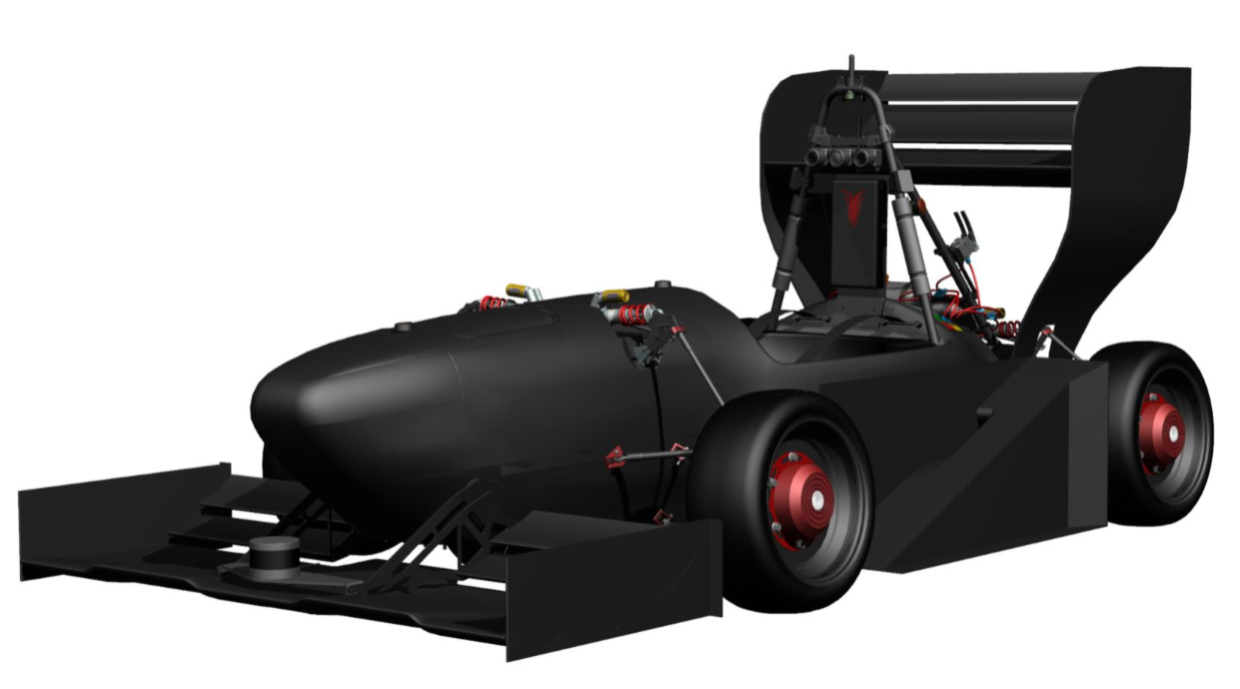
2021
Info
72x
The TU Darmstadt Racing Team was founded in 2005 and is attending FSG since its beginning. 2011 the Team switched to electric cars, and 2017 decided to go driverless. 40 students are currently working on the electric and the driverless project. Since last year we build a car designed for the participation in electric and driverless class. This year the focus of the autonomous system was the enhancement of the sensor pipeline.
Engineering Design Priorities:
wheelpackaging
drivetrain
aerodynamics
Car Specifications
General
| Frame Construction | One-shot monocoque |
|---|---|
| Material | Carbonfiber Prepreg with aluminium honeycomb |
| Overall L | 2994 mm |
| Overall W | 1454 mm |
| Overall H | 1201 mm |
| Wheelbase | 1534 mm |
| Track (Fr) | 1378 mm |
| Track (Rr) | 1331 mm |
| Weight with 68kg driver (Fr) | 98 kg |
| Weight with 68kg driver (Rr) | 106 kg |
| Suspension | Double, unequal-length A-Arms, Push rod actuated horizontally oriented spring and damper |
| Tyres (Fr / Rr) | Continental - 205/470 R13 |
| Wheels (Fr / Rr) | 7x13, 17.95 mm offset, 1 pc CFRP Rim |
| Drive Type | Directly driven planetary gearbox |
| Differential | n.a. |
| Cooling | Water-cooled wtih radiators on diffusor |
| Brake System | 4-Disk System, self developed rotors with 220mm diameter front and rear |
| Electronics | Torque vectoring, Bidirectional TCP streaming via WLAN, Multifunctional Steering Wheel |
Powertrain
| Number of Motors | 4 |
|---|---|
| Motor Location | One motor per wheel |
| Max Motor Power (per motor) | 4x 35,4kW kW |
| Motor Type | 4x PSM from Fischer |
| Max Motor RPM (highest) | 20000 rpm |
| Motor Controller | Lenze Schmidhauser |
| Max System Voltage | 443V V |
| Electrode Materials | Polymer Li-Ion Battery |
| Combined Accumulator Capacity | 5.81kWh kWh |
| Transmission Ratio (Primary) | 13.73 : 1 |
| Transmission Ratio (Secondary) | n.a. : 1 |
Driverless System
| Processing unit(s) | i7-9700K, RTX2060-6G |
|---|---|
| Floating Point Operations Per Second of all processing units that are working for the DV system | 6452.4 GigaFLOPS |
| Power consumption of all processing units that are working for the DV system | 255 W |
| Camera(s) | 3x Matrix Vision - mvBlueFOX3 |
| Radar sensor(s) | n.a. |
| Lidar sensor(s) | Velodyne |
| Other sensors | n.a. |
| Highlights of the DV system | Watercooled CPU and GPU, GraphSLAM using g2o, cone detection using YOLOv5 |
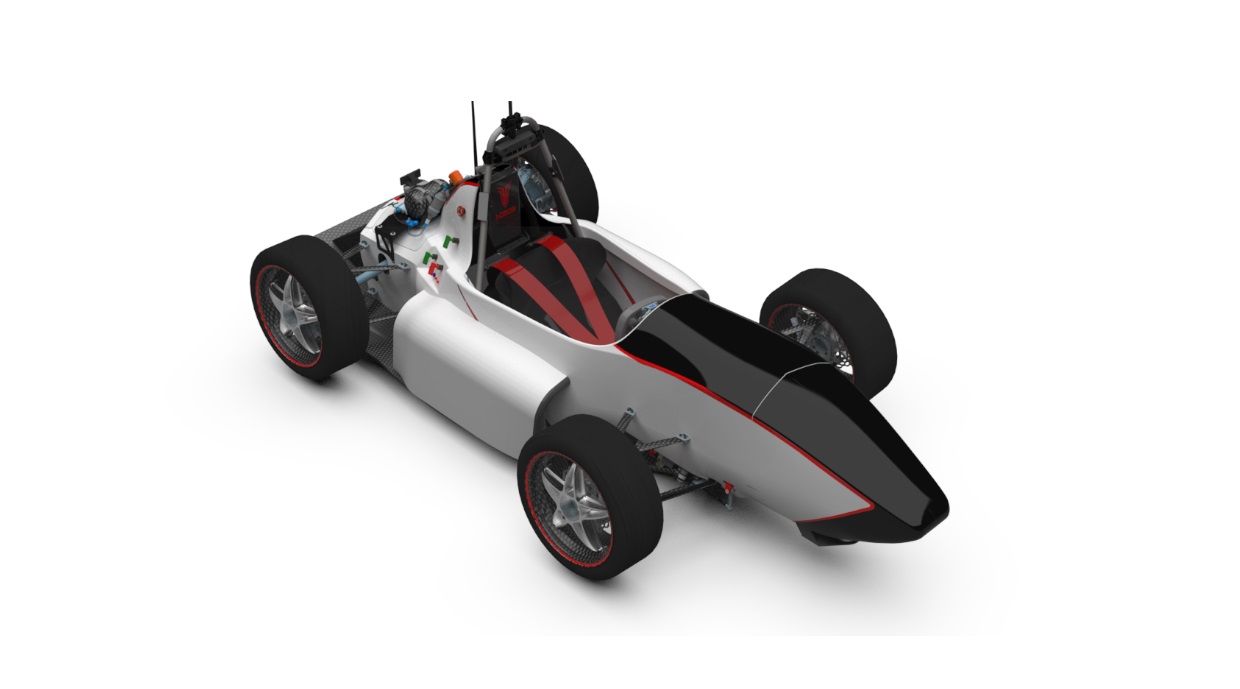
2019
Info
14x
The TU Darstadt Racing Team was founded in 2005 and is attending FSG since its beginning. 2011 the Team switched to electric cars, and 2017 decided to go driverless. 35 students are currently working on the electric and the driverless project.This year, we built our third driverless vehicle. We used the chance to focus on further improving our autonomous system. An enhanced Sensor Fusion, a SLAM and a racing line generating trajectory planning are just some of this year's highlights.
Engineering Design Priorities:
233seconds
Paradigmenwechsel
Car Specifications
General
| Frame Construction | Single piece CFRP monocoque |
|---|---|
| Material | CFRP-Prepreg, SGL SIGRAPREG C T24, Aluminium honeycomb |
| Overall L | 2966 mm |
| Overall W | 1345 mm |
| Overall H | 1182 mm |
| Wheelbase | 1525 mm |
| Track (Fr) | 1183 mm |
| Track (Rr) | 1162 mm |
| Weight with 68kg driver (Fr) | 107 kg |
| Weight with 68kg driver (Rr) | 132 kg |
| Suspension | Double-wishbone, short-long arm, pull rod, air spring |
| Tyres (Fr / Rr) | 7.5/21.5-15, Avon Tyres A15 |
| Wheels (Fr / Rr) | 7x15 |
| Drive Type | Two-stage spur gear transmission |
| Differential | 2 indepenent gear sets, electronic differential |
| Cooling | sidepod mounted radiator with thermostatic controlled electric fan |
| Brake System | self developed rotors 240mm dia. front / 200mm dia. rear, adj. brake balance |
| Electronics | Traction control, torque vectoring, Bidirectional TCP streaming via WLAN, HV DCDC for LV |
Powertrain
| Number of Motors | 2 |
|---|---|
| Motor Location | Rear Right, Rear Left |
| Max Motor Power (per motor) | 51kW kW |
| Motor Type | Brusa Elektronik AG IPM1-10.09.06-dart0b-03 |
| Max Motor RPM (highest) | 24000 rpm |
| Motor Controller | Brusa DMC 514 in CFRP casing |
| Max System Voltage | 336V V |
| Electrode Materials | LiCoO2 |
| Combined Accumulator Capacity | 6.35kWh kWh |
| Transmission Ratio (Primary) | 1:4,71 : 1 |
| Transmission Ratio (Secondary) | 1:3,93 : 1 |
Driverless System
| Processing unit(s) | dSPACE MicroAutoBox II, custom PC |
|---|---|
| Floating Point Operations Per Second of all processing units that are working for the DV system | 4285 GigaFLOPS |
| Power consumption of all processing units that are working for the DV system | 302 W |
| Camera(s) | Autonomos Smart Stereo Camera, 110° opening angle |
| Radar sensor(s) | n/a |
| Lidar sensor(s) | 2 Velodyne VLP-16 Hi-Res |
| Other sensors | VectorNav VN-300, Kistler Correvit SFII |
| Highlights of the DV system | Neuronal network for computer visision, implementation of Google Cartographer for map generation, redundant kalmann-filter based sensor fusion of camera and lidar data |
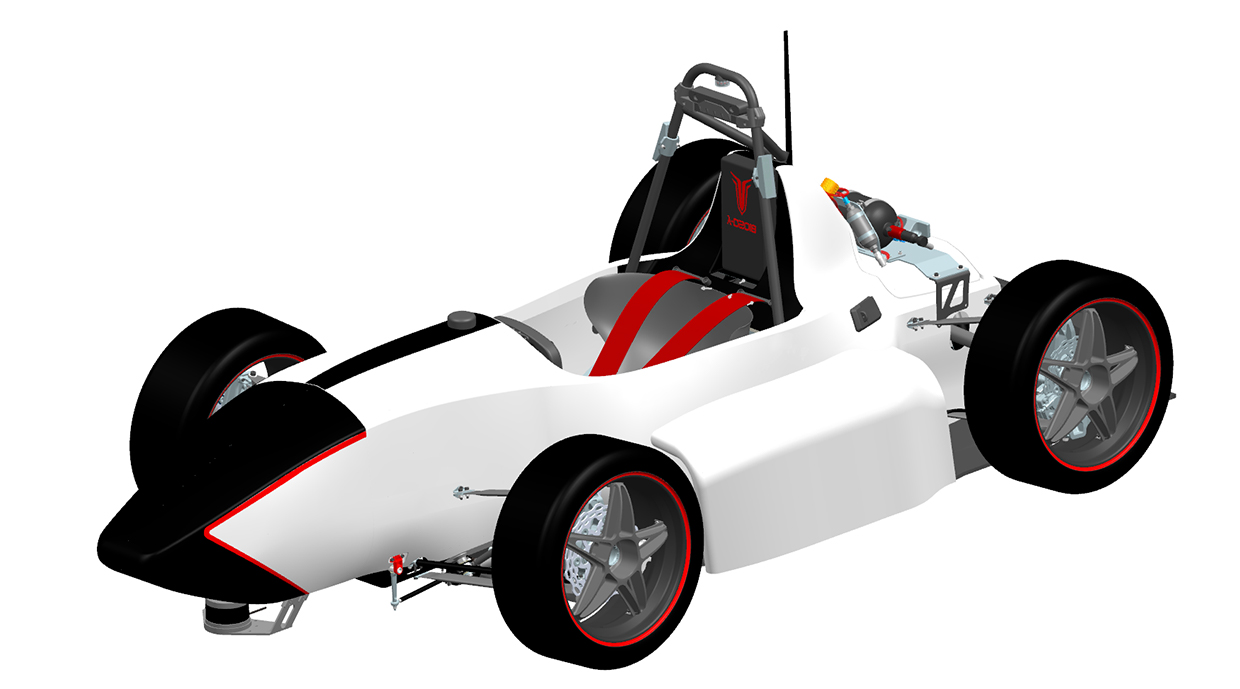
2018
Info
93x
DART Racing is the Formula Student Team of the Technical University of Darmstadt. The team was founded in 2005 as an IC Team. Since 2011 we build electric race cars and since 2017 two cars each year: one electric and one electric-driverless. The lambda-D2018 is the second fully autonomous race car of our team based on the lambda2016. The main changes to the last year’s driverless car are a new lidar-sensor and a new, hydropneumatic braking-actuator.
Engineering Design Priorities:
newlidarsensor
computervision
ROScar
hohesROS
weißwurstfrühstück
Car Specifications
General
| Frame Construction | Monocoque |
|---|---|
| Material | CFRP-Prepreg, SGL SIGRAPREG C T24, Aluminium honeycomb |
| Overall L | 2966 mm |
| Overall W | 1345 mm |
| Overall H | 1182 mm |
| Wheelbase | 1525 mm |
| Track (Fr) | 1183 mm |
| Track (Rr) | 1162 mm |
| Weight with 68kg driver (Fr) | 106 kg |
| Weight with 68kg driver (Rr) | 146 kg |
| Suspension | Double-wishbone, short-long arm, pull rod, air spring |
| Tyres (Fr / Rr) | 7.5/21.5-15, Avon Tyres A15 |
| Wheels (Fr / Rr) | 7x15 |
| Drive Type | Two-stage spur gear transmission |
| Differential | 2 indepenent gear sets, electronic differential |
| Cooling | sidepod mounted radiator with thermostatic controlled electric fan |
| Brake System | self developed rotors 240mm dia. front / 200mm dia. rear, adj. brake balance |
| Electronics | Traction control, torque vectoring, Bidirectional TCP streaming via WLAN |
Powertrain
| Number of Motors | 2 |
|---|---|
| Motor Location | Rear Right, Rear Left |
| Max Motor Power (per motor) | 51kW kW |
| Motor Type | Brusa Elektronik AG IPM1-10.09.06-dart0b-03 |
| Max Motor RPM (highest) | 24000 rpm |
| Motor Controller | Brusa DMC 514 in CFRP casing |
| Max System Voltage | 420V V |
| Electrode Materials | LiCoO2 |
| Combined Accumulator Capacity | 6.35kWh kWh |
| Transmission Ratio (Primary) | 1:4,71 : 1 |
| Transmission Ratio (Secondary) | 1:3,93 : 1 |
Driverless System
| Processing unit(s) | Nvidia Drive PX 2, dSPACE MicroAutoBox II |
|---|---|
| Floating Point Operations Per Second of all processing units that are working for the DV system | 9600 GigaFLOPS |
| Power consumption of all processing units that are working for the DV system | 416 W |
| Camera(s) | Autonomos Smart Stereo Camera, 110° opening angle |
| Radar sensor(s) | - |
| Lidar sensor(s) | Velodyne VLP-16 Hi-Res |
| Other sensors | VectorNav VN-300, Kistler Correvit SFII |
| Highlights of the DV system | Neuronal network for computer vision (trained with 3000 pictures), self developed mapping algorithm, sensor fusion of LIDAR and camera, localization by differential GPS, control system with 2 degrees of freedom, pneumatic brake actuation |
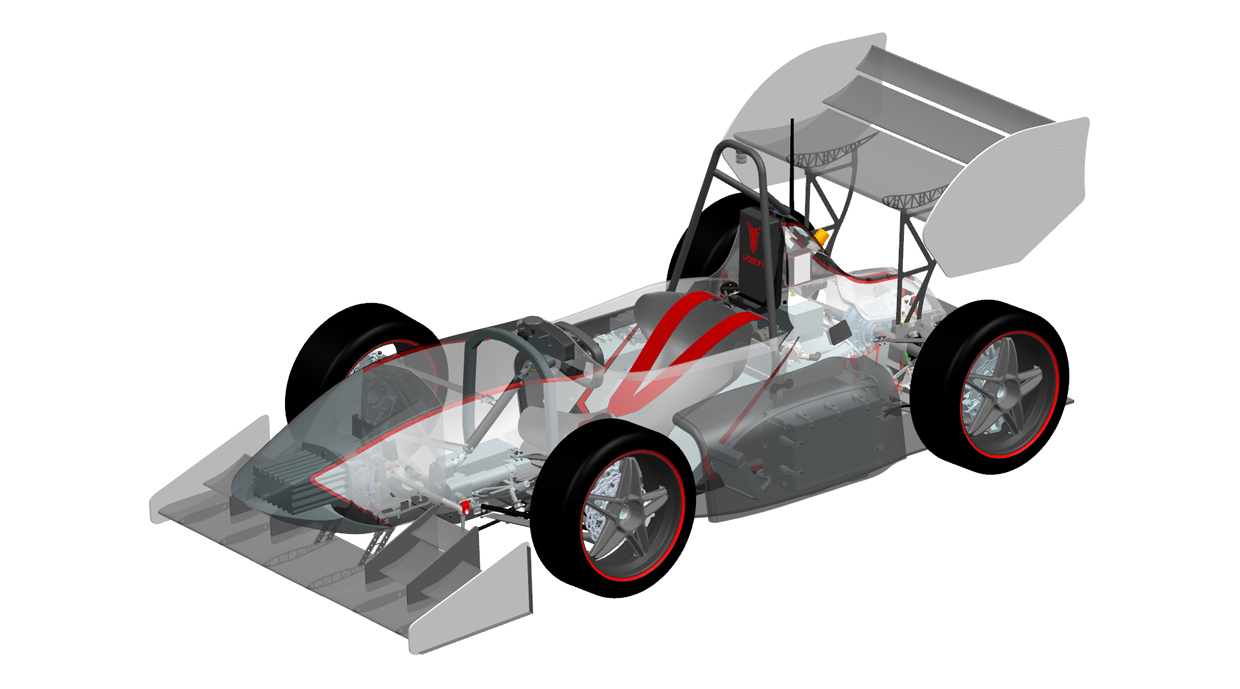
2017
Info
18x
We did reconstruct the lambda2016 to become the first autonomously driving car in the history of our association. To be part of the FSD from the first year on was a concern of ours, since DART always was a participant of the first minuet. The main changes regarding the lambda2016 was, the additional actuators for braking and steering together with an autonomous system.
Engineering Design Priorities:
machsieplatt
myde
nocombustion
quiteagoodcar
itonlydoeseverything
fahrennachgefuehl
Car Specifications
General
| Frame Construction | Monocoque |
|---|---|
| Material | Single-piece CFRP with Aluminium Honeycomby |
| Overall L | 2966 mm |
| Overall W | 1345 mm |
| Overall H | 1038 mm |
| Wheelbase | 1525 mm |
| Track (Fr) | 1183 mm |
| Track (Rr) | 1162 mm |
| Weight with 68kg driver (Fr) | 120 kg |
| Weight with 68kg driver (Rr) | 130 kg |
| Suspension | Double-wishbone, Short-Long Arm, pull rod, air spring |
| Tyres (Fr / Rr) | 7.5/21.5 x 15 Avon |
| Wheels (Fr / Rr) | 7.5/21.5 x 15 Avon |
| Drive Type | two-stage spur gear |
| Differential | - |
| Cooling | Two seperate water circuits |
| Brake System | 4-Disk system, self developed rotors , adjustable brake balance |
| Electronics | selfdesigned Live-Telemetry System, Multifunctional Steering Wheel |
Powertrain
| Number of Motors | 2 |
|---|---|
| Motor Location | Back |
| Max Motor Power (per motor) | 52kW kW |
| Motor Type | Permanent Magnet Synchronous Machine |
| Max Motor RPM (highest) | 24.000 rpm |
| Motor Controller | BRUSA DMC 514 |
| Max System Voltage | 420V V |
| Electrode Materials | LiPo |
| Combined Accumulator Capacity | 7kWh kWh |
| Transmission Ratio (Primary) | 1:18.5 : 1 |
| Transmission Ratio (Secondary) | 1 : 1 |
Driverless System
| Processing unit(s) | Intel NUC, Jetson TX1, Jetson TX2, NI sb-RIO 9627 |
|---|---|
| Floating Point Operations Per Second of all processing units that are working for the DV system | 1160 GigaFLOPS |
| Power consumption of all processing units that are working for the DV system | 150 W |
| Camera(s) | 1 * Stereo Labs ZED 20m FoV, 110° Opening Angle, Stereo Camera |
| Radar sensor(s) | - |
| Lidar sensor(s) | - |
| Other sensors | Swift Navigation Piksi Multi RTK GNSS Module |
| Highlights of the DV system | Image Processing |
FS past achievements due to World Ranking Data Base
| Date | Event | Teams | Rank | BP | CM | ED | DV SP | DV AC | AX | EN | EF | Pe | Total | Engine |
|---|---|---|---|---|---|---|---|---|---|---|---|---|---|---|
| 2026.08 | 15 |
15. |
- |
- |
15. |
- |
- |
- |
- |
- |
0.00 |
19.00 |
||
| 2025.08 | 42 |
32. |
- |
- |
30. |
- |
- |
- |
- |
- |
0.00 |
60.00 |
||
| 2025.08 | 24 |
23. |
- |
- |
23. |
- |
- |
- |
- |
- |
0.00 |
162.70 |
||
| 2024.08 | 27 |
13. |
- |
- |
25. |
9. |
11. |
8. |
6. |
- |
0.00 |
127.50 |
||
| 2024.08 | 12 |
11. |
- |
- |
11. |
- |
- |
- |
- |
- |
0.00 |
153.40 |
||
| 2023.08 | 30 |
23. |
- |
- |
21. |
- |
- |
- |
- |
- |
0.00 |
80.00 |
||
| 2023.08 | 9 |
2. |
- |
- |
6. |
1. |
1. |
1. |
4. |
- |
0.00 |
549.00 |
||
| 2022.08 | 19 |
5. |
- |
- |
13. |
6. |
3. |
- |
4. |
- |
0.00 |
215.44 |
||
| 2022.08 | 22 |
8. |
12. |
12. |
7. |
5. |
7. |
8. |
- |
- |
0.00 |
437.25 |
||
| 2021.08 | 17 |
16. |
9. |
- |
11. |
- |
- |
- |
- |
- |
-64.00 |
112.55 |
||
| 2019.08 | 8 |
5. |
8. |
5. |
5. |
- |
2. |
2. |
3. |
- |
0.00 |
315.30 |
||
| 2019.08 | 20 |
10. |
4. |
19. |
5. |
- |
- |
- |
- |
- |
0.00 |
295.32 |
||
| 2018.08 | 17 |
14. |
3. |
14. |
- |
- |
- |
- |
2. |
- |
-15.00 |
188.63 |
||
| 2017.08 | 15 |
12. |
10. |
5. |
11. |
- |
- |
- |
- |
- |
-49.00 |
240.02 |
||
| x 14 | ||||||||||||||