
Team Details
EPFL Racing Team
| University | École Polytechnique Fédérale de Lausanne
CH Lausanne EPFL short 1165 |
 |
|---|---|---|
| Location | Lausanne, Switzerland | |
| Homepage | https://epflracingteam.ch/ | |
| Social Media | ||
| DV Team | EPFL Racing Team - Driverless | |
| Short Link | tid.fsg.one/976 | |
Past Events
2025
Info
96x
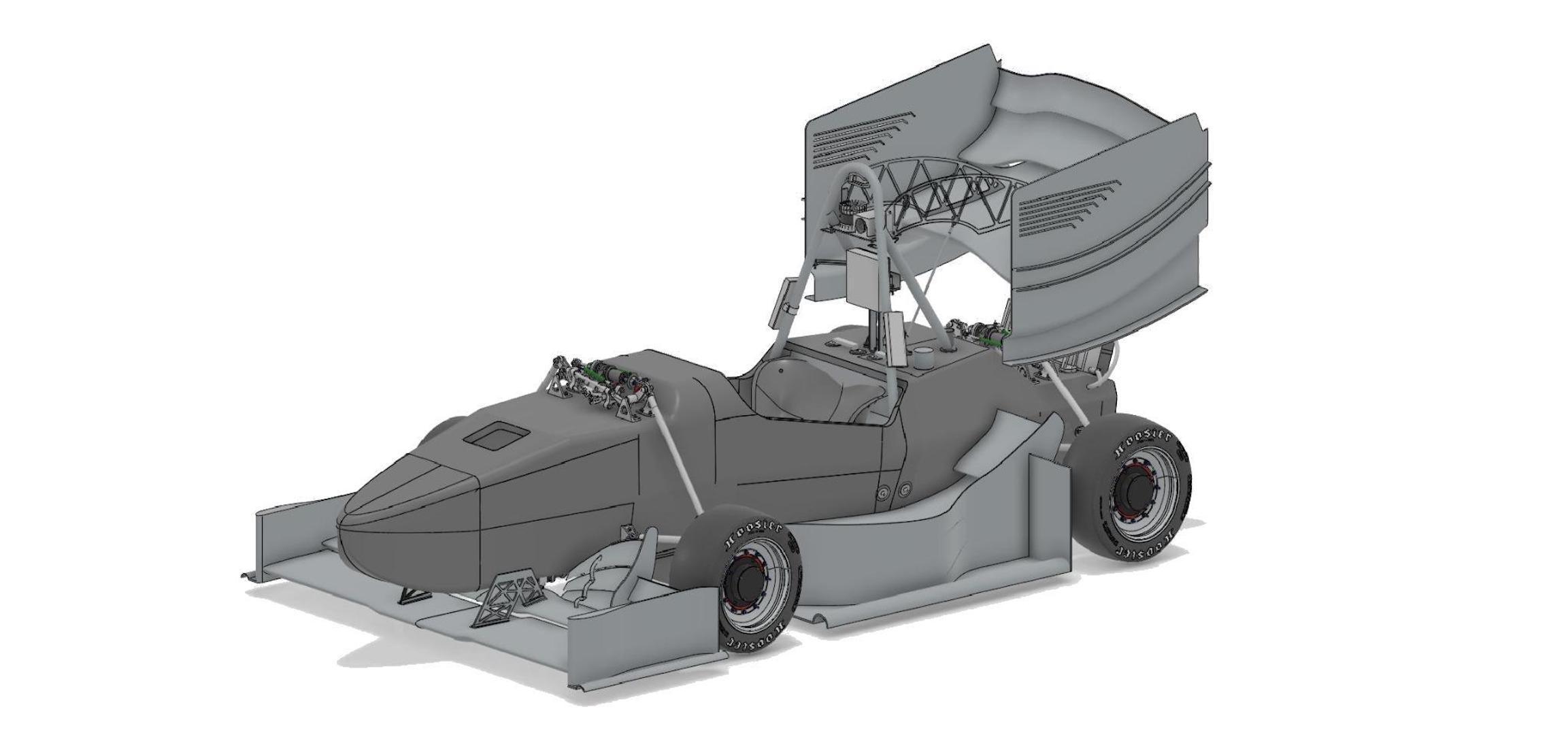
Vega is EPFL Racing Team’s 6th Formula Student car, building on Sirius’ platform with renewed focus on reliability and optimization. With strengthened gearboxes, improved cooling, a lighter high-efficiency battery, long-range telemetry, and adaptive control systems, Vega aims to unlock the full potential of our AWD, monocoque, and driverless platform. Designed, tested, and built by over 80 passionate students to push performance further and reliably.
Engineering Design Priorities:
Reliability
Driverless Testing
Control System Precision
Electrical Modularity
Weight Optimization
Sustainability
Car Specifications
General
| Frame Construction | Full Monocoque Front, Mid and Rear Section |
|---|---|
| Material | CFRP with Aluminium Honeycomb Core |
| Overall L | 3005 mm |
| Overall W | 1609 mm |
| Overall H | 1160 mm |
| Wheelbase | 1530 mm |
| Track (Fr) | 1240 mm |
| Track (Rr) | 1240 mm |
| Weight with 68kg driver (Fr) | 144 kg |
| Weight with 68kg driver (Rr) | 144 kg |
| Suspension | Double unequal length A-Arm. Push Rod actuated heave-roll system. 5 way Adjustable Dampers |
| Tyres (Fr / Rr) | 213x65 R13 Hoosier R20 / 213x65 R13 Hoosier R20 |
| Wheels (Fr / Rr) | 7.0x10, 2pc Al Rim / 7.0x10, 2pc Al Rim |
| Drive Type | Two Stage Planetary Gearbox |
| Differential | Electronic Torque Vectoring |
| Cooling | 3D printing aluminium radiator with electric fan. All the system is placed behind the rear suspensi |
| Brake System | 4 disk, self developed floating cast iron rotors, AP Racing calipers and master cylinders |
| Electronics | 27 Shutdown circuit measuring points, robust cable harness with LEMO connectors. |
Powertrain
| Number of Motors | 4 |
|---|---|
| Motor Location | In-Wheel |
| Max Motor Power (per motor) | 35.2kW kW |
| Motor Type | Synchronous Servomotor AMK DD5-14-10-POW |
| Max Motor RPM (highest) | 20000 rpm |
| Motor Controller | AMK KW26-S5-FSE-4Q |
| Max System Voltage | 600V V |
| Electrode Materials | Lithium - Graphite |
| Combined Accumulator Capacity | 10,8kWh kWh |
| Transmission Ratio (Primary) | 1:3 : 1 |
| Transmission Ratio (Secondary) | 1:4.389 : 1 |
Driverless System
| Processing unit(s) | National Instruments sbRIO 9627 |
|---|---|
| Floating Point Operations Per Second of all processing units that are working for the DV system | 33.00 GigaFLOPS |
| Power consumption of all processing units that are working for the DV system | 60 W |
| Camera(s) | 1 Camera, 60° Field of View with 20m range. Custom Water Sealing |
| Radar sensor(s) | no radar |
| Lidar sensor(s) | 1 Lidar, 60° Field of View and 20m range |
| Other sensors | Dual atenna RTK System |
| Highlights of the DV system | The 2025 DV system features robust sensor fusion using LiDAR and a new waterproof camera, improved perception via the Himmelsbach algorithm, enhanced SLAM with FastSLAM 2.0, and a new LiDAR-based boundary estimation. A Pure Pursuit controller improves skidpad performance, supported by extensive simulation and 20+ test days. |
2024
Info
66x
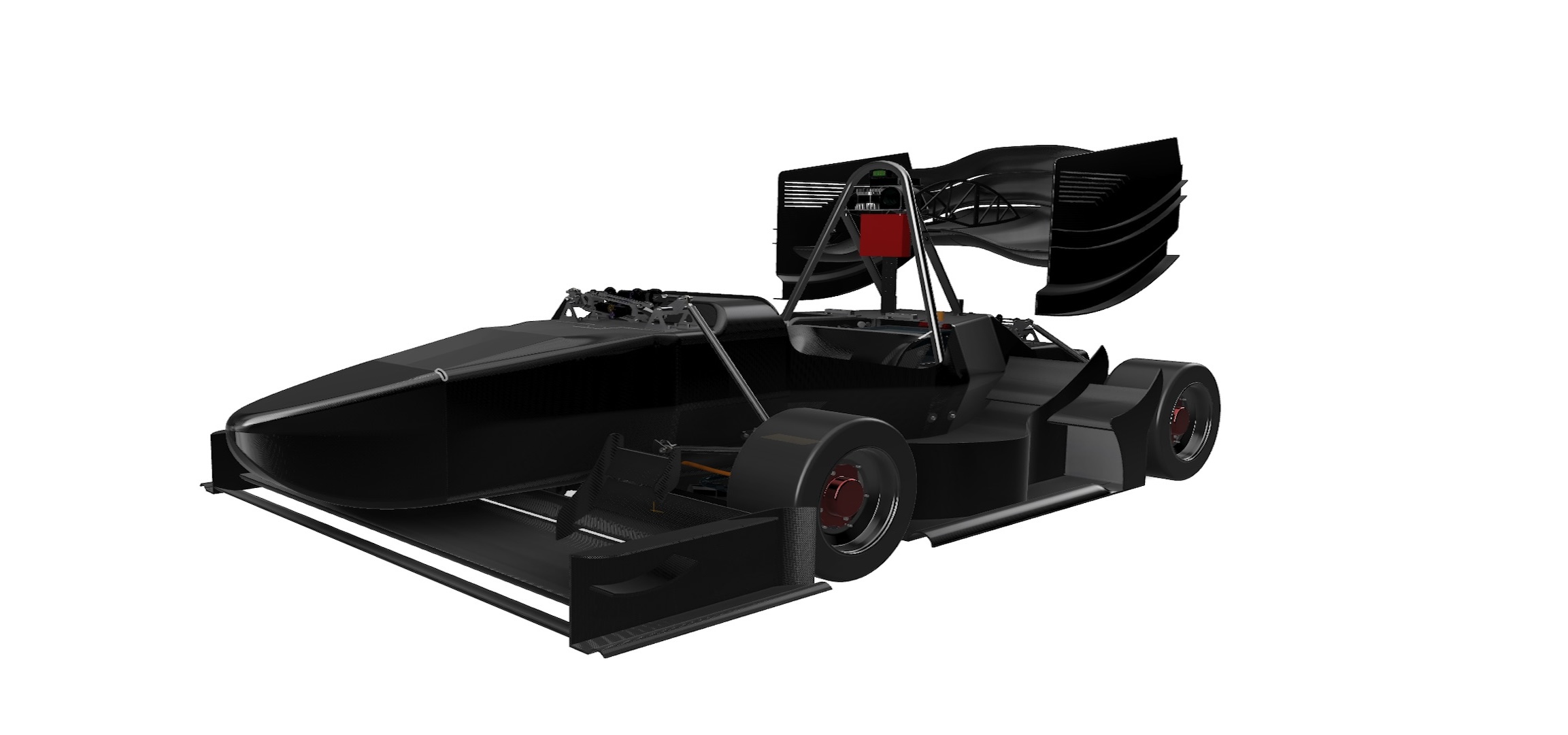
Founded in 2018, Sirius is EPFL Racing Team's 5th Formula Student Car. To develop the most competitive car possible, Sirius builds on Ariane's platform with full monocoque, AWD and driverless capabilities but aims to optimise the concept. Performance is improved through weight reduction, new suspension kinematics and dynamics based on whole car vehicle simulation. Reliability is improved through the creation of new shutdown measuring points, more robust cable management and increased testing.
Engineering Design Priorities:
Weight Reduction
Electrical Reliability
Kinematics and Dynamics
Driverless Optimisation
Test Time
Sustainability
Car Specifications
General
| Frame Construction | Full Monocoque Front, Mid and Rear Section |
|---|---|
| Material | CFRP with Aluminium Honeycomb Core |
| Overall L | 2922 mm |
| Overall W | 1621 mm |
| Overall H | 1200 mm |
| Wheelbase | 1530 mm |
| Track (Fr) | 1240 mm |
| Track (Rr) | 1240 mm |
| Weight with 68kg driver (Fr) | 149 kg |
| Weight with 68kg driver (Rr) | 149 kg |
| Suspension | Double unequal length A-Arm. Push Rod actuated heave-roll system. 5 way Adjustable Dampers |
| Tyres (Fr / Rr) | 16.0x7.5-10 Hoosier R20 |
| Wheels (Fr / Rr) | 7.0x10, 2pc Al Rim / 7.0x10, 2pc Al Rim |
| Drive Type | Two Stage Planetary Gearbox |
| Differential | Electronic Torque Vectoring |
| Cooling | Two side mounted aluminium radiator with XXmm fans. One rear mounted with three xxmm fans |
| Brake System | 4 disk, self developed floating cast iron rotors, AP Racing calipers and master cylinders |
| Electronics | 27 Shutdown circuit measuring points, robust cable harness with LEMO connectors. |
Powertrain
| Number of Motors | 4 |
|---|---|
| Motor Location | In-Wheel |
| Max Motor Power (per motor) | 35.2kW kW |
| Motor Type | Synchronous Servomotor AMK DD5-14-10-POW |
| Max Motor RPM (highest) | 20000 rpm |
| Motor Controller | AMK KW26-S5-FSE-4Q |
| Max System Voltage | 600V V |
| Electrode Materials | Lithium - Graphite |
| Combined Accumulator Capacity | 9.3 kWh kWh |
| Transmission Ratio (Primary) | 1:3 : 1 |
| Transmission Ratio (Secondary) | 1:4.389 : 1 |
Driverless System
| Processing unit(s) | National Instruments sbRIO 9627 |
|---|---|
| Floating Point Operations Per Second of all processing units that are working for the DV system | 33.00 GigaFLOPS |
| Power consumption of all processing units that are working for the DV system | 60 W |
| Camera(s) | 1 Camera, 60° Field of View with 20m range. Custom Water Sealing |
| Radar sensor(s) | No Radar |
| Lidar sensor(s) | 1 Lidar, 60° Field of View and 20m range |
| Other sensors | Dual atenna RTK System |
| Highlights of the DV system | For our second year, the team strives to catch up with the best formula students' team. The most significant improvements this year are the implementation of an MPC, the incorporation of GNSS RTK technology into our pipeline, a new color-independent boundary estimation, and a graph-based approach for our SLAM module. |
2023
Info
42x
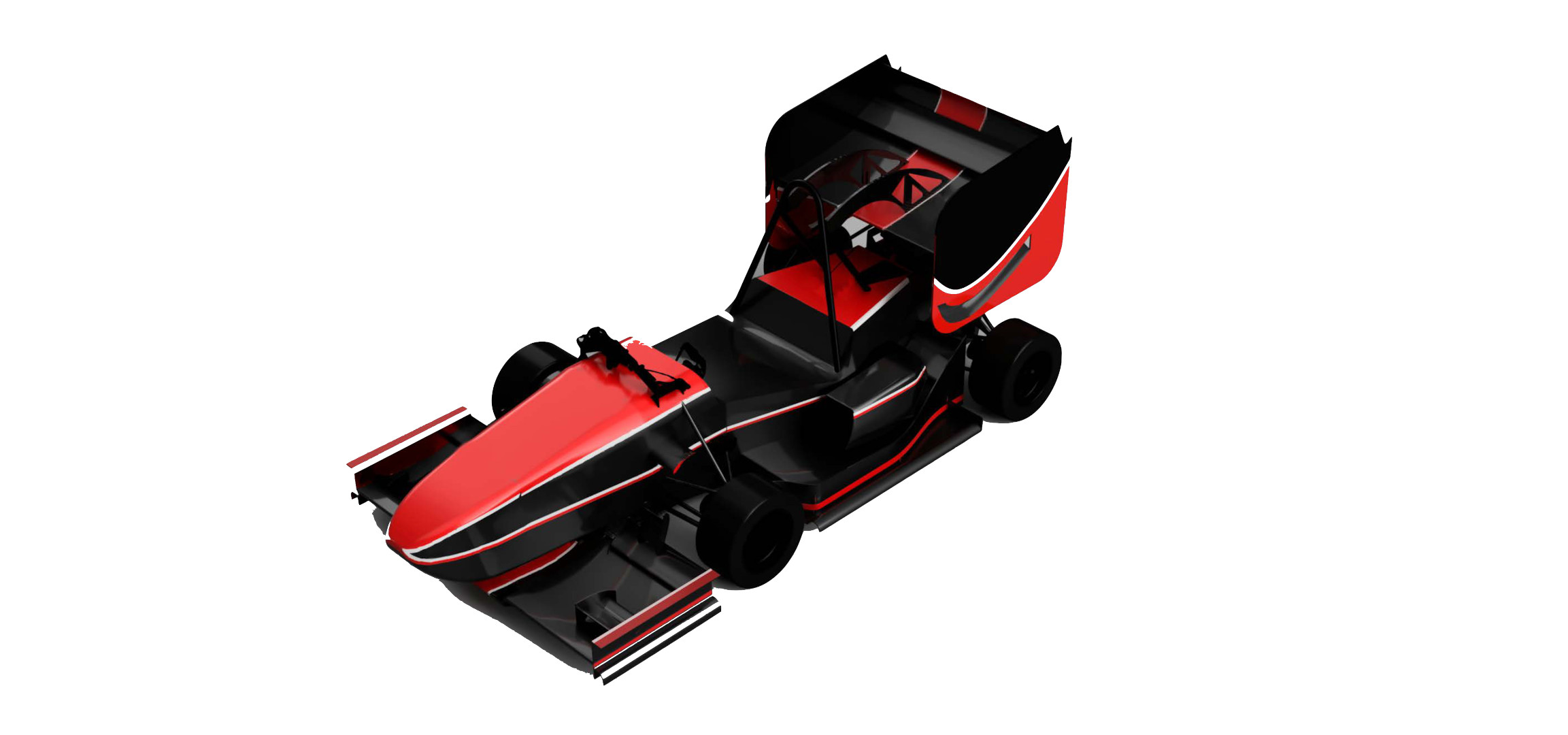
We present Ariane, EPFL Racing Team's fourth ever vehicle! After a successful 2022 season, we have decided to introduce a number of technological improvements such as a move from a 2-wheel drive system to a 4-wheel drive in-wheel propulsion with traction control and torque vectoring, increasing battery voltage from 430 to 600V, going from a semi- to a full carbon monocoque, a new heave-roll suspension architecture, improved aerodynamics and the introduction of our first driverless systems.
Engineering Design Priorities:
4-wheel drive
Complete CFRP monocoque
Driverless
600V battery
Car Specifications
General
| Frame Construction | 1mm carbon skins 20mm aluminium honeycomb core |
|---|---|
| Material | Corex aluminium honeycomb sandwich panel (1mm skins) |
| Overall L | 3185 mm |
| Overall W | 1551 mm |
| Overall H | 1177 mm |
| Wheelbase | 1570 mm |
| Track (Fr) | 1240 mm |
| Track (Rr) | 1240 mm |
| Weight with 68kg driver (Fr) | 121 kg |
| Weight with 68kg driver (Rr) | 187 kg |
| Drive Type | 2 stage planetary compound gearbox |
| Differential | None |
| Cooling | Cooling jackets for motors and cooled radiator thanks to sidepods and fans |
| Brake System | 4-disk system, self developped, rotors with 175mm outer diam, 107inner diam, vented |
| Electronics | Self-designed AMS, Live-Telemetry and Datalogging System, and self-designed LV battery |
Powertrain
| Motor Location | on 4 wheels |
|---|---|
| Max Motor Power (per motor) | 35.2kW kW |
| Motor Type | synchronous servo motor DD5-14-10-POW-18600 |
| Max Motor RPM (highest) | 20000 rpm |
| Motor Controller | AMK KW26-S5-FSE-4Q |
| Max System Voltage | 600V V |
| Combined Accumulator Capacity | 9,3kWh kWh |
| Transmission Ratio (Primary) | 1:13,18 : 1 |
| Transmission Ratio (Secondary) | None : 1 |
Driverless System
| Processing unit(s) | National Instruments sbRIO 9627 |
|---|---|
| Floating Point Operations Per Second of all processing units that are working for the DV system | 200000 GigaFLOPS |
| Power consumption of all processing units that are working for the DV system | 60 W |
| Camera(s) | 1 camera, field of view of 60 degrees and a range of 20 meters. Home made water sealing |
| Radar sensor(s) | 0 |
| Lidar sensor(s) | 1 camera, field of view of 60 degrees. range of 20 meters |
| Other sensors | Dual antenna RTK system |
| Highlights of the DV system | We implemented a MPC and ground removal algorithm. Everything is working on ROS2. We have a Lidar and a camera for our vision system. Then we also implemented a SLAM for the first lap mapping and the localization. |
2022
Info
35x
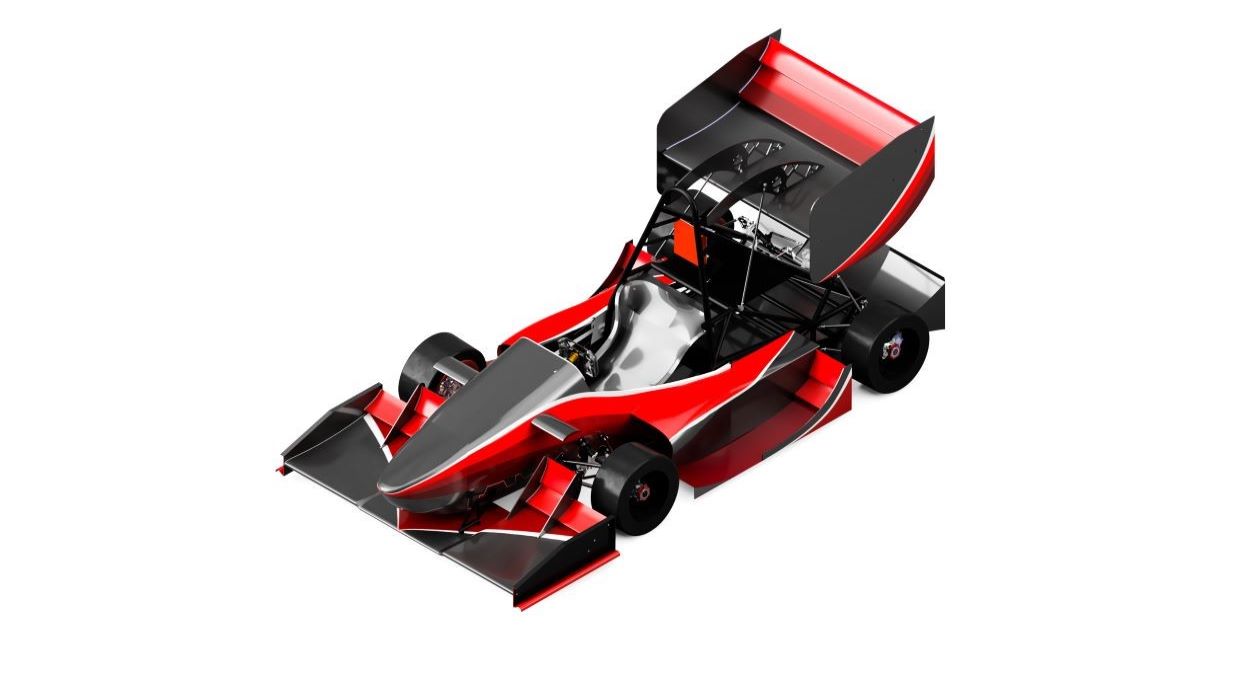
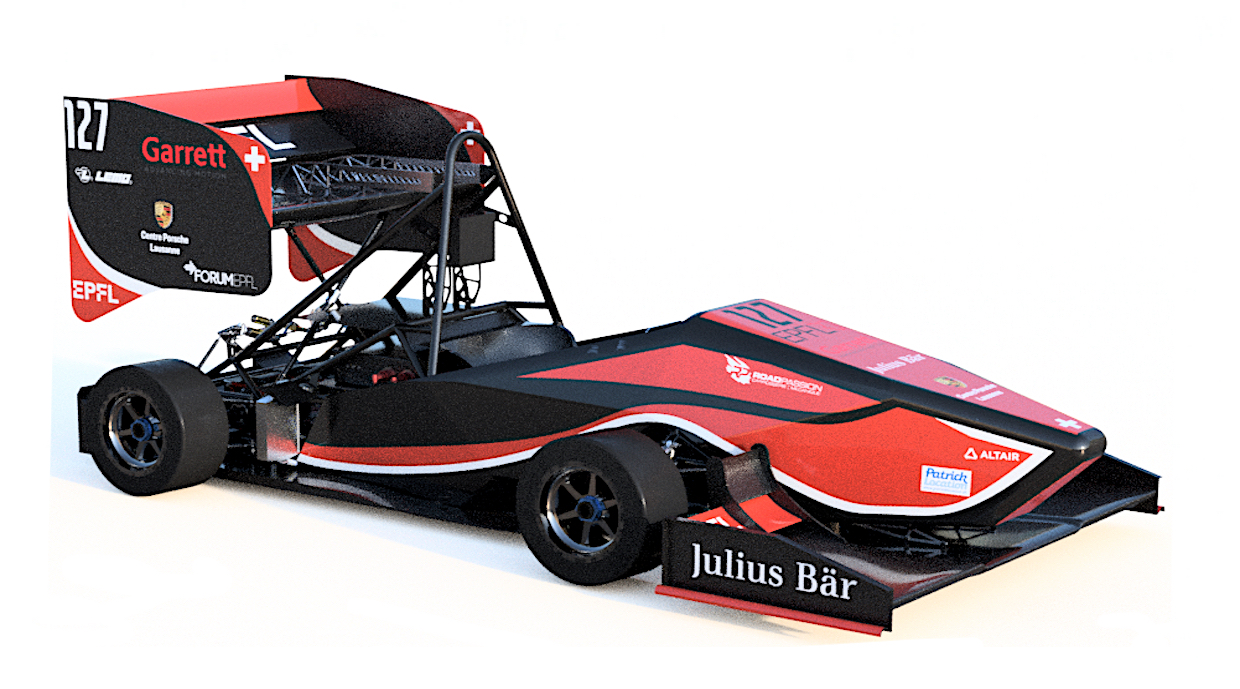
The EPFL Racing Team is back with our third car, Artemis, for the 2022 FS season! After the 2020 season was cancelled due to covid, last summer taught us to listen, to rethink and to remake! We will compete with our first hybrid monocoque chassis this year: Artemis, which is geared to optimise the designs of the team’s previous cars. All divisions working on Artemis took the feedback from 2021 in stride, and we will be back stronger than ever!
Engineering Design Priorities:
Testing
Improvements
validation
Low COG
Car Specifications
General
| Frame Construction | CFRP skin aluminium honeycomb core front monocoque. Tubular steel from main hoop |
|---|---|
| Material | Corex aluminium honeycomb sandwich panel (1mm skins) |
| Overall L | 2986 mm |
| Overall W | 1551 mm |
| Overall H | 1169 mm |
| Wheelbase | 1570 mm |
| Track (Fr) | 1371 mm |
| Track (Rr) | 1403 mm |
| Weight with 68kg driver (Fr) | 122 kg |
| Weight with 68kg driver (Rr) | 149 kg |
| Suspension | Double unequal length A-Arm. Adjustable Z style ARB. Rear push rod, front pull rod actued |
| Tyres (Fr / Rr) | Hoosier R25B 160*75 |
| Wheels (Fr / Rr) | 7x10, 22mm offset, 1pc magnesium rim |
| Drive Type | Tripod |
| Differential | electronic |
| Cooling | 2 radiators mounted in sidepods without fans. 880cc. Dedicated to battery and to power module |
| Brake System | 4-Disk system, self developed rotors with 175mm diameter, adjustable brake balance |
| Electronics | self designed telemetry, multifunctional steering wheel, touchscreen dashboard |
Powertrain
| Number of Motors | 2 |
|---|---|
| Motor Location | rear right, rear left |
| Max Motor Power (per motor) | 52 Kw kW |
| Motor Type | Emrax 188 |
| Max Motor RPM (highest) | 8000 rpm |
| Motor Controller | Unitek Bamocar D3 |
| Max System Voltage | 430 V |
| Electrode Materials | LiPo |
| Combined Accumulator Capacity | 6.8 kWh |
| Transmission Ratio (Primary) | 4.5 : 1 |
| Transmission Ratio (Secondary) | 1 : 1 |
2021
Info
61x
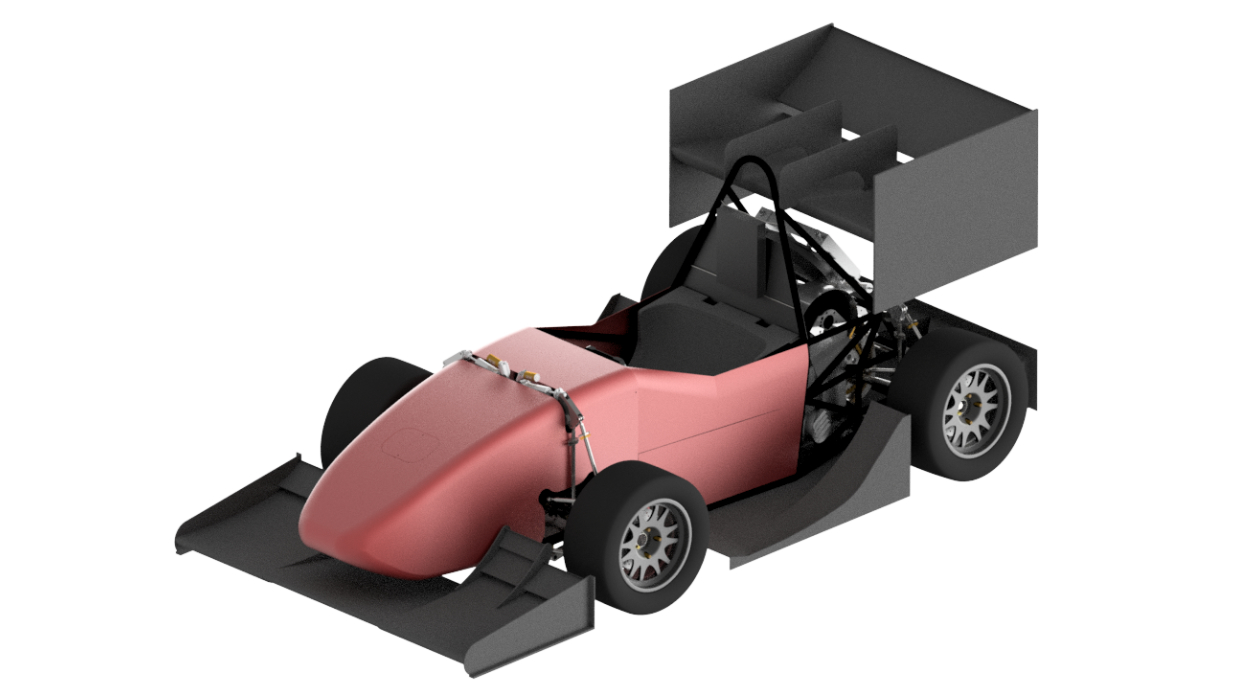
Thanks to our new and motivated team, we had the opportunity to really focus on research and development this year, to make a big step forward and try to catch up with the teams that have been in the business years before us. We also greatly progressed on the manufacturing side; developing our first parts in carbon fiber. We were able to test, try out, experiment and learn all year long, and this resulted in our newest and best race car: Mercury.
Engineering Design Priorities:
Mercury
EPFLRT
CarbonFiber
Innovation
Car Specifications
General
| Frame Construction | Front and rear tubular space frame |
|---|---|
| Material | Steel E235, Steel Docol R8 (from SSAV), round tubing 25.4mm to 31.75mm dia |
| Overall L | 3065 mm |
| Overall W | 1540 mm |
| Overall H | 1185 mm |
| Wheelbase | 1570 mm |
| Track (Fr) | 1240 mm |
| Track (Rr) | 1200 mm |
| Weight with 68kg driver (Fr) | 138 kg |
| Weight with 68kg driver (Rr) | 137 kg |
| Suspension | Double unequal length A-arm. Pull rod actuated vertically oriented spring and damper. |
| Tyres (Fr / Rr) | 160x75 R10, Hoosier |
| Wheels (Fr / Rr) | 7x10, 22mm offset, 1pc magnesium rim |
| Drive Type | Planetary (single gear) |
| Differential | electronic differential |
| Cooling | Twin side pod mounted radiators without fans |
| Brake System | 4 disk system, 175 outer diam, 25mm calipers,4 pistons front, 2 rear |
| Electronics | Simple differential, traction control, data logging via sbrio 9627, 2 waterpumps |
Powertrain
| Number of Motors | 2 |
|---|---|
| Motor Location | rear right, rear left |
| Max Motor Power (per motor) | 52kW kW |
| Motor Type | Emrax 188, Three phase PMSM |
| Max Motor RPM (highest) | 8000 rpm |
| Motor Controller | Bamocar D3 400/400 |
| Max System Voltage | 403V V |
| Electrode Materials | LiPo |
| Combined Accumulator Capacity | 1.037 kWh |
| Transmission Ratio (Primary) | 1:4.5 : 1 |
| Transmission Ratio (Secondary) | n/a : 1 |
2019
Info
8x
The Lausanne Racing Team is a rookie Formula student team. From EPFL Lausanne, It gathers 50 people around this electric race car project. For its first apparition on track, the team is presenting Orion, whose focuses on reliability in order to build a solid basis for the years to come. It is also a more environmental friendly EV thanks to the use of flax fiber for most of the composites. Come and hang out with our team in the pits to discover more on the project.
Engineering Design Priorities:
Reliability
Car Specifications
General
| Frame Construction | Tubular space frame |
|---|---|
| Material | E235 steel Tubing (round 25mm diameter and square 25x25mm) |
| Overall L | 3002 mm |
| Overall W | 1432 mm |
| Overall H | 1200 mm |
| Wheelbase | 1570 mm |
| Track (Fr) | 1250 mm |
| Track (Rr) | 1250 mm |
| Weight with 68kg driver (Fr) | 150 kg |
| Weight with 68kg driver (Rr) | 196 kg |
| Suspension | Double unequal length A-Arm. Push rod actuated horizontally oriented spring and damper |
| Tyres (Fr / Rr) | Avon 7.2/20.0-13 / Avon 7.2/20.0-13 |
| Wheels (Fr / Rr) | 7x13, 22mm offset, Al Rim, 4 stud bolt / 7x13, 22mm offset, Al Rim, 4 stud bolt |
| Drive Type | 520 & 530 X-ring chain |
| Differential | Ajustable clutch pack limited slip differential |
| Cooling | Single radiator, with fan on main-hoop bracing |
| Brake System | 4-Disk system, self made 220mm rotors, adjustable brake balance, AP racing calipers |
| Electronics | Traction control, launch control, self developped BMS |
Powertrain
| Number of Motors | 1 |
|---|---|
| Motor Location | Rear |
| Max Motor Power (per motor) | 100 kW |
| Motor Type | Emrax 228 |
| Max Motor RPM (highest) | 6000 rpm |
| Motor Controller | Unitek Bamocar D3 700 |
| Max System Voltage | 600V V |
| Electrode Materials | LiPo |
| Combined Accumulator Capacity | 8.65 kWh kWh |
| Transmission Ratio (Primary) | 1 : 1 |
| Transmission Ratio (Secondary) | 4.03 : 1 |
FS past achievements due to World Ranking Data Base
| Date | Event | Teams | Rank | BP | CM | ED | SP | DV SP | AC | DV AC | AX | EN | EF | Pe | Total |
|---|---|---|---|---|---|---|---|---|---|---|---|---|---|---|---|
| 2025.08 | 23 |
9. |
3. |
2. |
6. |
8. |
- |
7. |
- |
- |
- |
- |
0.00 |
322.77 |
|
| 2025.08 | 84 |
30. |
17. |
28. |
32. |
26. |
17. |
51. |
20. |
38. |
- |
- |
-10.00 |
326.18 |
|
| 2025.08 | 37 |
11. |
15. |
7. |
11. |
10. |
- |
10. |
- |
6. |
- |
- |
-1.00 |
279.10 |
|
| 2025.07 | 15 |
9. |
7. |
9. |
6. |
- |
- |
- |
- |
- |
- |
- |
0.00 |
223.00 |
|
| 2024.08 | 79 |
59. |
79. |
58. |
23. |
16. |
- |
22. |
- |
- |
- |
- |
-30.00 |
183.42 |
|
| 2024.08 | 47 |
32. |
9. |
40. |
16. |
- |
- |
- |
- |
- |
- |
- |
-10.00 |
216.50 |
|
| 2024.07 | 15 |
9. |
15. |
5. |
4. |
- |
- |
- |
- |
- |
- |
- |
0.00 |
240.00 |
|
| 2023.08 | 70 |
42. |
56. |
24. |
13. |
- |
- |
- |
- |
31. |
- |
- |
-10.00 |
220.72 |
|
| 2023.08 | 35 |
18. |
21. |
5. |
19. |
17. |
- |
8. |
- |
12. |
- |
- |
-5.00 |
290.60 |
|
| 2022.09 | 38 |
11. |
1. |
25. |
19. |
8. |
- |
14. |
- |
10. |
6. |
- |
0.00 |
308.10 |
|
| 2022.08 | 63 |
31. |
33. |
47. |
40. |
15. |
- |
- |
- |
22. |
11. |
- |
0.00 |
251.27 |
|
| 2022.08 | 33 |
14. |
3. |
33. |
14. |
9. |
- |
16. |
- |
9. |
- |
- |
0.00 |
293.24 |
|
| 2021.08 | 38 |
37. |
37. |
37. |
24. |
13. |
- |
- |
- |
23. |
- |
- |
-60.00 |
126.42 |
|
| 2021.08 | 26 |
14. |
17. |
21. |
23. |
19. |
- |
16. |
- |
15. |
12. |
9. |
0.00 |
369.53 |
|
| 2021.08 | 14 |
5. |
8. |
9. |
7. |
3. |
- |
5. |
- |
2. |
- |
- |
0.00 |
296.30 |
|
| 2019.08 | 39 |
36. |
17. |
34. |
34. |
- |
- |
- |
- |
- |
- |
- |
0.00 |
130.50 |
|
| 2019.08 | 38 |
34. |
20. |
35. |
30. |
- |
- |
- |
- |
- |
- |
- |
-36.00 |
112.62 |
|
| x 17 | |||||||||||||||