
Team Details
As of 2022, this class has been integrated into the other two classes.
KTH Formula Student Driverless
| University | KTH Royal Institute of Technology
SE Stockholm KTH short 68 |
 |
|---|---|---|
| Location | Stockholm, Sweden | |
| Homepage | https://www.kthformulastudent.se/ | |
| Social Media | ||
| CV Team | KTH Racing | |
| EV Team | KTH Formula Student | |
| Short Link | tid.fsg.one/919 | |
Team Description
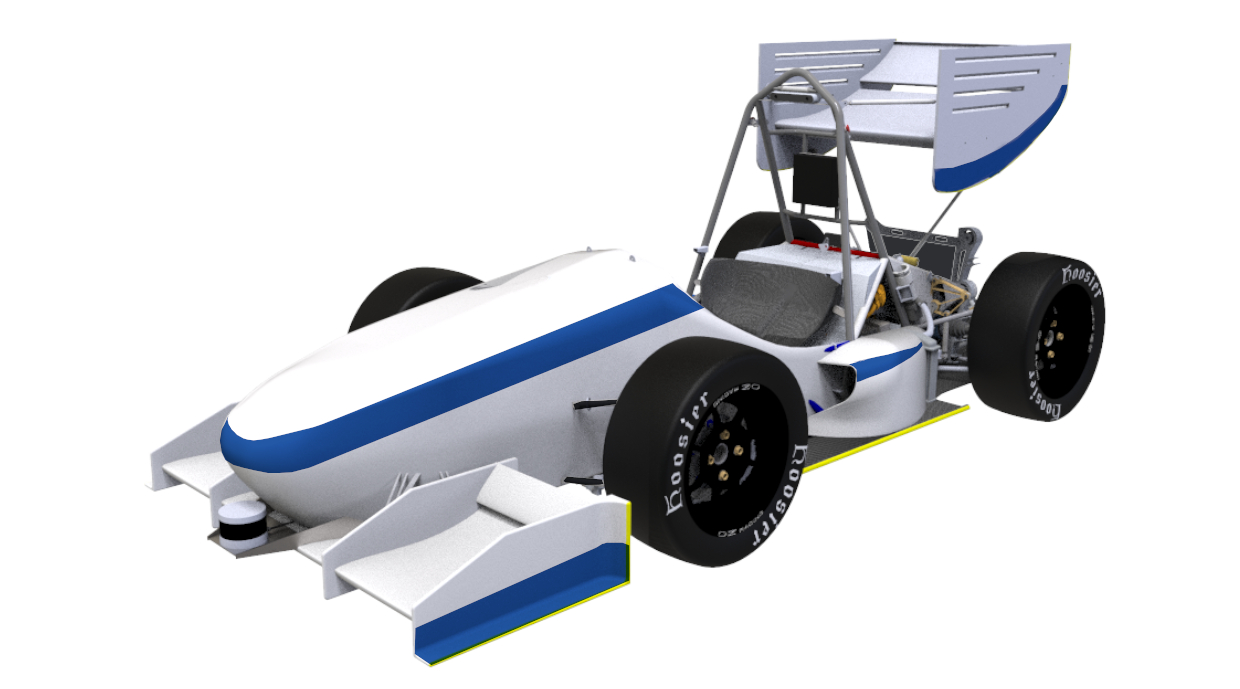
KTH Formula Student is a project where we design, manufacture, test and compete with a car in Formula Student. The project is all about learning to work as a team and produce a high quality product together. The experiences gained from the year long project provides the members with a head start in the transit between academic studies and the future workplace.
KTH Formula Student was founded 2003 by Dr. Fredrik Westin, former PhD student at KTH. Since then we have competed continuously in Formula Student competitions. Today, the team consists of around 80 students from different educational programs and phases at KTH.
Past Events
2019
Info
11x
At KTH Formula Student, the main design philosophy revolves around being efficient and practical. At the same time, sustainability is something that is implemented in all ends of our project. To achieve this, the work is based on the core values of the team: Learning, Teamwork and Engineering. These are achieved by aiming to be working with a number of things: documentation, transparency and maintaining good relations with our partners to mention a few.
Engineering Design Priorities:
Learning
Teamwork
Engineering
Sustainability
Efficiency
Practicality
Car Specifications
General
| Frame Construction | Tubular steel spaceframe |
|---|---|
| Material | Cold formed and welded high strength circular tubes, Docol R8, acc. EN 10304-3 |
| Overall L | 2982 mm |
| Overall W | 1304 mm |
| Overall H | 1150 mm |
| Wheelbase | 1530 mm |
| Track (Fr) | 1100 mm |
| Track (Rr) | 1080 mm |
| Weight with 68kg driver (Fr) | 110 kg |
| Weight with 68kg driver (Rr) | 124 kg |
| Suspension | DoubleUnequal A-Arms,pullrod actuated coilovers |
| Tyres (Fr / Rr) | 20.5 |
| Wheels (Fr / Rr) | 7 |
| Drive Type | Self developed planetary gearboxes, sing |
| Differential | N/A Independent drive, seperate motors, software torque vectoring |
| Cooling | Two side mounted radiators |
| Brake System | 4-disk system. 4 piston front calliper, 2 piston rear with same size master cylinder. |
| Electronics | Self develop ECUs with exception of main processing unit. Focus DV and EV compatibility |
Powertrain
| Number of Motors | 2 |
|---|---|
| Motor Location | Rear Right, Rear Left |
| Max Motor Power (per motor) | 80 kW kW |
| Motor Type | Axial flux synchronous permanent magnet mot |
| Max Motor RPM (highest) | 6000 rpm |
| Motor Controller | 2xUnitek Bamocar D3 700-400RS |
| Max System Voltage | 567V V |
| Electrode Materials | LiCo2 |
| Combined Accumulator Capacity | 7.37 kWh |
| Transmission Ratio (Primary) | 3.727 : 1 |
| Transmission Ratio (Secondary) | n/a : 1 |
Driverless System
| Processing unit(s) | dSpace MicroAuto Box |
|---|---|
| Floating Point Operations Per Second of all processing units that are working for the DV system | 1410.00 GigaFLOPS |
| Power consumption of all processing units that are working for the DV system | 30.00 W |
| Camera(s) | StereoLabs ZED Camera (1) |
| Radar sensor(s) | N/A |
| Lidar sensor(s) | Velodyne VLP-16 (1) |
| Other sensors | IMU: Xsens - MTi-G-710-GNSS/INS (1) |
| Highlights of the DV system | Focus put on system architecture and self-contained modules that interconnect via predefined interfaces. Pipeline using YOLOv3, fusion with LiDAR, FastSLAM2.0 and optimal tracking controller (MPC) |