
Team Details
As of 2022, this class has been integrated into the other two classes.
StarkStrom Driverless
| University | Technische Hochschule Augsburg
DE Augsburg UAS short 684 |
 |
|---|---|---|
| Location | Augsburg, Germany | |
| Homepage | https://starkstrom-augsburg.de/ | |
| Social Media | ||
| EV Team | StarkStrom Augsburg e.V. | |
| Short Link | tid.fsg.one/775 | |
Past Events
2021
Info
110x
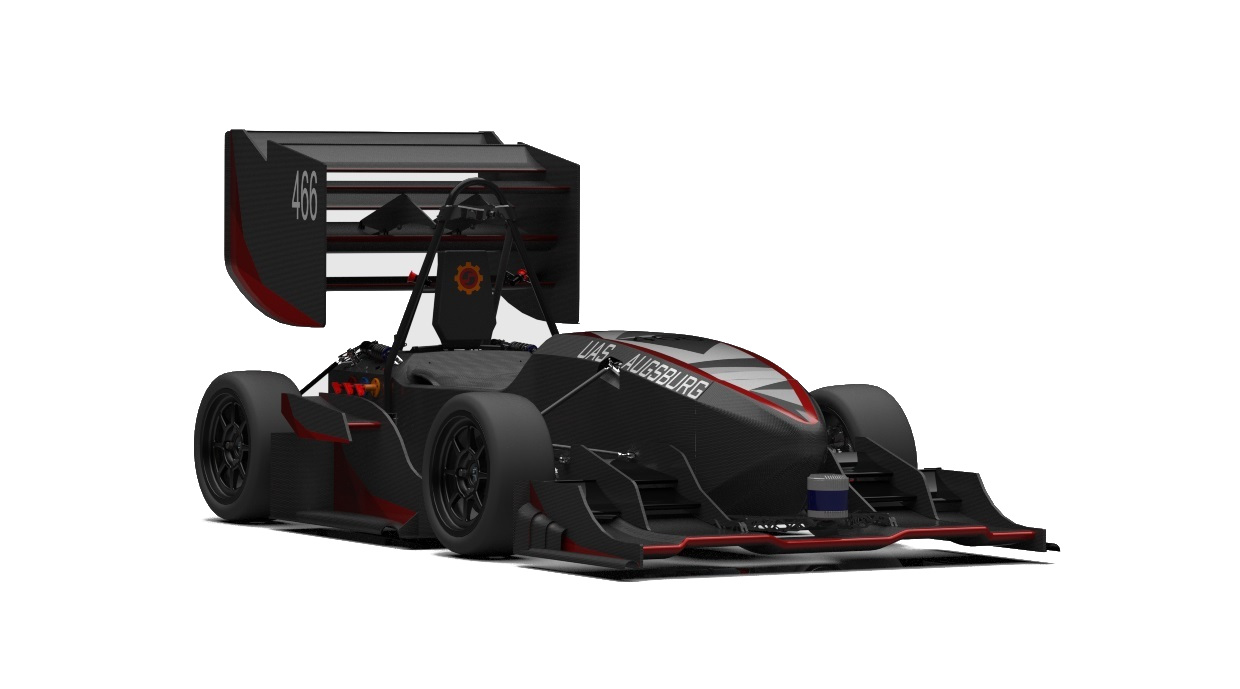
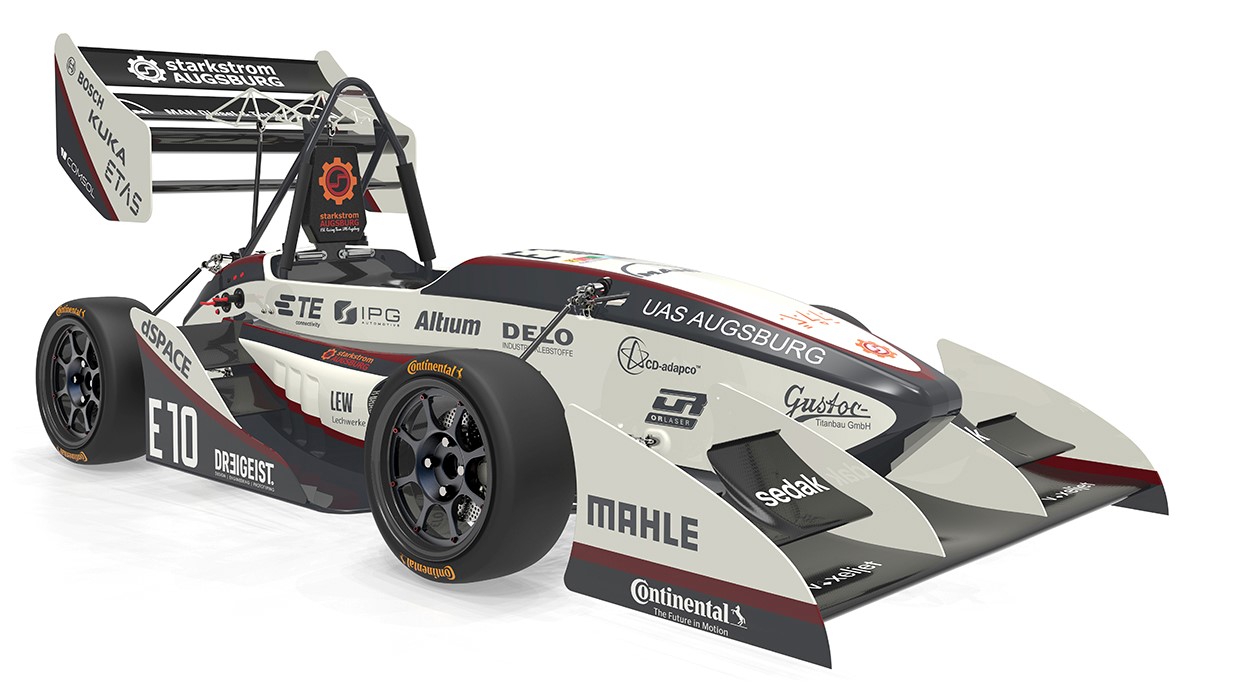
Celebrating the team’s 10th anniversary in 2021 StarkStrom Augsburg e.V.this year present the result of 4 years development time and their fastest autonomous race car – Zapp DV. The team was part of Formula Student Driverless from day one. Since then, the team improved every year creating better, stronger and faster autonomous race cars which are able to sense their environment and calculate trajectory in real time while dynamically estimating and adjusting speed.
Engineering Design Priorities:
SensorFusion
Pathplanning
VelocityEstimation
Accumulator
Car Specifications
General
| Frame Construction | CFRP sandwich monocoque with fully laminated AL front hoop and steel main hoop |
|---|---|
| Material | CFRP prepreg with aluminium honeycomb core |
| Overall L | 2940 mm |
| Overall W | 1450 mm |
| Overall H | 1211 mm |
| Wheelbase | 1535 mm |
| Track (Fr) | 1250 mm |
| Track (Rr) | 1200 mm |
| Weight with 68kg driver (Fr) | 102 kg |
| Weight with 68kg driver (Rr) | 103 kg |
| Suspension | Double unequal length A-Arm. Push rod actuated horizontally oriented spring and damper |
| Tyres (Fr / Rr) | 205x470 R13 Continental C20 |
| Wheels (Fr / Rr) | 7x13, 30mm off set, 1 Pc Mg Rim (OZ) / 7x13, 30mm off set, 1 Pc Mg Rim (OZ) |
| Drive Type | 1.5 stage planetary gear |
| Differential | Torque Vectoring |
| Cooling | rear mounted active cooled radiators, self designer inverter cooling plate and motor cooling sleeves |
| Brake System | 4 disc brake system, self developed rotors with 232mm diameter front and 228 rear |
| Electronics | self-developed Battery Management System, self-developed Sensor Processing Units |
Powertrain
| Number of Motors | 4 |
|---|---|
| Motor Location | Wheel Hubs FR, FL, RR, RL |
| Max Motor Power (per motor) | 35kW kW |
| Motor Type | AMK-DD5-14-10-POW |
| Max Motor RPM (highest) | 20000 rpm |
| Motor Controller | AMK - KW26-S5-FSE-4Q |
| Max System Voltage | 600V V |
| Electrode Materials | LiCO2 |
| Combined Accumulator Capacity | 4.26 kWh |
| Transmission Ratio (Primary) | 1:13.65 : 1 |
| Transmission Ratio (Secondary) | N/A : 1 |
Driverless System
| Processing unit(s) | dSPACE Micro Autobox II | ZOTAC MAGNUS EN72070V |
|---|---|
| Floating Point Operations Per Second of all processing units that are working for the DV system | 5734 GigaFLOPS |
| Power consumption of all processing units that are working for the DV system | 330 W |
| Camera(s) | Basler dart daA1600-60uc (S-Mount) 2x |
| Radar sensor(s) | N/A |
| Lidar sensor(s) | Hesai Pandar40P |
| Other sensors | Kistler S-Motion L |
| Highlights of the DV system | Fully automatic LiDAR-Camera registration, YOLOv3 camera cone detection, edge-detection for LiDAR, sensor fusion using projected LiDAR points in the camera image, particle filter SLAM, graph-search based trajectory planning, Pure Pursuit and MPC path tracking |
2019
Info
23x
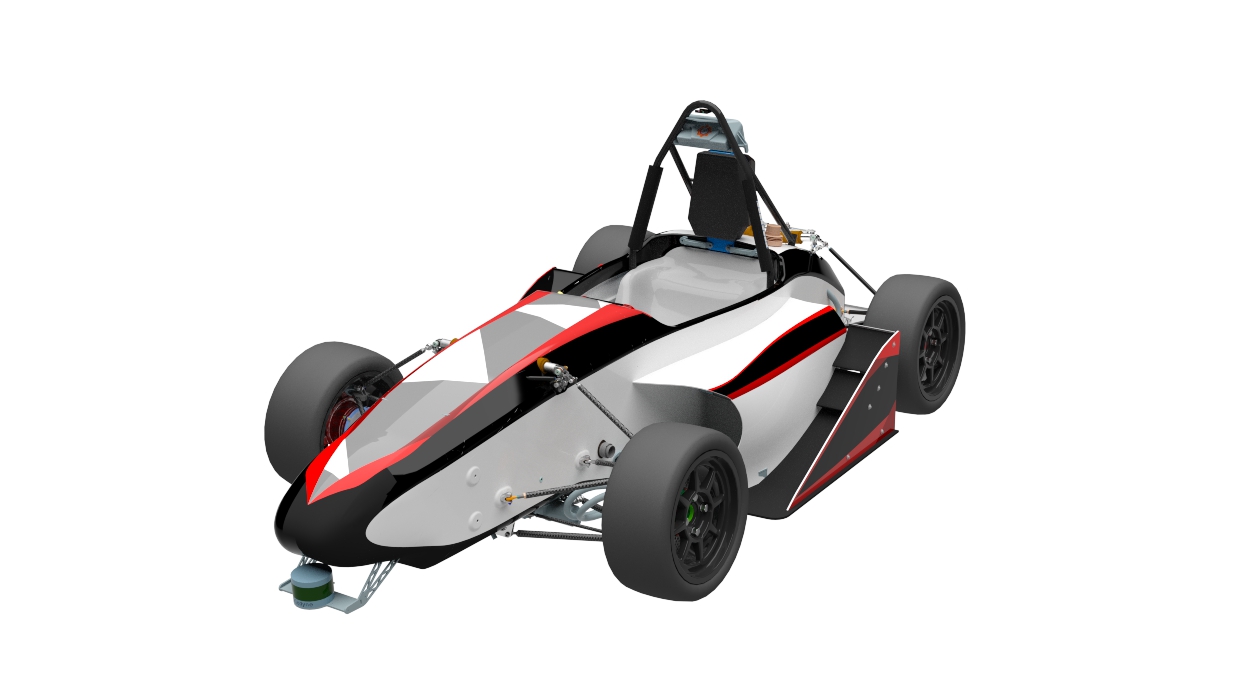
The StarkStrom Driverless Team was part of the Formula Student Driverless competition from the first day on. In 2014 our team already used automated testing to improve a torque vectoring controller. Therefore, we were the first ever Formula Student Team which developed an autonomous race car. With all our knowledge on automated driving we have improved our new autonomous system, which can sense the environment, calculate a trajectory in real time and dynamically estimate its speed.
Engineering Design Priorities:
SenseThinkAct
FPGAaccelleratedCV
RealtimTrajectoryPlanning
SensorFusion
DynamicSpeedController
Redundancy
Car Specifications
General
| Frame Construction | One piece Composite monocoque with anti rollbar structures |
|---|---|
| Material | Carbon Fiber with honeycomb/ S355 steeltubing roolbars 25mm diam. / EN-AW-6061 |
| Overall L | 2888 mm |
| Overall W | 1425 mm |
| Overall H | 1030 mm |
| Wheelbase | 1535 mm |
| Track (Fr) | 1250 mm |
| Track (Rr) | 1200 mm |
| Weight with 68kg driver (Fr) | 110 kg |
| Weight with 68kg driver (Rr) | 115 kg |
| Suspension | Double unequal A-Arms, Push Rod, horizontal damper |
| Tyres (Fr / Rr) | 25/470 R13 C16 |
| Wheels (Fr / Rr) | 7x13, 22mm offset |
| Drive Type | planetary gear with staged planets |
| Differential | individual torque distribution via torque vectoring |
| Cooling | 2 side pod mounted radiator cooled by airstream |
| Brake System | 4-Disk system, self developed rotors, adjustable brake balance |
| Electronics | Highly reliable controll units. |
Powertrain
| Number of Motors | 4 |
|---|---|
| Motor Location | hubwheel drive |
| Max Motor Power (per motor) | 35kW, 35kW, 35kW, 35kW kW |
| Motor Type | 4x AMK - DD5-14-10-POW |
| Max Motor RPM (highest) | 20.000 rpm |
| Motor Controller | AMK - KW26-S5-FSE-4Q 2 |
| Max System Voltage | 600V V |
| Electrode Materials | LiPo |
| Combined Accumulator Capacity | 6.7 kWh kWh |
| Transmission Ratio (Primary) | 1:13.6 : 1 |
| Transmission Ratio (Secondary) | -- : 1 |
Driverless System
| Processing unit(s) | dSPACE MicroAutoBoxII, EmbeddedPC,2xMicroZed Zynq 7020, dSPACE Embedded SPU |
|---|---|
| Floating Point Operations Per Second of all processing units that are working for the DV system | 700 GigaFLOPS |
| Power consumption of all processing units that are working for the DV system | 165 W |
| Camera(s) | Basler LVDS Camera (2x), Bosch stereo camera (1x) |
| Lidar sensor(s) | Velodyne VLP 16 Hi-Res (1x) |
| Other sensors | Forsberg ReACT GNSS (1x) , Kistler Correvit SFII (1x) |
| Highlights of the DV system | High efficient camera system, based on FPGA hardware acceleration. |
2018
Info
66x
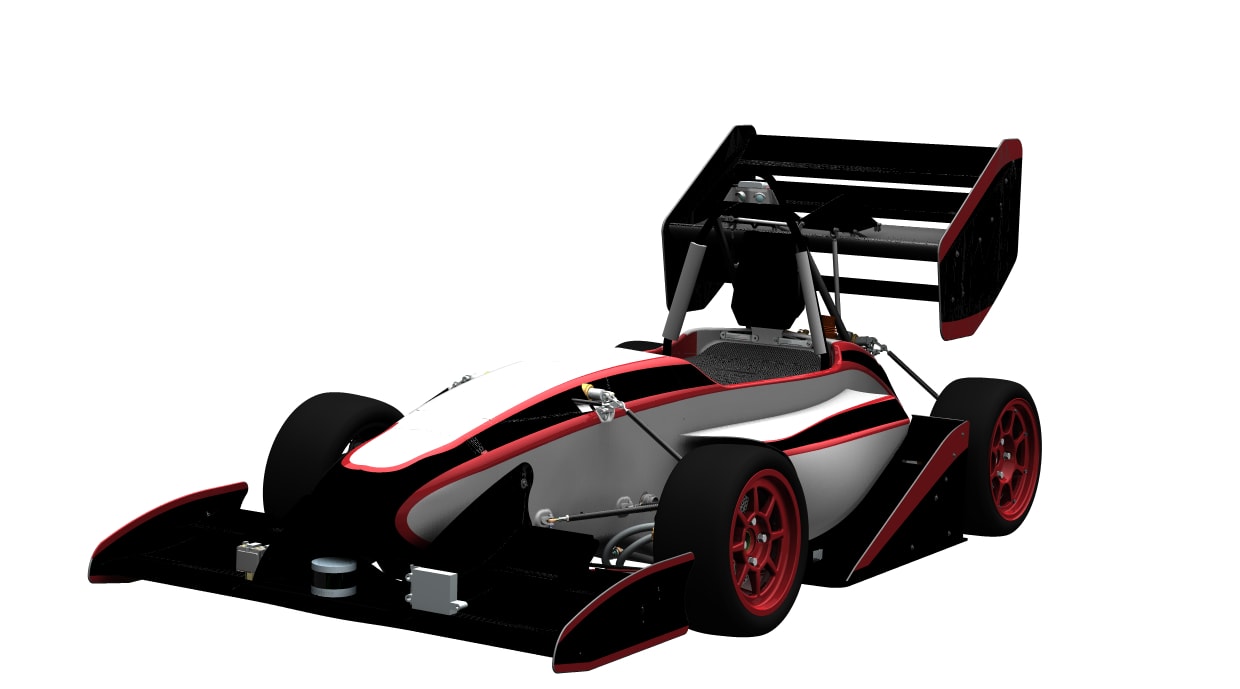
The StarkStrom Driverless Team was part of the Formula Student Driverless competition from the first day on. In 2014 our team already used automated testing to improve a torque vectoring controller. Therefore, we were the first ever Formula Student Team which developed an autonomous race car. With all our knowledge on automated driving we have improved our new autonomous system, which can sense the environment, calculate a trajectory in real time and dynamically estimate its speed.
Engineering Design Priorities:
SenseThinkAct
FPGAaccelleratedCV
RealtimTrajectoryPlanning
NoBlackBoxAlgorithms
SensorFusion
DynamicSpeedController
Car Specifications
General
| Frame Construction | One piece Composite monocoque with anti rollbar structures |
|---|---|
| Material | Carbon Fiber with honeycomb/ S355 steeltubing roolbars 25mm diam. / EN-AW-6061 |
| Overall L | 2888 mm |
| Overall W | 1425 mm |
| Overall H | 1030 mm |
| Wheelbase | 1535 mm |
| Track (Fr) | 1250 mm |
| Track (Rr) | 1200 mm |
| Weight with 68kg driver (Fr) | 115 kg |
| Weight with 68kg driver (Rr) | 120 kg |
| Suspension | Double unequal A-Arms, Push Rod, horizontal damper |
| Tyres (Fr / Rr) | 25/470 R13 C16 |
| Wheels (Fr / Rr) | 7x13, 22mm offset |
| Drive Type | planetary gear with staged planets |
| Differential | individual torque distribution via torque vectoring |
| Cooling | 2 side pod mounted radiator cooled by airstream |
| Brake System | 4-Disk system, self developed rotors, adjustable brake balance |
| Electronics | Over 25 in house developed PCBs. Highly reliable controll units. |
Powertrain
| Number of Motors | 4 |
|---|---|
| Motor Location | hubwheel drive |
| Max Motor Power (per motor) | 35kW, 35kW, 35kW, 35kW kW |
| Motor Type | 4x AMK - DD5-14-10-POW |
| Max Motor RPM (highest) | 20.000 rpm |
| Motor Controller | AMK - KW26-S5-FSE-4Q 2 |
| Max System Voltage | 600V V |
| Electrode Materials | LiPo |
| Combined Accumulator Capacity | 6.7 kWh kWh |
| Transmission Ratio (Primary) | 1:13.6 : 1 |
| Transmission Ratio (Secondary) | -- : 1 |
Driverless System
| Processing unit(s) | microAutoBox II (IBM PPC 750GL), Embedded PC (Intel i7-3517UE), 2x MicroZed Zynq 7020 |
|---|---|
| Floating Point Operations Per Second of all processing units that are working for the DV system | 42 GigaFLOPS |
| Power consumption of all processing units that are working for the DV system | 29.40 W |
| Camera(s) | 2x Basler LVDS Camera |
| Radar sensor(s) | Continental ARS 4xx, Bosch MRRe14HBW |
| Lidar sensor(s) | Velodyne VLP 16 |
| Other sensors | Forsberg ReACT GNSS, 2x U-bloxx m8p GNSS |
| Highlights of the DV system | High efficient camera system, based on FPGA hardware acceleration. Realtime trajectory planning at 100Hz. Highly dynamic speed calculation based on the trajectory. No blackbox algorithms! |
2017
Info
62x
The base vehicle we use is named Silencio, according to a character from Augsburger Puppenkiste. Our race car from 2016 was our first with electric four wheel drive. The upgrade to drive autonomously is another chance to show the underestimated potential of this vehicle. The autonomous system was designed to tackle the challenges of a race driver. Map the track, calculating a driving strategy and control the actuators in real-time are the major challenges in designing the autonomous system.
Engineering Design Priorities:
KALMAN Filter
DifferentialGNSS
VibrationControledCamera
ePOWERsteering
DetectionAndRanging
LoaclDynamicMap
Car Specifications
General
| Frame Construction | One piece Composite monocoque with tubular roll bars |
|---|---|
| Material | Carbon fiber with aluminum honeycomb core / S355 steel main hoop / EN AW 6061 aluminum front hoop |
| Overall L | 2893 mm |
| Overall W | 1448 mm |
| Overall H | 1145 mm |
| Wheelbase | 1535 mm |
| Track (Fr) | 1250 mm |
| Track (Rr) | 1200 mm |
| Weight with 68kg driver (Fr) | 112 kg |
| Weight with 68kg driver (Rr) | 148 kg |
| Suspension | Double unequal length A-Arms, Push rod actuated horizontally oriented spring and damper. |
| Tyres (Fr / Rr) | 205/407R13 C16, Continetal |
| Wheels (Fr / Rr) | 7x13, 22mm offset, hybrid rim with carbon rim base aluminum rim star |
| Drive Type | planetary gear with staged planets |
| Differential | individual torque distribution in software |
| Cooling | 2 side pod mounted radiator cooled by airstream |
| Brake System | 4-Disk system, self developed rotors, adjustable brake balance |
| Electronics | Multifunctional Steering Wheel, Torque Vectoring, Traction Control, selfdesigned AMS, EMC |
Powertrain
| Number of Motors | 4 |
|---|---|
| Motor Location | all wheels driven |
| Max Motor Power (per motor) | 20 kW |
| Motor Type | permanent excitated synchronous motor |
| Max Motor RPM (highest) | 20000 rpm |
| Motor Controller | AMK KW26-S5-FSE4Q |
| Max System Voltage | 600V V |
| Electrode Materials | LiPo |
| Combined Accumulator Capacity | 6,67kWh kWh |
| Transmission Ratio (Primary) | 1:13,6 : 1 |
| Transmission Ratio (Secondary) | -- : 1 |
Driverless System
| Processing unit(s) | IBM PPC 750GL, Intel i7-3517UE, NVIDIA Jetson TX2 |
|---|---|
| Floating Point Operations Per Second of all processing units that are working for the DV system | >1,500 GigaFLOPS |
| Power consumption of all processing units that are working for the DV system | >50 W |
| Camera(s) | 1, 10m, 90°, 1080p/60fps/VC |
| Radar sensor(s) | 1, 70m/250m, 120°/9°, 77GHz long range |
| Lidar sensor(s) | 2, 13m, 27°, infrared short range |
| Other sensors | 1, unlimited, 360°, differential GNSS |
| Highlights of the DV system | keep it simple but fast! |
FS past achievements due to World Ranking Data Base
| Date | Event | Teams | Rank | BP | CM | ED | DV SP | DV AC | AX | EN | EF | Pe | Total | Engine |
|---|---|---|---|---|---|---|---|---|---|---|---|---|---|---|
| 2026.09 | 11 |
4. |
7. |
10. |
2. |
2. |
- |
- |
- |
- |
0.00 |
357.11 |
||
| 2026.07 | 27 |
16. |
- |
- |
14. |
- |
- |
- |
- |
- |
-10.00 |
103.10 |
||
| 2025.08 | 8 |
1. |
- |
- |
3. |
1. |
2. |
1. |
- |
- |
0.00 |
315.16 |
||
| 2025.08 | 42 |
22. |
- |
- |
25. |
8. |
- |
- |
- |
- |
-10.00 |
113.45 |
||
| 2024.09 | 9 |
9. |
6. |
5. |
8. |
- |
- |
- |
- |
- |
0.00 |
262.18 |
||
| 2023.08 | 30 |
5. |
- |
- |
9. |
- |
- |
- |
2. |
- |
0.00 |
213.18 |
||
| 2023.08 | 22 |
1. |
5. |
2. |
16. |
- |
2. |
1. |
1. |
4. |
-10.00 |
802.28 |
||
| 2022.08 | 19 |
1. |
- |
- |
11. |
2. |
1. |
1. |
1. |
- |
0.00 |
532.54 |
||
| 2021.10 | 6 |
1. |
1. |
1. |
2. |
2. |
2. |
2. |
2. |
- |
0.00 |
948.43 |
||
| 2021.08 | 17 |
2. |
4. |
7. |
13. |
3. |
1. |
1. |
1. |
3. |
0.00 |
760.53 |
||
| 2021.08 | 12 |
2. |
2. |
6. |
6. |
2. |
1. |
1. |
1. |
1. |
0.00 |
758.70 |
||
| 2019.08 | 20 |
4. |
7. |
13. |
- |
- |
2. |
- |
3. |
3. |
0.00 |
401.51 |
||
| 2019.07 | 14 |
2. |
5. |
4. |
2. |
1. |
4. |
2. |
2. |
2. |
0.00 |
806.40 |
||
| 2018.08 | 17 |
4. |
7. |
4. |
9. |
4. |
1. |
- |
5. |
- |
0.00 |
424.27 |
||
| 2017.08 | 15 |
11. |
6. |
10. |
12. |
- |
3. |
- |
- |
- |
-45.00 |
245.39 |
||
| x 15 | ||||||||||||||