
Team Details
As of 2022, this class has been integrated into the other two classes.
e-gnition driverless
| University | Technische Universität Hamburg
DE Hamburg TU short 728 |
|---|---|
| Location | Hamburg, Germany |
| Homepage | https://www.egnition.hamburg/ |
| Social Media | |
| CV Team | e-gnition |
| EV Team | e-gnition Hamburg |
| Short Link | tid.fsg.one/790 |
Past Events
2021
Info
81x
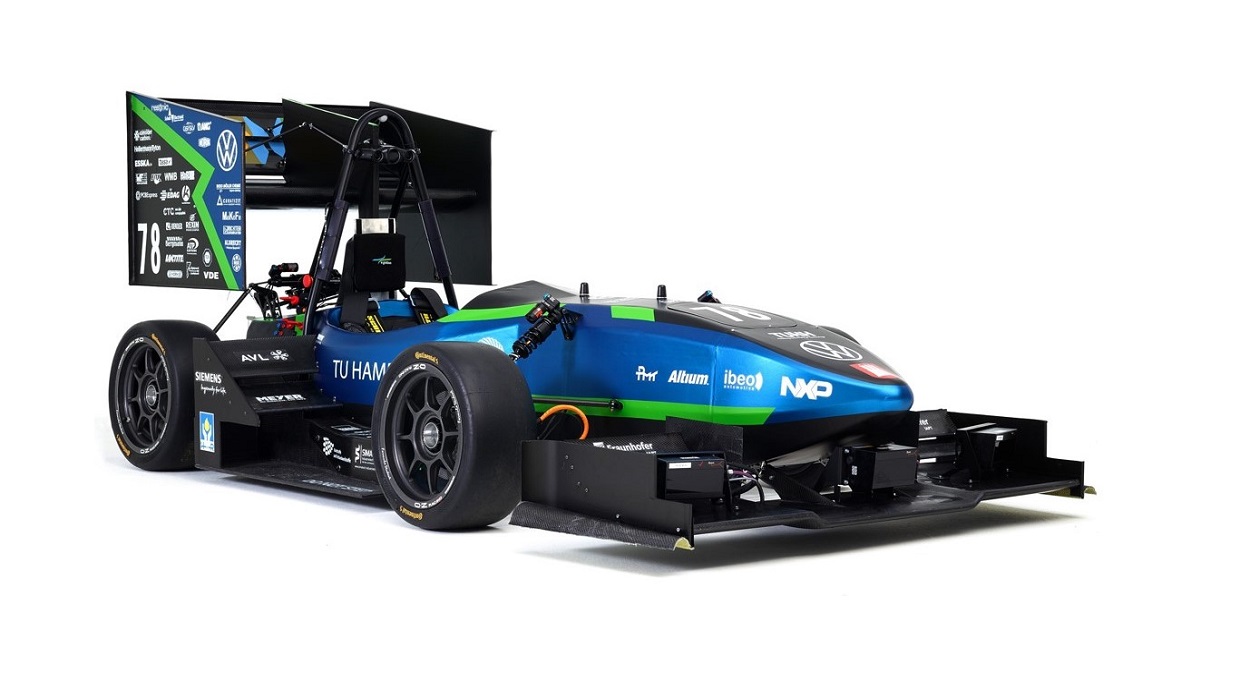
The egn20 is the most innovative and forward-thinking car e-gnition has ever build. In the coming years FSG is looking to integrate driverless technology into every car participating in the event. We decided to start this integration one year early. The egn20 is able to run EV and with a quick change of the steering wheel and front wing it is capable to drive DV as well. The steering actuation is fully integrated into the steering wheel and easily exchangeable with a quick release.
Engineering Design Priorities:
Driverless integration
Reliability
Battery Management System
Low center of gravity
Validation
Wing inner structure
Car Specifications
General
| Frame Construction | Monocoque structure with prep- reg and aluminium honeycomb core |
|---|---|
| Material | Unidirectional fibers M21T800S + different kinds of aluminium honeycomb structure |
| Overall L | 2935 mm |
| Overall W | 1422 mm |
| Overall H | 1175 mm |
| Wheelbase | 1530 mm |
| Track (Fr) | 1200 mm |
| Track (Rr) | 1150 mm |
| Weight with 68kg driver (Fr) | 112 kg |
| Weight with 68kg driver (Rr) | 142 kg |
| Suspension | double unequal length a-arms, pushrod actuated bellcranks, heave-roll-decoupled system |
| Tyres (Fr / Rr) | 470 x 205 R13 Continental |
| Wheels (Fr / Rr) | 7x13“ 30mm offset, CFRP rim |
| Drive Type | two staged planetary gear |
| Differential | n/a |
| Cooling | Water cooling. Two fans and heat exchangers, four motors, two inverters and a DV computer |
| Brake System | self developed rotors 222mm diameter, lasersintered self manufactured brake callipers |
| Electronics | ECU, AMS, ACU, fuse board and sensor boards self designed. |
Powertrain
| Number of Motors | 4 |
|---|---|
| Motor Location | Every wheel |
| Max Motor Power (per motor) | 35 kW, 35kW, 35kW, 35kW kW |
| Motor Type | All: Fischer TI085-052-070-04B7S-07S04BE2 |
| Max Motor RPM (highest) | All: 20000 rpm |
| Motor Controller | Lenze Schmidhauser Mobile Drives |
| Max System Voltage | 588V V |
| Electrode Materials | LiCoO2 |
| Combined Accumulator Capacity | 6,216kWh kWh |
| Transmission Ratio (Primary) | 1:12,78 : 1 |
| Transmission Ratio (Secondary) | n/a : 1 |
Driverless System
| Processing unit(s) | Intel Core i7-6700K, NVIDIA Jetson TX2 module |
|---|---|
| Floating Point Operations Per Second of all processing units that are working for the DV system | 1231 GigaFLOPS |
| Power consumption of all processing units that are working for the DV system | 350 W |
| Camera(s) | "2 x Basler - daA1600-60ucArea Scan Camera with Global Shutter, USB 3.0, Res: 1600 x 1200 pixels |
| Radar sensor(s) | n/a |
| Lidar sensor(s) | "4x Ibeo Lux 2010. 4 Layer rotating mirror LIDAR scanner (3 forward and 1 rearward) |
| Other sensors | 1x Xsens - MTi-G-710-GNSS/INS (IMU) |
| Highlights of the DV system | The integration of the DV components without generating disadvantages for each of the disciplines. Creation of a structured electrical/mechanical overall system by merging components that were previously added separately.The egn20 can be changed form EV to DV configuration and vice versa with a few steps. |
2019
Info
39x
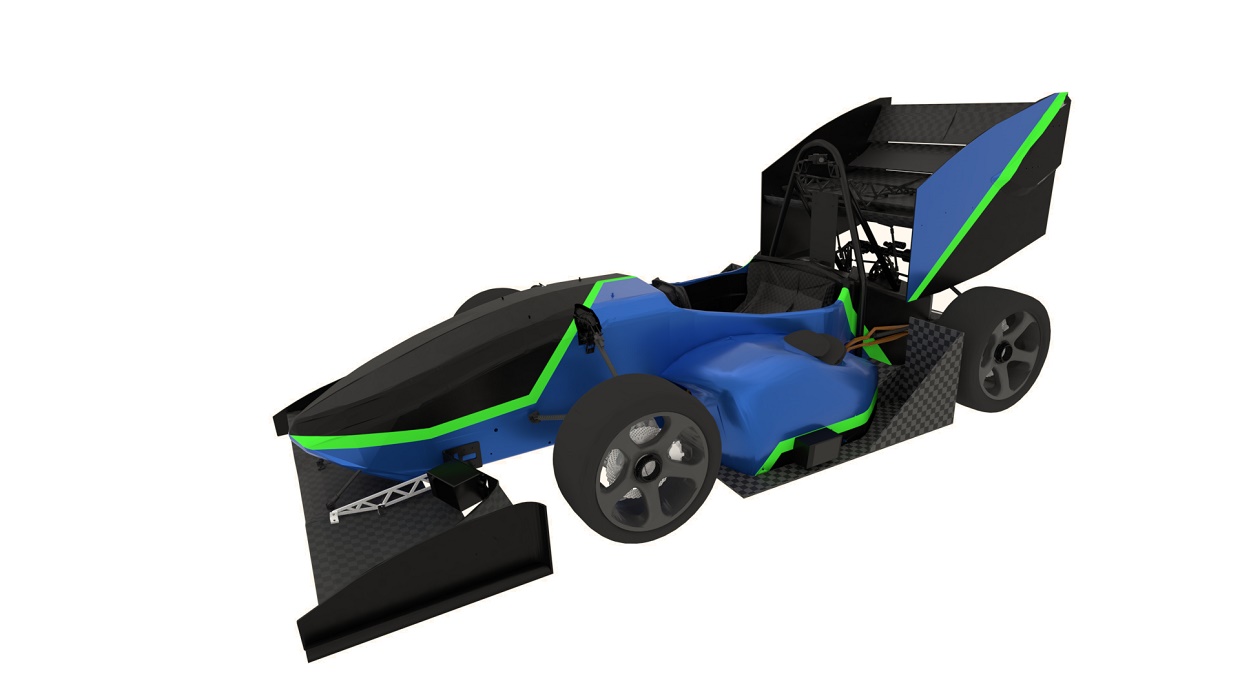
For the third time in a row the egn19-dv will enter the glowing asphalt of the Hockenheimring. After last year's extensive hardware and software conversion, the focus this season is on software optimizations. The two additional LIDARs, which increase the lateral field of vision of the racing car, also ensure better performance. For his last season, "Horst" has undergone another optical makeover and will not only look great on but also off the track.
Engineering Design Priorities:
Bundle Adjustment
Extended Kalman Filter
360°Vision
PressureTranslator
Model Predictive Control
#1000Strom
Car Specifications
General
| Frame Construction | Monocoque structure with prepreg and aluminium honeycomb core |
|---|---|
| Material | IMS65 UD Fibres prepreg, aluminium honeycomb |
| Overall L | 2920 mm |
| Overall W | 1385 mm |
| Overall H | 1140 mm |
| Wheelbase | 1530 mm |
| Track (Fr) | 1200 mm |
| Track (Rr) | 1150 mm |
| Weight with 68kg driver (Fr) | 114 kg |
| Weight with 68kg driver (Rr) | 116 kg |
| Suspension | Double A-Arms, push rod, air spring and damper, anti-rollbar with torsion spring |
| Tyres (Fr / Rr) | Continental C18 470x205 R13 |
| Wheels (Fr / Rr) | 7x13, 22,5 mm offset, magnesium rim / 7x13, 22,5 mm offset, magnesium rim |
| Drive Type | One stage planetary gear system in wheel |
| Differential | Intelligent torque vectoring |
| Cooling | Water cooling with side mounted selfdesigned radiators |
| Brake System | 4-Disk system, self-developed rotors, adjustable breake balance |
| Electronics | Self-developed and programmed ECU, AMS and sensor boards |
Powertrain
| Number of Motors | 4 |
|---|---|
| Motor Location | In the wheelhubs |
| Max Motor Power (per motor) | 30kW kW |
| Motor Type | AMK DD5-14-10-POW-18600-B5 |
| Max Motor RPM (highest) | 18617 rpm |
| Motor Controller | KW26-S5-FSE-4Q |
| Max System Voltage | 600V V |
| Electrode Materials | LiCoO2 |
| Combined Accumulator Capacity | 6,7kWh kWh |
| Transmission Ratio (Primary) | 1:12,6 : 1 |
| Transmission Ratio (Secondary) | n/a : 1 |
Driverless System
| Processing unit(s) | LPC 4337, Intel Core i7-6700K, Jetson TX2 module, Raspberry Pi |
|---|---|
| Floating Point Operations Per Second of all processing units that are working for the DV system | 6573 GigaFLOPS |
| Power consumption of all processing units that are working for the DV system | 300 W |
| Camera(s) | 2 x Basler - daA1600-60ucArea Scan Camera with Global Shutter, USB 3.0, Res: 1600 x 1200 pixels |
| Radar sensor(s) | n/a |
| Lidar sensor(s) | 5x Ibeo Lux 2010, 85 deg. angle, 30m range, 4 Layer rotating mirror LIDAR scanner |
| Other sensors | 1x Xsens - MTi-G-710-GNSS/INS (IMU), self-developed angle sensor at steering rack |
| Highlights of the DV system | In processing our LiDAR data we use Bundle Adjustment to retrieve both the car movement and a cone map, effectively using it for SLAM. We gather color information out of the camera data to simplify our path planning. We have also a smooth integration of the dv components in the ev car. To improve our lap times we optimized our torque vectoring. |
2018
Info
94x
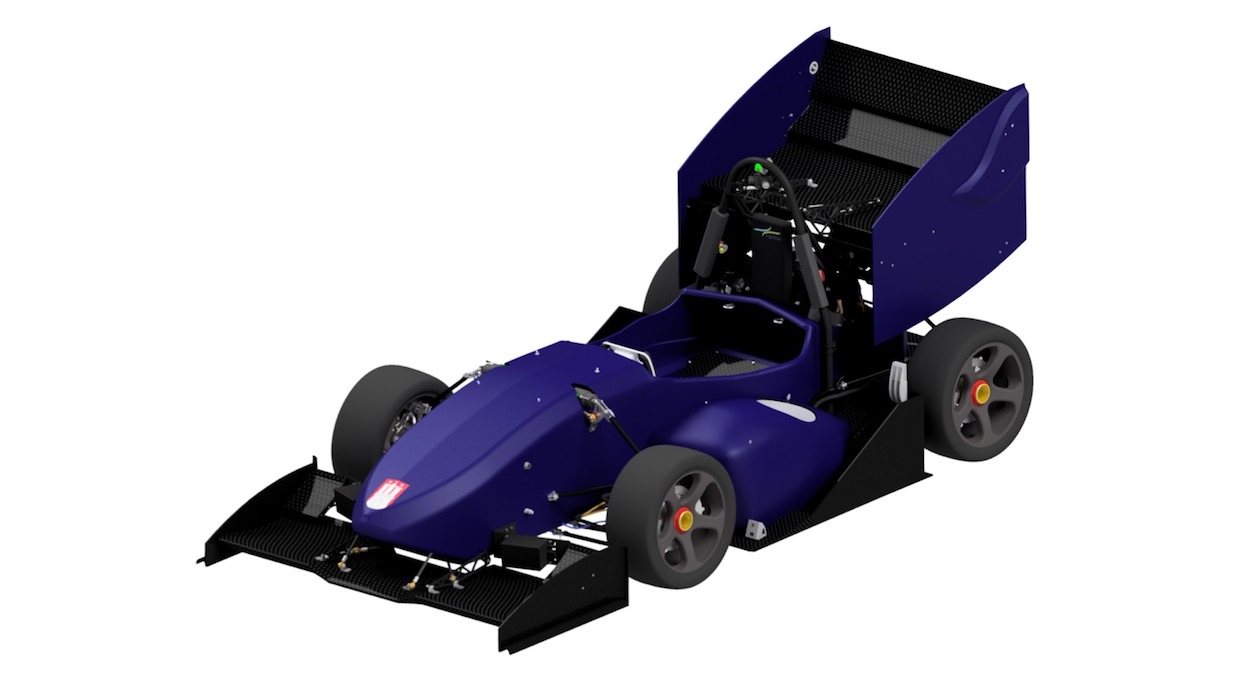
"Horst" was built in 2017 and took part in several competitions this year. It is our first all-wheel drive vehicle and was able to complete the Endurance in FSE17. After this eventful year Horst decided that it was time to take the next step. So he returned to our workshop for a few months to complete his transformation. With new skills and the newest drivers, he wants to face the challenges of the race track alone. But Horst, we will always sit on the grandstand and send our support and love.
Engineering Design Priorities:
1000STROM
e-gnition
2Cars1Team
1000Horstpower
geflasht
DieAutonomenausHamburg
Car Specifications
General
| Frame Construction | Monocoque structure with prepreg and aluminium honeycomb material |
|---|---|
| Material | IMS65 UD Fibres |
| Overall L | 2920 mm |
| Overall W | 1385 mm |
| Overall H | 1140 mm |
| Wheelbase | 1530 mm |
| Track (Fr) | 1200 mm |
| Track (Rr) | 1150 mm |
| Weight with 68kg driver (Fr) | 114 kg |
| Weight with 68kg driver (Rr) | 116 kg |
| Suspension | Double unequal length A-Arms, Push rod actuated horizontally air spring and damper |
| Tyres (Fr / Rr) | Continental C18 |
| Wheels (Fr / Rr) | 7x13, 22.5mm offset, magnesium rim |
| Drive Type | One stage planetary gear system in wheel |
| Differential | Intelligent torque vectoring |
| Cooling | Water cooling with side mounted selfdesigned radiators |
| Brake System | 4-Disk system, self-developed rotors, adjustable breake balance |
| Electronics | Self-developed and programmed ECU, AMS and sensor boards |
Powertrain
| Number of Motors | 4 |
|---|---|
| Motor Location | In the Wheelhubs |
| Max Motor Power (per motor) | 30 kW each kW |
| Motor Type | AMK DD5-14-10-POW |
| Max Motor RPM (highest) | 18000 rpm |
| Motor Controller | AMK Inverter KW26-S5-FSE-4Q |
| Max System Voltage | 600V V |
| Electrode Materials | LiCoO2 - Graphite |
| Combined Accumulator Capacity | 6,7 kWh kWh |
| Transmission Ratio (Primary) | 1:12,6 : 1 |
| Transmission Ratio (Secondary) | n/a : 1 |
Driverless System
| Processing unit(s) | LPC 4337, Intel Core i7-6700K, Jetson TX2 module |
|---|---|
| Floating Point Operations Per Second of all processing units that are working for the DV system | 6573.00 GigaFLOPS |
| Power consumption of all processing units that are working for the DV system | 300.00 W |
| Camera(s) | 2 x Basler - daA1600-60ucArea Scan Camera with Global Shutter, USB 3.0, Res: 1600 x 1200 pixels |
| Radar sensor(s) | n/a |
| Lidar sensor(s) | 3x Ibeo Lux 2010. 4 Layer rotating mirror LIDAR scanner |
| Other sensors | 1x Xsens - MTi-G-710-GNSS/INS (IMU), self-developed angle sensor at steering rack |
| Highlights of the DV system | In processing our LiDAR data we use Bundle Adjustment to retrieve both the car movement and a cone map, effectivly using it for SLAM. The pneumatic EBS system, which is supplied by a compressor, can directly pressurize the hydraulic brake system. We have also a smooth integration of the dv components in the ev car. It is nearly invisible. |
2017
Info
74x
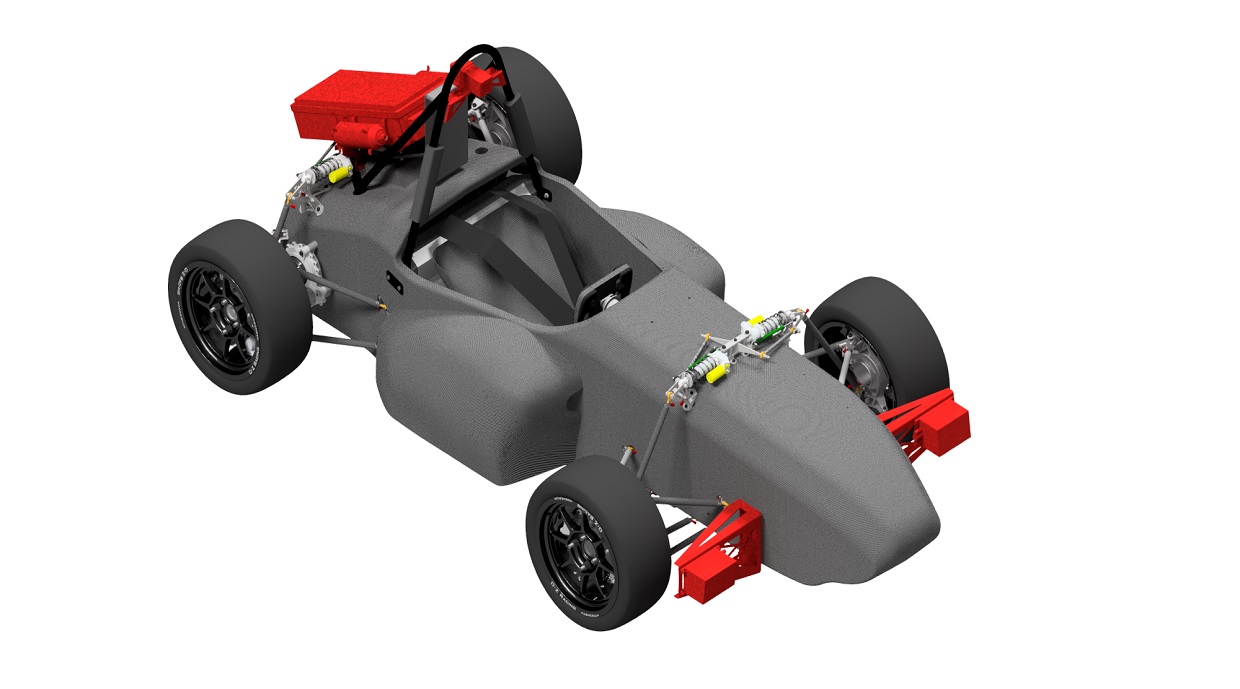
Many Formula Student veterans made a return to the team to take on this fascinating new challenge. Together with some newly found teammates we turned "Uwe", our very reliable last year's car, the egn16, into the egn_dv17. Giving it a bunch of new sensors and actuators as well as a lot of additional processing power, "Uwe" will face his new task. We can't wait to see all the different approaches the teams have taken to make their FS car drive autonomously!
Engineering Design Priorities:
1000STROM
UweIstAuchDabei
driverless
TUHH
e-gnition
Car Specifications
General
| Frame Construction | Carbon fibre monocoque |
|---|---|
| Material | HTS Fibres with Rohacell IGF-71 Core |
| Overall L | 2336 mm |
| Overall W | 1385 mm |
| Overall H | 1125 mm |
| Wheelbase | 1560 mm |
| Track (Fr) | 1200 mm |
| Track (Rr) | 1150 mm |
| Weight with 68kg driver (Fr) | 80 kg |
| Weight with 68kg driver (Rr) | 140 kg |
| Suspension | double unequal length a-arms,push rod actuated horizontally oriented spring/damper, anti-r |
| Tyres (Fr / Rr) | Continental 470 x 205 R13 |
| Wheels (Fr / Rr) | 7x13”, 30mm offset, magnesium rim |
| Drive Type | Spur Gear |
| Differential | torque vectoring |
| Cooling | side mounted selfdesigned radiators |
| Brake System | 4-Disk system, self developed rotors |
| Electronics | wiring harness, self-developed BMS, selfdesigned Live-Telemetry System, |
Powertrain
| Number of Motors | 2 |
|---|---|
| Motor Location | Rear Right, Rear Left |
| Max Motor Power (per motor) | 2x 40kW kW |
| Motor Type | Enstroj Emrax 208 |
| Max Motor RPM (highest) | 6000 rpm |
| Motor Controller | Unitek Bamocar-D3 700/400 |
| Max System Voltage | 404V V |
| Electrode Materials | LiPo |
| Combined Accumulator Capacity | 6,7 kWh kWh |
| Transmission Ratio (Primary) | 1:3,7 : 1 |
Driverless System
| Processing unit(s) | LPC 4337, Intel Core i7-6700K, Nvidia GTX 1070 |
|---|---|
| Floating Point Operations Per Second of all processing units that are working for the DV system | 6573 GigaFLOPS |
| Power consumption of all processing units that are working for the DV system | 300W W |
| Camera(s) | 1x Basler - acA1300-200uc. Industrial high speed CMOS camera with global shutter. USB3 |
| Lidar sensor(s) | 2x Ibeo Lux 2010. 4 Layer rotating mirror LIDAR scanner. |
| Other sensors | 1x Xsens - MTi-G-710-GNSS/INS (IMU), wheel speed sensors, angle sensor at steering wheel |
| Highlights of the DV system | Redundant multi-sensor perception system, highly adaptive path finding, ideal racing line generation |
FS past achievements due to World Ranking Data Base
| Date | Event | Teams | Rank | BP | CM | ED | DV SP | DV AC | AX | EN | EF | Pe | Total | Engine |
|---|---|---|---|---|---|---|---|---|---|---|---|---|---|---|
| 2026.08 | 39 |
1. |
- |
- |
26. |
4. |
7. |
2. |
1. |
- |
0.00 |
497.50 |
||
| 2026.07 | 27 |
24. |
- |
- |
24. |
- |
- |
- |
- |
- |
-20.00 |
74.70 |
||
| 2025.08 | 42 |
5. |
- |
- |
18. |
9. |
- |
6. |
2. |
- |
0.00 |
400.76 |
||
| 2025.08 | 24 |
12. |
- |
- |
12. |
- |
- |
- |
- |
- |
0.00 |
224.40 |
||
| 2024.08 | 27 |
25. |
- |
- |
25. |
- |
11. |
- |
- |
- |
0.00 |
68.75 |
||
| 2024.08 | 13 |
13. |
13. |
8. |
12. |
- |
- |
- |
- |
- |
0.00 |
244.07 |
||
| 2023.08 | 30 |
15. |
- |
- |
27. |
5. |
5. |
- |
- |
- |
0.00 |
113.21 |
||
| 2023.08 | 22 |
2. |
15. |
7. |
13. |
3. |
3. |
3. |
3. |
2. |
0.00 |
775.06 |
||
| 2022.08 | 19 |
7. |
- |
- |
18. |
1. |
4. |
- |
- |
- |
0.00 |
164.99 |
||
| 2022.08 | 22 |
4. |
11. |
3. |
5. |
2. |
6. |
5. |
- |
- |
0.00 |
542.63 |
||
| 2021.08 | 17 |
6. |
3. |
9. |
3. |
- |
- |
- |
- |
- |
0.00 |
329.50 |
||
| 2021.08 | 12 |
8. |
8. |
4. |
8. |
- |
- |
- |
- |
- |
0.00 |
360.70 |
||
| 2019.08 | 20 |
5. |
11. |
4. |
9. |
3. |
5. |
3. |
5. |
- |
0.00 |
386.86 |
||
| 2019.07 | 14 |
3. |
11. |
2. |
8. |
3. |
2. |
- |
- |
- |
0.00 |
405.60 |
||
| 2018.08 | 17 |
3. |
12. |
6. |
4. |
3. |
5. |
- |
2. |
- |
-10.00 |
506.44 |
||
| 2017.08 | 15 |
3. |
7. |
9. |
2. |
2. |
4. |
- |
2. |
- |
0.00 |
443.96 |
||
| x 16 | ||||||||||||||