
Team Details
Formula Student Team Delft
| University | TU Delft
NL Delft TU short 41 |
 |
|---|---|---|
| Location | Delft, Netherlands | |
| Homepage | https://www.fsteamdelft.nl/ | |
| Social Media | ||
| CV Team | Delft University of Technology Racing Team | |
| DV Team | Formula Student Team Delft Driverless | |
| Short Link | tid.fsg.one/285 | |
Team Description
Founded in 1999, Formula Student Team Delft is a powerhouse of over 80 ambitious engineers, driven by a passion for performance and cutting-edge technology. Known for crafting some of the lightest and most agile cars in Formula Student, the team has consistently dominated the competition.
They hold the world acceleration record (2.999s) and are the first and only team to win Formula Student Germany’s electric class three years in a row. With a relentless drive for excellence, they continue to push the boundaries of innovation—one race at a time.
Past Events
2026
Info
236x
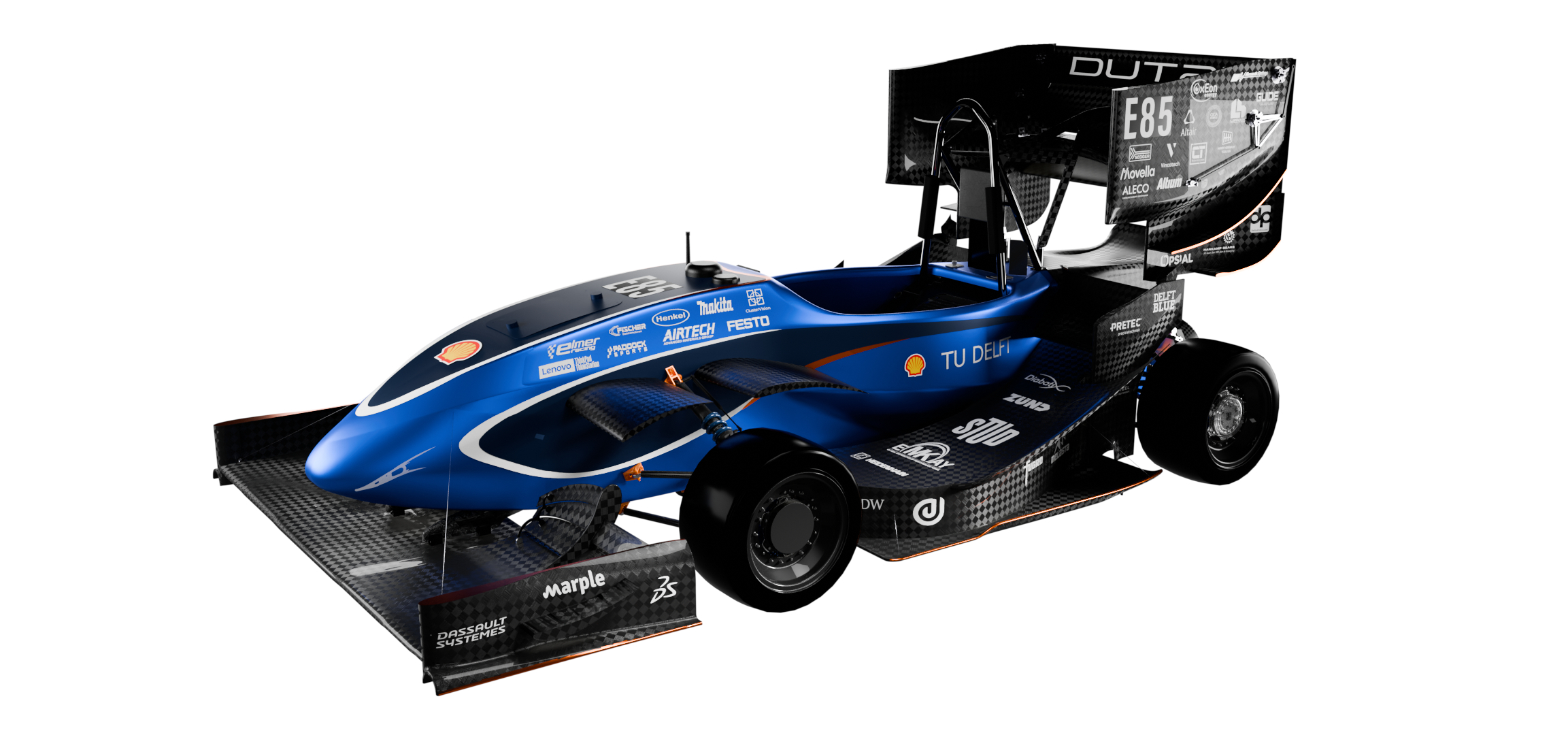
This year's car is a reference to our organisation, as we have been in existence for 25 years. It reflects this team's ambition to innovate, take risks, and win. With a completely new suspension concept and a big change in our electrical system, DUT26 faced enormous challenges along the way. To overcome these challenges, we forged a team that is cohesive, dynamic and determined. Now, it's time to show the competition what we are capable of. FSG, team, car, AHOO!
Engineering Design Priorities:
Win
Finish all dynamic events
Predictability
Well-understood
Validation
Cohesion
Car Specifications
General
| Frame Construction | CF Monocoque |
|---|---|
| Material | CF pre-pregs with aluminium and rohacell cores |
| Overall L | 2870 mm |
| Overall W | 1610 mm |
| Overall H | 1100 mm |
| Wheelbase | 1530 mm |
| Track (Fr) | 1250 mm |
| Track (Rr) | 1250 mm |
| Weight with 68kg driver (Fr) | 124 kg |
| Weight with 68kg driver (Rr) | 120 kg |
| Suspension | Decoupled heave and roll suspension with double A-Arms. |
| Tyres (Fr / Rr) | 4x Hoosier 43075R20 16.0x7.5-10 R20 |
| Wheels (Fr / Rr) | 4x CF in-house produced one-piece rims (8.0x8.0 inch) |
| Drive Type | 4WD Electric Fischer Moters |
| Differential | - |
| Cooling | Rear mounted radiators with fans. |
| Brake System | 4-Disk system with adjustable brake balance. |
| Electronics | Wire harness with IP68 sealing, self developed PCB's and a DCDC converter |
Powertrain
| Number of Motors | 4 |
|---|---|
| Motor Location | Front+Rear and Left+Right |
| Max Motor Power (per motor) | 35 kW |
| Motor Type | Fischer TI085-052-070 |
| Max Motor RPM (highest) | 13250 rpm |
| Motor Controller | Custom with Vincotech inverters |
| Max System Voltage | 600 V |
| Electrode Materials | Melasta SLPBB042126HX |
| Combined Accumulator Capacity | 7.03 kWh |
| Transmission Ratio (Primary) | 11.84 : 1 |
| Transmission Ratio (Secondary) | - |
Driverless System
| Processing unit(s) | 1x Raspberry PI 5 |
|---|---|
| Floating Point Operations Per Second of all processing units that are working for the DV system | 0.25 GigaFLOPS |
| Power consumption of all processing units that are working for the DV system | 45 W |
| Camera(s) | 1x FLIR Blackfly S BFS-U3-13Y3C-C, 75 deg opening angle |
| Radar sensor(s) | - |
| Lidar sensor(s) | 1x Seyond Robin E1X, 300 m range, 120 deg opening angle |
| Other sensors | Ground Speed Sensor (OMS Race, Sensoric Solutions) and Xsens (mti 680G, Movella) |
| Highlights of the DV system | Main hoop mounted lidar and camera. |
2025
Info
210x
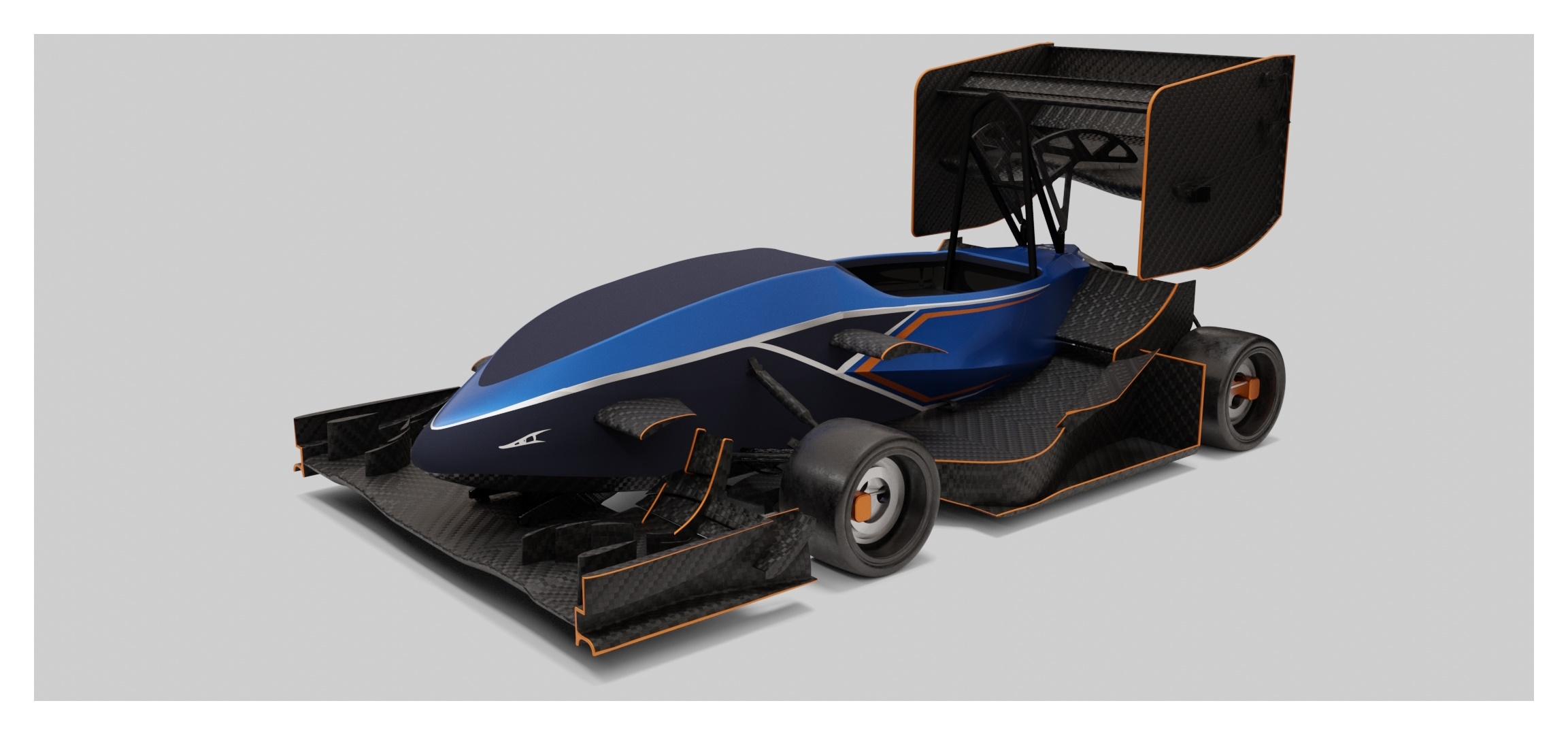
Celebrating 25 years of racing innovation, FS Team Delft proudly represents TU Delft with a rich legacy of engineering excellence and competition success. Evolving alongside FSG, the team has excelled in both the combustion and electric eras, having won the competition a whopping 6 times. This year, with a new 1.5-stage drivetrain and a strong focus on the autonomous system, we are gearing up for the next era of racing. With the aim to be the best, by beating the best. Let's bring it on '25!
Engineering Design Priorities:
CustomMotorControllers
3DPTVTestedAeroSystem
AdvancedVehicleControls
LiDAR/cameraIntegration
Real-timeTelemetry
1.5StageDrivetrain
Car Specifications
General
| Frame Construction | CFRP sandwich structure with aluminum honeycomb and Rohacell core. |
|---|---|
| Material | Rohacell 31 IG-F and Plascore 15 mm & 20 mm aluminum honeycomb core. |
| Overall L | 2866 mm |
| Overall W | 1615 mm |
| Overall H | 1187 mm |
| Wheelbase | 1530 mm |
| Track (Fr) | 1250 mm |
| Track (Rr) | 1250 mm |
| Weight with 68kg driver (Fr) | 119 kg |
| Weight with 68kg driver (Rr) | 128 kg |
| Suspension | Double unequal-length A-arms; direct front suspension, pushrod with rocker and ARB at rear |
| Tyres (Fr / Rr) | Dry: Hoosier 16 x 7.5-10 R20. Wet: Hoosier 16 x 7.0-10 W3 |
| Wheels (Fr / Rr) | 10 x 8 inch, CFRP 2 piece custom rim. |
| Drive Type | 1.5 stage planetary gearbox |
| Differential | Electronic differential with yaw rate control |
| Cooling | Rear single-loop with twin rads; topology-optimized motor housing and water-cooled motor/inverter. |
| Brake System | 4-Disk system, custom rotors/calipers, adjustable brake balance Driver sensitive load cell |
| Electronics | Self developed live telemetry system. In house designed and produced PCB's. |
Powertrain
| Number of Motors | 4 |
|---|---|
| Motor Location | FR, FL, RR, RL |
| Max Motor Power (per motor) | 35kW kW |
| Motor Type | Fischer TI085-052-070-04B7S-07S04BE2 |
| Max Motor RPM (highest) | 20.500 RPM rpm |
| Motor Controller | Self developed SiCFET |
| Max System Voltage | 600V V |
| Electrode Materials | LiCoO2 |
| Combined Accumulator Capacity | 7,00 kWh kWh |
| Transmission Ratio (Primary) | 1:2,72 : 1 |
| Transmission Ratio (Secondary) | 1:4.35 : 1 |
Driverless System
| Processing unit(s) | Raspberry Pi, CM4 In-house developed VCU Autonomous Computer (ASRock 4x4 8840U) |
|---|---|
| Floating Point Operations Per Second of all processing units that are working for the DV system | 120.3 GigaFLOPS |
| Power consumption of all processing units that are working for the DV system | 100.00 W |
| Camera(s) | FLIR BlackFly S BFS-U3-13Y3C-C |
| Radar sensor(s) | N.A. |
| Lidar sensor(s) | Seyond Robin E1X |
| Other sensors | Centimetre accurate GPS/ GPS RTK OMS race 7 GSS |
| Highlights of the DV system | DUT25’s autonomous system can excel in acceleration and skidpad, using lidar-camera fusion, GPS+IMU, and an optical ground speed sensor. It runs GraphSLAM, EKF, and LPV-MPC for accurate localization and control, with event-specific strategies and fast actuation via a Maxon EPOS steering controller. |
2024
Info
121xNo media information available for this year.
2023
Info
151x
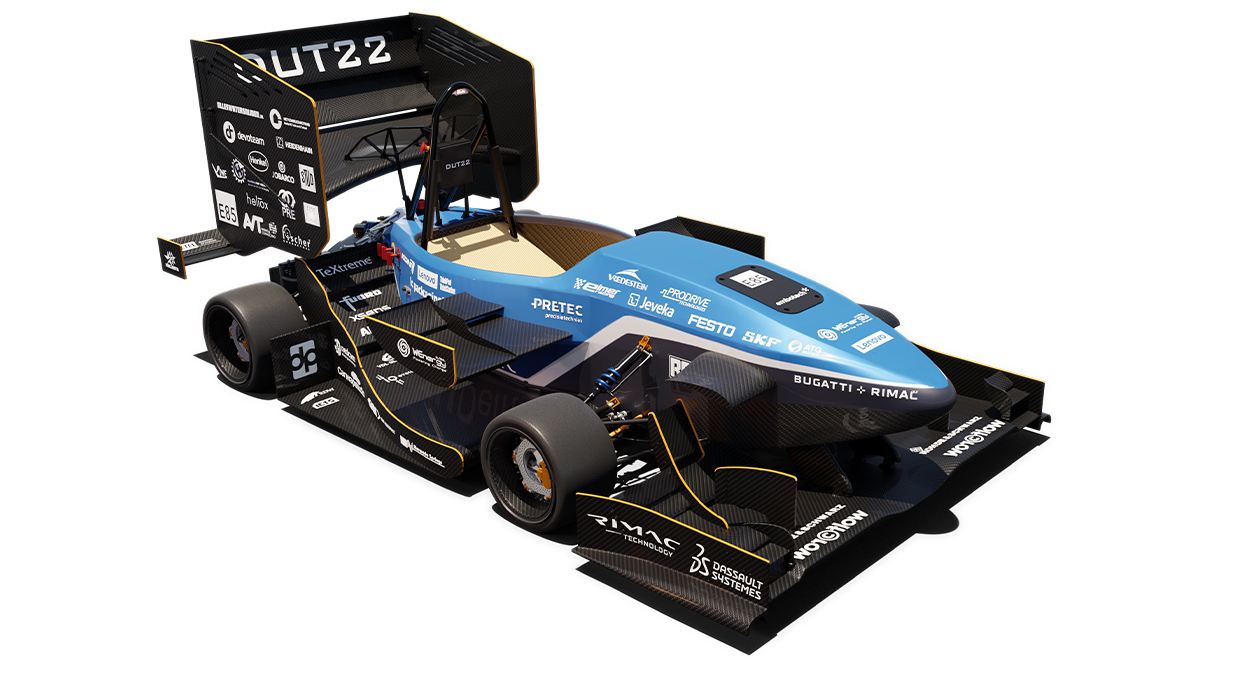
The DUT23 is the newest car in our collection. It will be our first car capable of both human and autonomous driving. A revised aerodynamics package has been implemented, which includes active aerodynamics, a new drag reduction system design, and an overall emphasis on improving downforce around corners using cornering simulations. Our cells have undergone thorough testing to perform in every possible environment, and our self-designed motor controllers have been optimized for greater efficiency
Engineering Design Priorities:
Motorcontrollers
Aerodynamics
Controls
Autonomous
Tires
Ergonomics
Car Specifications
General
| Frame Construction | Composite monocoque |
|---|---|
| Material | CFRP with aluminium honeycomb core |
| Overall L | 2830 mm |
| Overall W | 1540 mm |
| Overall H | 1185 mm |
| Wheelbase | 1530 mm |
| Track (Fr) | 1250 mm |
| Track (Rr) | 1250 mm |
| Weight with 68kg driver (Fr) | 117 kg |
| Weight with 68kg driver (Rr) | 116 kg |
| Suspension | Double unequal length A-arm. Directly actuating on spring and damper. |
| Tyres (Fr / Rr) | 225/25 R10, Compound B & D, Vredestein / 225/25 R10, Compound B & D, Vredestein |
| Wheels (Fr / Rr) | 214x254 mm CFRP self-made two-piece Rims / 214x254 mm CFRP self-made two-piece Rims |
| Drive Type | Single-stage planetary transmission |
| Differential | Electric |
| Cooling | Single-loop, twin rear-mounted radiators, thermally controlled dual-fan layout |
| Brake System | 4-Disk system, Floating in hub rotors with 161mm diameter, adjustable brake balance |
| Electronics | Multifunctional Steering Wheel, Self-developed logging with live cloud interface 4G + GPS |
Powertrain
| Number of Motors | 4 |
|---|---|
| Motor Location | Innerwheel mounted |
| Max Motor Power (per motor) | FR, FL, RR, RL: 35kW kW |
| Motor Type | FR, FL, RR, RL:Fischer PMSM |
| Max Motor RPM (highest) | FR, FL, RR, RL: 20.000 rpm |
| Motor Controller | Self-developed |
| Max System Voltage | 600 V |
| Electrode Materials | LiFePO - graphite |
| Combined Accumulator Capacity | 6,8 kWh kWh |
| Transmission Ratio (Primary) | 10.82 : 1 |
| Transmission Ratio (Secondary) | - |
Driverless System
| Processing unit(s) | Intel i7-1185G7E |
|---|---|
| Floating Point Operations Per Second of all processing units that are working for the DV system | 40 GigaFLOPS |
| Power consumption of all processing units that are working for the DV system | 60 W |
| Camera(s) | - |
| Radar sensor(s) | - |
| Lidar sensor(s) | Robosense RS-LiDAR-M1. 200m range, 120deg FoV. Solid state lidar |
| Other sensors | IMU Xsens MTi 680G |
| Highlights of the DV system | Very simple but consistent, reliable, and fast EKF based state estimation |
2022
Info
141x
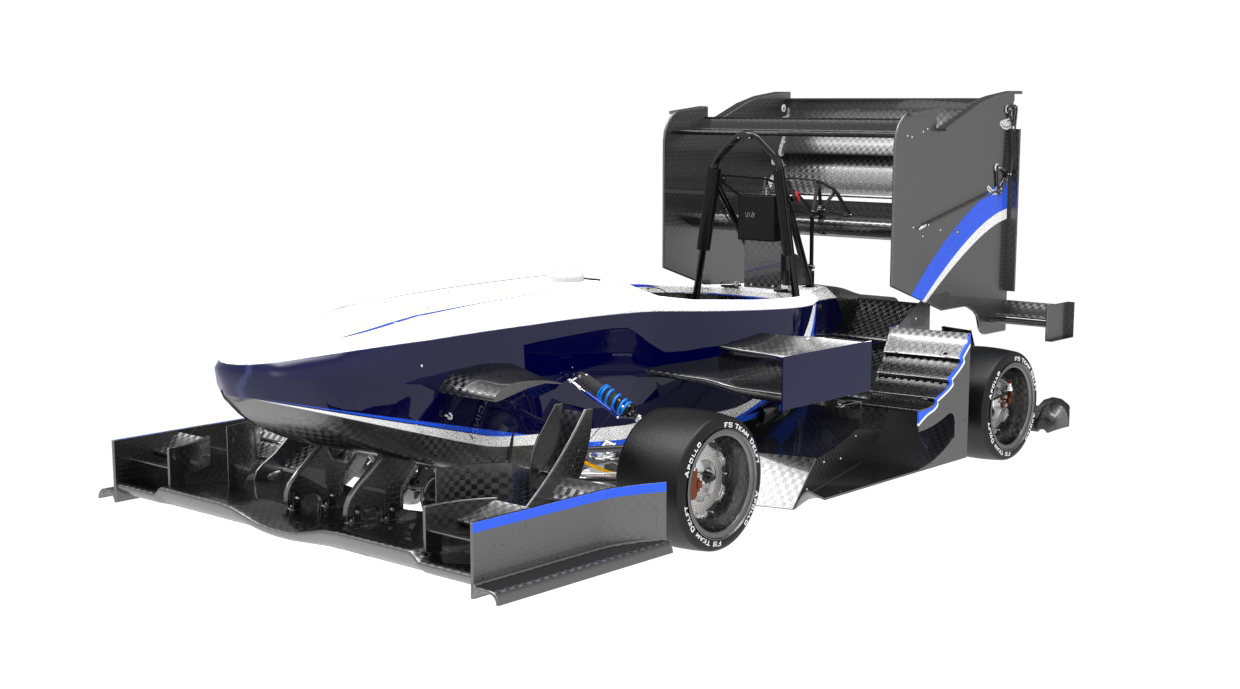
The DUT22 is the 21st car built by our team. We have done driverless before but for the first time, the car is designed to work with and without a driver. We have emphasized consistency by focusing on reliability and drivability. The autonomous systems are packaged so as not to inhibit the drivers' ability to extract performance and we have continued development of our self-designed motor controllers to make them as reliable as possible.
Engineering Design Priorities:
Motor controllers
Autonomous
Aero
Ergonomics
Controls
Tires
Car Specifications
General
| Frame Construction | Composite monocoque |
|---|---|
| Material | CFRP with aluminium honeycomb core |
| Overall L | 2892 mm |
| Overall W | 1604 mm |
| Overall H | 1059 mm |
| Wheelbase | 1530 mm |
| Track (Fr) | 1250 mm |
| Track (Rr) | 1250 mm |
| Weight with 68kg driver (Fr) | 120 kg |
| Weight with 68kg driver (Rr) | 119 kg |
| Suspension | Double unequal length A-arm. Directly actuating on spring and damper. |
| Tyres (Fr / Rr) | 225x368 R10, Vredestein B&D / 225x368 R10, Vredestein B&D |
| Wheels (Fr / Rr) | 214x254 mm CFRP self-made two-piece Rims / 214x254 mm CFRP self-made two-piece Rims |
| Drive Type | Single-stage planetary transmission |
| Differential | - |
| Cooling | Single-loop, twin rear-mounted radiators, thermally controlled dual-fan layout |
| Brake System | 4-Disk system, Floating in hub rotors with 161mm diameter, adjustable brake balance |
| Electronics | Multifunctional Steering Wheel, Self-developed logging with live cloud interface 4G + GPS |
Powertrain
| Number of Motors | 4 |
|---|---|
| Motor Location | Innerwheel mounted |
| Max Motor Power (per motor) | 35kW kW |
| Motor Type | FL, FR, RR, RL Fischer PMSM |
| Max Motor RPM (highest) | FL, FR, RR, RL: 20 000 rpm |
| Motor Controller | Self-developed |
| Max System Voltage | 600V V |
| Electrode Materials | LiCoO2 (cathode) |
| Combined Accumulator Capacity | 7.0 kWh |
| Transmission Ratio (Primary) | 10.82 : 1 |
| Transmission Ratio (Secondary) | - |
Driverless System
| Processing unit(s) | Raspberry Pi, Lenovo P350 tiny PC Intel Core i5-11500 |
|---|---|
| Floating Point Operations Per Second of all processing units that are working for the DV system | 667 GigaFLOPS |
| Power consumption of all processing units that are working for the DV system | 150 W |
| Camera(s) | 0 |
| Radar sensor(s) | 0 |
| Lidar sensor(s) | 1, 200m, 120°, Velodyne |
| Other sensors | Xsens MTi-670G, GPS and IMU |
| Highlights of the DV system | This year's DUT22 driverless system is built from scratch and is entirely optimized for the acceleration and skidpad events. From sensing to steering actuation, our total latency is less than 100ms with the system weighing in at only 4kg. The DUT22 driverless system maximizes the potential points scored and minimizes impact on car performance. |
2021
Info
106x
The DUT21, the newest addition to the Formula Student Team Delft family! This year's extensive focus has been on the aerodynamics package of the DUT21. Significantly improving downforce numbers over its predecessor. The DUT21 is also the first in a long streak to decrease its chassis size which gives it that overall slim look!Something that can't be seen from the outside is the introduction of our custom-designed motor controllers which will be featured for the first time in the DUT21!
Engineering Design Priorities:
Aerodynamics
Motorcontrollers
Chassis
Suspension
Electronics
Ergonomics
Car Specifications
General
| Frame Construction | Composite Monocoque |
|---|---|
| Material | CFRP with Aluminium Honeycomb core |
| Overall L | 2940 mm |
| Overall W | 1590 mm |
| Overall H | 1170 mm |
| Wheelbase | 1530 mm |
| Track (Fr) | 1250 mm |
| Track (Rr) | 1250 mm |
| Weight with 68kg driver (Fr) | 116 kg |
| Weight with 68kg driver (Rr) | 122 kg |
| Suspension | Double unequal length A-arm. Push rod actuated horizontally oriented spring damper + ARB |
| Tyres (Fr / Rr) | 225x368 R10, Vredestein / 225x368 R10 Vredestein |
| Wheels (Fr / Rr) | 214mm CFRP self-made two-piece rim / 214mm CFRP self-made two-piece rim |
| Drive Type | Single Stage Planetary with 3 planets |
| Differential | Electronic Torque vectoring with active tyre load optimisation |
| Cooling | Optimised single loop system with 2 Rear mounted radiators and 60 W fans. |
| Brake System | 4-disk system with self-developed calipers integrated in upright. Adjustable brake balance |
| Electronics | Selfdesigned Motorcontrollers, Selfdesigned cloud-based data acquisition |
Powertrain
| Number of Motors | 4 |
|---|---|
| Motor Location | Integrated in the wheels |
| Max Motor Power (per motor) | 35kW, 35kW, 35kW, 35kW kW |
| Motor Type | Fischer TI085, PMSM |
| Max Motor RPM (highest) | 20000 rpm |
| Motor Controller | Self-Developed |
| Max System Voltage | 600V V |
| Electrode Materials | LiCoO2 |
| Combined Accumulator Capacity | 7.0kWh kWh |
| Transmission Ratio (Primary) | 1:10.82 : 1 |
| Transmission Ratio (Secondary) | n/a : 1 |
2018
Info
115x
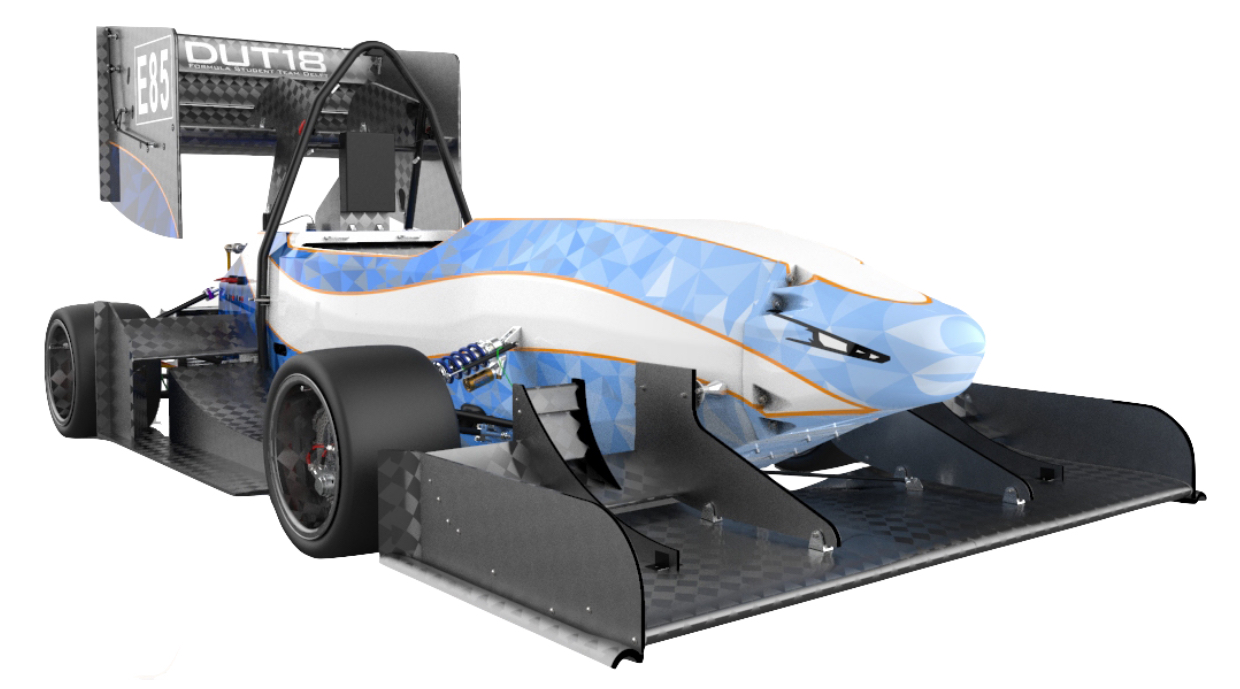
The DUT18 is the latest in a long line of successful machines designed and built by Formula Student Team Delft. This season, the team's focus was to optimise the synergy between the car and the driver, which was achieved by specific focus on the ergonomics and aerodynamics of the vehicle. Coupled with the now-traditional 14.5' tyres and custom-designed cooling system, the DUT18 is ready to take on the competition at Hockenheim.
Engineering Design Priorities:
Aerodynamics
Ergonomics
Underbody
Car&Driver
Car Specifications
General
| Frame Construction | Full monocoque |
|---|---|
| Material | CFRP with aluminum honeycomb core |
| Overall L | 2831 mm |
| Overall W | 1428 mm |
| Overall H | 1138 mm |
| Wheelbase | 1530 mm |
| Track (Fr) | 1200 mm |
| Track (Rr) | 1200 mm |
| Weight with 68kg driver (Fr) | 112 kg |
| Weight with 68kg driver (Rr) | 116 kg |
| Suspension | Double unequal length A-Arm. Direct acting spring damper front, pushrod rear |
| Tyres (Fr / Rr) | 225x368-R10, Vredestein |
| Wheels (Fr / Rr) | 214mm CFRP self-made two-piece rim |
| Drive Type | 3 Planet single-stage transmission |
| Differential | Electronic using own control systems |
| Cooling | Water cooled with radiator rearward of chassis |
| Brake System | Rotor floating in hub, 3 & 2 mm steel, 161/119mm, Integrated caliper half |
| Electronics | Multiple driver aids, Self designed data logging on ECU, UFH Band FHSS protocol telemetry |
Powertrain
| Number of Motors | 4 |
|---|---|
| Motor Location | FL FR RL RR |
| Max Motor Power (per motor) | 35 kW per motor kW |
| Motor Type | AMK DT5-14-10-POW-14000-B5 |
| Max Motor RPM (highest) | 20000 rpm |
| Motor Controller | AMK KW26-S5-FSE-4Q |
| Max System Voltage | 600V V |
| Electrode Materials | LiCoO2 |
| Combined Accumulator Capacity | 6.8 kWh kWh |
| Transmission Ratio (Primary) | 1:10.82 : 1 |
| Transmission Ratio (Secondary) | - |
2017
Info
88x
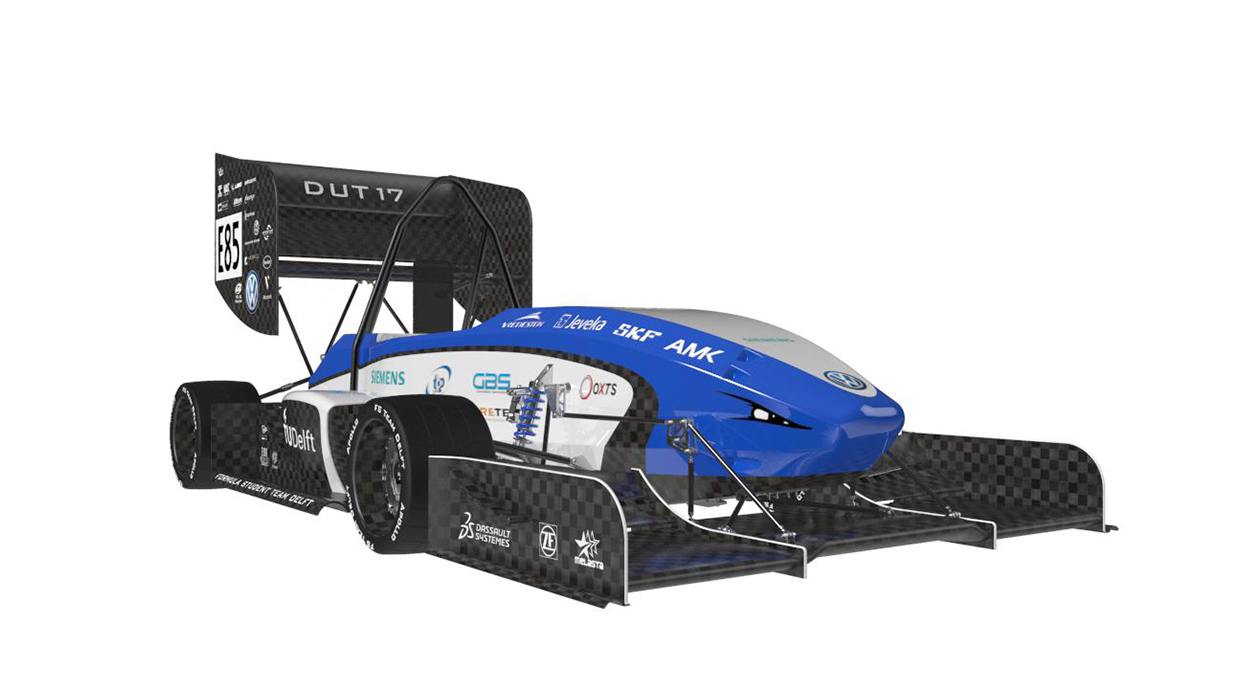
Formula Student Team Delft returns to Hockenheim with the DUT17. The newest car has an improved aerodynamic package, an ergonomic chassis shape, single stage planetary gearset and the tyres to match. These features make the DUT17 a lightweight and agile car, in line with our design philosophy.
Engineering Design Priorities:
Lightweight
Efficient
Drivable
Reliable
Car Specifications
General
| Frame Construction | Full CFRP single piece monocoque with aluminium honeycomb core |
|---|---|
| Material | TeXtreme 100gsm weave, DeltaTech M46J + STS UD prepregs impregn. with MTC510, Plascore Al5052 core |
| Overall L | 2867 mm |
| Overall W | 1442 mm |
| Overall H | 1190 mm |
| Wheelbase | 1530 mm |
| Track (Fr) | 1200 mm |
| Track (Rr) | 1200 mm |
| Weight with 68kg driver (Fr) | 110 kg |
| Weight with 68kg driver (Rr) | 115 kg |
| Suspension | Double unequal length A-arms, pullrod (front) and pushrod (rear) acting on vertical SDS |
| Tyres (Fr / Rr) | 225x368-R10, Vredestein Slick Compound Front and Rear |
| Wheels (Fr / Rr) | 214mm, self-made 2-piece CFRP rim Front and Rear |
| Drive Type | Single-stage planetary |
| Differential | Electronically actuated slip ratio and yaw rate controller |
| Cooling | Two sidepod-mounted custom radiators with temperature-controlled fans |
| Brake System | Floating steel brake disks, single piston half-caliper per wheel, adjustable brake balance |
| Electronics | Self-made ECU, AMS, BMS, Sensornodes and DRS power stage, 200+ channel CAN logging |
Powertrain
| Number of Motors | 4 |
|---|---|
| Motor Location | Centre of each wheel |
| Max Motor Power (per motor) | 35kW per motor kW |
| Motor Type | 4x AMK DT5-14-10-POW-14000-B5 |
| Max Motor RPM (highest) | 4x 20,000 rpm |
| Motor Controller | AMK KW26-S5-FSE-4Q |
| Max System Voltage | 600V V |
| Electrode Materials | LiCoO2 - Graphite |
| Combined Accumulator Capacity | 6.7kWh kWh |
| Transmission Ratio (Primary) | 10.82 : 1 |
| Transmission Ratio (Secondary) | n/a : 1 |
2016
Info
103x
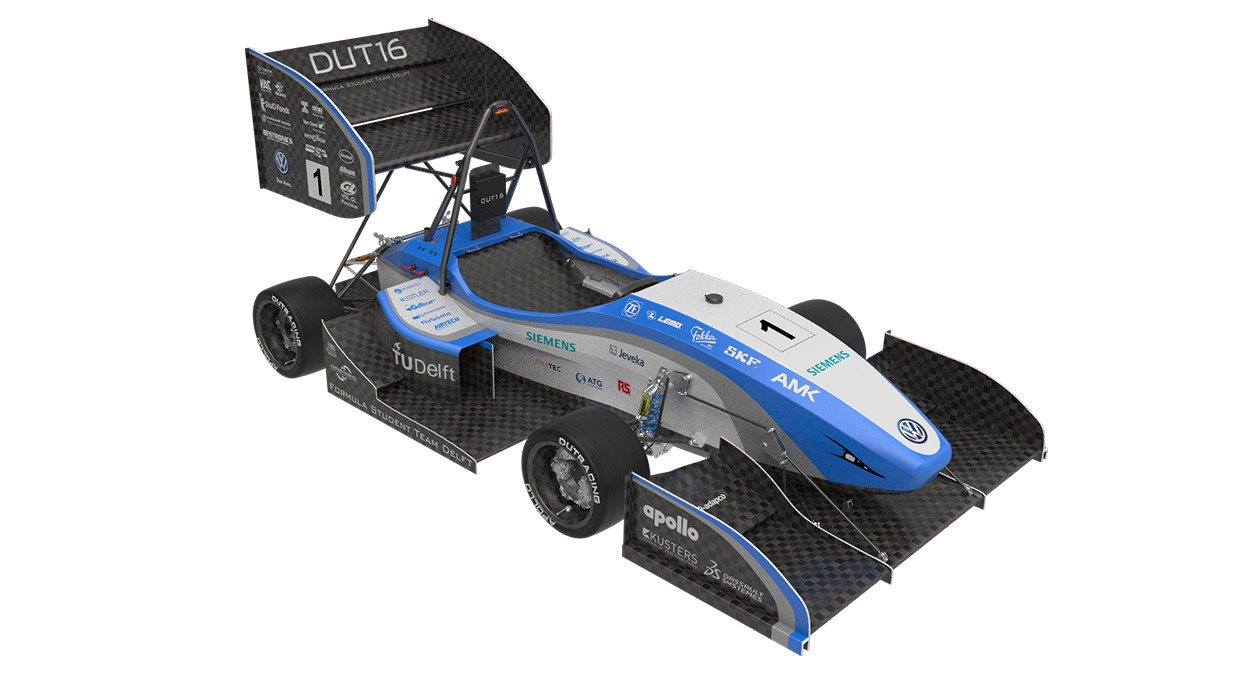
Formula Student Team Delft is a team of over 60 students from over 6 faculties of the TU Delft. The team is divided into six technical departments and a management team of four people. The team's newest vehicle, the DUT16, is a 4 wheel driven electric vehicle featuring aerodynamic devices. As with it's 15 predecessors a lightweight design was one of the key focus points of this year's vehicle. Together with the newest iteration tyres and a new innerwheel concept, the DUT16 is ready to race!
Engineering Design Priorities:
selfdevelopedtyres
lightweight
eccentricinnerwheels
Car Specifications
General
| Frame Construction | CFRP single piece monocoque with aluminium honeycomb core |
|---|---|
| Material | Textreme 100 gsm plain weave impregnated with MTC510, DeltaTech M46J and STS UD prepregs |
| Overall L | 2831 mm |
| Overall W | 1426 mm |
| Overall H | 1174 mm |
| Wheelbase | 1530 mm |
| Track (Fr) | 1200 mm |
| Track (Rr) | 1200 mm |
| Weight with 68kg driver (Fr) | 111 kg |
| Weight with 68kg driver (Rr) | 117 kg |
| Suspension | Double unequal length A-arms with pullrod front, double unequal length A-arms with pushrod rear |
| Tyres (Fr / Rr) | 225-368-R10 Apollo |
| Wheels (Fr / Rr) | 225-368-R10 Apollo |
| Drive Type | Single-stage double-spur gearbox |
| Differential | Electrical |
| Cooling | Sidewing mounted radiator inside duct, air inlet scoop in duct |
| Brake System | Double caliper on front, single caliper on rear, adjustable brake balance from cockpit, electric ABS |
| Electronics | Custom ECU, Long range telemetry, high resolution dashboard, 4 distributed CAN sensor nodes |
Powertrain
| Number of Motors | 4 |
|---|---|
| Motor Location | In every wheel |
| Max Motor Power (per motor) | 4x32.5 kW kW |
| Motor Type | Permanent Magnet Synchronous Motor |
| Max Motor RPM (highest) | 20000 rpm |
| Motor Controller | AMK - KW26-S5-FSE-4Q |
| Max System Voltage | 600V V |
| Electrode Materials | Lithium Polymer (Lithium Cobalt Chemistr |
| Combined Accumulator Capacity | 7.2 kWh kWh |
| Transmission Ratio (Primary) | 10.8 : 1 |
| Transmission Ratio (Secondary) | n/a : 1 |
2015
Info
70x
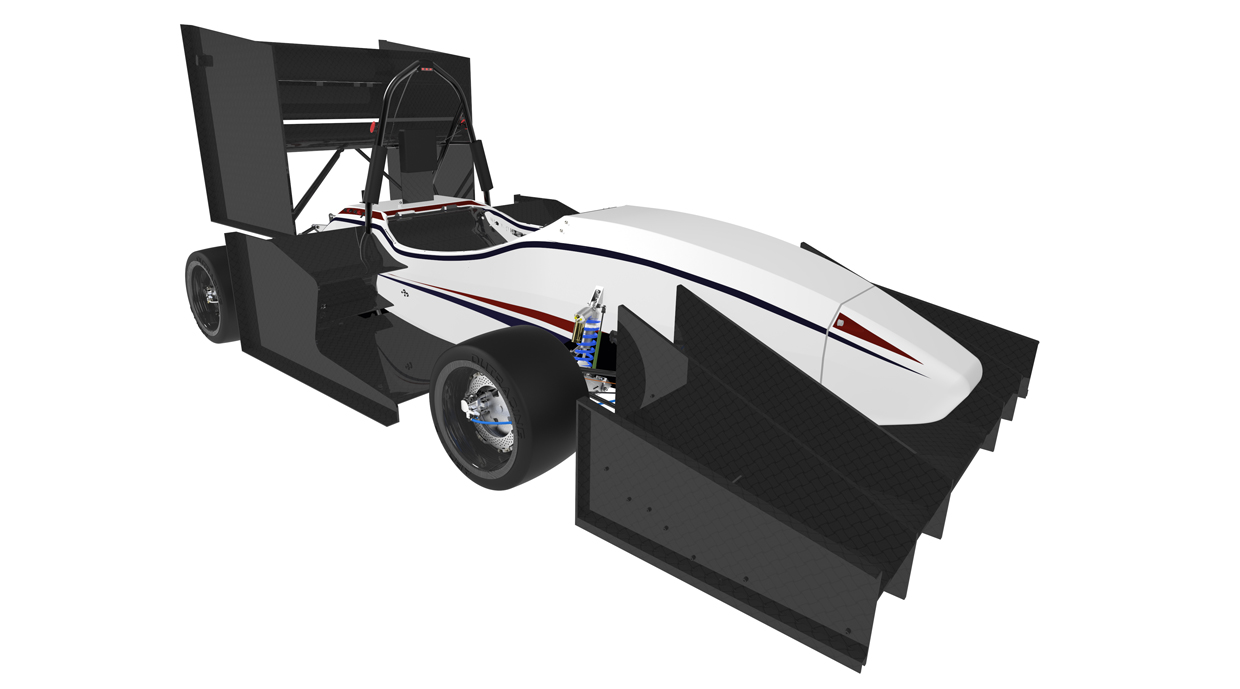
Formula Student Team Delft is a team of over 60 students from over 6 faculties of the TU Delft. The team is divided into six technical departments and a management team of four people. The DUT15 is the car of anniversaries: the teams 15th car, 5th electric car and 4th 4WD car. Delft is known for engineering extremely light weight and agile cars and the DUT15 continues this trend.
Engineering Design Priorities:
Performance gain v effort
Long & Lat accelerations
Tyre friction coefficient
4WD
Mass
Downforce
Car Specifications
General
| Frame Construction | Single-piece CFRP monocoque with honeycomb core with Aluminium CNC'd front hoop |
|---|---|
| Material | Plascore 5052 aluminium honeycomb sandwich panel, cell size 3.2mm, 25micron foil thickness, 72kg/m3 |
| Overall L | 2834 mm |
| Overall W | 1426 mm |
| Overall H | 1195 mm |
| Wheelbase | 1530 mm |
| Track (Fr) | 1200 mm |
| Track (Rr) | 1200 mm |
| Weight with 68kg driver (Fr) | 112 kg |
| Weight with 68kg driver (Rr) | 116 kg |
| Suspension | Double anti parallel unequal length CFRP A-arms. Fr pull rod, Rr push rod actuated, vertical SDS |
| Tyres (Fr / Rr) | 368 x 209.5 - R10 Apollo |
| Wheels (Fr / Rr) | 214 x 254mm, 21mm offset, 2 pc CFRP rim |
| Drive Type | Single Stage Planetary Gearbox |
| Differential | Self-developed slip ratio and yaw-rate controller |
| Cooling | Two side mounted radiators |
| Brake System | Metal matrix composite aluminium brake disks with half the brake caliper integrated into the upright |
| Electronics | Self-developed ECU, ECU nodes and AMS. Self developed software and vehicle dynamics controller. |
Powertrain
| Number of Motors | 4 |
|---|---|
| Motor Location | Inside each wheel |
| Max Motor Power (per motor) | 32.5kW kW |
| Motor Type | 4x AMK DT5-14 |
| Max Motor RPM (highest) | 20000 rpm |
| Motor Controller | AMK KW 26-S5 |
| Max System Voltage | 600V V |
| Electrode Materials | LiCoO2 - aluminium and copper |
| Combined Accumulator Capacity | 7.2kWh kWh |
| Transmission Ratio (Primary) | 1:10.8 : 1 |
| Transmission Ratio (Secondary) | - |
2014
Info
139x
The Delft University of Technology Racing Team consists of 80 team members from eight different faculties. The newest car, the DUT14, can be described as an extremely lightweight four-wheel driven electric car enhanced with aerodynamic devices, a slip ratio controller and a yaw rate controller. All four motors are placed inside the wheels together with an one-stage planetary transmission. With the self-designed tyres the team was able to improve the tyre behavior.
Engineering Design Priorities:
lightweight
tyres
aerodynamics
four wheel drive
motors in wheel
low centre of gravity
Car Specifications
General
| Frame Construction | Composite monocoque with integral aluminium front hoop. |
|---|---|
| Material | Aluminium honeycomb sandwich panel. |
| Overall L | 2856 mm |
| Overall W | 1383 mm |
| Overall H | 1054 mm |
| Wheelbase | 1530 mm |
| Track (Fr) | 1150 mm |
| Track (Rr) | 1150 mm |
| Weight with 68kg driver (Fr) | 110 kg |
| Weight with 68kg driver (Rr) | 113 kg |
| Suspension | Double unequal length CFRP A-arms. Push rod actuated vertically oriented spring and dampers. |
| Tyres (Fr / Rr) | 368 x 209.5 R254 Apollo/368 x 209.5 R254 Apollo |
| Wheels (Fr / Rr) | 8.5x10, 27 mm offset, 2 pc CFRP Rim/8.5x10, 27 mm offset, 2 pc CFRP Rim |
| Drive Type | One stage planetary gear system in wheel |
| Differential | Software actuated electrical differential (active yaw rate control). |
| Cooling | Single water cooling system with two side mounted radiators. |
| Brake System | Self-developed aluminium matrix composite rotors, modified brake calipers, adjustable brake balance. |
| Electronics | ECU, AMS, and sensor nodes self-designed. Telemetry using XBee module. |
Powertrain
| Number of Motors | 4 |
|---|---|
| Motor Location | Inside wheels. |
| Max Motor Power (per motor) | 30 kW kW |
| Motor Type | 3 phase synchronous permanent magnet. |
| Max Motor RPM (highest) | 20000 rpm |
| Motor Controller | 4x AMK KW26-S5 |
| Max System Voltage | 580V V |
| Electrode Materials | LiCoO2 - Graphite |
| Combined Accumulator Capacity | 6.3 kWh kWh |
| Transmission Ratio (Primary) | 1:10.29 : 1 |
| Transmission Ratio (Secondary) | N/A : 1 |
2013
Info
86x
The Delft University of Technology (DUT) Racing Team consists of seventy students from different faculties of the TU Delft. The team has a record of building lightweight and agile cars. The last two years, the team took on the challenge of taking the lightweight concept to the electric racing class and implementing full torque vectoring with four-wheel-drive. This year, we integrated aerodynamics in the overall concept of the car. The DUT13 is the result of 12 years of experience, a systemic approach in design and project management and a year of hard work. By combining four-wheel-drive, aerodynamics and advanced control systems whilst sticking true to the Delft Concept (Lightweight, efficient and fast!) the team has been able to design their most competitive car so far. With features such as regenerative braking, slip ratio control, torque vectoring and a wing-shaped underbody the DUT13 is a worthy addition to the DUT Racing fleet.
Car Specifications
General
| Frame Construction | Full carbon fiber monocoque with integrated aluminium front hoop |
|---|---|
| Material | TeXtreme 100gsm SpreadTow fabric, 300gsm UD, 10~25mm Rohacell IG51 core |
| Overall L | 2907 mm |
| Overall W | 1415 mm |
| Overall H | 1077 mm |
| Wheelbase | 1530 mm |
| Track (Fr) | 1200 mm |
| Track (Rr) | 1200 mm |
| Weight with 68kg driver (Fr) | 123 kg |
| Weight with 68kg driver (Rr) | 123 kg |
| Suspension | Double unequal length A-Arms. Spring-damper: front push rod actuated in-line, rear direct actuated |
| Tyres (Fr / Rr) | 18x6 R10 Hoosier LC0 |
| Wheels (Fr / Rr) | 7.0x10, 2 pc Al-CFRP Rim, 67mm / 75mm offset |
| Drive Type | Spur and planetary gear system |
| Differential | Electronic Differential (Active Yaw Rate Control) |
| Cooling | 2x Side mounted 750cc radiator |
| Brake System | 50kW regenerative braking. Aluminium composite rotors. AP Racing CP7003 casted aluminium calipers |
| Electronics | Self-designed Electronics Control Unit and sensor nodes system. 5.2" LCD display. 3 colour LED-bar |
Powertrain
| Number of Motors | 4 |
|---|---|
| Motor Location | 4x hub mounted motors |
| Max Motor Power (per motor) | 4x 26kW kW |
| Motor Type | 4x modified AMK DT5-14-10 |
| Max Motor RPM (highest) | 4x 20.000RPM rpm |
| Motor Controller | 4x AMK KW26. Single cooling plate |
| Max System Voltage | 600V V |
| Electrode Materials | LiCoO2 |
| Combined Accumulator Capacity | 6.29kWh kWh |
| Transmission Ratio (Primary) | 1:14.15 : 1 |
| Transmission Ratio (Secondary) | n/a : 1 |
2012
Info
9x
The Delft University of Technology (DUT) Racing Team consists of sixty students from different faculties of the TU Delft, in the Netherlands. The team is unique in its systematic approach in design and project management. Nine full-time managers, together with fifty-one part-timers, dedicate their whole year on designing and building the second generation electric car, by Delft. The end product is the DUT12. The DUT12 is the first four wheel driven car ever made by the DUT Racing Team. The team started thinking about how the ultimate electric car should look like and found their ways in the focus on lightweight in combination with one motor per wheel. This will take care of an optimal dynamic performance and maximum regenerative braking capabilities, resulting in a fast and more energy efficient car. This is in our opinion the best fulfillment of the Delft Concept: Lightweight, efficient and fast!
Car Specifications
General
| Frame Construction | Full composite monocoque with integral aluminum front hoop |
|---|---|
| Material | Spread tow prepregs with AX-5201S Epoxy, Corecell M60 and Rohacell IG51 core. |
| Overall L | 2445 mm |
| Overall W | 1415 mm |
| Overall H | 1104 mm |
| Wheelbase | 1530 mm |
| Track (Fr) | 1200 mm |
| Track (Rr) | 1200 mm |
| Weight with 68kg driver (Fr) | 105 kg |
| Weight with 68kg driver (Rr) | 108 kg |
| Suspension | Double unequal length A-Arms. Front push rod & rear pull rod actuated SDS, adjustable U-type ARB |
| Tyres (Fr / Rr) | 18x6 R10 Hoosier LC0, 6x10, 68.5mm offset, 2 pc Al-CFRP rim |
| Wheels (Fr / Rr) | 18x6 R10 Hoosier LC0, 6x10, -108.9mm offset, 2 pc Al-CFRP rim |
| Drive Type | Front planetary gears Rear 2 stage spur |
| Differential | n/a |
| Cooling | Radiator mounted behind the driver |
| Brake System | 4 floating rotors, front 192x2.8mm, rear 182x1.9mm, dual piston calipers,adjustable brake bias |
| Electronics | Self developed ECU with data acquisition, slip ratio and yaw rate control, LCD and LEDs as interface |
Powertrain
| Number of Motors | 4 |
|---|---|
| Motor Location | fr: in-wheel, r: onboard |
| Max Motor Power (per motor) | 28kW (per motor) kW |
| Motor Type | modified AMK DT5-12 |
| Max Motor RPM (highest) | 20000 rpm |
| Motor Controller | AMK KW20 |
| Max System Voltage | 600V V |
| Electrode Materials | LiPo |
| Combined Accumulator Capacity | 4.3kWh kWh |
| Transmission Ratio (Primary) | f 1:7.5 : 1 |
| Transmission Ratio (Secondary) | r 1:13 : 1 |
2011
Info
1x
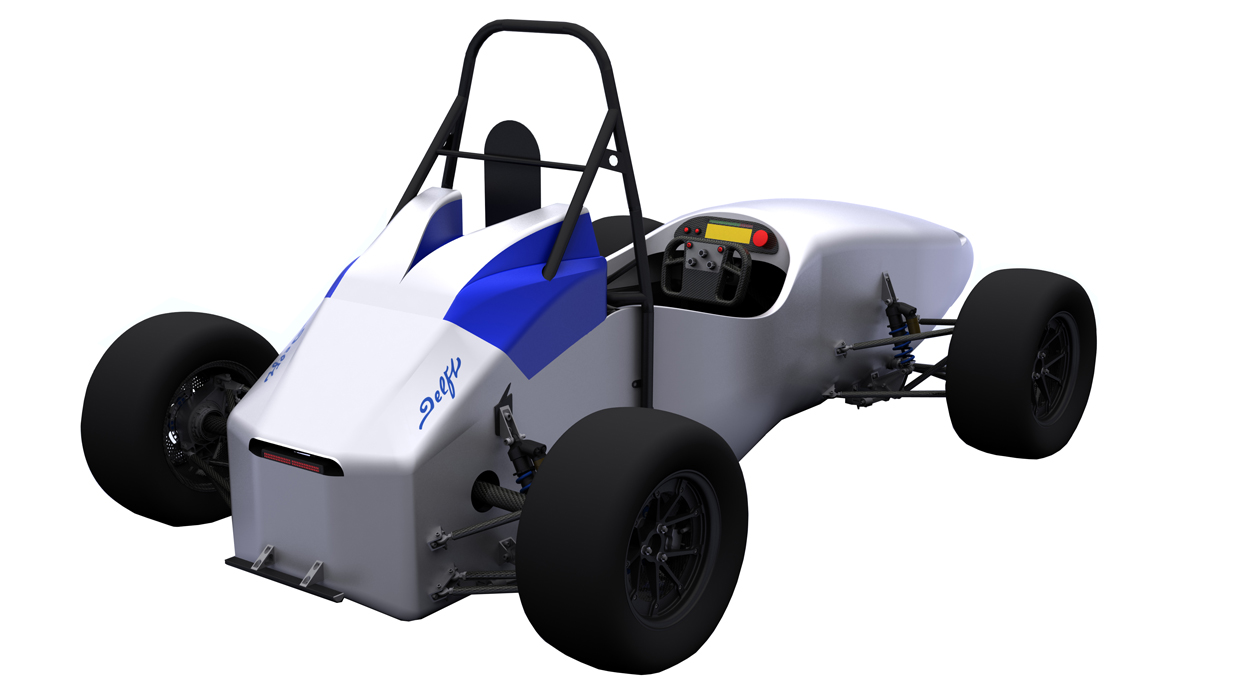
After ten successful combustion years, the DUT Racing Team will this year focus on a fully electric Formula Student car. This first electric car has a focus on the end-user, the amateur weekend racer. The design focuses on the needs, demands and limitations of this driver. As such, the car is easy to drive due to a good feel of the throttle, brakes and tires. Also the ergonomics and safety is taken in to account, the car is spacious and al the set-ups are easy to adjust. The beating heart of the car is formed by two electric motors and controllers from AMK Antriebe. These are fed by lithium ion polymer batteries which are placed behind the driver. With a peak power of 55 kW, a total energy of 5.7kWh and a weight of only 180 kilograms the team will show their vision on electric cars. Being a team of over fifty technical students from the TU Delft, the team strives to be one of the top teams in the Class 1A competition in England with their electric car: the DUT11.
Car Specifications
General
| Frame Construction | Full composite monocoque with aluminium front hoop and steel main hoop |
|---|---|
| Material | Vacuum infused carbon and Aramid fibre facing, Axson 5015 epoxy, Corecell M60 core |
| Overall L | 2628 mm |
| Overall W | 1407 mm |
| Overall H | 1064 mm |
| Wheelbase | 1540 mm |
| Track (Fr) | 1200 mm |
| Track (Rr) | 1200 mm |
| Weight with 68kg driver (Fr) | 102 kg |
| Weight with 68kg driver (Rr) | 146 kg |
| Suspension | Unequal length A-Arms. Pull rod actuated Cane Creek Double Barrel spring/damper units |
| Tyres (Fr / Rr) | 180x60 - 10 inch LC0 Hoosier |
| Wheels (Fr / Rr) | Student designed 10 |
| Drive Type | Spur gears, one step |
| Differential | Electronic Differential |
| Cooling | Custom radiator mounted centrally behind driver in motor compartment cover |
| Brake System | 4-Disk system, full-floating rotors with 191mm diameter, adjustable brake balance, AP 4226 calipers |
| Electronics | wiring harness sealed to IP67, multifunctional steering wheel, student designed DAQ system |
Powertrain
| Number of Motors | 2 |
|---|---|
| Motor Location | Rear Right, Rear Left |
| Max Motor Power (per motor) | 27 kW per motor kW |
| Motor Type | RR, RL: AMK antriebe DT5-30-10 |
| Max Motor RPM (highest) | RR,RL: 10500 RPM rpm |
| Motor Controller | AMK Antriebe KW-40 |
| Max System Voltage | 400V V |
| Electrode Materials | Lithium Polymere |
| Combined Accumulator Capacity | 5,7 kWh |
| Transmission Ratio (Primary) | 1:7,24 : 1 |
| Transmission Ratio (Secondary) | N/A : 1 |
FS past achievements due to World Ranking Data Base
| Date | Event | Teams | Rank | BP | CM | ED | SP | DV SP | AC | DV AC | AX | EN | EF | Pe | Total |
|---|---|---|---|---|---|---|---|---|---|---|---|---|---|---|---|
| 2026.08 | 80 |
22. |
3. |
3. |
9. |
8. |
- |
3. |
- |
22. |
- |
- |
0.00 |
402.06 |
|
| 2026.07 | 52 |
16. |
6. |
14. |
17. |
10. |
- |
17. |
- |
12. |
- |
- |
0.00 |
387.86 |
|
| 2026.07 | 21 |
2. |
1. |
4. |
3. |
5. |
- |
8. |
- |
- |
2. |
1. |
0.00 |
703.00 |
|
| 2025.08 | 84 |
3. |
4. |
13. |
5. |
2. |
13. |
4. |
15. |
14. |
5. |
3. |
0.00 |
815.68 |
|
| 2025.08 | 53 |
14. |
15. |
2. |
4. |
1. |
- |
4. |
- |
- |
- |
- |
0.00 |
440.59 |
|
| 2025.07 | 44 |
19. |
36. |
16. |
4. |
- |
- |
- |
- |
- |
- |
- |
0.00 |
247.98 |
|
| 2024.08 | 79 |
4. |
21. |
5. |
10. |
- |
- |
- |
10. |
4. |
4. |
8. |
0.00 |
680.41 |
|
| 2024.07 | 31 |
9. |
6. |
7. |
12. |
5. |
- |
3. |
- |
4. |
- |
- |
0.00 |
422.88 |
|
| 2023.08 | 70 |
12. |
8. |
1. |
3. |
10. |
- |
- |
4. |
25. |
- |
- |
0.00 |
417.38 |
|
| 2023.08 | 31 |
15. |
2. |
2. |
7. |
- |
- |
1. |
- |
- |
- |
- |
0.00 |
372.50 |
|
| 2023.07 | 33 |
7. |
6. |
9. |
12. |
5. |
- |
5. |
- |
7. |
- |
- |
-25.00 |
338.36 |
|
| 2022.08 | 63 |
13. |
3. |
4. |
3. |
2. |
- |
1. |
- |
- |
- |
- |
0.00 |
405.87 |
|
| 2022.07 | 30 |
5. |
6. |
8. |
4. |
4. |
- |
3. |
- |
6. |
- |
- |
0.00 |
442.80 |
|
| 2022.07 | 21 |
2. |
1. |
3. |
2. |
- |
- |
4. |
- |
3. |
2. |
1. |
0.00 |
646.63 |
|
| 2021.08 | 38 |
16. |
3. |
4. |
6. |
8. |
- |
16. |
- |
9. |
- |
- |
0.00 |
428.65 |
|
| 2021.07 | 27 |
10. |
23. |
8. |
5. |
- |
- |
- |
- |
- |
9. |
1. |
0.00 |
356.90 |
|
| 2021.07 | 28 |
7. |
10. |
1. |
1. |
- |
- |
- |
- |
- |
- |
- |
-10.00 |
305.80 |
|
| 2019.08 | 24 |
6. |
2. |
2. |
5. |
2. |
- |
10. |
- |
4. |
- |
- |
-10.00 |
452.60 |
|
| 2019.07 | 20 |
7. |
1. |
3. |
3. |
2. |
- |
1. |
- |
2. |
- |
- |
0.00 |
534.85 |
|
| 2019.07 | 21 |
1. |
1. |
4. |
1. |
1. |
- |
3. |
- |
4. |
1. |
2. |
0.00 |
942.79 |
|
| 2018.08 | 39 |
9. |
3. |
1. |
3. |
4. |
- |
4. |
- |
2. |
- |
- |
0.00 |
546.51 |
|
| 2018.08 | 19 |
10. |
5. |
3. |
2. |
13. |
- |
15. |
- |
1. |
- |
- |
0.00 |
439.50 |
|
| 2018.07 | 16 |
1. |
2. |
4. |
1. |
3. |
- |
3. |
- |
2. |
1. |
1. |
0.00 |
960.88 |
|
| 2017.08 | 30 |
4. |
22. |
14. |
3. |
9. |
- |
- |
- |
3. |
3. |
7. |
0.00 |
785.00 |
|
| 2017.08 | 34 |
13. |
3. |
11. |
2. |
- |
- |
5. |
- |
2. |
- |
- |
-50.00 |
414.42 |
|
| 2017.07 | 38 |
3. |
1. |
9. |
1. |
4. |
- |
4. |
- |
2. |
8. |
6. |
0.00 |
837.70 |
|
| 2016.08 | 29 |
1. |
13. |
22. |
1. |
4. |
- |
2. |
- |
1. |
1. |
12. |
0.00 |
918.60 |
|
| 2016.08 | 37 |
2. |
7. |
8. |
5. |
4. |
- |
2. |
- |
5. |
1. |
7. |
0.00 |
900.08 |
|
| 2016.07 | 106 |
17. |
5. |
47. |
2. |
8. |
- |
3. |
- |
1. |
- |
- |
0.00 |
528.30 |
|
| 2015.08 | 18 |
9. |
7. |
3. |
2. |
3. |
- |
3. |
- |
3. |
16. |
14. |
0.00 |
580.10 |
|
| 2015.08 | 39 |
1. |
4. |
8. |
3. |
1. |
- |
3. |
- |
1. |
2. |
8. |
0.00 |
923.02 |
|
| 2015.07 | 92 |
1. |
1. |
21. |
5. |
5. |
- |
2. |
- |
4. |
2. |
3. |
0.00 |
909.30 |
|
| 2014.08 | 18 |
2. |
3. |
5. |
2. |
4. |
- |
3. |
- |
3. |
2. |
5. |
-50.00 |
799.90 |
|
| 2014.08 | 39 |
3. |
5. |
16. |
3. |
1. |
- |
3. |
- |
2. |
3. |
7. |
0.00 |
855.47 |
|
| 2014.07 | 90 |
1. |
17. |
32. |
4. |
2. |
- |
2. |
- |
1. |
7. |
2. |
0.00 |
855.50 |
|
| 2013.08 | 39 |
2. |
1. |
14. |
12. |
14. |
- |
2. |
- |
8. |
2. |
4. |
0.00 |
834.47 |
|
| 2013.08 | 40 |
1. |
2. |
9. |
14. |
- |
- |
1. |
- |
2. |
1. |
3. |
0.00 |
843.80 |
|
| 2013.07 | 83 |
13. |
9. |
22. |
2. |
11. |
- |
2. |
- |
1. |
47. |
- |
0.00 |
533.60 |
|
| 2012.08 | 32 |
1. |
4. |
1. |
1. |
3. |
- |
1. |
- |
2. |
2. |
2. |
-5.00 |
933.61 |
|
| 2012.07 | 97 |
2. |
12. |
39. |
1. |
9. |
- |
3. |
- |
9. |
6. |
1. |
0.00 |
848.10 |
|
| 2011.08 | 28 |
1. |
2. |
1. |
2. |
6. |
- |
4. |
- |
2. |
1. |
2. |
0.00 |
908.92 |
|
| 2011.07 | 13 |
1. |
4. |
1. |
1. |
1. |
- |
1. |
- |
1. |
2. |
1. |
0.00 |
910.30 |
|
| x 42 | |||||||||||||||