
Team Details
KTH Formula Student
| University | KTH Royal Institute of Technology
SE Stockholm KTH short 68 |
 |
|---|---|---|
| Location | Stockholm, Sweden | |
| Homepage | https://www.kthformulastudent.se/ | |
| Social Media | ||
| CV Team | KTH Racing | |
| DV Team | KTH Formula Student Driverless | |
| Short Link | tid.fsg.one/249 | |
Team Description
KTH Formula Student is a project where we design, manufacture, test and compete with a car in Formula Student. The project is all about learning to work as a team and produce a high quality product together. The experiences gained from the year long project provides the members with a head start in the transit between academic studies and the future workplace.
KTH Formula Student was founded 2003 by Dr. Fredrik Westin, former PhD student at KTH. Since then we have competed continuously in Formula Student competitions. Today, the team consists of around 80 students from different educational programs and phases at KTH.
Past Events
2025
Info
77x
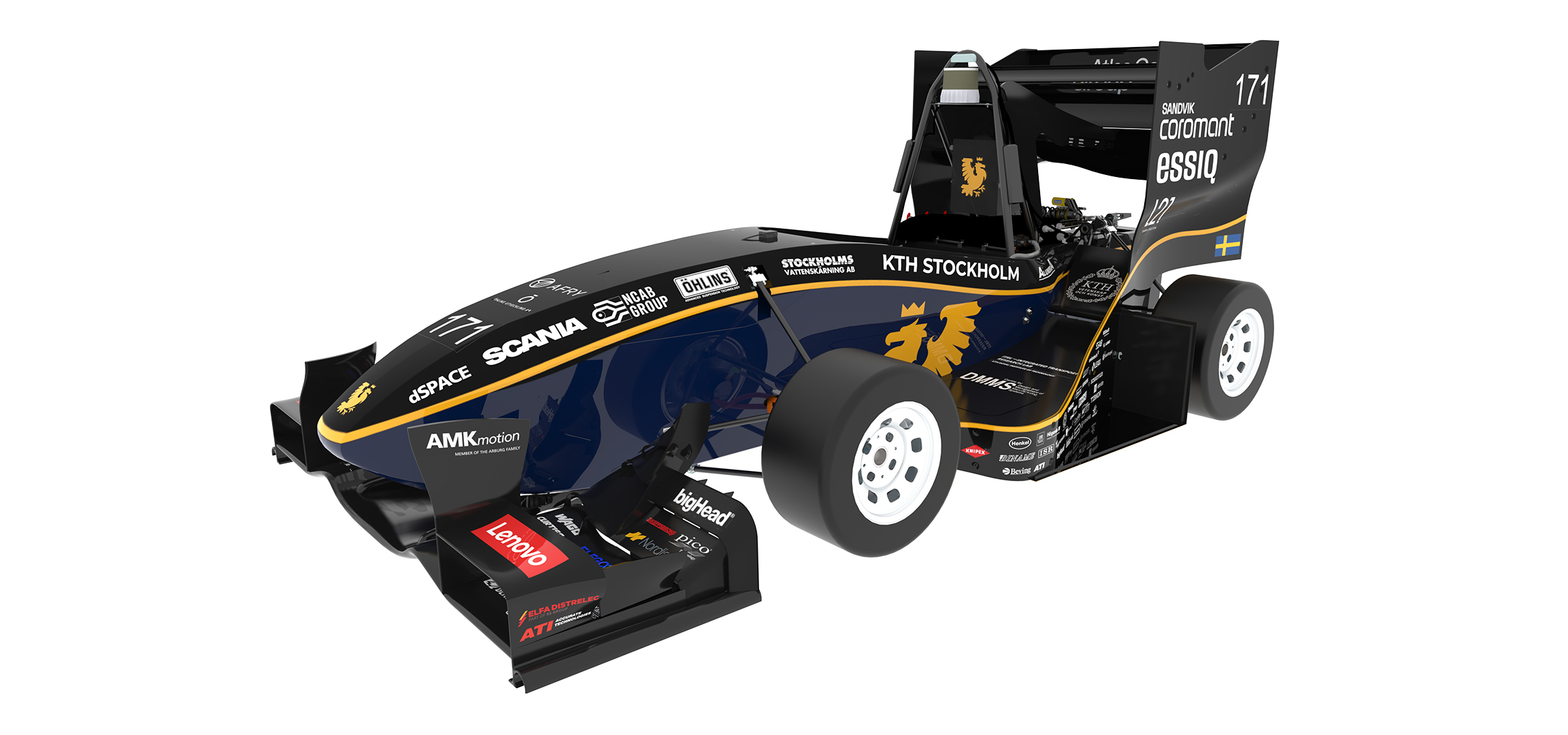
DeV19 is the next evolutionary step in our car development journey. It combines years of accumulated knowledge with a refined aerodynamic package and an improved monocoque. Every subsystem has been carefully engineered with an emphasis on improving reliability, minimizing weight, and optimizing integration. With DeV19, we aim not only to elevate our standards but also to push the boundaries of what we as a team have achieved within Formula Student.
Engineering Design Priorities:
Ambition
Reliability
Independence
Simplicity
Optimization
Teamwork
Car Specifications
General
| Frame Construction | Single piece composite monocoque with integrated front hoop |
|---|---|
| Material | Aluminium honeycomb core with a combination of HM and HS CFRP |
| Overall L | 3030 mm |
| Overall W | 1511 mm |
| Overall H | 1170 mm |
| Wheelbase | 1535 mm |
| Track (Fr) | 1200 mm |
| Track (Rr) | 1200 mm |
| Weight with 68kg driver (Fr) | 149 kg |
| Weight with 68kg driver (Rr) | 149 kg |
| Suspension | Double wishbone. Pushrod actuated. Decoupled heave and roll dampers. |
| Tyres (Fr / Rr) | 191x53 R10, Hoosier R25B / 191x53 R10, Hoosier R25B |
| Wheels (Fr / Rr) | 8.0x10, forged aluminium / 8.0x10, forged aluminium |
| Drive Type | Planetary gearbox in every hub |
| Differential | n/a |
| Cooling | 2 side pod mounted radiators, 1 rear cone mounted radiator, 3 seperate loops. |
| Brake System | 4-Disk system, 190mm outer, 164mm inner diameter, adjustable brake balance |
| Electronics | Traction control, Torque vectoring, Multifunctional Steering Wheel, Data Logger |
Powertrain
| Number of Motors | 4 |
|---|---|
| Motor Location | One in each wheel |
| Max Motor Power (per motor) | 32kW, 32kW, 32kW, 32kW kW |
| Motor Type | AMK DYNASIN DD5-14-10-POW-18600-B5 |
| Max Motor RPM (highest) | 20000 rpm |
| Motor Controller | AMK AMKASYN KW26-S5-FSE-4Q |
| Max System Voltage | 529V V |
| Electrode Materials | LiCoO2 |
| Combined Accumulator Capacity | 6.15kWh kWh |
| Transmission Ratio (Primary) | 1:14 : 1 |
| Transmission Ratio (Secondary) | n/a : 1 |
Driverless System
| Processing unit(s) | Lenovo P360 Ultra |
|---|---|
| Floating Point Operations Per Second of all processing units that are working for the DV system | 1180 GigaFLOPS |
| Power consumption of all processing units that are working for the DV system | 70 W |
| Camera(s) | 0 |
| Radar sensor(s) | 0 |
| Lidar sensor(s) | 1, 200m, ±0.01°, os2-128 |
| Other sensors | 0 |
| Highlights of the DV system | Usage of direct lidar inertial odometry for twist information instead of external IMU and gnss. Decreased sensor dependency with full pipeline only using one lidar sensor. Perception latency of below 2 ms and full pipeline delay of below 25 ms. |
2024
Info
37x
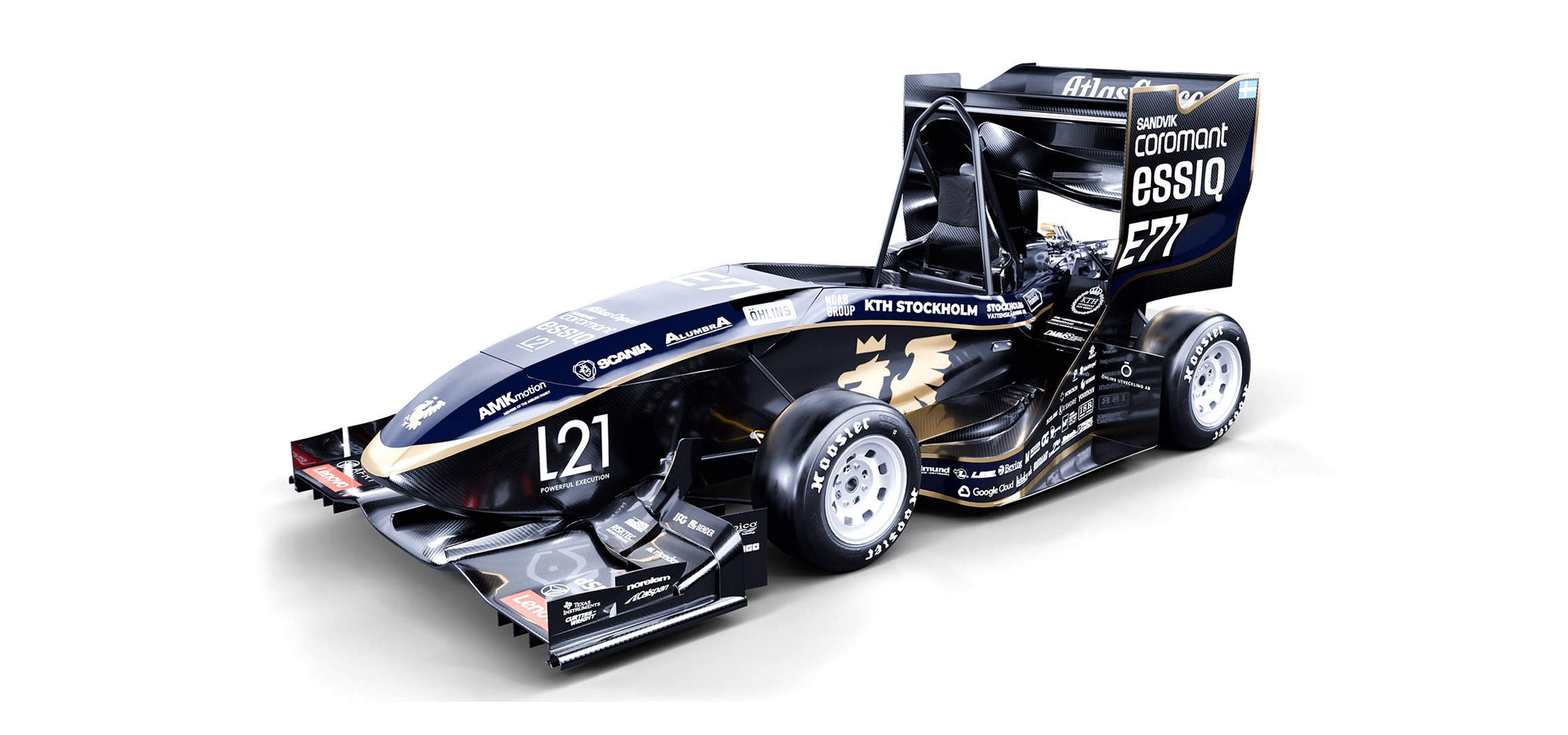
Built upon lessons learnt from Dev17, KTH Formula Student is now back with its next generation human- and autonomous-driven racecar, Dev18. A completely new aero package, combined with refined power delivery system and driver aids that allows for better grip and performance both in driver and driverless mode. With our biggest and strongest team to date we are confident to push our own and formula student boundaries' further.
Engineering Design Priorities:
Ambition
Independence
Innovation
Sustainability
Teamwork
Performance
Car Specifications
General
| Frame Construction | Single piece composite monocoque with integrated front hoop |
|---|---|
| Material | Aluminium honeycomb core with a combination of HM and HS CFRP |
| Overall L | 3030 mm |
| Overall W | 1511 mm |
| Overall H | 1170 mm |
| Wheelbase | 1535 mm |
| Track (Fr) | 1200 mm |
| Track (Rr) | 1200 mm |
| Weight with 68kg driver (Fr) | 142 kg |
| Weight with 68kg driver (Rr) | 142 kg |
| Suspension | Double wishbone. Push rod actuated. Decoupled heave and roll dampers. |
| Tyres (Fr / Rr) | 191x53 R10, Hoosier R25B / 191x53 R10, Hoosier R25B |
| Wheels (Fr / Rr) | 8.0x10, forged aluminium / 8.0x10, forged aluminium |
| Drive Type | Planetary gearbox in every hub |
| Differential | n/a |
| Cooling | 2 side pod mounted radiators, 1 rear cone mounted radiator, 3 seperate loops. |
| Brake System | 4-Disk system, 190mm outer, 164mm inner diameter, adjustable brake balance, brake pedal co |
| Electronics | Traction control, Torque vectoring, ABS, Multifunctional Steering Wheel, Data Logge |
Powertrain
| Number of Motors | 4 |
|---|---|
| Motor Location | One in each wheel |
| Max Motor Power (per motor) | 32kW, 32kW, 32kW, 32kW kW |
| Motor Type | AMK DYNASIN DD5-14-10-POW-18600-B5 |
| Max Motor RPM (highest) | 20000 rpm |
| Motor Controller | AMK AMKASYN KW26-S5-FSE-4Q |
| Max System Voltage | 529V V |
| Electrode Materials | LiCoO2 |
| Combined Accumulator Capacity | 6.15kWh kWh |
| Transmission Ratio (Primary) | 1:14 : 1 |
| Transmission Ratio (Secondary) | n/a : 1 |
Driverless System
| Processing unit(s) | Nvidia Xavier AGX development kit |
|---|---|
| Floating Point Operations Per Second of all processing units that are working for the DV system | 1410 GigaFLOPS |
| Power consumption of all processing units that are working for the DV system | 30 W |
| Camera(s) | 0 |
| Radar sensor(s) | 0 |
| Lidar sensor(s) | 1, 200m, ±0.01°, os2-128 |
| Other sensors | 0 |
| Highlights of the DV system | Usage of direct lidar inertial odometry for twist information instead of external IMU and gnss. Decreased sensor dependancy with full pipeline only using one lidar sensor. Perception latency of below 2 ms and full pipeline delay of below 25 ms. |
2023
Info
38x
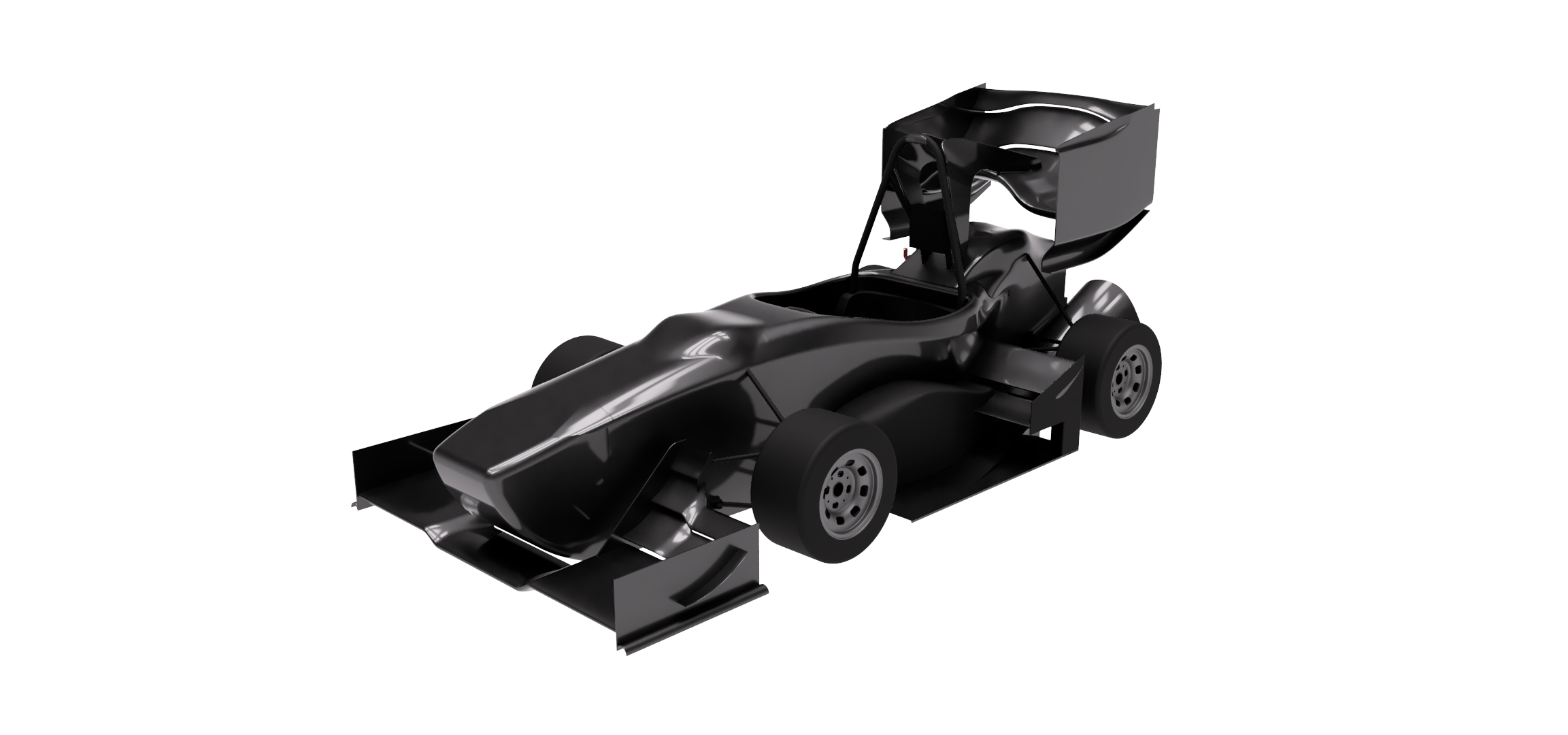
Driven by our core values: innovation, challenge, and teamwork, KTH Formula Student has developed a unique racecar, which is a complete redesign from the previous generations of cars. Not only the looks but also the innovation implemented in the DEv17 means that we are proud to present our first 4wd car with our first carbon fiber monocoque in over a decade! On completing the first generation of this car, the team will focus on improving this concept in the future, as still a lot can be learned!
Engineering Design Priorities:
Carbon fibre monocoque
3x decoupled heave/roll
LV hardware architecture
4WD with hub motors
Ground effect aeropackage
Driverless pipeline
Car Specifications
General
| Frame Construction | Single piece composite monocoque with integrated front hoop |
|---|---|
| Material | Aluminium honeycomb core with a combination of HM and HS CFRP |
| Overall L | 2920 mm |
| Overall W | 1334 mm |
| Overall H | 1193 mm |
| Wheelbase | 1535 mm |
| Track (Fr) | 1120 mm |
| Track (Rr) | 1120 mm |
| Weight with 68kg driver (Fr) | 122 kg |
| Weight with 68kg driver (Rr) | 149 kg |
| Suspension | Double wishbone, pushrod, decoupled heave and roll dampers |
| Tyres (Fr / Rr) | 191x53 R10, Hoosier R25B/191x53 R10, Hoosier R25B |
| Wheels (Fr / Rr) | 8.0x10, 35 mm offset, Al Rim/8.0x10, 35 mm offset, Al Rim |
| Drive Type | 4WD, planetary gearbox in every hub |
| Differential | N/A |
| Cooling | 2 side pod mounted radiators, separate water loops cooling motors and inverters |
| Brake System | 4-disk system, 4 2-piston ISR brake calipers, adjustable brake bias and 2 ISR master cyl. |
| Electronics | Multifunctional steering wheel and dashboard unit, Custom Telemetry System, Modular PCBs |
Powertrain
| Number of Motors | 4 |
|---|---|
| Motor Location | All wheel hubs |
| Max Motor Power (per motor) | 14kW, 14kW, 14kW, 14kW kW |
| Motor Type | water-cooled permanent magnet synchronous |
| Max Motor RPM (highest) | FL,FR: 20.000; RR,RL: 20.000 rpm |
| Motor Controller | AMK AMKASYN KW26-S5-FSE-4Q |
| Max System Voltage | 528V V |
| Electrode Materials | LiCoO2 |
| Combined Accumulator Capacity | 6,15kWh kWh |
| Transmission Ratio (Primary) | 1:1 : 1 |
| Transmission Ratio (Secondary) | 1:14 : 1 |
Driverless System
| Processing unit(s) | dSpace MicroAutobox (ECU), Nvidia Xavier (DV), STM32 microcontrollers |
|---|---|
| Floating Point Operations Per Second of all processing units that are working for the DV system | 705.00 GigaFLOPS |
| Power consumption of all processing units that are working for the DV system | 30.00 W |
| Camera(s) | 1x Stereo labs ZED/stereo camera, 90 degrees & 2 Basler ace2 a2A1920-160ucBAS |
| Radar sensor(s) | N/A |
| Lidar sensor(s) | 1x Ouster 0S1-64 / LiDAR, 180 degrees |
| Other sensors | 1x IMU SBG Ellipse, 1x Wheel Encoder, 1x Steering Angle Encoder |
| Highlights of the DV system | Focus put on system architecture and self-contained modules that interconnect via predefined interfaces. Pipeline using Yolov8, fusion with LiDAR, FastSLAM2.0. Navigation and SLAM development done in FSD simulation where the car models can be easily switched. |
2012
Info
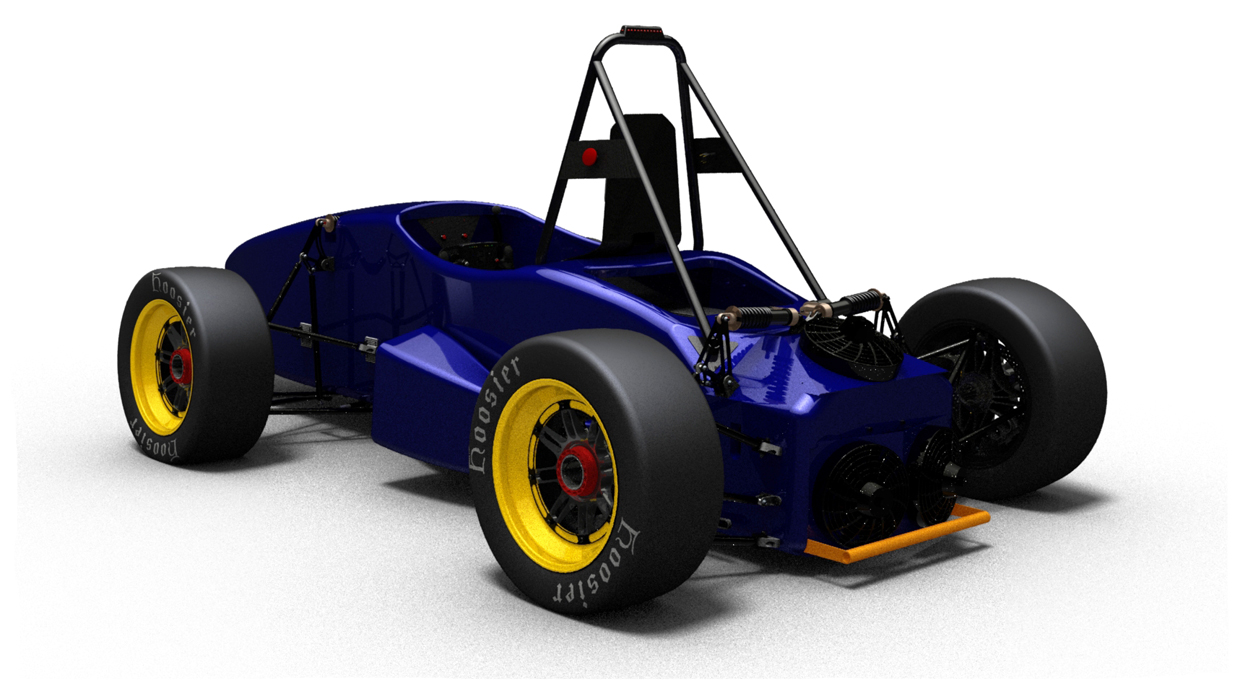
This season KTH Racing, the FS-team of the Royal Institute of Technology Stockholm, designed and engineered its 9th car so far, the R9e. The highly motivated and multinational team from all levels of university education decided to completely start from scratch to set a sustainable basis for the next years. The design goals of the R9e were an agile and easy-to-drive racing car, which was achieved by a low inertia and a low centre of gravity. Contrary to the last year, the electric drivetrain is driven by two AC motors, that deliver 85kW peak power. The purchased build-in motors are integrated in a fully self-developed motor housing that is attached to a self-developed two stage gear box. The powertrain represents a fully integrated and lightweight unit delivering independent torques to each of the rear wheel, managed by a torque vectoring system. KTH Racing want to thank all sponsors and collaborators and is looking forward to having a successful competition on Hockenheim this summer.
Car Specifications
General
| Frame Construction | Tubular steel space frame |
|---|---|
| Material | 1020 steel round tubing 18 to 25mm dia |
| Overall L | 2860 mm |
| Overall W | 1380 mm |
| Overall H | 1010 mm |
| Wheelbase | 1550 mm |
| Track (Fr) | 1160 mm |
| Track (Rr) | 1140 mm |
| Weight with 68kg driver (Fr) | 125 kg |
| Weight with 68kg driver (Rr) | 153 kg |
| Suspension | Double unequal length A-Arm. Push rod actuated horizontally oriented Penske 7800 dampers |
| Tyres (Fr / Rr) | Hoosier 205x55 R13 R25B |
| Wheels (Fr / Rr) | Hoosier 205x55 R13 R25B |
| Drive Type | Two stage spure gear box |
| Differential | Torque vectoring |
| Cooling | Left side pod with electicly controlled water pump |
| Brake System | 4-disc system, ISR 4-pot front, 2-pot rear brake calipers, adjustable brake balance |
| Electronics | Multifunctional Steering Wheel, self designed torque vectoring |
Powertrain
| Number of Motors | 2 |
|---|---|
| Motor Location | Center rear |
| Max Motor Power (per motor) | 52kW per motor kW |
| Motor Type | Siemens 1FE1082-6WP with self designed shafts |
| Max Motor RPM (highest) | 8000 rpm |
| Motor Controller | Infineon hybrid kit 2 |
| Max System Voltage | 420V V |
| Electrode Materials | LiPo |
| Combined Accumulator Capacity | 5,33 kWh |
| Transmission Ratio (Primary) | 5,76 : 1 |
| Transmission Ratio (Secondary) | - |
2011
Info
KTH Racing was founded in 2003 and has built one car per year since then, focusing on the European FS competitions. This year we have a highly motivated multinational team of around 30 students from all 3 levels of university education. Our aim in the concept ideation of our newest car, the KTH R8e, was to have medium power in a low-to-medium weight car to make it both maneuverable and efficient. In the design of specific parts we strive to make them as simple and robust as possible, with the goal to ease manufacturing and servicing as much as possible. What makes our car stand out is the fact that the chassis is built in a modular way to allow us to switch out its rear part in a matter of hours. This added flexibility allows us to run the car as either a internal combustion engine car or an electric car. In this competition we are focusing on the latter application, as we make our debut into the electric class of FS.
Car Specifications
General
| Frame Construction | Front and rear carbon fiber monocoque split behind the firewall |
|---|---|
| Material | 340 gram/sqm pre preg carbon fiber and nomex honeycomb |
| Overall L | 2857 mm |
| Overall W | 1519 mm |
| Overall H | 1094 mm |
| Wheelbase | 1600 mm |
| Track (Fr) | 1272 mm |
| Track (Rr) | 1250 mm |
| Weight with 68kg driver (Fr) | 135 kg |
| Weight with 68kg driver (Rr) | 165 kg |
| Suspension | Double unequal length A-Arm. Push rod actuated horizontally oriented spring and damper |
| Tyres (Fr / Rr) | 205x55 R13 Hoosier R25B / 205x55 R13 Hoosier R25B/ |
| Wheels (Fr / Rr) | 7x13, 0mm offset, 3 pc Al/carbon Rim / 7x13, 0mm offset, 3 pc Al/carbon Rim |
| Drive Type | two 428 chains |
| Differential | n/a |
| Cooling | Air cooled with side scoops and thermostatic controlled electric fans |
| Brake System | 4-Disk system floating rotor, 235 mm outer diam. ISR 4 pistons calipers adjustable brake balance |
| Electronics | Torque vectoring, Race Technology DL-1 data logger, unidirectional radio modem, CAN bus 500Kbit/s |
Powertrain
| Number of Motors | 2 |
|---|---|
| Motor Location | Rear center |
| Max Motor Power (per motor) | 30kW each kW |
| Motor Type | Permanent magnet brushed DC |
| Max Motor RPM (highest) | 6000 rpm |
| Motor Controller | Kelly controls KDC 72601 |
| Max System Voltage | 84 V |
| Electrode Materials | LiPo |
| Combined Accumulator Capacity | 5,9 kWh kWh |
| Transmission Ratio (Primary) | 4.61 : 1 |
| Transmission Ratio (Secondary) | n/a : 1 |
FS past achievements due to World Ranking Data Base
| Date | Event | Teams | Rank | BP | CM | ED | SP | DV SP | AC | DV AC | AX | EN | EF | Pe | Total |
|---|---|---|---|---|---|---|---|---|---|---|---|---|---|---|---|
| 2026.07 | 52 |
36. |
22. |
48. |
41. |
19. |
- |
- |
- |
24. |
- |
- |
-10.00 |
164.71 |
|
| 2026.07 | 21 |
12. |
2. |
13. |
12. |
- |
- |
- |
- |
- |
- |
- |
-20.00 |
196.00 |
|
| 2025.08 | 84 |
49. |
11. |
47. |
49. |
50. |
- |
32. |
- |
38. |
28. |
- |
-10.00 |
218.21 |
|
| 2025.07 | 40 |
32. |
14. |
17. |
36. |
- |
- |
- |
- |
- |
- |
- |
0.00 |
214.20 |
|
| 2024.08 | 79 |
60. |
9. |
54. |
29. |
- |
- |
- |
- |
- |
- |
- |
-30.00 |
178.78 |
|
| 2024.07 | 38 |
35. |
- |
17. |
28. |
- |
- |
- |
- |
- |
- |
- |
0.00 |
148.50 |
|
| 2023.08 | 70 |
54. |
63. |
51. |
30. |
- |
- |
- |
- |
- |
- |
- |
0.00 |
178.16 |
|
| 2023.07 | 60 |
32. |
41. |
28. |
5. |
- |
- |
- |
- |
- |
- |
- |
0.00 |
218.30 |
|
| 2019.07 | 25 |
14. |
5. |
14. |
16. |
- |
- |
- |
- |
- |
- |
- |
0.00 |
220.45 |
|
| 2018.07 | 70 |
53. |
46. |
55. |
44. |
- |
- |
- |
- |
- |
- |
- |
-10.00 |
127.80 |
|
| 2017.07 | 62 |
45. |
53. |
41. |
24. |
- |
- |
- |
- |
- |
45. |
- |
0.00 |
148.70 |
|
| 2016.07 | 20 |
7. |
13. |
8. |
12. |
9. |
- |
9. |
- |
6. |
8. |
- |
0.00 |
363.98 |
|
| 2015.07 | 92 |
31. |
63. |
29. |
57. |
32. |
- |
- |
- |
41. |
23. |
1. |
0.00 |
343.60 |
|
| 2013.08 | 39 |
37. |
18. |
30. |
35. |
- |
- |
- |
- |
- |
- |
- |
0.00 |
150.78 |
|
| 2012.08 | 32 |
30. |
24. |
28. |
29. |
- |
- |
- |
- |
- |
- |
- |
0.00 |
150.08 |
|
| 2011.08 | 28 |
23. |
15. |
21. |
20. |
- |
- |
- |
- |
- |
- |
- |
-5.00 |
156.52 |
|
| x 16 | |||||||||||||||