
Team Details
BME Formula Racing Team (FSE)
| University | Budapest University of Technology and Economics
HU Budapest TU short 139 |
|---|---|
| Location | Budapest, Hungary |
| Homepage | http://frt.bme.hu/ |
| Social Media | |
| CV Team | BME Motorsport |
| DV Team | BME FRT Driverless |
| Short Link | tid.fsg.one/395 |
Past Events
2026
Info
65x
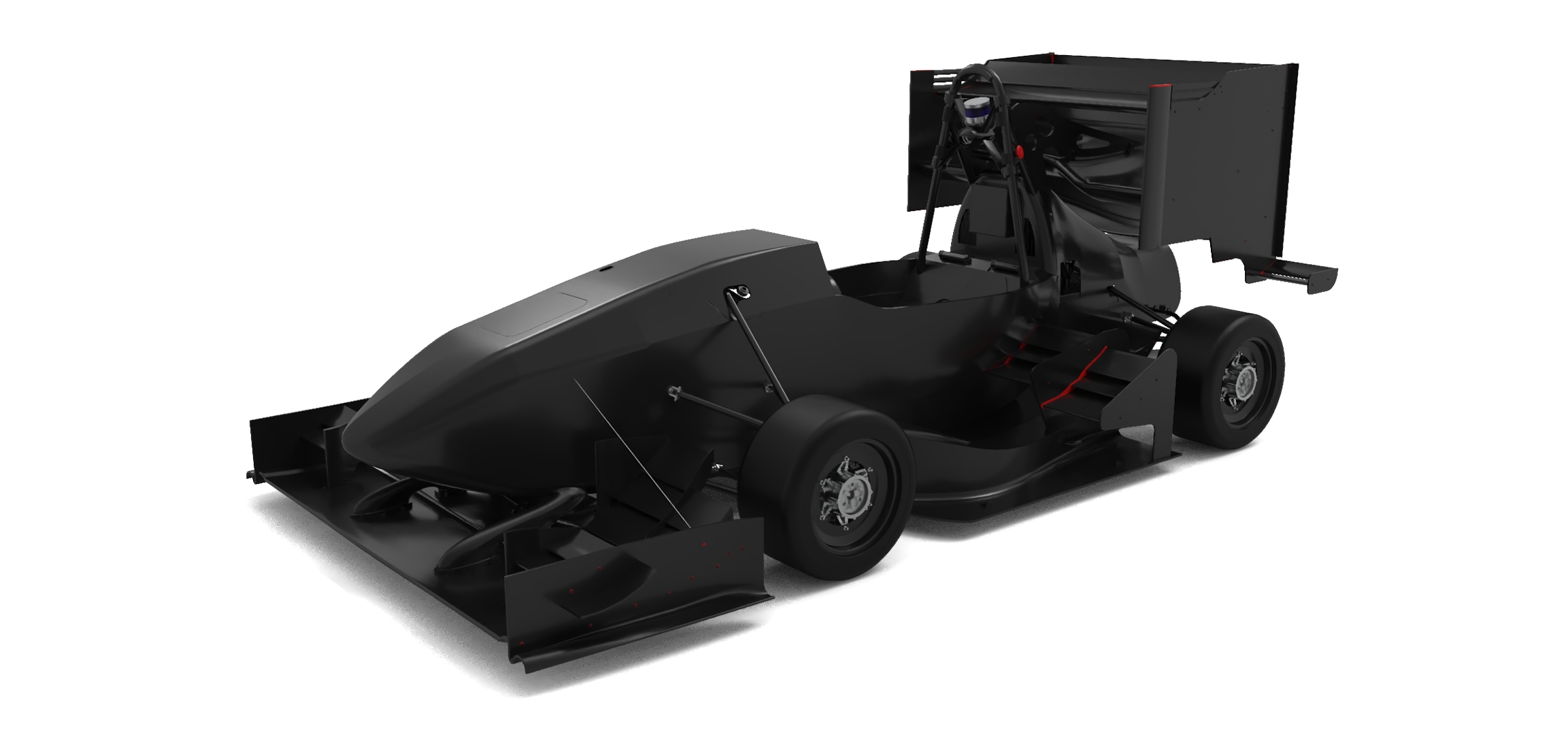
The team was founded in 2007 at TU Budapest with the purpose of participating in the international Formula Student series. We are proud to be the pioneers of Hungary’s FS teams. Since 2011 we have been the first team in Hungary to race in the electric category and the only one building driverless cars. Building EV-DV vehicles since 2022, our latest car reflects years of technical progress and our drive for higher efficiency, reliability and on-track performance.
Engineering Design Priorities:
Feasibility
Reliability
Performance
Energy efficiency
Mass
Manufacturability
2025
Info
3x
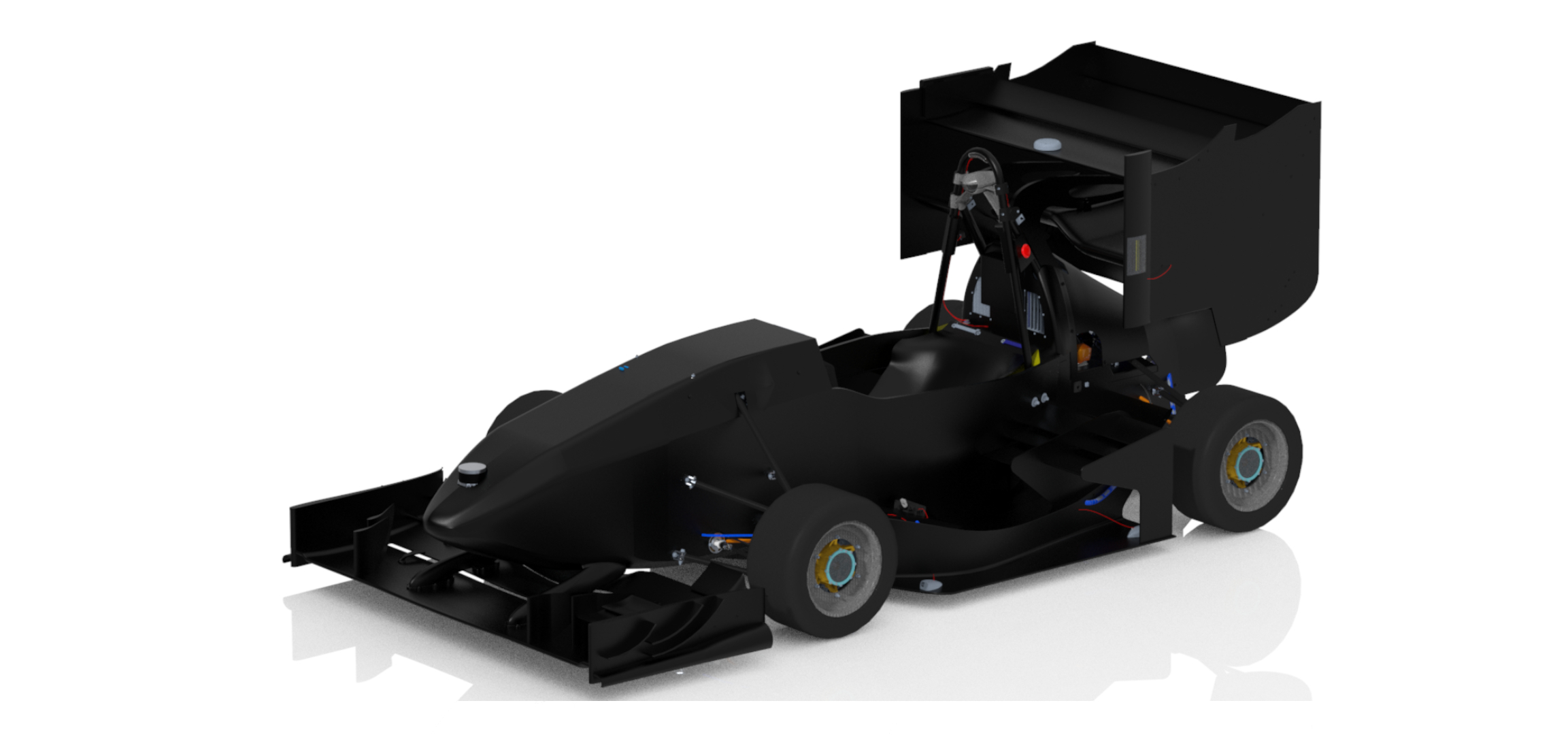
The team was founded in 2007 at TU Budapest with the purpose of participating in the international Formula Student series. We are proud to be the pioneers of Hungary’s FS teams. Since 2011 we have been the first team in Hungary to race in the electric category and the only one building driverless cars. We are making a comeback to FSG after 2023 with a completely redesigned vehicle aiming for the podium once again. Our motto for the season: Keep gambling.
Engineering Design Priorities:
Understanding
Reliability
Knowledge transfer
Performance
Engineering attitude
#keepgambling
Car Specifications
General
| Frame Construction | Monocoque with sandwich structure |
|---|---|
| Material | Sandwich str. carbon-kevlar reinforced plastic + Al honeycomb,front hoop:Al 6060 |
| Overall L | 2883 mm |
| Overall W | 1535 mm |
| Overall H | 1175 mm |
| Wheelbase | 1540 mm |
| Track (Fr) | 1220 mm |
| Track (Rr) | 1210 mm |
| Weight with 68kg driver (Fr) | 125 kg |
| Weight with 68kg driver (Rr) | 119 kg |
| Suspension | Double unequal A-arms, push rod-actuated spring-damper system via rocker, abjustable ARB |
| Tyres (Fr / Rr) | 16x7.5-10 Hoosier LC0 |
| Wheels (Fr / Rr) | 7.25x10, et +54mm, 1 pc cfrp, 850g |
| Drive Type | Coupled planetary gear system |
| Differential | Programmable electronic torque vectoring |
| Cooling | Water cooling, 1 circuit for motors, 1 for inverters |
| Brake System | 4-disk system, adjustable brake balance and integrated brake actuator |
| Electronics | Radio telemetry broadcast on local network, parameter adj. from steering wheel |
Powertrain
| Number of Motors | 4 |
|---|---|
| Motor Location | Hub motors in each wheel |
| Max Motor Power (per motor) | 4x35kW kW |
| Motor Type | AMK DD5-14-10-POW-18600-B5 |
| Max Motor RPM (highest) | 21500 rpm |
| Motor Controller | self-designed |
| Max System Voltage | 600V V |
| Electrode Materials | LiCoO2 |
| Combined Accumulator Capacity | 6.92kWh kWh |
| Transmission Ratio (Primary) | 1:14 : 1 |
| Transmission Ratio (Secondary) | n/a : 1 |
Driverless System
| Processing unit(s) | Intel Core Ultra 7 165H, Nvidia RTX A500 |
|---|---|
| Floating Point Operations Per Second of all processing units that are working for the DV system | 285 GigaFLOPS |
| Power consumption of all processing units that are working for the DV system | 200 W |
| Camera(s) | 1 of Basler acA2040-120uc (color) with a 3.5mm f/2 lens |
| Radar sensor(s) | 0 |
| Lidar sensor(s) | 1, 50 m, 180°, Ouster OS1, channels: 32, spacing: gradient |
| Other sensors | GNSS sensor with 2 antennas |
| Highlights of the DV system | Our DV system features camera-LiDAR fusion for robust cone detection, enhanced state estimation through GNSS-LiDAR odometry fusion, and improved motion planning using a GGV diagram and motor characteristics. We eliminated acceleration oscillations and implemented a nonlinear MPC for precise path tracking. |
2023
Info
105x
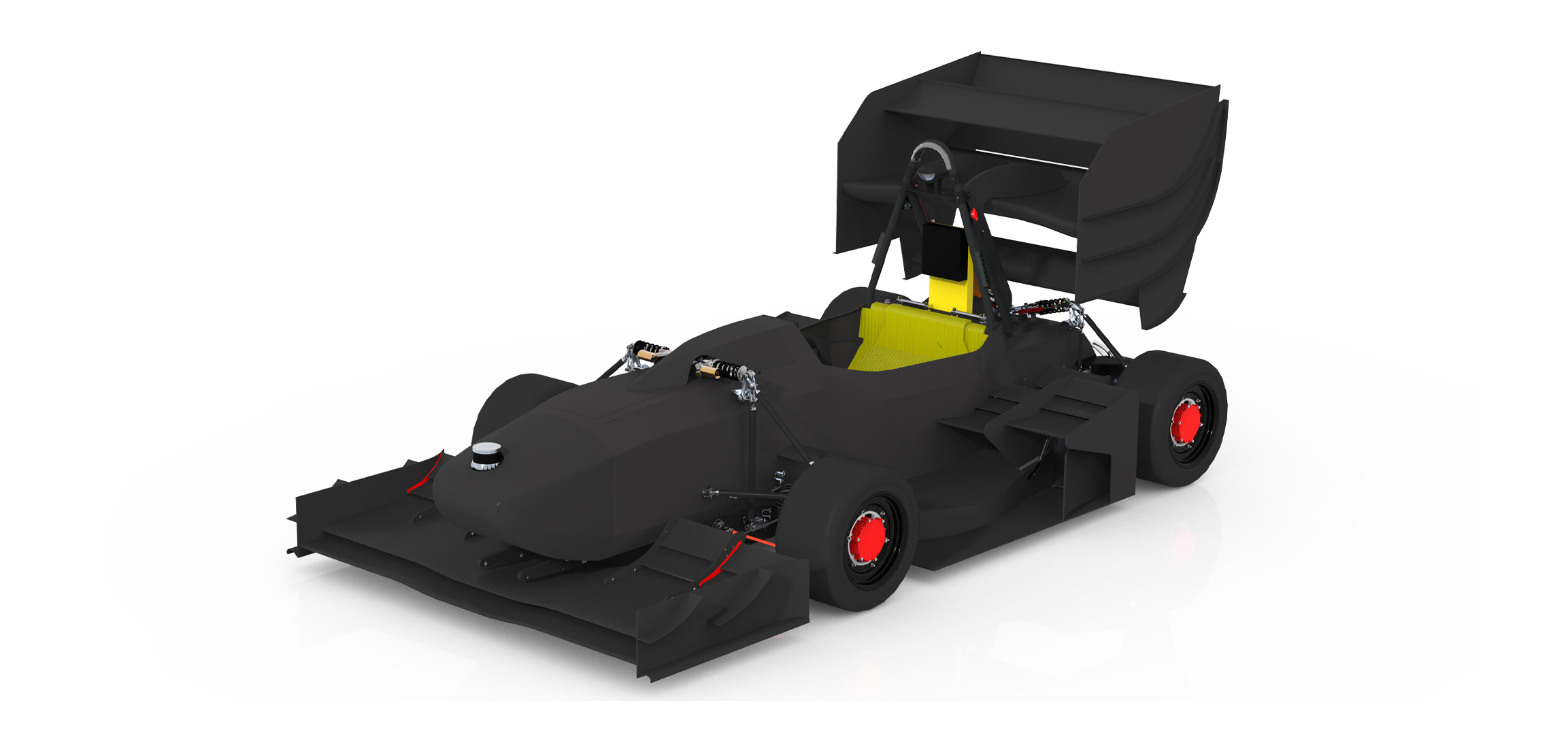
The team was founded in 2007 at TU Budapest with the purpose of participating in the international Formula Student series. We are proud to be the pioneers of Hungary’s FS teams. Since 2011 we have been the first and only team in Hungary to race in the more environmentally friendly electric category, being the leaders in constructing driverless FS cars as well. Last year we had one of our strongest season, finishing on the podium in FSG, with significant improvements to our driverless system.
Engineering Design Priorities:
EVDV System
Reliability
Safety
Simple, but fast
Cost-Efficient
Weight Reduction
Car Specifications
General
| Frame Construction | Carbon composite sandwich strucure with steel main hoop and aluminium front hoop |
|---|---|
| Material | CFRP and aluminium honeycomb |
| Overall L | 2856 mm |
| Overall W | 1440 mm |
| Overall H | 1189 mm |
| Wheelbase | 1540 mm |
| Track (Fr) | 1220 mm |
| Track (Rr) | 1200 mm |
| Weight with 68kg driver (Fr) | 118 kg |
| Weight with 68kg driver (Rr) | 138 kg |
| Suspension | Double unequal A-arm. Pushrod actuated spring and 4-way adjustable damper. |
| Tyres (Fr / Rr) | Hoosier 16x7.5-10 R20, Hoosier 16x7.5-10 R20 |
| Wheels (Fr / Rr) | 7.25x10, +59 mm offset, 2 pc Al rim / 7.25x10, +59 mm offset, 2 pc Al rim |
| Drive Type | Coupled planetary gear system |
| Differential | Real-time software torque vectoring based on sensor data and vehicle model |
| Cooling | 2 circuits for motors, 2 for inverters with self designed radiators and electric fans |
| Brake System | 4-disk system, adjustable brake balance and integrated brake actuator |
| Electronics | Radio-based telemetry, parameter adj. from steering wheel, LVS supplied by DCDC converter. |
Powertrain
| Number of Motors | 4 |
|---|---|
| Motor Location | Hub motors in each wheel |
| Max Motor Power (per motor) | 4x35kW kW |
| Motor Type | AMK DD5-14-10-POW-18600-B5 |
| Max Motor RPM (highest) | 21500 rpm |
| Motor Controller | AMK KW26-S5-FSE-4Q |
| Max System Voltage | 600V V |
| Electrode Materials | LiCoO2 |
| Combined Accumulator Capacity | 7.03kWh kWh |
| Transmission Ratio (Primary) | 1:13.7 : 1 |
| Transmission Ratio (Secondary) | n/a : 1 |
Driverless System
| Processing unit(s) | Nvidia Jetson AGX Xavier |
|---|---|
| Floating Point Operations Per Second of all processing units that are working for the DV system | 705 GigaFLOPS |
| Power consumption of all processing units that are working for the DV system | 60 W |
| Camera(s) | 1x Basler ac2440-75uc, 100° horizontal FOV, used at 20Hz through USB |
| Radar sensor(s) | n/a |
| Lidar sensor(s) | 1x Ouster OS1-32, 100° horizontal FOV used |
| Other sensors | 1x Vectornav VN-300 DUAL GNSS/INS, used for velocity estimation and positioning |
| Highlights of the DV system | Robust perception pipeline based on a Camera-LiDAR sensor fusion algorithm using a motion compensated and ground filtered pointcloud. A particle filter based FastSLAM algorithm with GraphSLAM optimization upon loop closure. Online trajectory planning and velocity profile fitting with a non linear control system using the Hoffmann-Stanley algorithm. |
2022
Info
101x
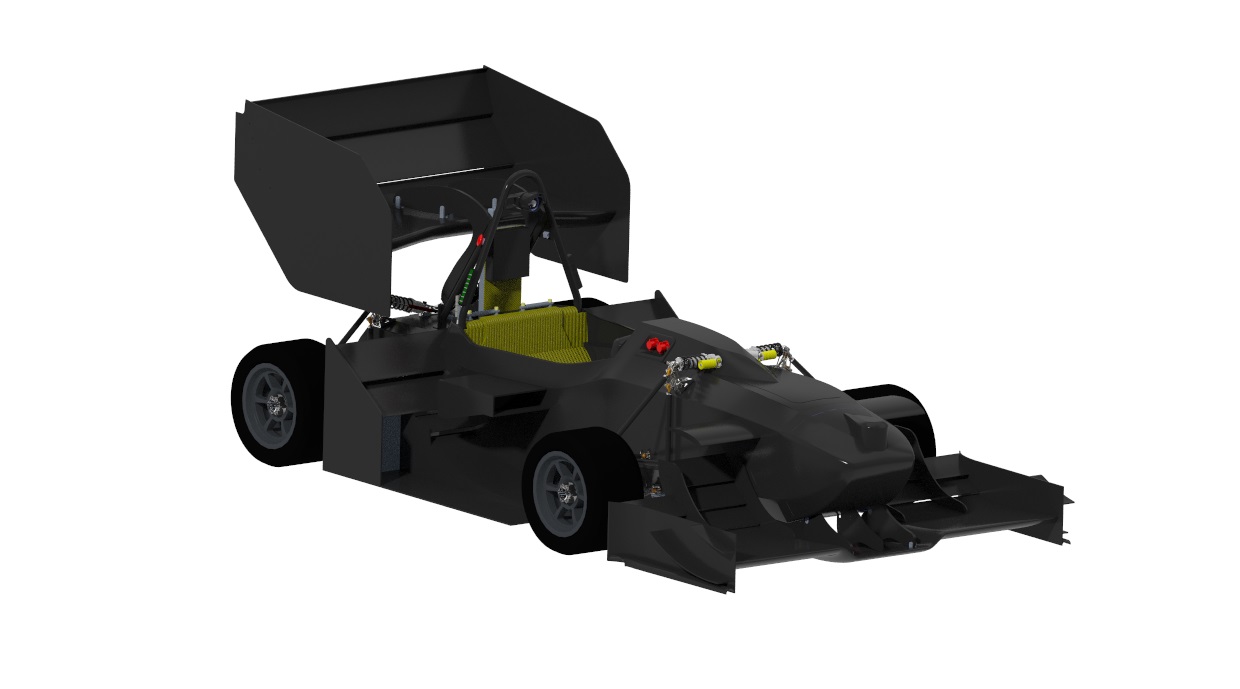
BME Formula Racing Team is the pioneer of the hungarian FS teams. At the beginning, we made cars powered by gasoline, but in 2011 we were the first team in the country to switch to the more innovative electric category. The successful 2021 season - where we achieved our best overall score so far - built a great foundation for this year. This year we built an EV/DV car to compete fully under the FSG ruleset, to be able to race against the very bests and to collect throphies instead of cones.
Engineering Design Priorities:
reliability
safety
keep it simple
driverless
weight reduction
maintainability
Car Specifications
General
| Frame Construction | Single piece CFRP monocoque |
|---|---|
| Material | Sandwich panel: prepreg layers with Al honeycomb and CFRP inserts |
| Overall L | 2871 mm |
| Overall W | 1440 mm |
| Overall H | 1110 mm |
| Wheelbase | 1540 mm |
| Track (Fr) | 1200 mm |
| Track (Rr) | 1160 mm |
| Weight with 68kg driver (Fr) | 123 kg |
| Weight with 68kg driver (Rr) | 137 kg |
| Suspension | Double unequal A-arms, pushrod-actuated spring-damper system with adjustable ARB |
| Tyres (Fr / Rr) | 16.0x7.5-10, Hoosier R20 / 16.0x7.5-10, Hoosier R20 |
| Wheels (Fr / Rr) | 10x7, ET +22 OZ Racing Magnesium / 10x7, ET +22 OZ Racing Magnesium |
| Drive Type | Coupled planetary gear system |
| Differential | Programmable electronic torque vectoring |
| Cooling | 4 separate circuits for motors, motor controller and DCDC converter with self designed radiators |
| Brake System | 4-disk system, self developed rotors with 154 mm diameter, adjustable brake balance |
| Electronics | LV system powered via DCDC converter, self designed telemetry system, slip and yaw control |
Powertrain
| Number of Motors | 4 |
|---|---|
| Motor Location | 4 outboard motors |
| Max Motor Power (per motor) | 35 kW / motor kW |
| Motor Type | AMK/DD5-14 10 POW 18600 |
| Max Motor RPM (highest) | 20000 rpm |
| Motor Controller | AMK KW26-S5-FSE-4Q |
| Max System Voltage | 600 V |
| Electrode Materials | LiCoO2 |
| Combined Accumulator Capacity | 7.03kWh kWh |
| Transmission Ratio (Primary) | 1:16 : 1 |
| Transmission Ratio (Secondary) | - |
Driverless System
| Processing unit(s) | NVIDIA Jetson AGX Xavier, TI TMS570LS1227 |
|---|---|
| Floating Point Operations Per Second of all processing units that are working for the DV system | 705 GigaFLOPS |
| Power consumption of all processing units that are working for the DV system | 30 W |
| Camera(s) | 1x Basler acA2040-120uc |
| Radar sensor(s) | - |
| Lidar sensor(s) | 1x Ouster OS1-32, vertical FOV: 29°, horizontal FOV used: 180°, 100 m range |
| Other sensors | 1x Vectornav VN-300 DUAL GNSS/INS, used for velocity estimation and positioning |
| Highlights of the DV system | Robust perception pipeline based on a Camera-LiDAR sensor fusion algorithm using a motion compensated and ground filtered pointcloud. A particle filter based FastSLAM algorithm with GraphSLAM optimization upon loop closure. Online trajectory planning and velocity profile fitting with a non linear control system using the Hoffmann-Stanley algorithm. |
2014
Info
1x
The BME Formula Racing Team from TU Budapest was established in 2007 by several enthusiastic master and postgraduate students. This season though, the team operates with 95 active members. In 2014 the FRT enters the competition with its 9th car, the FREC-004, which is also the 4th electric racecar built by the team. BME FRT’s goal for this season is to be a mentionable competitor against the best teams of the world at FS Germany and aims to reach the top 10 in the World Ranking.
Engineering Design Priorities:
reliability
adjustability
maneuverability
innovation
wheight reduction
aesthetics
Car Specifications
General
| Frame Construction | CFRP sandwich monocoque with tubular steel space frame mounted on the rear |
|---|---|
| Material | CFRP & S235 JR |
| Overall L | 3165 mm |
| Overall W | 1446 mm |
| Overall H | 1260 mm |
| Wheelbase | 1600 mm |
| Track (Fr) | 1220 mm |
| Track (Rr) | 1150 mm |
| Weight with 68kg driver (Fr) | 165 kg |
| Weight with 68kg driver (Rr) | 165 kg |
| Suspension | Double unequal length A-Arm, pull-rod (front) and push-rod (rear) actuated spring and damper unit |
| Tyres (Fr / Rr) | Hoosier 20.0 x 7.5-13 R25B |
| Wheels (Fr / Rr) | 8x13 |
| Drive Type | Independent chain drive |
| Differential | Electronic differential |
| Cooling | Liquied cooled motor and motor controller, radiator moundted in the left sidepod |
| Brake System | Custom heat treaded rotors, AP Racing Calipers, adjustable brake balance |
| Electronics | CAD designed wire harness, live telemetry via WiFi from 300m distance, self-developed LV units |
Powertrain
| Number of Motors | 2 |
|---|---|
| Motor Location | Rear, inside the chassis |
| Max Motor Power (per motor) | 100 [kW] kW |
| Motor Type | Enstroj - EMRAX 228 High Voltage LC |
| Max Motor RPM (highest) | 4000 [1/min] rpm |
| Motor Controller | Piktronik SAC-41 |
| Max System Voltage | 306. V |
| Electrode Materials | LiFePO4 |
| Combined Accumulator Capacity | 5.6 kWh kWh |
| Transmission Ratio (Primary) | 1:2,045 : 1 |
| Transmission Ratio (Secondary) | n/a : 1 |
FS past achievements due to World Ranking Data Base
| Date | Event | Teams | Rank | BP | CM | ED | SP | DV SP | AC | DV AC | AX | EN | EF | Pe | Total |
|---|---|---|---|---|---|---|---|---|---|---|---|---|---|---|---|
| 2026.08 | 80 |
39. |
36. |
32. |
25. |
38. |
- |
30. |
- |
37. |
- |
- |
0.00 |
259.75 |
|
| 2026.08 | 38 |
20. |
22. |
16. |
3. |
- |
- |
- |
- |
- |
- |
- |
0.00 |
251.70 |
|
| 2025.08 | 84 |
83. |
- |
- |
- |
- |
- |
- |
- |
- |
- |
- |
-20.00 |
0.00 |
|
| 2024.07 | 31 |
12. |
7. |
13. |
16. |
6. |
- |
8. |
- |
6. |
- |
- |
-30.00 |
335.08 |
|
| 2023.08 | 70 |
17. |
53. |
61. |
22. |
4. |
8. |
14. |
- |
8. |
- |
- |
0.00 |
373.27 |
|
| 2023.08 | 31 |
4. |
24. |
25. |
9. |
5. |
- |
10. |
- |
9. |
1. |
9. |
0.00 |
710.39 |
|
| 2023.07 | 34 |
4. |
22. |
26. |
17. |
7. |
- |
10. |
- |
- |
3. |
4. |
-10.00 |
607.40 |
|
| 2022.08 | 63 |
3. |
31. |
34. |
30. |
7. |
5. |
8. |
7. |
12. |
6. |
10. |
0.00 |
592.89 |
|
| 2022.08 | 33 |
4. |
28. |
2. |
7. |
5. |
- |
5. |
- |
4. |
4. |
4. |
0.00 |
594.06 |
|
| 2022.07 | 30 |
9. |
23. |
8. |
15. |
3. |
- |
6. |
- |
- |
3. |
- |
-40.00 |
319.40 |
|
| 2021.08 | 26 |
3. |
10. |
12. |
5. |
3. |
- |
6. |
- |
2. |
2. |
8. |
0.00 |
841.03 |
|
| 2021.07 | 27 |
4. |
7. |
20. |
15. |
1. |
- |
6. |
- |
5. |
3. |
4. |
-10.00 |
742.20 |
|
| 2019.08 | 39 |
9. |
36. |
26. |
18. |
12. |
- |
12. |
- |
11. |
7. |
10. |
0.00 |
521.70 |
|
| 2019.07 | 25 |
6. |
24. |
13. |
4. |
- |
- |
- |
- |
5. |
4. |
4. |
-60.00 |
387.56 |
|
| 2019.07 | 20 |
18. |
15. |
18. |
14. |
- |
- |
- |
- |
- |
- |
- |
0.00 |
213.63 |
|
| 2018.07 | 16 |
10. |
11. |
10. |
8. |
- |
- |
- |
- |
- |
- |
- |
0.00 |
198.89 |
|
| 2017.08 | 14 |
4. |
7. |
4. |
5. |
4. |
- |
4. |
- |
6. |
4. |
1. |
0.00 |
761.00 |
|
| 2017.07 | 38 |
9. |
22. |
8. |
23. |
10. |
- |
6. |
- |
13. |
10. |
9. |
0.00 |
649.80 |
|
| 2016.07 | 28 |
3. |
11. |
9. |
3. |
2. |
- |
1. |
- |
3. |
7. |
2. |
0.00 |
832.30 |
|
| 2016.07 | 106 |
8. |
49. |
37. |
7. |
22. |
- |
- |
- |
16. |
14. |
2. |
0.00 |
631.50 |
|
| 2015.08 | 37 |
30. |
23. |
27. |
22. |
- |
- |
- |
- |
- |
- |
- |
0.00 |
199.31 |
|
| 2014.08 | 38 |
27. |
31. |
13. |
21. |
19. |
- |
17. |
- |
17. |
29. |
- |
0.00 |
382.46 |
|
| 2014.08 | 39 |
34. |
29. |
18. |
26. |
- |
- |
- |
- |
- |
- |
- |
0.00 |
186.16 |
|
| 2013.08 | 37 |
9. |
16. |
5. |
1. |
12. |
- |
16. |
- |
14. |
11. |
1. |
0.00 |
742.40 |
|
| 2012.08 | 39 |
24. |
31. |
17. |
22. |
29. |
- |
14. |
- |
20. |
- |
- |
0.00 |
386.10 |
|
| 2012.07 | 97 |
59. |
86. |
19. |
20. |
- |
- |
- |
- |
- |
- |
- |
-20.00 |
183.00 |
|
| x 26 | |||||||||||||||