
Team Details
UGent Racing
| University | Ghent University
BE Ghent U short 1339 |
|---|---|
| Location | Ghent, Belgium |
| Homepage | https://www.ugentracing.be |
| Social Media | |
| DV Team | UGent Racing |
| Short Link | tid.fsg.one/1292 |
Past Events
2026
Info
81x
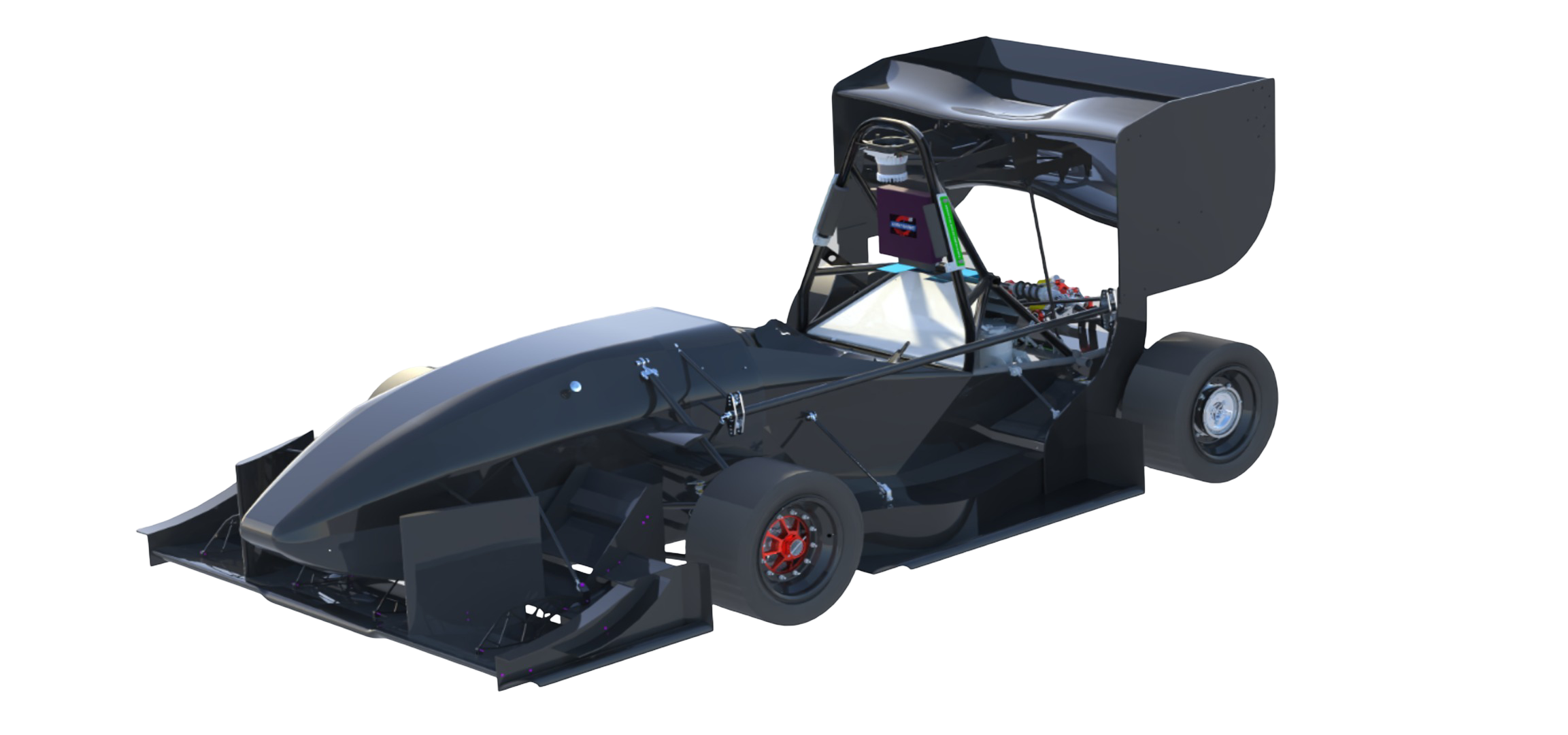
UGent Racing is a group of students from Ghent University who voluntarily decided that building an electric driverless race car alongside university deadlines sounded like a good idea. Somewhere between CAD models, composite dust, sponsor meetings, and “quick fixes” that somehow took six hours, we created another Formula Student car ready for competition. For us, Formula Student is fierce competition on track, followed by teams helping each other out in the pitlane minutes later.
Engineering Design Priorities:
In-wheel integration
Durability
Weight reduction
Off-car validation
Car Specifications
General
| Frame Construction | TIG-welded steel tubular spaceframe |
|---|---|
| Material | E235 C+ |
| Overall L | 2867 mm |
| Overall W | 1531 mm |
| Overall H | 1080 mm |
| Wheelbase | 1535 mm |
| Track (Fr) | 1320 mm |
| Track (Rr) | 1300 mm |
| Weight with 68kg driver (Fr) | 150 kg |
| Weight with 68kg driver (Rr) | 148 kg |
| Suspension | Double A-arm with push rod into decoupled roll-heave spring assembly |
| Tyres (Fr / Rr) | Hoosier 16.0x7.0-10” (Fr & Rr) |
| Wheels (Fr / Rr) | 7x10, carbon fibre Rim |
| Drive Type | Compound planetary gearbox, Ratio: 12.83 |
| Differential | N/A. Each wheel is powered separately |
| Cooling | Single loop with dual pump and T junction. Each section has a 140mm radiator and fan rearmounted |
| Brake System | 4-Disk hydraulic system, adjustable brake balance |
| Electronics | Custom from-scratch BMS, Batteryless system with PDU, Improved waterproof wiring harness |
Powertrain
| Number of Motors | 2 |
|---|---|
| Motor Location | Rear Right, Rear Left |
| Max Motor Power (per motor) | 35 kW |
| Motor Type | RR, RL: Radial‑flux internal‑rotor Fischer |
| Max Motor RPM (highest) | 11600 rpm |
| Motor Controller | Silicon-Carbide inverter from DTI |
| Max System Voltage | 588 V |
| Electrode Materials | LiCoO2 |
| Combined Accumulator Capacity | 6.76 kWh |
| Transmission Ratio (Primary) | 12.83 : 1 |
| Transmission Ratio (Secondary) | - |
Driverless System
| Processing unit(s) | Multiple Espressif ESP32, Intel Core i7-14700T |
|---|---|
| Floating Point Operations Per Second of all processing units that are working for the DV system | 79.6 GigaFLOPS |
| Power consumption of all processing units that are working for the DV system | 106 W |
| Camera(s) | - |
| Radar sensor(s) | N/A |
| Lidar sensor(s) | 1, 45 degrees, Ouster OS1-128 rev7 (128 channels) |
| Other sensors | N/A |
| Highlights of the DV system | - ROS1 -> ROS2, totally new architecture - MPC - Dynamic velocity - New perceptionpipeline - MCL + graphslam -> 2 mode graphslam - Custom autonomous testplatform - Full new hardware set - Custom LiDARsim - Validation, integration + unit tests - Built simulator on 3 different platforms |
2025
Info
78x
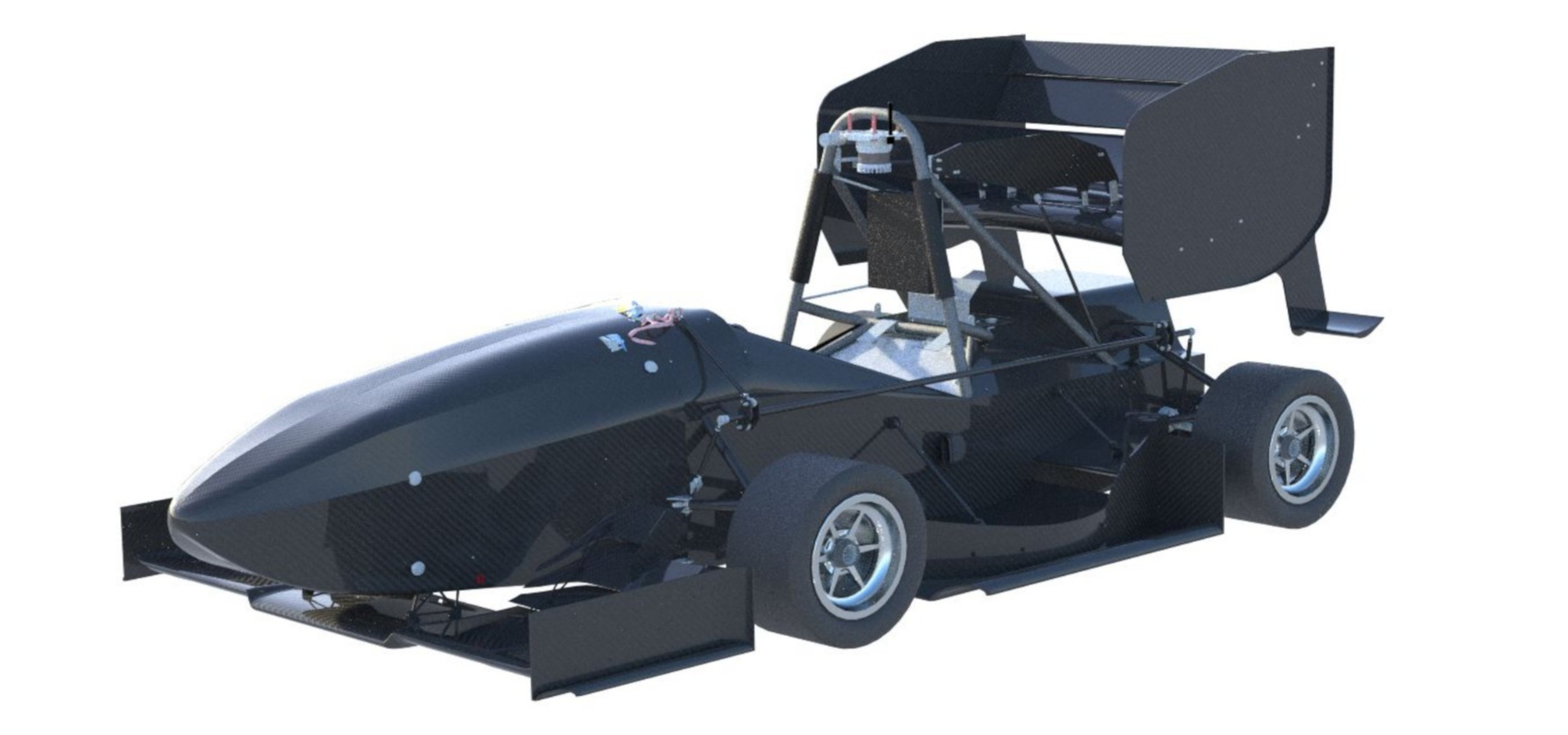
UGent Racing is the youngest Formula Student Team from Belgium, representing Ghent University since 2021. In these past few years, our part-time students have already managed to deliver driving cars with many innovative features - let the "interlink" be testimony of that. With these advancements, we aim to create a competitive package in the coming years: see you on the podium ; )
Engineering Design Priorities:
WeightSaving
ReliableElectronics
LeveragingSimulations
AutonomousPerformance
Car Specifications
General
| Frame Construction | Steel Spaceframe |
|---|---|
| Material | E235+C |
| Overall L | 3124 mm |
| Overall W | 1479 mm |
| Overall H | 1199 mm |
| Wheelbase | 1535 mm |
| Track (Fr) | 1300 mm |
| Track (Rr) | 1300 mm |
| Weight with 68kg driver (Fr) | 110 kg |
| Weight with 68kg driver (Rr) | 145 kg |
| Suspension | Double A-Arm. Push rod actuated interlinked decoupled suspension. |
| Tyres (Fr / Rr) | 16.0x7.5-10 |
| Wheels (Fr / Rr) | 10 |
| Drive Type | Tripod |
| Differential | Electronic Differential |
| Cooling | improved flow layout and head pressure, rear mounted dual radiator, TSAC with integrated air ducts |
| Brake System | 4-Disk system, self developed rotors and adjustable brake balance. |
| Electronics | centralized ECU, increased sensors and telemetry, signal filtering, improved dashboard |
Powertrain
| Number of Motors | 2 |
|---|---|
| Motor Location | Rear Right, Rear Left |
| Max Motor Power (per motor) | 86 kW, 86 kW kW |
| Motor Type | Emrax 208 Axial Flux |
| Max Motor RPM (highest) | 7000 rpm |
| Motor Controller | BAMOCAR-PG-D3-700-160-RS |
| Max System Voltage | 588 V |
| Electrode Materials | LiCoO2 (LiPo) |
| Combined Accumulator Capacity | 7.94 kWh kWh |
| Transmission Ratio (Primary) | 4.08 : 1 |
| Transmission Ratio (Secondary) | / : 1 |
Driverless System
| Processing unit(s) | ESP 32 devkitC-V4, IPC with Intel Core i7-10700t for Driverless |
|---|---|
| Floating Point Operations Per Second of all processing units that are working for the DV system | 576 GigaFLOPS |
| Power consumption of all processing units that are working for the DV system | 35 W |
| Camera(s) | 1, Baumer VCXG-25C.I, detection range = 15m, opening angle = 70°, 2.3 MP 53 fps CMOS global shutter |
| Radar sensor(s) | None |
| Lidar sensor(s) | 1, Ouster OS1 128 channels, detection range = 21m, opening angle = 360° x 45°, multi-beam flash |
| Other sensors | 1, VectorNav VN-300, Dual GNSS/INS |
| Highlights of the DV system | Camera-LiDAR sensor fusion for cone detection, using hardware triggers for synchronization and precise extrinsic calibration. GraphSLAM & Monte Carlo localization for SLAM. Planning using triangulation and boundary-based planning depending on the event. Control with pure pursuit or stanley control also depending on the event. MPC in development. |
2024
Info
36x
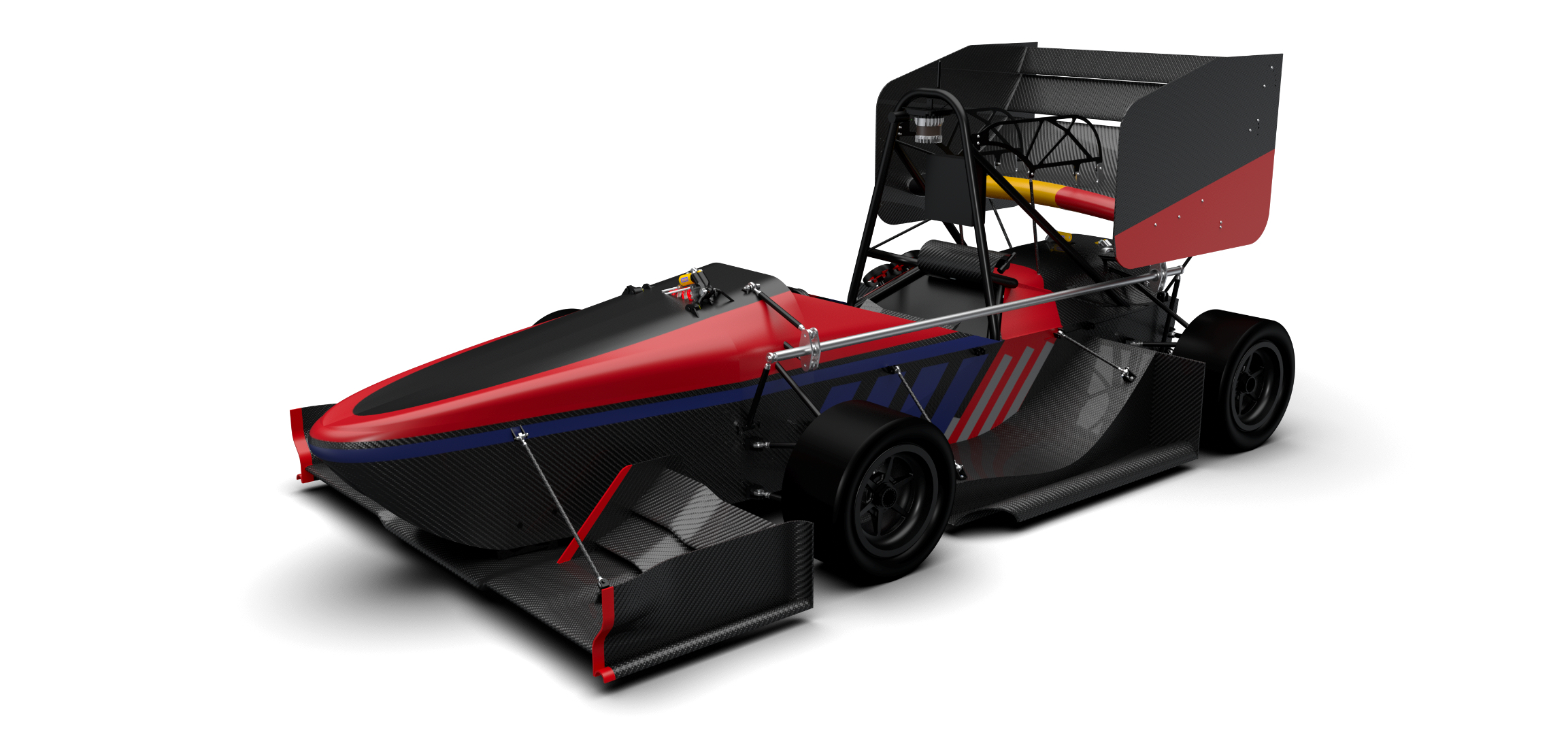
UGent Racing is the official Formula Student Team of Ghent University, Belgium. This year, our team consists of 80 students who partake in the project part time. Despite our youth, we are driven by ambition, aspiring to establish ourselves as a recognized entity in the Formula Student community. This season, we proudly unveil our fourth generation race car, Orion. With Orion, we are aiming to compete in the Driverless Category for the first time. We will participate at FSN, FSCZ and FSG.
Engineering Design Priorities:
Reliability
Driverless Integration
Increased Understanding
Car Specifications
General
| Frame Construction | Steel spaceframe |
|---|---|
| Material | E355+C and E235+C |
| Overall L | 3032 mm |
| Overall W | 1496 mm |
| Overall H | 1177 mm |
| Wheelbase | 1535 mm |
| Track (Fr) | 1300 mm |
| Track (Rr) | 1300 mm |
| Weight with 68kg driver (Fr) | 174 kg |
| Weight with 68kg driver (Rr) | 178 kg |
| Suspension | Double A-arm with push rod into decoupled roll-heave spring assembly |
| Tyres (Fr / Rr) | 191x50 R10 Hoosier R20 / 191x50 R10 Hoosier R20 |
| Wheels (Fr / Rr) | 254 mm radius, 177.8 mm width, +22 mm offset, cast magnesium (front and rear) |
| Drive Type | single stage planetary gearbox |
| Differential | Electronic |
| Cooling | 2x 120x44mm radiator and 2x 120mm electric fan, mounted in rear |
| Brake System | 4 disk system, self developed rotors with 180mm outer diameter, 40CrMnMoS8-6 material |
| Electronics | wiring harness using CPC connectors, dashboard with multifunctional buttons |
Powertrain
| Number of Motors | 2 |
|---|---|
| Motor Location | Rear Left, Rear Right |
| Max Motor Power (per motor) | 40kW, 40kW kW |
| Motor Type | RR, RL: Emrax 208 |
| Max Motor RPM (highest) | RR, RL: 7000 rpm |
| Motor Controller | DTI 500HV LC |
| Max System Voltage | 592V V |
| Electrode Materials | LiCoO2 - graphite |
| Combined Accumulator Capacity | 7.15 kWh kWh |
| Transmission Ratio (Primary) | 3.405 : 1 |
| Transmission Ratio (Secondary) | n/a : 1 |
Driverless System
| Processing unit(s) | Intel Cire i7-10700TE, Nvidia T1000 |
|---|---|
| Floating Point Operations Per Second of all processing units that are working for the DV system | 2500000 GigaFLOPS |
| Power consumption of all processing units that are working for the DV system | 220 W |
| Camera(s) | 1 camera, 60 degrees, Baumer VCXG-25C.I, Ricoh FL-CC0820-5MX lense |
| Radar sensor(s) | n/a |
| Lidar sensor(s) | 1 lidar, 360 degrees horizontal, 45 degrees vertical, Ouster OS1 |
| Other sensors | Vectornav VN300, Dual GNSS/INS system |
| Highlights of the DV system | Driverless compute is vehicle ECU as well which allows us to utilize data capture tools for both Driverless and non-Driverless mode. |
FS past achievements due to World Ranking Data Base
| Date | Event | Teams | Rank | BP | CM | ED | SP | DV SP | AC | DV AC | AX | EN | EF | Pe | Total |
|---|---|---|---|---|---|---|---|---|---|---|---|---|---|---|---|
| 2026.08 | 80 |
47. |
32. |
20. |
31. |
35. |
- |
45. |
- |
52. |
- |
- |
-10.00 |
224.84 |
|
| 2026.07 | 38 |
24. |
14. |
34. |
20. |
21. |
- |
15. |
- |
19. |
- |
- |
0.00 |
246.70 |
|
| 2026.07 | 52 |
21. |
20. |
8. |
28. |
- |
- |
18. |
- |
20. |
- |
- |
0.00 |
250.92 |
|
| 2025.08 | 84 |
51. |
19. |
19. |
49. |
- |
- |
48. |
- |
38. |
- |
- |
0.00 |
206.75 |
|
| 2025.08 | 53 |
29. |
11. |
27. |
17. |
34. |
- |
33. |
- |
19. |
16. |
- |
0.00 |
273.40 |
|
| 2025.07 | 44 |
20. |
3. |
18. |
19. |
- |
- |
- |
- |
- |
- |
- |
0.00 |
229.00 |
|
| 2024.08 | 79 |
57. |
6. |
21. |
23. |
- |
- |
48. |
- |
- |
- |
- |
-50.00 |
187.30 |
|
| 2024.08 | 47 |
21. |
21. |
2. |
10. |
- |
- |
21. |
- |
12. |
- |
- |
-10.00 |
270.20 |
|
| 2024.07 | 31 |
18. |
5. |
23. |
11. |
- |
- |
- |
- |
- |
- |
- |
-10.00 |
205.04 |
|
| 2023.08 | 35 |
23. |
3. |
19. |
27. |
- |
- |
- |
- |
- |
- |
- |
0.00 |
207.00 |
|
| 2022.07 | 30 |
28. |
14. |
26. |
28. |
- |
- |
- |
- |
- |
- |
- |
-20.00 |
117.10 |
|
| 2022.07 | 21 |
20. |
15. |
19. |
18. |
- |
- |
- |
- |
- |
- |
- |
-50.00 |
91.29 |
|
| x 12 | |||||||||||||||