
Team Details
PWR Racing Team
| University | Wroclaw University of Technology
PL Wrocław TU short 624 |
 |
|---|---|---|
| Location | Wrocław, Poland | |
| Homepage | https://racing-pwr.pl/ | |
| Social Media | ||
| CV Team | PWR Racing Team | |
| DV Team | PWR Racing Team Driverless | |
| Short Link | tid.fsg.one/1258 | |
Team Description
PWR Racing Team, the Formula Student Team from Wrocław University of Science and Technology, has been pushing the limits of engineering and motorsport innovation since 2009. As the most successful and experienced Polish Formula Student team, we have built a legacy of 15 racecars over the past 15 years - starting with 12 internal combustion cars before transitioning to electric vehicles equipped with autonomous driving systems.
With a dedicated team of 82 passionate and ambitious students, we constantly strive for excellence on the global stage. Our achievements speak for themselves:
We became the winners of the general classification at SAE Italy 2017 and the first Polish Formula Student competition in 2023, as well as we took second place at SAE Michigan 2023 against over 100 teams from around the world.
Formula Student is more than just a competition for us, it’s a journey of innovation, where engineering precision meets the thrill of racing.
Past Events
Info
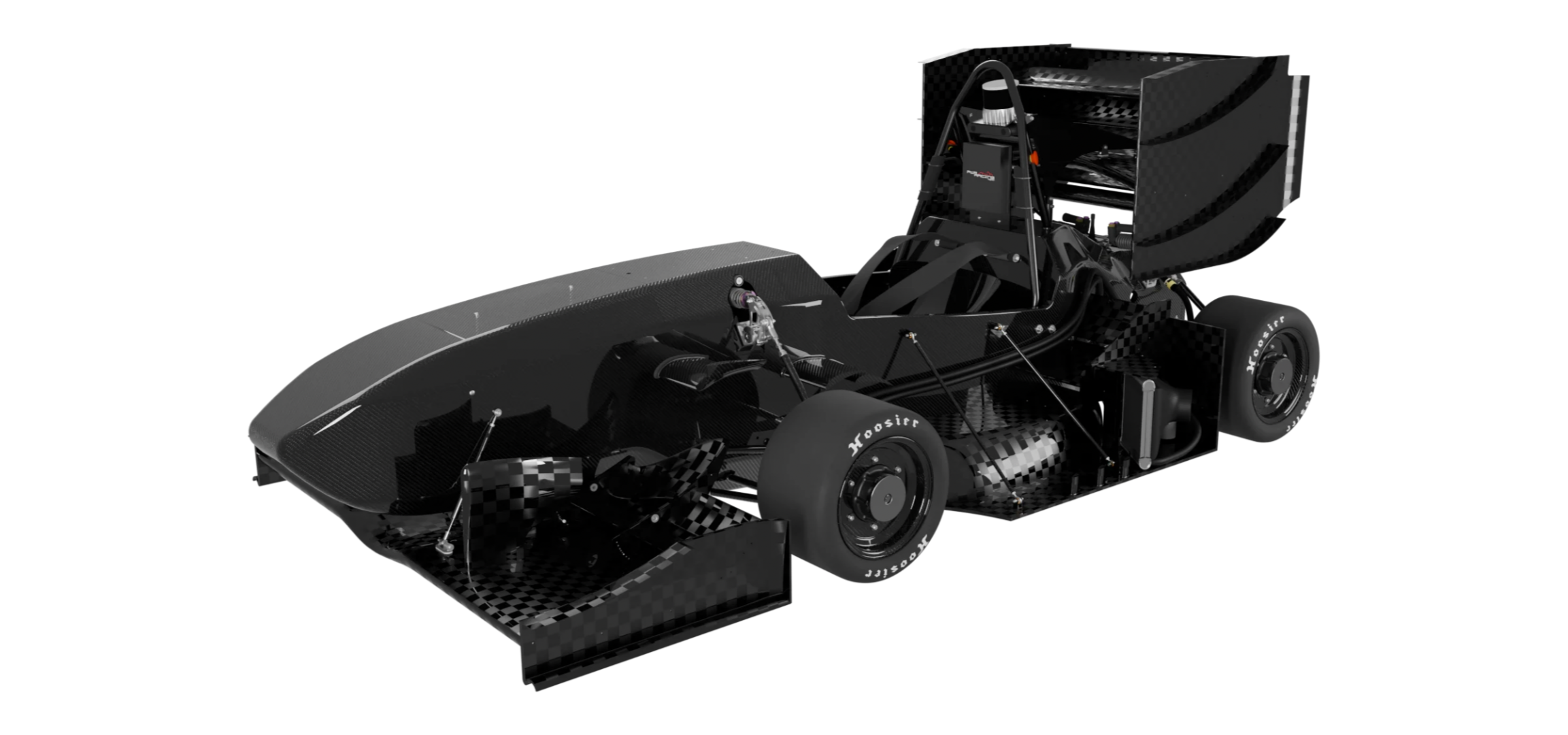
158xCar Specifications
General
| Frame Construction | CFRP Monocoque |
|---|---|
| Material | sandwich panels with aluminium honeycomb and Rohacell Foam cores |
| Overall L | 3025 mm |
| Overall W | 1485 mm |
| Overall H | 1078 mm |
| Wheelbase | 1525 mm |
| Track (Fr) | 1200 mm |
| Track (Rr) | 1180 mm |
| Weight with 68kg driver (Fr) | 137 kg |
| Weight with 68kg driver (Rr) | 131 kg |
| Suspension | Double unequal length A-Arm; Pushrod actuated horizontaly oriented spring and damper; |
| Tyres (Fr / Rr) | Hoosier 16x7.5-10 R20 |
| Wheels (Fr / Rr) | 4x Self-developed 1-piece CFRP laminated rim, 10x8", 60 mm offset |
| Drive Type | Single stage compound planetary gearbox |
| Differential | - |
| Cooling | 2 symetric water loops - 2x motor + 2x inverter per loop; custom radiator with electric fan |
| Brake System | 4-disk system; self developed monoblock, single side, 2 piston calipers, custom master cyl |
| Electronics | Self Developed AMS; Multifunction Steering Wheel, Self Developed Live Telemetry |
Powertrain
| Number of Motors | 4 |
|---|---|
| Motor Location | 4x in-hub mounted motors |
| Max Motor Power (per motor) | 35.4 kW |
| Motor Type | 4x Fischer Elektromotoren PMSM In-runner |
| Max Motor RPM (highest) | 20000 rpm |
| Motor Controller | Electrophorus Ephorus 3.1 |
| Max System Voltage | 605 V |
| Electrode Materials | LiION |
| Combined Accumulator Capacity | 7.51 kWh |
| Transmission Ratio (Primary) | 12.89 : 1 |
| Transmission Ratio (Secondary) | - |
Driverless System
| Processing unit(s) | Nvidia Jetson AGX Orin, Arm Cortex-A78AE, NVIDIA Ampere GPU, 64 GB RAM |
|---|---|
| Floating Point Operations Per Second of all processing units that are working for the DV system | 5325 GigaFLOPS |
| Power consumption of all processing units that are working for the DV system | 35 W |
| Camera(s) | 1x StereoLabs ZED2i, 4MP (4416x1242) |
| Radar sensor(s) | - |
| Lidar sensor(s) | 1x Ouster OS2-128,128 channels, 360 deg hor. fov |
| Other sensors | 2x Xsens Mti-680G, RTK GNSS/INS module operating in all 3 linear and angular axes |
| Highlights of the DV system | New LiDAR-based perception capable of detecting cones at up to and over 30 m with <0.2 m RMSE. Robust hybrid Graph SLAM supported by a particle filter designed with resistance to sensor lag and noise as a priority. Dual mode Path Planner optimized towards both discovery and full lap optimization phases. Learning-Based Model Predictive Controller. |
Info
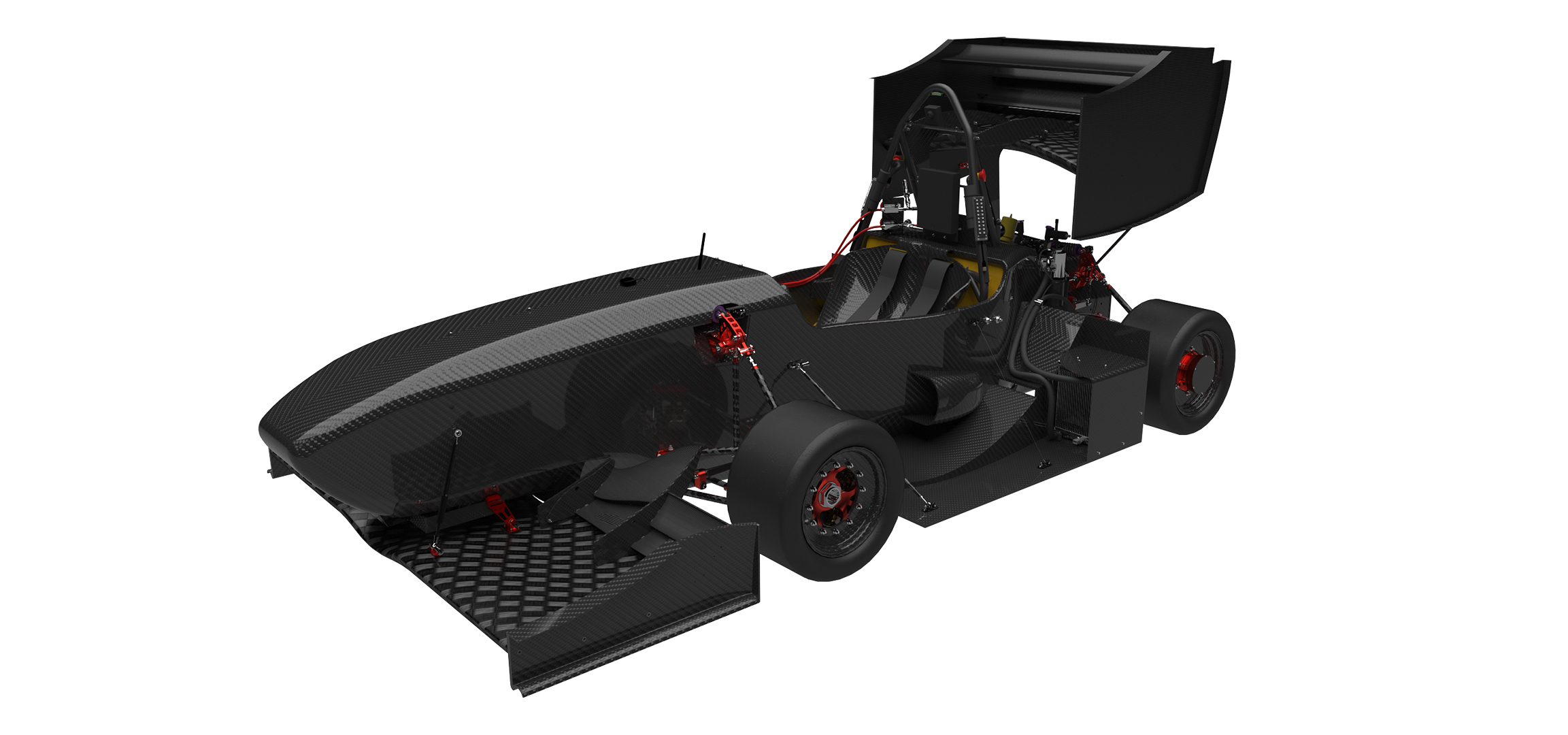
82xCar Specifications
General
| Frame Construction | Full CFRP Monocoque |
|---|---|
| Material | CFRP with aluminium Honeycomb and Rohacell |
| Overall L | 2987 mm |
| Overall W | 1489 mm |
| Overall H | 1179 mm |
| Wheelbase | 1525 mm |
| Track (Fr) | 1200 mm |
| Track (Rr) | 1180 mm |
| Weight with 68kg driver (Fr) | 156 kg |
| Weight with 68kg driver (Rr) | 156 kg |
| Suspension | Double unequal length A-arm. Push rod actuated horizontally oriented spring and damper |
| Tyres (Fr / Rr) | 190.5x40 R10, Hoosier R20 / 190.5x40 R10, Hoosier R20 |
| Wheels (Fr / Rr) | 7.5x10, 59mm offset, 2pc Carbon Rim / 7.5x10, 62mm offset, 1pc Carbon Rim |
| Drive Type | compound planetary gearbox in hubs |
| Differential | - |
| Cooling | Twin under body mounted radiators with sensor based controlled electric fans |
| Brake System | 4-disc system, self developed mono-block calipers, adjustable brake balance |
| Electronics | Self-designed multifunctional wheel, self-developed live telemetry, motorsport harness |
Powertrain
| Number of Motors | 2 |
|---|---|
| Motor Location | Rear Right, Rear Left |
| Max Motor Power (per motor) | 35.4 kW, 35.4 kW kW |
| Motor Type | Fischer TI085-052-070-04B7S-07S04BE2 |
| Max Motor RPM (highest) | RR,RL: 20.000 rpm |
| Motor Controller | AMK Motion |
| Max System Voltage | 538V V |
| Electrode Materials | Lithium Ion |
| Combined Accumulator Capacity | 6.221kWh kWh |
| Transmission Ratio (Primary) | 1:12.87 : 1 |
| Transmission Ratio (Secondary) | - |
Driverless System
| Processing unit(s) | Speedgoat real-time target machine, NVIDIA Jetson |
|---|---|
| Floating Point Operations Per Second of all processing units that are working for the DV system | 275000 GigaFLOPS |
| Power consumption of all processing units that are working for the DV system | 600 W |
| Camera(s) | 1, n/a, 120 degrees, Arducam 30fps 1080p |
| Radar sensor(s) | - |
| Lidar sensor(s) | 1, 30m, 120 degrees, Velodyne Velarray m1600 |
| Other sensors | Xsens MTI670, Xsens MTI680G, Bosch m5.10, steering encoder and potentiometer, wheel speed sensors |
| Highlights of the DV system | - Pointcloud - image projection, MPC based movement control, innovative path planner based on 3 algorithms, FastSLAM 2.0, Monte Carlo Localization, braking controlled using Preview Controller, YoloV8 image detection, GPU clustering of pointcloud |
Info
40xNo media information available for this year.
Info
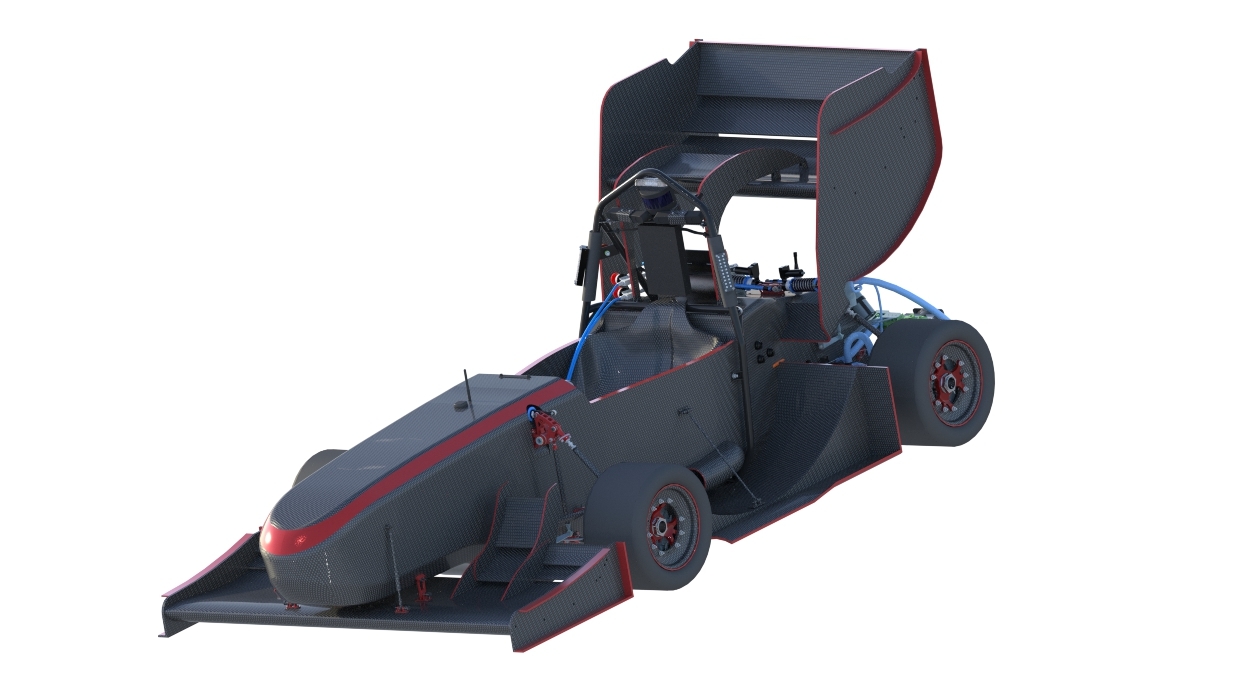
21xCar Specifications
General
| Frame Construction | Full monocoque |
|---|---|
| Material | Carbon fiber, rohacell, aluminum honeycomb |
| Overall L | 3045 mm |
| Overall W | 1478 mm |
| Overall H | 1190 mm |
| Wheelbase | 1525 mm |
| Track (Fr) | 1200 mm |
| Track (Rr) | 1180 mm |
| Weight with 68kg driver (Fr) | 145 kg |
| Weight with 68kg driver (Rr) | 185 kg |
| Suspension | Double A-Arm, pushrod actuated, U-bar stabilizer. Front and Rear |
| Tyres (Fr / Rr) | 16.0/7.5-10, Hoosier R25B / 16.0/7.5-10, Hoosier R25B |
| Wheels (Fr / Rr) | Seflmade CFRP rims with aluminum rotors |
| Drive Type | 2-stage planetary gear inside rear wheel |
| Differential | - |
| Cooling | Twin side rear mounted radiators with sensor based controlled electric fans |
| Brake System | 4-disc system, self developed calipers. Adjustable brake balance. |
| Electronics | Self-developed Live-Telemetry, Multifuncional Steering Wheel, Motorsport wiring harness |
Powertrain
| Number of Motors | 2 |
|---|---|
| Motor Location | Rear left and right wheel |
| Max Motor Power (per motor) | 47 kW |
| Motor Type | self-Designed motors |
| Max Motor RPM (highest) | 15.000 rpm |
| Motor Controller | Cascadia Motion |
| Max System Voltage | 508 V |
| Electrode Materials | Litium-Ion |
| Combined Accumulator Capacity | 8,54 kWh |
| Transmission Ratio (Primary) | 9,8 : 1 |
| Transmission Ratio (Secondary) | - |
Driverless System
| Processing unit(s) | Speedgoat baseline real-time target machine, NVIDIA Jetson |
|---|---|
| Floating Point Operations Per Second of all processing units that are working for the DV system | 32000 GigaFLOPS |
| Power consumption of all processing units that are working for the DV system | 425.00 W |
| Camera(s) | 2 stereoscopic cameras, Range 20m, System operating angle 160 deegres, StereoLabs ZED2 |
| Radar sensor(s) | - |
| Lidar sensor(s) | 1, Range 100m, Operating angle 360 degrees, Velodyne Puck Hi-Res |
| Other sensors | - |
| Highlights of the DV system | First-year autonomous system. ROS2 based software. Cameras and LiDAR recognition accelerated with NVIDIA hardware. FastSLAM 2.0 based mapping. Team-developed BLDC controller for steering actuator using 6-step algorithm. 2 line pneumatic EBS and servobased brake actuator. |
FS past achievements due to World Ranking Data Base
| Date | Event | Teams | Rank | BP | CM | ED | SP | DV SP | AC | DV AC | AX | EN | EF | Pe | Total |
|---|---|---|---|---|---|---|---|---|---|---|---|---|---|---|---|
| 2026.08 | 42 |
7. |
8. |
9. |
10. |
5. |
- |
10. |
- |
6. |
7. |
13. |
-100.00 |
447.90 |
|
| 2026.08 | 80 |
19. |
2. |
40. |
36. |
13. |
13. |
22. |
16. |
10. |
- |
- |
-10.00 |
441.51 |
|
| 2026.07 | 52 |
11. |
5. |
25. |
19. |
16. |
- |
16. |
- |
18. |
9. |
10. |
-10.00 |
455.85 |
|
| 2025.08 | 53 |
11. |
31. |
10. |
15. |
21. |
- |
28. |
- |
19. |
9. |
5. |
-20.00 |
505.68 |
|
| 2025.07 | 40 |
24. |
2. |
21. |
14. |
18. |
- |
22. |
- |
21. |
- |
- |
0.00 |
356.60 |
|
| 2025.07 | 44 |
8. |
15. |
30. |
16. |
7. |
- |
10. |
- |
8. |
7. |
8. |
0.00 |
484.60 |
|
| 2024.09 | 34 |
15. |
22. |
27. |
9. |
9. |
- |
16. |
- |
7. |
- |
- |
0.00 |
364.97 |
|
| 2024.08 | 79 |
55. |
55. |
46. |
18. |
44. |
- |
48. |
- |
- |
- |
- |
0.00 |
208.80 |
|
| 2024.08 | 47 |
20. |
32. |
32. |
6. |
7. |
- |
20. |
- |
12. |
- |
- |
0.00 |
271.58 |
|
| 2024.07 | 31 |
15. |
28. |
13. |
5. |
- |
- |
15. |
- |
- |
- |
- |
0.00 |
237.23 |
|
| 2023.08 | 70 |
44. |
12. |
52. |
24. |
- |
- |
36. |
- |
31. |
- |
- |
-10.00 |
216.87 |
|
| 2023.07 | 29 |
10. |
6. |
9. |
6. |
- |
- |
- |
- |
9. |
- |
- |
0.00 |
293.44 |
|
| 2022.08 | 25 |
17. |
6. |
12. |
18. |
- |
- |
- |
- |
- |
- |
- |
0.00 |
222.00 |
|
| 2022.08 | 63 |
35. |
26. |
13. |
8. |
- |
- |
- |
- |
- |
- |
- |
-20.00 |
226.11 |
|
| x 14 | |||||||||||||||